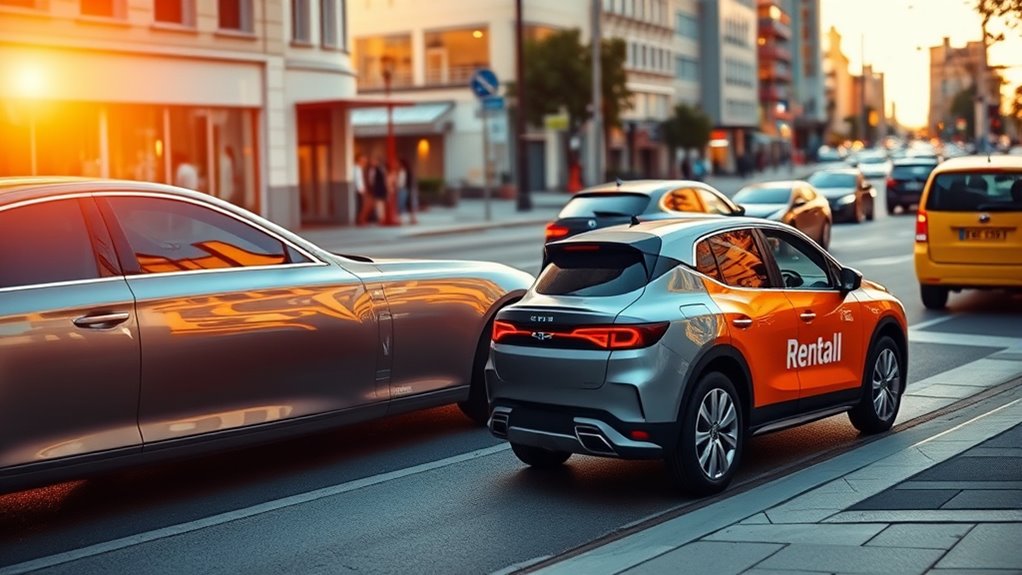

When choosing between renting and owning a vehicle, consider how often you’ll need it. Owning involves ongoing costs like insurance, maintenance, and depreciation, which can add up over time—especially if your use is occasional. Renting may be more cost-effective for short-term or infrequent needs, as it includes some expenses and avoids long-term commitments. Continue exploring to discover how to make the most financially savvy decision for your lifestyle.
Key Takeaways
- Rental cars incur lower upfront costs and include maintenance and insurance, ideal for infrequent or short-term use.
- Ownership involves higher initial expenses, ongoing insurance, and maintenance costs, suitable for regular or long-term driving.
- Frequent rentals may surpass ownership costs over time due to cumulative rental fees and insurance expenses.
- For occasional use, renting offers cost savings and flexibility; ownership is more economical for daily or long-term needs.
- The best choice depends on individual driving habits, budget, and preference for vehicle control versus convenience.
Are you unsure how to pick the perfect vehicle for your needs? Deciding between renting or owning a car can seem overwhelming, especially when you start to consider the ongoing costs involved. One of the main factors to weigh is insurance costs, which can vary considerably depending on whether you rent or own. When you own a vehicle, you’re responsible for all-encompassing insurance, liability coverage, and possibly additional protection plans. These costs can add up, especially if you have a new or high-value car. On the other hand, rental insurance is usually included in the rental fee or offered at a lower rate, making it easier to predict your expenses. However, if you rent frequently, the cumulative insurance costs might surpass what you’d pay owning a vehicle over time.
Deciding to rent or own involves weighing insurance costs, which vary significantly based on your choice and usage frequency.
Maintenance expenses are another critical aspect. When you own a car, you’re responsible for all upkeep—oil changes, tire replacements, brake repairs, and unexpected fixes. These costs can fluctuate depending on the vehicle’s age, model, and how often you drive. Newer cars tend to have lower maintenance expenses initially but may still require substantial repairs as they age. Conversely, when you rent a vehicle, maintenance is typically handled by the rental company, and you don’t have to worry about routine repairs or depreciation. This can be advantageous if you only need a car temporarily or want to avoid unpredictable repair bills. However, rental costs can skyrocket if you rent frequently, especially with longer rentals or premium vehicles.
Another aspect to consider is the frequency of use. If you only need a vehicle occasionally—say, a few days a month—renting might be more economical because you avoid the long-term commitment and ongoing expenses like insurance and maintenance. But if you’re a daily driver or need a vehicle for the long haul, owning could be more cost-efficient in the long run, despite higher upfront costs. Owning also gives you the flexibility to customize and use the car as you see fit, without restrictions from rental agreements. Additionally, considering the cost differences between renting and owning can help clarify your decision, especially since the expenses involved can vary widely based on your specific circumstances.
Ultimately, your decision hinges on your driving habits, financial situation, and how much control you want over vehicle maintenance and insurance costs. If minimizing monthly expenses and avoiding upkeep sounds appealing, renting might be your best bet. But if you’re looking for long-term investment and want to build equity, owning a vehicle could be the smarter choice. Weigh these factors carefully, and you’ll be better equipped to choose the vehicle option that aligns with your lifestyle and budget.
Frequently Asked Questions
How Do Insurance Costs Compare Between Renting and Owning?
Insurance costs tend to be higher when you own a car because of all-encompassing insurance policies covering repairs, liability, and theft. Rental insurance generally offers limited coverage, often included or available at a lower cost, but coverage differences mean you might need extra protection. When renting, you pay a daily fee for insurance, whereas owning involves ongoing premiums. Your choice impacts overall costs depending on your insurance policies and coverage needs.
What Are the Long-Term Maintenance Expenses for a Personal Vehicle?
You’ll face long-term maintenance expenses that include routine oil changes, tire replacements, and brake repairs. Keep an eye on your vehicle’s wear and tear, which can increase costs over time. Fuel efficiency plays a role too—more efficient cars save you money on gas, reducing overall expenses. Regular upkeep, timely repairs, and choosing a reliable model help minimize long-term costs and extend your vehicle’s lifespan.
How Does Mileage Impact Rental Vehicle Costs?
If you rent a car and drive 1,000 miles, your costs increase with mileage fees, which can add up quickly. For example, a rental company might charge a per-mile fee or offer mileage discounts for long trips. Higher mileage impacts fuel efficiency, making it more important to choose a vehicle with good miles per gallon. To save, look for rentals with mileage discounts or unlimited mileage options.
Are There Tax Benefits for Owning a Vehicle?
Yes, you can get tax benefits for owning a vehicle. You might deduct vehicle depreciation, which reduces your taxable income over time, or benefit from lease incentives if you lease instead of buy. Keep track of expenses like fuel, maintenance, and insurance, as they can also be deductible. Consulting a tax professional helps make sure you’re maximizing these benefits legally and accurately.
How Do Parking and Storage Costs Differ?
Imagine parking fees piling up like shadows around your vehicle, each fee adding to your costs. Storage expenses can lurk in hidden corners, quietly draining your budget. When you own a car, you cover these costs regularly—monthly parking fees and storage expenses—often more predictable but sometimes more costly than renting. With a rental, those costs disappear, offering flexibility but less control over long-term expenses.
Conclusion
Ultimately, whether you rent or own, your choice reflects your journey ahead. Renting is like borrowing a map—flexible, temporary, guiding you through new paths. Owning is planting roots—careful, lasting, shaping your future landscape. Consider what aligns with your destination. The road you choose symbolizes your commitment to adventure or stability. Whichever path you take, remember: your vehicle is more than transport; it’s a symbol of your direction, your story, and the road you’re willing to travel.