To capture stunning sunrise and sunset spots on your road trip, plan ahead by scouting locations with clear views and arriving early or staying late to catch the best light. Pack a sturdy tripod, extra batteries, a variety of lenses, and protective gear for changing weather. Keep an eye on the forecast and be flexible with your timing to adapt to weather changes. If you keep exploring, you’ll uncover more tips to make your photos truly outstanding.
Key Takeaways
- Research and list scenic sunrise and sunset locations along your route in advance.
- Plan your timing to arrive early and stay late for optimal light and unique shots.
- Prepare your gear with appropriate lenses, filters, and batteries to adapt to changing lighting conditions.
- Check weather forecasts to select clear or cloud-rich days for dramatic sky effects.
- Be flexible and ready to capture spontaneous moments or unexpected lighting changes for unique images.
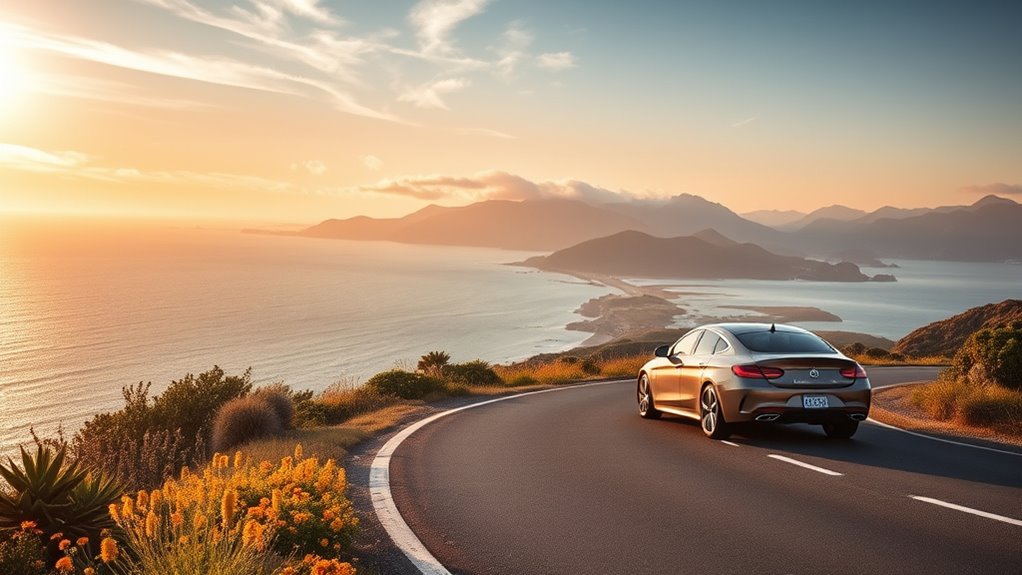
Starting on a road trip offers endless opportunities to capture stunning photographs, but planning your shots ahead of time can make all the difference. When you’re aiming to photograph sunrise and sunset spots, preparation becomes vital. An equipment checklist is your best friend—bring a sturdy tripod to keep your shots steady, especially in low light conditions, and pack extra batteries since early mornings and late evenings can drain your gear quickly. Don’t forget to include a variety of lenses; a wide-angle for sweeping landscapes and a telephoto for distant details can diversify your shots. A lens cleaning kit is also handy to keep your glass clear, and consider a remote shutter release to minimize vibrations during long exposures. Remember to pack protective gear like lens wipes and filters to adapt to changing conditions.
Weather considerations play a vital role in planning your photography sessions. Check the forecast for each spot well in advance, as clear skies often produce the most dramatic sunrises and sunsets, but a few clouds can add depth and color to your images. Be prepared for sudden changes—rain, fog, or wind can alter your plans or damage your equipment. Waterproof covers or plastic bags can protect your gear during unexpected showers. If you’re heading to mountainous or coastal areas, wind can be a factor, so secure your equipment tightly and watch for dust or sand that could scratch your lenses. Also, consider the temperature; extreme cold can drain batteries faster, so keep spares warm in your pocket, and in hot weather, avoid leaving gear exposed to direct sunlight for extended periods. Understanding projector technology can help you appreciate the importance of equipment care and proper handling of delicate gear.
Timing is everything when photographing sunrises and sunsets. Arrive at your chosen spot early to set up and scout the best angles, and stay a little after the sun dips below the horizon to capture those fleeting, magical colors. The golden hour—the period shortly after sunrise and before sunset—offers ideal lighting, casting warm, soft tones that enhance landscapes and details. Remember, the weather can change quickly, so be flexible and ready to adapt your plans. If clouds roll in unexpectedly, seize the moment to experiment with silhouettes or abstract compositions. Having a detailed plan, backed by your equipment checklist and weather considerations, guarantees you’re prepared to make the most of these fleeting moments, turning everyday scenery into extraordinary photographs.
Frequently Asked Questions
What Camera Settings Are Best for Sunrise and Sunset Shots?
For stunning sunrise and sunset shots, use a small aperture like f/8 to f/16 for sharpness and a low ISO to avoid noise. Opt for a neutral density or graduated filter to balance exposure, and keep your camera steady with a tripod for crisp images. Adjust shutter speed based on light conditions, and be mindful of tripod stability to prevent blur. Experiment with different settings to find what works best for your scene.
How Do Weather Conditions Affect Sunrise and Sunset Photography?
Ironically, weather makes or breaks your sunrise and sunset shots. Cloud cover can add drama or hide the sun altogether, while temperature fluctuations cause haze or fog, softening your images. You might hope for clear skies, but sometimes, a bit of clouds creates stunning colors. Embrace the unpredictability—adjust your settings accordingly, and you’ll capture breathtaking moments regardless of weather, turning nature’s whims into beautiful art.
What Safety Tips Should I Consider During Early Morning or Late Evening Shoots?
When shooting early mornings or late evenings, always stay alert to roadside hazards like uneven terrain or loose gravel. Keep a safe distance from wild animals to prevent unexpected encounters. Wear reflective clothing or gear to enhance visibility, especially in low light. Avoid distractions, stay on designated paths, and carry a flashlight. These precautions help guarantee your safety while capturing stunning sunrise and sunset shots, without risking wild animal encounters or roadside accidents.
Are Drone Photos Effective for Capturing Sunrise and Sunset Spots?
Drone photos are incredibly effective for capturing breathtaking aerial perspectives of sunrise and sunset spots, offering views you can’t get from the ground. They add a dramatic, expansive dimension to your shots. Just remember, drone regulations are strict; always fly within legal limits and respect privacy. With the right permissions and safe flying, you’ll create stunning, unforgettable images that truly showcase nature’s beauty from above.
How Can I Protect My Equipment From Dew or Moisture?
You should use protective covers for your camera and gear to shield them from dew and moisture. These covers prevent water from settling and causing damage. Additionally, carry moisture absorption packs or silica gel packets in your camera bag to absorb excess humidity. Regularly check and dry your equipment if it gets damp, and store it in a dry, cool place overnight to keep your gear safe during early morning or late evening shoots.
Conclusion
As you set out on your road trip photography adventure, remember that every sunrise and sunset holds the power to transform your journey into an everlasting masterpiece. By planning your spots thoughtfully, you’ll unlock scenes so breathtaking they might just outshine even the most famous painters’ dreams. Keep your camera ready, stay present, and let each moment be a symphony of light and color. Your travels will soon become a treasure trove of images that defy time itself.