To stay safe on road trips, you should prepare your vehicle with regular maintenance, including checking tire pressure, fluid levels, and lights. Keep an emergency kit with essentials like water, snacks, a flashlight, and first aid supplies. Stay alert, obey traffic laws, and avoid driving when tired. Share your itinerary with someone and plan your route carefully. Following these tips helps guarantee a smooth journey—continue for more insights on how to stay safe every mile.
Key Takeaways
- Conduct thorough vehicle maintenance checks before the trip to prevent breakdowns and ensure safety.
- Keep emergency supplies, including a first aid kit, flashlight, and extra water, easily accessible.
- Stay alert, avoid distractions, and take regular breaks to prevent fatigue and drowsy driving.
- Follow traffic laws, maintain safe following distances, and signal clearly to communicate with others.
- Share your route and estimated arrival time with someone for added safety in remote or unfamiliar areas.

Starting on a road trip can be an exciting adventure, but ensuring safety should always come first. Before hitting the road, you want to make sure your vehicle is in top shape. Vehicle maintenance is essential to prevent breakdowns or accidents during your trip. Check your tire pressure and tread, making sure they’re within the recommended range, and don’t forget to inspect your spare tire. Verify that all fluids—oil, coolant, brake fluid, and windshield washer—are at proper levels. A well-maintained vehicle reduces the risk of mechanical failure and keeps you safer on unfamiliar roads. Additionally, examine your brakes and lights to ensure they’re functioning properly, as these are indispensable for safe driving and visibility. Taking the time for vehicle maintenance isn’t just about avoiding inconvenience; it’s about protecting yourself and your passengers throughout your journey. Regularly reviewing your vehicle’s maintenance schedule can help you stay ahead of potential issues before they become serious problems.
Emergency preparedness is equally important. Prepare a safety kit that includes essentials like a flashlight, first aid supplies, bottled water, snacks, and basic tools such as a screwdriver and pliers. Keep a blanket in case you get stranded in cold weather, and make sure your phone is fully charged before departure. It’s also a good idea to have a portable phone charger with you. Familiarize yourself with your route and have a GPS or map on hand, especially in areas with poor cell service. Knowing your route and alternative options can help you avoid getting lost or stuck in unsafe areas. If you’re traveling through remote regions, consider informing someone about your itinerary and expected arrival times. That way, if something goes wrong, someone will know to check on you.
While on the road, stay alert and attentive to your surroundings. Rest when you’re tired—driving drowsy is dangerous. Follow traffic laws, maintain a safe following distance, and use turn signals consistently. If any vehicle issues arise, pull over safely and address them rather than risking further damage or accidents. Remember, being prepared with vehicle maintenance and emergency supplies isn’t just about reacting to problems; it’s about proactively reducing risks. These steps keep you prepared for unexpected situations, giving you peace of mind so you can focus on enjoying your trip. Staying safe is about foresight and responsibility, ensuring that your adventure remains enjoyable from start to finish.
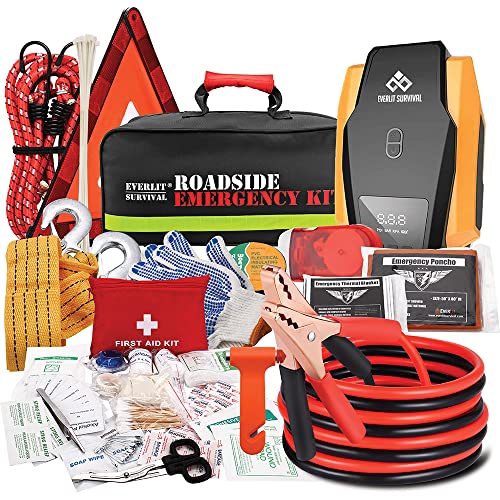
Everlit Survival Car Emergency Kit, Roadside Safety Tool Kit with Gloves,Digital Auto Air Compressor Tire Inflator, First Aid Kit, 12 Feet Jumper Cable, Tow Strap, Flashlight for Women, Men, Teenagers
- Roadside Emergency Kit: Includes tools for roadside assistance
- Digital Tire Inflator: Inflates tires quickly with auto shutoff
- LED Light & Nozzles: Provides illumination and multiple inflation options
As an affiliate, we earn on qualifying purchases.
As an affiliate, we earn on qualifying purchases.
Frequently Asked Questions
How Should I Handle an Emergency Tire Blowout While Driving?
If you experience an emergency tire blowout, stay calm and grip the steering wheel firmly. Gradually slow down, avoid braking suddenly, and gently steer to the side of the road. Use your emergency preparedness kit, including a spare tire and jack, to replace the blown tire. Regular tire maintenance helps prevent blowouts, so check your tires before trips. Stay safe by staying alert and handling the situation methodically.
What Are the Best Ways to Prevent Driver Fatigue on Long Trips?
To prevent driver fatigue on long trips, you should take regular rest breaks every two hours to stretch and refresh. Stay alert by staying hydrated—drink water frequently and avoid excessive caffeine or sugar. Switch drivers if possible, and listen to your body’s signals. Keep the vehicle well-ventilated and avoid driving during peak fatigue hours, usually late at night or early morning. These strategies help you stay alert and safe throughout your journey.
How Can I Ensure My Vehicle Is Roadworthy Before Departure?
You should start with a thorough pre trip inspection, checking tire pressure, fluid levels, brakes, lights, and signals. Use a maintenance checklist to make certain essential components like the battery, belts, and wipers are in good condition. Confirm your brakes work properly, and top off fluids. Address any issues before departure to keep your vehicle roadworthy, guaranteeing a safe, smooth journey. Regular checks help prevent breakdowns and keep you confident on the road.
What Safety Precautions Should I Take When Driving in Unfamiliar Areas?
When driving in unfamiliar areas, pay close attention to local signage to understand traffic rules and warnings. Slow down near unfamiliar intersections, and approach them with caution, as they might be different from what you’re used to. Keep your focus on the road, avoid distractions, and follow the flow of traffic. If unsure, pull over safely to review maps or GPS directions to prevent accidents and stay safe.
How Do I Safely Share the Road With Large Trucks and Buses?
Did you know trucks and buses account for about 12% of traffic fatalities? To stay safe, always check blind spot awareness before passing and avoid lingering in their blind spots. Use proper passing techniques—signal early, accelerate smoothly, and pass quickly to minimize risk. Maintain a safe following distance and stay alert to their turning signals and lane changes. Respect their size and maneuverability, and never cut close in tight spaces.

ANCEL AD310 Classic Enhanced Universal OBD II Scanner Car Engine Fault Code Reader CAN Diagnostic Scan Tool, Read and Clear Error Codes for 1996 or Newer OBD2 Protocol Vehicle (Black)
- Diagnoses Check Engine Light: Easily identify cause of check engine light
- Clear Diagnostic Codes: Read and erase trouble codes quickly
- Live Data & Freeze Frame: View real-time data and snapshot info
As an affiliate, we earn on qualifying purchases.
As an affiliate, we earn on qualifying purchases.
Conclusion
By staying alert, staying prepared, and staying cautious, you protect yourself, your passengers, and everyone on the road. Keep your focus sharp, your documents handy, and your attitude positive. Follow safety rules, respect other drivers, and plan your route ahead. When you stay mindful, stay responsible, and stay safe, you turn a simple road trip into a memorable adventure. Remember, safety isn’t just a goal—it’s a way of traveling. Drive smart, arrive safe, and enjoy the journey!

NOCO Boost GB40 12V 1000A UltraSafe Portable Lithium Jump Starter
- Powerful Jump Starter: 1000A peak lithium power
- Easy Dead Battery Starts: Up to 20 starts per charge
- Universal Compatibility: Suitable for engines up to 6.0L gas, 3.0L diesel
As an affiliate, we earn on qualifying purchases.
As an affiliate, we earn on qualifying purchases.

Mini First Aid Kit – 150 Piece Small Waterproof Hard Shell Medical Kit for Home, Car, Travel, Camping, Truck, Hiking, Sports, Office, Vehicle & Outdoor Emergencies- Small First Aid Medical Kit (Red)
- Complete Emergency Supplies: Includes 150+ medical and safety items
- Lightweight & Compact: Measures 6.4 x 4.9 x 2.7 inches, 0.73 lbs
- Travel-Friendly Design: Features premium zippers and carabiners
As an affiliate, we earn on qualifying purchases.
As an affiliate, we earn on qualifying purchases.