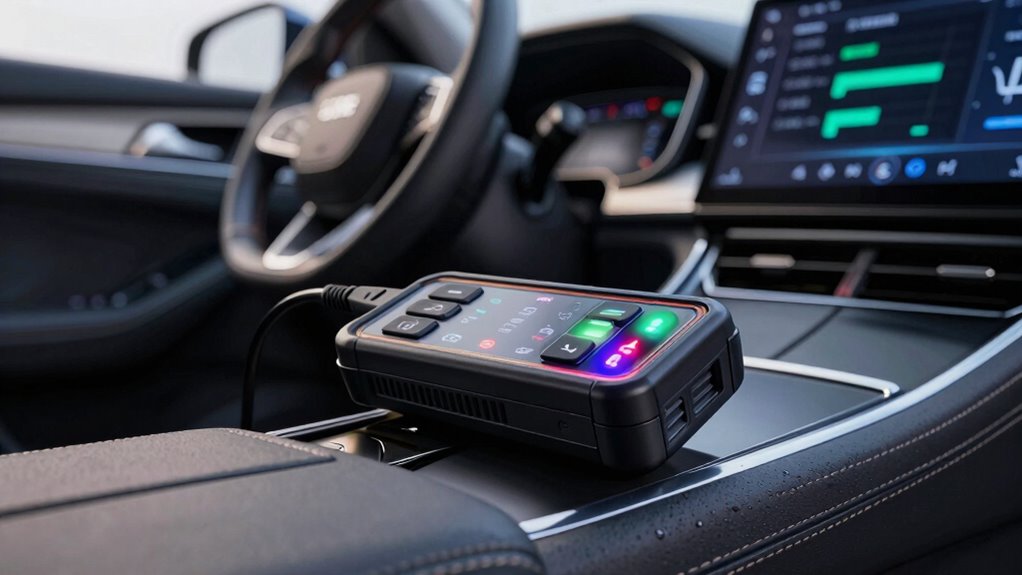

Using an OBD2 scanner lets you quickly determine if a vehicle problem is serious or minor. By checking diagnostic trouble codes (DTCs), you can spot urgent issues like engine misfires or critical sensor failures that need immediate repair. It also helps you identify less serious causes, such as a loose gas cap. Staying alert to these signals helps you decide whether to drive or seek professional help. If you keep exploring, you’ll learn more about how to interpret these insights effectively.
Key Takeaways
- The scanner indicates whether trouble codes are related to minor issues or urgent repairs.
- It highlights serious problems like engine misfires that require immediate attention.
- The device helps differentiate between trivial triggers and critical system failures.
- It alerts you when emission-related problems could lead to costly fines or inspections.
- Regular diagnostics can identify escalating issues before they cause severe engine damage.
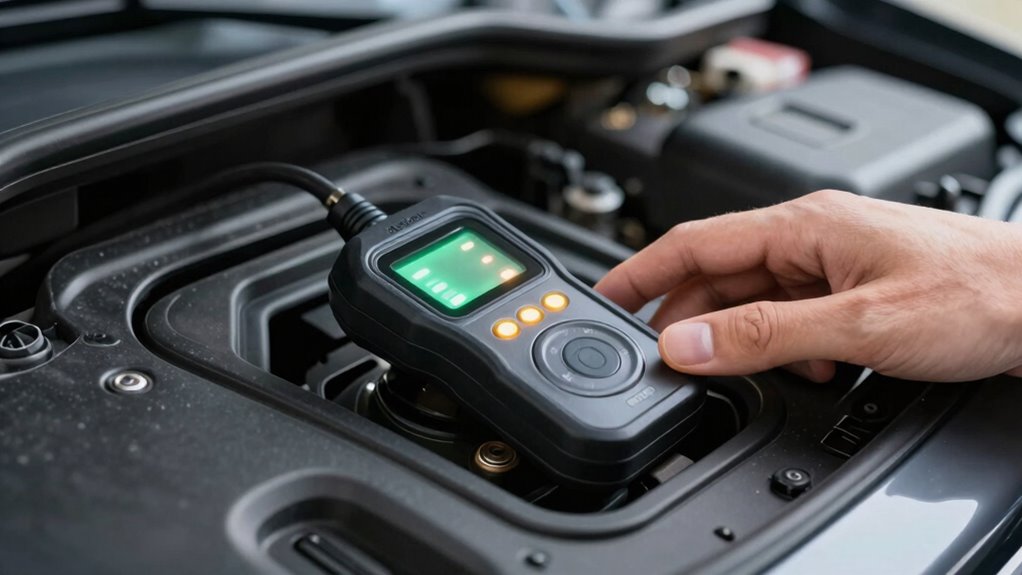
Ever wonder how to quickly diagnose your car’s issues without wasting time? An OBD2 scanner shortcut can be a game-changer, helping you determine whether a problem is serious or just a minor glitch. When your vehicle’s check engine light pops on, it’s tempting to ignore it, especially if the car seems to run fine. But that small warning can hide bigger trouble, and using an OBD2 scanner allows you to tap into your car’s onboard diagnostics system instantly. It provides code readings that reveal specific issues—saving you from unnecessary trips to the mechanic and giving you peace of mind.
One of the key benefits of using an OBD2 scanner is understanding how a problem impacts your vehicle’s fuel efficiency. When your engine isn’t running optimally, it burns more fuel than necessary, which hits your wallet and increases emissions. By quickly retrieving diagnostic trouble codes, you can identify issues like a faulty oxygen sensor or a clogged fuel injector that directly affect your fuel economy. Catching these problems early means you can address them before they escalate into costly repairs or cause your vehicle to become less economical to operate.
Additionally, an OBD2 scanner helps you monitor your vehicle’s emission control system. Emission-related codes indicate problems that could cause your car to fail emissions tests or contribute to environmental pollution. If your emissions system isn’t functioning properly, it might be due to worn-out catalytic converters, leaks in the exhaust system, or malfunctioning sensors. Recognizing these issues early not only helps you avoid fines or failed inspections but also ensures your vehicle remains environmentally friendly. The scanner provides insight into whether certain components are operating within safe parameters or if they need immediate attention.
The real advantage of this shortcut is that it allows you to gauge the severity of the problem on the spot. Some codes indicate minor issues that can wait until your next routine maintenance, while others signal urgent repairs that could lead to engine damage or safety risks. For example, a loose gas cap might trigger a check engine light but isn’t serious. On the other hand, a misfire detected by the scanner could mean a more significant engine problem. By understanding what the codes mean and how they relate to your vehicle’s fuel efficiency and emission control, you can make informed decisions about whether to drive, repair, or seek professional help. Additionally, recognizing onboard diagnostics systems can help you better understand the vehicle’s health monitoring capabilities. Knowing how to interpret these diagnostic trouble codes can significantly improve your ability to maintain your vehicle properly. Regularly checking these vehicle diagnostics can also prevent minor issues from turning into major repairs later. Staying familiar with emission control systems can further ensure your vehicle stays compliant and environmentally friendly.

ANCEL AD310 Classic Enhanced Universal OBD II Scanner Car Engine Fault Code Reader CAN Diagnostic Scan Tool, Read and Clear Error Codes for 1996 or Newer OBD2 Protocol Vehicle (Black)
- Diagnoses Check Engine Light: Easily identify cause of check engine light
- Clear Diagnostic Codes: Read and erase trouble codes quickly
- Live Data & Freeze Frame: View real-time data and snapshot info
As an affiliate, we earn on qualifying purchases.
As an affiliate, we earn on qualifying purchases.
Frequently Asked Questions
Can I Use an OBD2 Scanner on Any Vehicle Model?
You can usually use an OBD2 scanner on most vehicle models, but vehicle compatibility varies. Check if your vehicle is OBD2 compliant, typically from 1996 onward. Scanner accuracy depends on the device and the vehicle’s make and model, so some scanners may provide more detailed data than others. Always verify compatibility before purchasing, ensuring the scanner will give you reliable readings and help you identify issues effectively.
How Often Should I Check My Car With an OBD2 Scanner?
You should check your car with an OBD2 scanner during regular maintenance, ideally every 3 to 6 months, or whenever you notice unusual symptoms. Following your vehicle’s maintenance schedule helps guarantee accurate diagnostics and prevents minor issues from becoming major problems. Regular scans improve diagnostic accuracy, allowing you to catch potential problems early, save money, and keep your vehicle running smoothly.
Do All OBD2 Scanners Provide the Same Level of Detail?
Like a knight with a trusty sword, your OBD2 scanner varies in detail. Not all provide advanced diagnostics or ease data interpretation equally. Basic models show trouble codes, but higher-end scanners offer extensive data, live graphs, and vehicle-specific insights. So, if you want in-depth info to troubleshoot effectively, choose a scanner with advanced diagnostics. Otherwise, you might miss critical details needed to keep your car running smoothly.
Can an OBD2 Scanner Detect All Car Issues?
An OBD2 scanner can’t detect every car issue because engine complexity and sensor accuracy vary. While it efficiently identifies many problems related to emissions, engine performance, and sensor malfunctions, some mechanical or electrical issues may go unnoticed. Advanced scanners can diagnose more complex problems, but for thorough diagnostics, you might need specialized tools or professional inspection. Always consider the scanner’s capabilities relative to your vehicle’s complexity.
Is Professional Diagnosis Always Necessary After Using an OBD2 Scanner?
You don’t always need a professional diagnosis after using an OBD2 scanner, especially for basic issues. It’s great for DIY troubleshooting and gives you quick insights. However, if the problem persists or the scanner indicates a serious issue, it’s wise to consult a mechanic. Regular maintenance tips, like checking your vehicle regularly and addressing warning lights promptly, help prevent bigger problems and reduce the need for professional diagnosis.
ANCEL AD310 Classic Enhanced Universal OBD II Scanner Car Engine Fault Code Reader CAN Diagnostic Scan Tool, Read and Clear Error Codes for 1996 or Newer OBD2 Protocol Vehicle (Black)
- Diagnoses Check Engine Light: Easily identify cause of check engine light
- Clear Diagnostic Codes: Read and erase trouble codes quickly
- Live Data & Freeze Frame: View real-time data and snapshot info
As an affiliate, we earn on qualifying purchases.
As an affiliate, we earn on qualifying purchases.
Conclusion
Think of your car’s OBD2 scanner as a vigilant lighthouse keeper, constantly watching the horizon for signs of trouble. When it blinks a warning, it’s like a flash of light guiding you away from treacherous waters. Ignoring these signals is like sailing into a storm blindfolded. Use your scanner wisely, and it’ll be your steadfast guide, helping you navigate through potential problems before they become storms—keeping your journey smooth and safe.

ANCEL AD410 Enhanced OBD2 Scanner, Vehicle Code Reader for Check Engine Light, Automotive OBD II Scanner Fault Diagnosis, OBDII Scan Tool for All OBDII Cars 1996+, Black/Yellow
- Quickly Read and Clear Fault Codes: Understand and reset engine trouble codes
- Comprehensive OBD2 Diagnostics: Supports code reading, live data, and tests
- Real-Time Vehicle Data: Displays engine RPM, temperature, and more
As an affiliate, we earn on qualifying purchases.
As an affiliate, we earn on qualifying purchases.
ANCEL AD310 Classic Enhanced Universal OBD II Scanner Car Engine Fault Code Reader CAN Diagnostic Scan Tool, Read and Clear Error Codes for 1996 or Newer OBD2 Protocol Vehicle (Black)
- Diagnoses Check Engine Light: Easily identify cause of check engine light
- Clear Diagnostic Codes: Read and erase trouble codes quickly
- Live Data & Freeze Frame: View real-time data and snapshot info
As an affiliate, we earn on qualifying purchases.
As an affiliate, we earn on qualifying purchases.