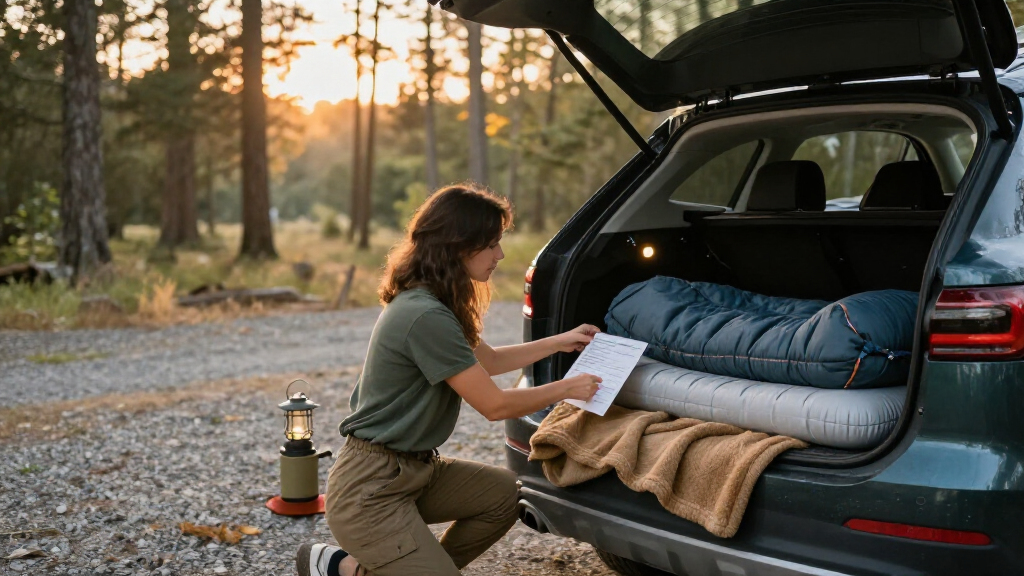
This checklist is for road trippers who plan to sleep in their vehicle and want a setup that feels comfortable and practical from the first night. It covers the core sleep items plus a few small comfort choices that can make a car-camping setup easier to tailor.

Get travel and outdoor gear delivered free with Prime
- Fast, free delivery on millions of items
- Prime Video, Amazon Music and more included
- Member-only deals all year
The sections follow the sleeping setup from the surface you rest on to warmth and airflow: mattress, sleeping bag, pillow, liner, window sunshades, and portable fan. Product picks are included where provided; the pillow and sunshade sections offer selection advice instead.
Use the checklist to compare each item with your vehicle, sleeping position, and expected conditions. Before buying, measure the sleeping area and check the product’s dimensions and compatibility; then prioritize the pieces that address your biggest comfort needs.
Car Camping Mattress
The mattress is the foundation of a car-camping sleep setup. The Exped MegaMat Auto Sleeping Pad with Wheel Cutouts is the listed pick, and its name signals a design intended to account for wheel-area contours. A mattress that fits the usable floor area can help make the sleeping surface feel more settled and leave less awkward space around the edges.
A common mistake is choosing by the vehicle’s model alone without measuring the actual sleeping space. Interior layouts, seat positions, and trim can affect the area available, so measure the length and width with the seats configured as you plan to sleep. Check the pad’s dimensions and the placement of its wheel cutouts against your vehicle’s shape. Also consider whether the intended sleeping position leaves room for essentials you want nearby, such as clothing or a small bag.
Confirm the pad’s fit before planning the rest of the setup around it. If you share the space, account for both sleepers’ positions and the room needed to get in and out. Vehicle-specific fit is the key check for this slot.
What to look for:
- Measure the sleeping area with seats in the planned position.
- Compare pad dimensions with the vehicle’s usable floor space.
- Check wheel-cutout placement against the interior layout.
- Consider room for a second sleeper and nearby essentials.
- Confirm the packed size works with your storage space.
Exped MegaMat Auto Sleeping Pad with Wheel Cutouts

The Exped MegaMat Auto Sleeping Pad is a 4-inch polyurethane foam mattress designed for vehicles like trucks, SUVs, and Teslas. It features asymmetrical wheel well cutouts, easy handling with welded side handles, and an advanced valve system for quick inflation and deflation, providing vehicle-optimized comfort for camping trips.
Pros:
- Custom fit for various vehicle types including trucks and Teslas
- Easy to inflate and deflate with advanced valve system
- Comfortable support with adjustable firmness
Cons:
- Designed specifically for vehicle use, less suitable for ground camping
- May be bulky to store when not in use
Best for: Campers whose vehicle layout calls for wheel-area clearance.
Not ideal for: Anyone who has not measured their sleeping area yet.
Bottom line: Match the pad’s dimensions and wheel cutouts to your vehicle before building the rest of your sleep setup around it.
Sleeping Bag
The sleeping bag is the main layer for warmth, so its fit and stated conditions should suit the trip. The listed pick is the Sleeping Bag for Adults & Kids – 0 Degree Cold Weather Warm Camping Ge. The product name gives a temperature figure and indicates an adults-and-kids audience, but it does not establish how the bag will feel for a particular sleeper or conditions beyond that label.
A common buying mistake is treating a temperature number as a guarantee of comfort. Read the full product details for the temperature rating type, intended use, and dimensions, then compare those details with the weather you expect. Check whether the bag’s shape and length work for each person using it. For a child, make sure the fit is appropriate and that the product guidance suits their age and sleeping needs; for adults, consider room to change position without creating excess space that may feel uncomfortable.
Think about how the sleeping bag will work with your mattress and any liner. Check the zipper placement and care instructions, and make sure it can be stored and transported conveniently. Rating, dimensions, and sleeper fit are the essential checks for this pick.
What to look for:
- Read the full temperature-rating details and how the rating is described.
- Check bag length and shape for each intended sleeper.
- Review product guidance for children and age suitability.
- Consider zipper placement and ease of getting in and out.
- Confirm care instructions and storage requirements.
Sleeping Bag for Adults & Kids – 0 Degree Cold Weather Warm Camping Gear

This sleeping bag is designed for both adults and children, providing warmth in temperatures as low as 32°F. Made with high-loft hollow-fiber insulation, water-resistant polyester shell, and a semi-rectangular shape, it offers comfort and durability for camping, hiking, and outdoor adventures.
Pros:
- Warm and suitable for cold weather camping down to 32°F
- Waterproof and windproof material enhances durability and comfort
- Versatile design with reversible zippers for couples or family use
- Lightweight and packs into a compact compression sack
Cons:
- Limited to temperatures above 32°F, not suitable for extreme cold
- Weight may be slightly heavy for ultra-light backpackers
- Zipper quality may vary based on user reviews
Best for: Travelers comparing a bag labeled for adults and kids.
Not ideal for: Anyone who needs confirmed rating details before choosing.
Bottom line: Check the full temperature guidance and sizing details against each sleeper and the conditions you expect.
Camping Pillow
A pillow can make a vehicle sleep setup feel more familiar, especially when the sleeping surface differs from a bed at home. Choose one that supports your preferred sleeping position and fits the space without crowding the rest of the setup. Support and packability are useful starting points.
One common mistake is bringing a full-size pillow without checking how much room it takes up in the car. Measure the area remaining once the mattress and sleeping bags are in place. If you move between sleeping on your back and side, consider whether the pillow’s height and firmness feel suitable for both positions. A pillow that compresses easily can be convenient to store, while a familiar pillow from home may be a comfortable choice if you have room for it.
Think about the pillow’s cover and cleaning needs, particularly on a longer trip. If more than one person will use the vehicle, confirm that everyone has enough space and a pillow suited to their preferences. Try the pillow with your mattress at home before departure if possible. Fit the pillow to your sleep style and available space rather than choosing by appearance alone.
What to look for:
- Choose a shape and height suited to your sleeping position.
- Check how much space it takes when packed and in use.
- Consider a removable or washable cover.
- Think about whether you prefer a familiar pillow or one that packs down.
- Test its comfort with your camping mattress before the trip.
Sleeping Bag Liner
A liner adds another layer inside a sleeping bag and can be useful when you want a different feel against your skin or an extra item that can be handled separately. The listed pick is the Sea to Summit Silk Blend Sleeping Bag Liner. Check the product details for its dimensions, care guidance, and how it is intended to work with a sleeping bag.
A common mistake is assuming every liner fits every bag comfortably. Compare the liner’s shape and measurements with the sleeping bag, allowing for how each sleeper moves at night. Consider whether the liner’s opening and any attachment features suit the bag’s zipper and design. Read care instructions before the trip so you know how to wash and dry it, and whether that routine is practical while traveling.
Think about when you expect to use the liner and whether it will be easy to pack alongside the rest of your bedding. If you are sharing the car, check that each sleeper has a suitable arrangement rather than assuming one liner will cover multiple needs. Bag compatibility and care are the main checks for this slot.
What to look for:
- Compare liner dimensions and shape with your sleeping bag.
- Check opening and attachment details against the bag design.
- Read washing and drying instructions before traveling.
- Consider how the liner feels for your preferred sleep setup.
- Confirm it packs conveniently with the rest of your bedding.
Sea to Summit Silk Blend Sleeping Bag Liner

This sleeping bag liner adds warmth and a soft feel to a sleep system. Hollow-core Thermolite Pro fibers and infrared-absorbing ceramic pigments help retain warmth, while HeiQ odor control helps keep the liner fresh during extended use.
Pros:
- Adds warmth to a sleeping bag
- Soft, luxurious feel
- Odor control helps keep it fresh
- Adjustable footbox
Cons:
- Availability can vary
Best for: Campers who want a separate liner layer inside their bag.
Not ideal for: Anyone whose sleeping bag shape or size is still undecided.
Bottom line: Check dimensions, opening details, and care instructions so the liner works with your sleeping bag.
Window Sunshades
Window sunshades are an advice-only slot in this checklist. Look for coverage that matches the windows you plan to shade and can be installed without interfering with your vehicle’s setup. Window-by-window fit is the first thing to verify.
A common buying mistake is choosing a generic shade based only on the vehicle make or model. Window shapes can vary, so compare the product’s stated fit or measurements with the actual windows you will use. Consider how the shades attach, how easily they can be removed, and whether they are intended for the specific windows you want to cover. Keep access and visibility needs in mind when deciding which windows to shade.
Before purchasing a set, count the windows and check exactly which ones are included. Consider how the shades store when not in use and whether you can pack them without bending or damaging them. For a shared vehicle, make sure the arrangement works for everyone sleeping inside. Coverage, attachment, and storage are the practical checks for this item.
What to look for:
- Measure each window you plan to cover.
- Confirm the set includes the specific windows you need.
- Check how the shades attach and come off.
- Consider visibility and access needs while parked.
- Review how the shades fold or store between uses.
Portable Fan
A portable fan can provide airflow in a vehicle sleep setup. The listed pick is the ELECOM NESTOUT Portable Camping Fan with Tripod, Beige. Its product name identifies it as a portable camping fan with a tripod, but check the full details to understand its controls, power arrangement, and intended placement.
A common mistake is assuming a fan will fit the available space or run for the duration you need without checking its specifications. Measure the area where you would place it and consider whether a tripod can sit securely without blocking movement. Review the product’s power source and charging requirements, then compare them with what you can support on your trip. Check operating instructions and any guidance for use inside a vehicle before relying on it overnight.
Consider how you will position the fan so airflow reaches the sleeping area and its controls remain accessible. If you share the vehicle, think about whether the placement works for everyone. Also check how it packs with other gear and whether the tripod can be stored conveniently. Power, placement, and safe use are the key checks for this slot.
What to look for:
- Review power source, charging method, and operating details.
- Check whether the tripod fits securely in your planned location.
- Consider airflow direction and access to controls.
- Read product guidance for use in your vehicle.
- Confirm the fan and tripod pack comfortably with your gear.
ELECOM NESTOUT Portable Camping Fan with Tripod, Beige
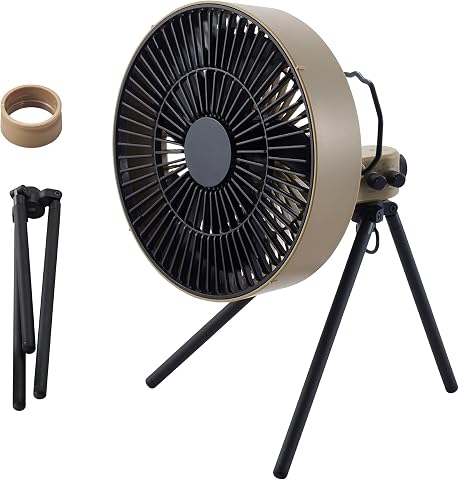
A portable outdoor fan with four speeds, including a gentle Breeze mode, and automatic oscillation at 40°, 70°, or 100°. Its neck tilts up to 90°, and hooks and an included tripod offer flexible mounting; USB-C power works with compatible NESTOUT batteries, other power banks, chargers, or wall outlets.
Pros:
- Four speed settings include a gentle Breeze mode.
- Three oscillation angles and up to 90° of tilt let you direct airflow.
- Tripod and dual hooks provide multiple mounting options.
- Runs up to 15 hours with a compatible 5000 mAh battery.
Cons:
- NESTOUT batteries are compatible, but the description does not list a battery among the included components.
- Battery life varies by speed and conditions.
Best for: Campers looking for a fan with a tripod for placement.
Not ideal for: Anyone who has not checked power needs and vehicle use guidance.
Bottom line: Confirm power, placement, and operating guidance before relying on the fan for overnight airflow.
Build the setup in a practical order: first measure the vehicle and choose a mattress that fits, then select a sleeping bag for the expected conditions and each sleeper. Add a pillow and liner to suit personal comfort, followed by window shades and a fan if they address needs for your trip. Fit and core sleep comfort are good priorities when choosing what to bring first.
Use this checklist as a starting point, and check the full product details before buying. A little measuring and a test night at home can help you spot fit issues while there is still time to adjust. With a setup suited to your vehicle and sleep preferences, you can head out feeling ready for the road.