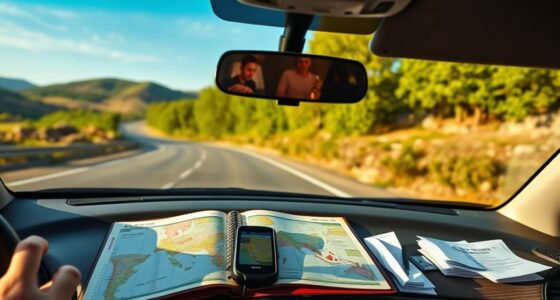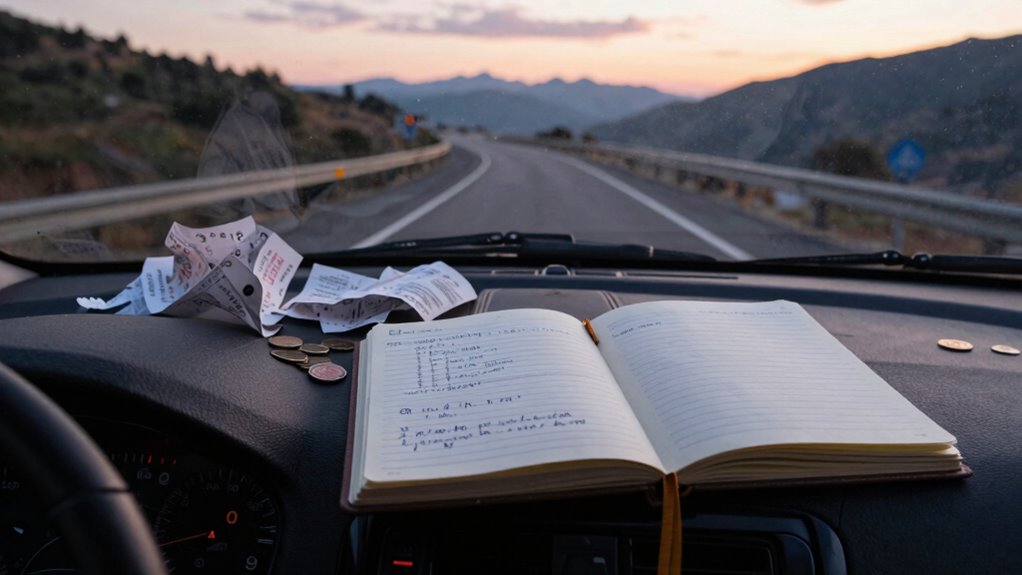

To stop the ‘where did the money go?’ panic, create a clear road trip budget split. Start by estimating your total costs for fuel, accommodation, and essentials. Use a tracking tool or app to monitor expenses daily, and set aside a contingency fund for surprises. Split costs fairly if traveling with others, and plan ahead for each category. Keep everything organized, and you’ll stay on top of your spending and enjoy a stress-free trip. Want to learn more?

Get travel and outdoor gear delivered free with Prime
- Fast, free delivery on millions of items
- Prime Video, Amazon Music and more included
- Member-only deals all year
Key Takeaways
- Create a detailed budget before the trip, including all major expenses and a contingency fund.
- Use a shared tracking system, like a spreadsheet or app, to monitor expenses in real-time.
- Split costs evenly among travelers for transparency and fairness.
- Regularly review and update expenses to prevent overspending or surprises.
- Plan and reserve accommodations and fuel in advance to stick to the budget.

Planning a road trip involves more than just choosing a route and packing your bags; it’s vital to figure out how to split your budget wisely. Without a clear plan, you risk running out of money mid-journey or overspending on one aspect while neglecting another. To keep things smooth and avoid that dreaded “Where did the money go?” panic, you need to get a handle on your main expenses upfront, especially fuel expenses and accommodation costs.
Effective trip planning balances your budget to prevent surprises and ensure a smooth, enjoyable journey.
Start by estimating your fuel expenses. Calculate your total driving distance and determine your vehicle’s fuel efficiency. For example, if you’re traveling 1,000 miles and your car gets 25 miles per gallon, you’ll need around 40 gallons of fuel. Check current fuel prices in the areas you’ll be traveling through; this can vary considerably by region. Multiplying the gallons needed by the average price per gallon gives you a realistic estimate of your total fuel expenses. Setting this amount aside early on prevents surprises at the pump and helps you decide how much to allocate for other expenses. Remember, adding a little extra for unexpected detours or rising fuel prices is always wise. Additionally, understanding **fuel efficiency** can help you plan more accurately and potentially save money on your trip. Being aware of your vehicle’s fuel consumption can also influence your route choices or driving habits to maximize savings. Moreover, maintaining your vehicle properly before the trip can improve your fuel economy and reduce unexpected breakdowns. Researching how driving habits impact fuel consumption can also lead to more cost-effective traveling.
Next, consider accommodation costs. Research the types of lodging available along your route—hotels, motels, hostels, or camping sites—and compare prices. Booking in advance often secures better rates and ensures availability, especially during peak travel times. Decide on a comfortable but affordable nightly rate and multiply it by the number of nights you plan to stay in each location. Be sure to include potential extra costs like taxes, parking fees, or amenities. If you’re traveling with others, split these costs evenly to keep things fair and transparent. Having a clear idea of your accommodation budget helps prevent overspending and keeps your overall travel budget in check.
Once you’ve estimated both fuel and accommodation expenses, add a contingency fund for meals, entertainment, and miscellaneous costs. This buffer prevents you from dipping into your main budget when unexpected expenses arise. Create a simple spreadsheet or use a budgeting app to track your spending as you go. Regularly updating your expenses ensures you stay within your limits and gives you confidence that your funds are allocated properly. When you approach your trip with detailed planning and awareness of your main costs, you’ll enjoy your adventure without that nagging worry about where your money went. Proper planning makes every mile more enjoyable, and you’ll arrive home with memories, not financial stress.
As an affiliate, we earn on qualifying purchases.
Frequently Asked Questions
How Should I Handle Unexpected Expenses During the Trip?
When unexpected expenses pop up, you should depend on your emergency fund first to cover costs promptly. It’s also wise to have travel insurance that can help reimburse unforeseen expenses like vehicle repairs or medical emergencies. Keep a record of all receipts and stay calm, adjusting your budget if needed. Planning ahead with an emergency fund and travel insurance ensures you handle surprises confidently without derailing your trip.
What’s the Best Way to Track Daily Spending?
You should keep a travel journal, jotting down your expenses daily in different spending categories like food, gas, and souvenirs. For example, Laura tracked her spending this way, which helped her realize she was overspending on dining out and cut back. This method gives you a clear picture of where your money goes, making it easier to stay within your budget and avoid surprises.
How Do I Adjust the Budget if Plans Change?
If your plans change, you should modify your budget by reallocating funds from less essential expenses. Keep your travel insurance and emergency fund priorities in mind—don’t dip into them unless absolutely necessary. Review your daily spending and identify areas where you can cut back. Updating your budget ensures you stay on track, even with unexpected changes, and keeps your trip stress-free and financially secure.
Should I Allocate Extra Funds for Emergencies?
Yes, you should allocate extra funds for emergencies to be prepared for unexpected costs. Building an emergency fund as part of your contingency planning helps you cover unforeseen expenses like vehicle repairs or medical issues without stress. By setting aside a small portion of your budget for emergencies, you guarantee you’re financially resilient during your trip, giving you peace of mind and the flexibility to handle surprises confidently.
What’s the Ideal Percentage Split for Food and Entertainment?
You should allocate about 10-15% of your budget to food and entertainment, ensuring your trip remains fun without draining your funds. Keep in mind, travel insurance and fuel costs can skyrocket unexpectedly, so it’s wise to set aside extra for those. By planning carefully and sticking to this split, you’ll avoid the chaos of overspending, making your adventure smooth, enjoyable, and worry-free—like a well-oiled machine on wheels.
fuel cost calculator for road trips
As an affiliate, we earn on qualifying purchases.
As an affiliate, we earn on qualifying purchases.
Conclusion
As your road trip winds down, you’ll glance at your budget, feeling the weight lift like the setting sun over the horizon. The once chaotic spill of receipts and expenses now feels like a well-worn map, guiding you home. With every dollar accounted for, you’ll savor the clarity, knowing your journey was balanced and mindful. The open road behind you, and a clear path ahead—your adventure’s end, and its story, finally in perfect focus.
budget travel accommodation booking
As an affiliate, we earn on qualifying purchases.
As an affiliate, we earn on qualifying purchases.
shared travel expense spreadsheet
As an affiliate, we earn on qualifying purchases.
As an affiliate, we earn on qualifying purchases.
Halloween Picks
halloween
As an affiliate, we earn on qualifying purchases.