
TL;DR

Get travel and outdoor gear delivered free with Prime
- Fast, free delivery on millions of items
- Prime Video, Amazon Music and more included
- Member-only deals all year
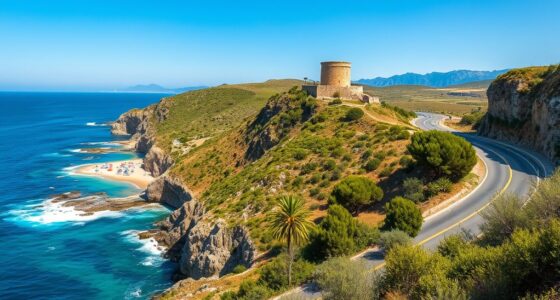
Tuscany’s sky has recently appeared unusually milky, prompting scientific investigation. The cause remains unconfirmed, but the phenomenon has attracted widespread attention.
Tuscany’s sky has taken on an unusual milky hue in recent weeks, baffling residents, tourists, and scientists alike. While the phenomenon has not yet been definitively explained, experts are actively investigating potential causes. This development has attracted significant media coverage and public curiosity, raising questions about environmental or atmospheric changes in the region.
Local residents in Tuscany first reported the sky’s unusual appearance roughly three weeks ago, describing it as a persistent, diffuse milky whiteness that obscures the usual blue or clear sky. Photographs and videos circulating on social media show a consistent, hazy pall over the landscape, prompting scientific interest.
According to atmospheric scientists from the regional environmental agency, preliminary assessments have ruled out common causes such as pollution spikes, wildfires, or industrial emissions. No significant air quality deterioration or known pollution events have been officially recorded during this period.
Experts are now exploring other potential explanations, including natural atmospheric phenomena like unusual cloud formations, mineral or particulate matter in the air, or even rare optical effects. However, no conclusive evidence has yet emerged to confirm any specific cause.
Authorities have emphasized that investigations are still ongoing, and no health advisories or safety warnings have been issued at this stage. The phenomenon appears to be primarily visual and atmospheric, with no immediate reports of health impacts or environmental damage.
Implications of the Milky Sky Phenomenon for Tuscany
The unexplained change in the sky’s appearance has drawn widespread attention because it highlights potential environmental or atmospheric shifts that may be occurring in the region. If caused by natural factors, it could signal unusual weather patterns or natural mineral dispersal. If linked to pollution or other human activities, it raises concerns about regional air quality and environmental health. The phenomenon also impacts tourism, as visitors may be concerned or intrigued by the unusual sky, affecting local economies.
Scientists stress that understanding this phenomenon is essential not only for regional environmental monitoring but also for broader climate and atmospheric research. The event underscores the importance of ongoing environmental surveillance and the need for transparent investigation into unusual atmospheric events.
Tuscany sky observation binoculars
As an affiliate, we earn on qualifying purchases.
As an affiliate, we earn on qualifying purchases.
Recent Changes in Tuscany’s Atmospheric Conditions
Tuscany is known for its scenic landscapes, historic towns, and generally stable weather patterns. In recent years, however, there have been reports of increased atmospheric anomalies, including fog, haze, and unusual cloud formations, linked to regional climate variability.
The current milky sky phenomenon is the latest in a series of atmospheric irregularities that have prompted scientific scrutiny. Historically, the region has experienced air quality issues related to traffic and industry, but these have been largely managed through regulations.
Previous investigations into atmospheric phenomena in Tuscany have identified natural causes such as mineral dust from the Apennines or transient weather patterns. However, the persistence and uniformity of the current milky appearance differ from typical natural events, adding to the mystery.
It is worth noting that global climate change has increased the frequency of unusual weather and atmospheric events worldwide, which may be relevant to understanding this development.
atmospheric phenomenon photography camera
As an affiliate, we earn on qualifying purchases.
As an affiliate, we earn on qualifying purchases.
Unconfirmed Causes and Ongoing Investigations
It remains unclear what precisely is causing the milky appearance of Tuscany’s sky. Investigators have not yet identified a definitive natural or anthropogenic source. Theories range from unusual cloud formations, mineral dust, or atmospheric optical effects, but no conclusive evidence has been published. Researchers acknowledge that further data collection and analysis are needed to determine the root cause.
As an affiliate, we earn on qualifying purchases.
Expected Steps in Identifying the Cause
Scientists plan to conduct detailed atmospheric sampling and remote sensing analyses over the coming weeks. Additional observations from weather stations and satellite data are expected to help narrow down potential causes. Regional authorities will continue monitoring air quality and atmospheric conditions and will issue updates as new findings emerge. Public communication will likely increase to inform residents and visitors about any health or safety advisories if necessary.
As an affiliate, we earn on qualifying purchases.
Key Questions
Is the milky sky harmful to health?
Currently, there are no reports indicating health risks associated with the phenomenon. Authorities are investigating whether airborne particles or pollutants are involved, but no safety warnings have been issued at this stage.
Could this be related to pollution or industrial activity?
Officials have ruled out typical pollution spikes or industrial emissions as causes so far, but investigations are ongoing. The phenomenon’s natural or atmospheric origins are still being studied.
Will the sky return to normal?
It is too early to predict. Scientists are working to identify the cause, and depending on the findings, the sky may revert to its usual appearance once the influencing factors subside or are addressed.
Has this happened before in Tuscany?
There are no well-documented previous instances of a persistent milky sky in Tuscany, making this a notable and unusual event that is attracting scientific and public attention.
Should tourists be concerned about visiting Tuscany now?
At this time, there is no evidence to suggest that the phenomenon poses a health threat. Visitors are advised to stay informed through official updates and follow any safety guidance issued by local authorities.
Source: rss
Fall Picks
fall essentials
As an affiliate, we earn on qualifying purchases.