For a tiny campsite kitchen, prioritize a well-organized, functional layout with distinct zones for prep, cooking, and cleanup. Maximize vertical storage with shelves, hooks, and hanging baskets, and use space-saving gear like foldable stoves and stackable cookware. Keep safety in mind by placing fires on stable surfaces away from tents and ensuring easy access to fire extinguishers. With smart planning, you’ll create a safe, efficient space—stick around to discover more tips for your perfect outdoor kitchen.
Key Takeaways
- Maximize vertical storage with shelves, hooks, and hanging baskets to save limited counter space.
- Arrange work zones—stove, sink, prep area—close for efficiency while maintaining safe distances.
- Use multi-purpose, foldable furniture and modular setups to adapt to small, changing spaces.
- Keep safety equipment accessible, elevate cooking surfaces, and separate cooking and sleeping zones.
- Organize tools and ingredients with labeled, space-saving containers to prevent clutter and improve workflow.
What to Consider When Designing a Small Campsite Kitchen
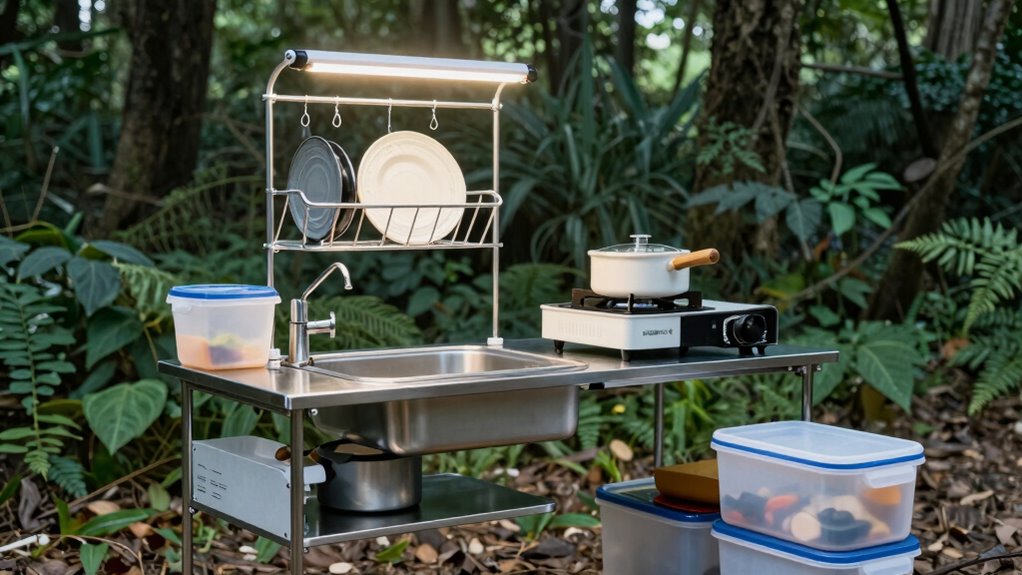
When designing a small campsite kitchen, it’s essential to prioritize functionality and efficient use of space. Think about how you’ll prepare campfire recipes, ensuring your setup allows easy access to ingredients and utensils. Choose compact, multi-purpose tent camping gear that saves room while offering durability. Consider a portable stove or grill that fits your cooking needs without overcrowding the area. Storage is key—use wall-mounted racks or bins to keep cookware, spices, and utensils organized. Keep your workspace clear to prevent clutter, and plan for easy cleanup. Remember, the goal is to maximize functionality without sacrificing safety or convenience. Incorporating space-saving techniques can greatly enhance your small outdoor kitchen setup. Additionally, selecting compact, multi-use tools can further optimize your limited space. With thoughtful planning, your small outdoor kitchen can be both practical and enjoyable, making your camping experience smoother and more fun.
How to Create a Functional Layout in a Tiny Outdoor Kitchen
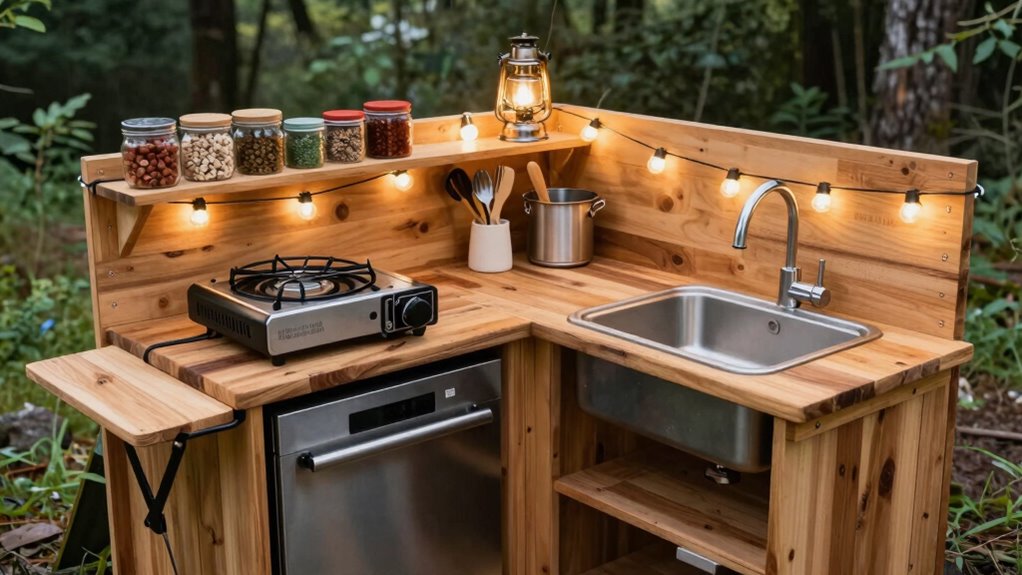
To make your tiny outdoor kitchen truly functional, focus on maximizing vertical storage to save countertop space. Arrange your workspace to create an efficient flow, reducing unnecessary movement between prep, cook, and cleanup areas. Using multi-functional items can also help you get the most out of limited space without sacrificing convenience. Incorporating interactive murals or digital displays can add a creative touch while utilizing wall space effectively. Additionally, choosing smart furniture like ladder racks or foldable tables can further optimize your layout and improve overall organization. Implementing space-saving techniques and integrating outdoor kitchen essentials can make a significant difference in small outdoor kitchens, ensuring every inch works for you.
Maximize Vertical Storage Space
Maximizing vertical storage is essential in a tiny outdoor kitchen, as it helps free up precious counter and floor space. You can achieve this by installing vertical shelving to keep utensils, spices, and cookware within easy reach. Hanging storage is another game-changer, allowing you to suspend pots, pans, and tools, saving valuable space. Here are four ideas to maximize your vertical storage:
- Use wall-mounted racks for frequently used utensils and tools.
- Install pegboards for versatile hanging options.
- Add floating shelves for extra storage without cluttering surfaces.
- Hang baskets underneath shelves for small items like herbs or condiments.
Additionally, incorporating rebalancing strategies can help you optimize your storage layout for maximum efficiency and accessibility.
Optimize Work Triangle Flow
Have you ever noticed how a poorly designed kitchen layout can make cooking feel like a chore? In a tiny outdoor kitchen, optimizing the work triangle flow is essential. Focus on placing your stove, sink, and prep area close but not crowded, creating a smooth path between them. This setup makes preparing campfire recipes more efficient and enjoyable. Keep the workspace clear to avoid unnecessary movement, which is especially important in limited space. When your work triangle is well-designed, outdoor dining becomes more relaxed, allowing you to focus on the meal and the company. By streamlining these key zones, you’ll maximize functionality without sacrificing comfort, making every outdoor cooking session more enjoyable and less stressful.
Use Multi-Functional Items
In a tiny outdoor kitchen, space is at a premium, so every item needs to serve more than one purpose. Multi-functional items help you maximize limited space while creating a cozy, efficient cooking area that complements your camping decor and outdoor seating.
Consider these options:
- A foldable table that doubles as food prep and dining space, perfect for small campsites.
- A storage ottoman that acts as seating and holds kitchen tools or supplies.
- A pot that doubles as a serving dish, reducing the need for extra serveware.
- A portable grill with built-in prep surfaces, saving space and adding convenience.
- Incorporating multi-purpose design and projector technology into your outdoor setup can enhance your camping experience by providing entertainment or ambiance during meals.
Using multi-functional items keeps your tiny kitchen organized, stylish, and highly functional—making your outdoor cooking experience enjoyable and stress-free.
Choosing Space-Saving Camping Stove and Cooking Gear
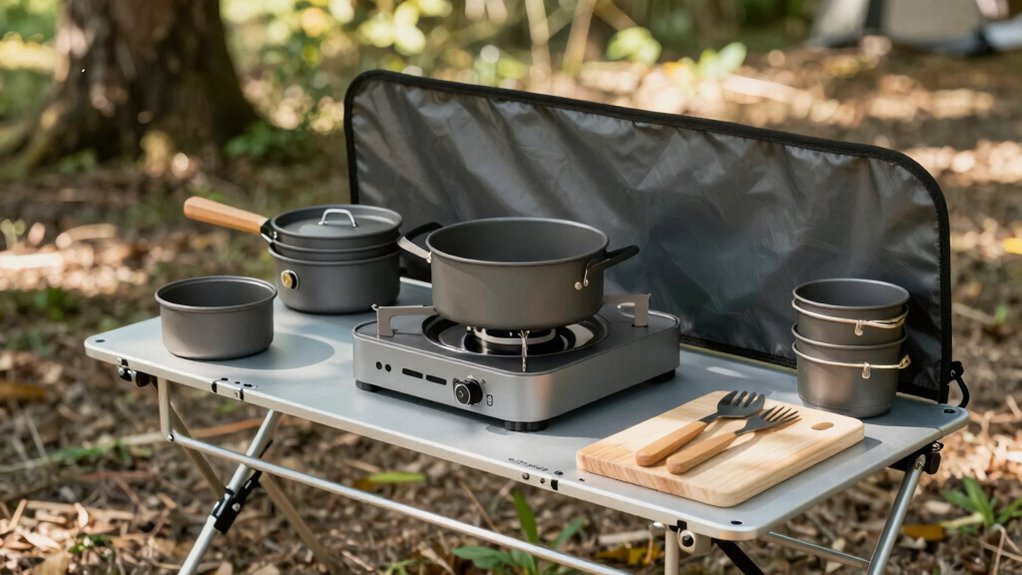
When selecting camping stoves and cookware, look for compact designs that fit easily into tight spaces. Multi-use cookware helps you save room by combining functions, while lightweight options reduce the load you carry. Choosing gear with these features guarantees you can cook efficiently without sacrificing space or convenience. Incorporating seasonal considerations into your gear choices can also enhance your camping experience by ensuring you’re prepared for varying weather conditions. Additionally, opting for space-saving gaming gear such as compact stoves and portable utensils can further optimize your campsite setup. For a more comfortable environment, consider integrating aroma diffusers to create a calming atmosphere and improve overall scent balance at your site. Practicing proper piercing care and hygiene principles can also help maintain a clean and infection-free environment around your campsite, especially if you’re using personal items that require regular cleaning. Being mindful of household organization principles can help you keep your small campsite tidy and clutter-free, making your outdoor stay more enjoyable.
Compact Stove Designs
Selecting the right camping stove and cooking gear is essential for maximizing space in a tiny campsite kitchen. Compact stove designs offer a perfect solution, fitting easily into limited areas without sacrificing functionality. Look for portable cooking units that are lightweight yet powerful enough for your needs. Here are four options to evaluate:
- Folding stoves that collapse flat for easy storage.
- Mini single-burner units ideal for small countertops.
- Stove with integrated wind shields to conserve fuel and heat efficiently.
- Stackable cookware sets that nest together to save space. In addition, choosing space-efficient cooking gear can greatly improve your overall setup. Incorporating multi-purpose appliances can further optimize your limited space and reduce clutter. Using compact tools designed specifically for camping can also help streamline your cooking process.
A well-chosen stove can also enhance your efficiency by reducing setup time and fuel consumption, making your camping experience more enjoyable. Utilizing space-saving designs can significantly streamline your campsite organization and accessibility. These compact stove designs help you stay organized while enjoying reliable cooking options in tight spaces. Prioritize portability and efficiency to make your tiny campsite kitchen both functional and clutter-free.
Multi-Use Cookware
Choosing multi-use cookware is key to making the most of limited space in your tiny campsite kitchen. Opt for versatile pots and pans that serve multiple functions, like a pot that doubles as a lid or a pan with foldable handles. This simplifies utensil organization and maximizes storage. For campfire recipes, select cookware that’s durable and easy to clean. Consider stacking sets or nesting items to save space. Use collapsible utensils and compact tools that can be stored easily. Here’s a quick visual guide:
| Item Type | Features | Benefits |
|---|---|---|
| Multi-use Pot | Double as a lid, collapsible handles | Saves space, versatile |
| Nesting Cookware | Stacks together, lightweight | Easy storage, portability |
| Collapsible Utensils | Foldable spoons, spatulas | Compact, utensil organization |
| Camping Fry Pan | Non-stick, foldable handle | Easy to clean, space-efficient |
| Compact Grater | Small, multi-sided design | Multi-purpose for prep |
Lightweight Equipment Options
Maximizing space in your tiny campsite kitchen means investing in lightweight, compact equipment that doesn’t compromise on functionality. Choose lightweight cookware that’s easy to pack and won’t weigh you down, making setup and breakdown effortless. Portable utensils should be durable yet space-efficient, so you can cook confidently without clutter. Here are four game-changing options:
- Compact camping stove with foldable or collapsible features
- Stackable, lightweight cookware sets for versatile meal prep
- Slim, multi-purpose utensils that serve multiple functions
- Collapsible cups and bowls to save storage space
Opting for space-efficient accessories like air fryers and accessories can further enhance your cooking versatility at the campsite. These gear choices ensure you stay mobile without sacrificing quality. Incorporating storage solutions such as wall hooks or stackable containers can help keep your small kitchen organized and accessible. Additionally, selecting versatile equipment that can handle multiple cooking tasks reduces the need for extra tools, thus saving space. With space-saving camping stoves and portable utensils, you’ll enjoy seamless cooking adventures, even in the tightest spots. Light, efficient equipment keeps your campsite organized and stress-free.
Organizing Your Campsite Kitchen to Maximize Space and Efficiency
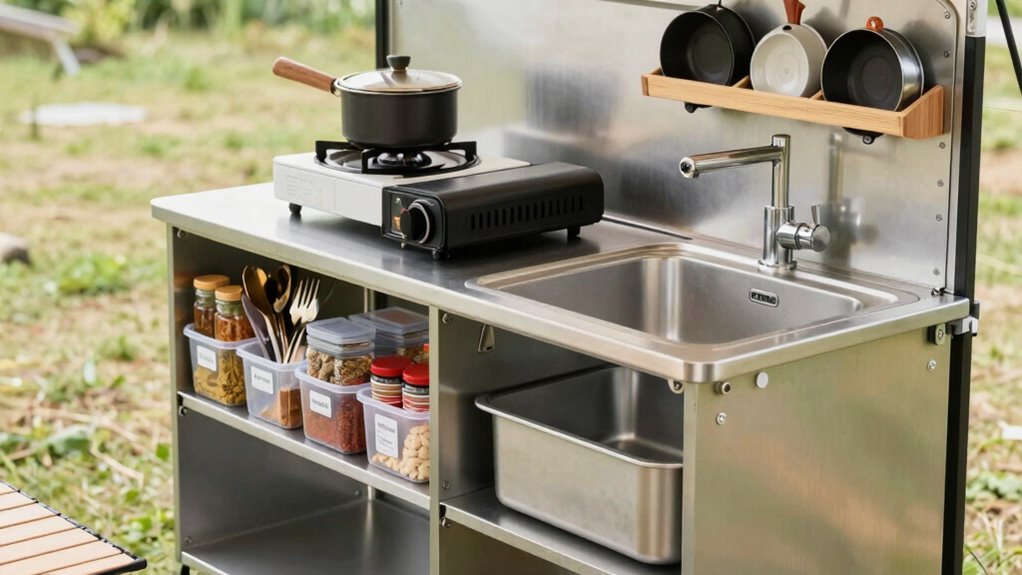
Effective organization is key to making the most of your tiny campsite kitchen. Start by grouping items based on their use, like keeping campfire cooking tools together and nearby. Use vertical space with hooks and shelves for utensils and spices. Designate specific areas for food prep, cooking, and dishwashing stations to minimize movement. Keep frequently used items within easy reach, and store less-used gear away. Consider collapsible or stackable containers to save space. Use labeled bins to keep everything tidy and accessible. Additionally, incorporating multi-unit setups can optimize your storage options and make your campsite kitchen even more efficient. Understanding the importance of precious metals in investment portfolios can help you plan for long-term financial stability. Here’s a quick overview:
| Zone | Items to Store | Tips |
|---|---|---|
| Campfire Cooking | Fire starters, grills, skewers | Keep near fire for easy access |
| Food Prep | Cutting boards, knives, bowls | Organize for efficiency |
| Dishwashing | Soap, sponge, drying rack | Keep close to water source |
| Storage | Non-perishable food, utensils | Use stackable containers |
Setting Up a Safe and Easy Food Prep Area Outdoors
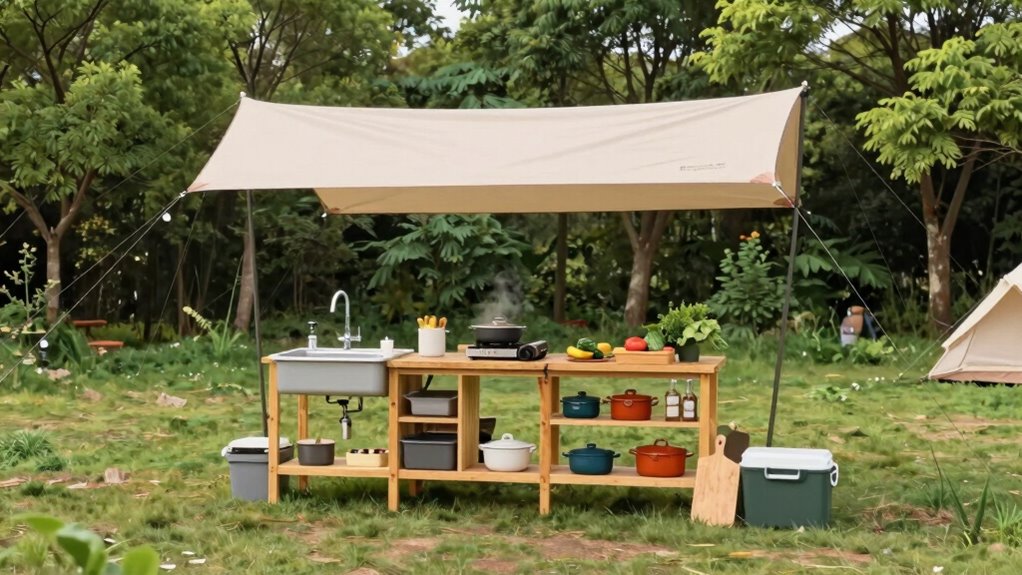
Setting up a safe and easy food prep area outdoors is essential for an enjoyable camping experience. A well-organized space makes outdoor meal prep smooth and stress-free. To create an inviting setup, consider these key elements:
- Stable surface—a sturdy table or flat rock for chopping and mixing.
- Accessible utensils and ingredients—keep everything within arm’s reach for quick outdoor meal prep.
- Clear separation—designate a space for campsite snacks to prevent cross-contamination.
- Safety measures—keep a fire extinguisher nearby and stay vigilant with open flames and sharp tools.
- Incorporating sound healing science principles, such as calming sounds or vibrations, can enhance your outdoor cooking experience by promoting relaxation and focus.
These steps guarantee your outdoor meal prep remains safe and fun, making your campsite snacks delicious and hassle-free. Proper setup gives you confidence and more time to enjoy the great outdoors.
Smart Storage Solutions for a Clutter-Free Campsite Kitchen
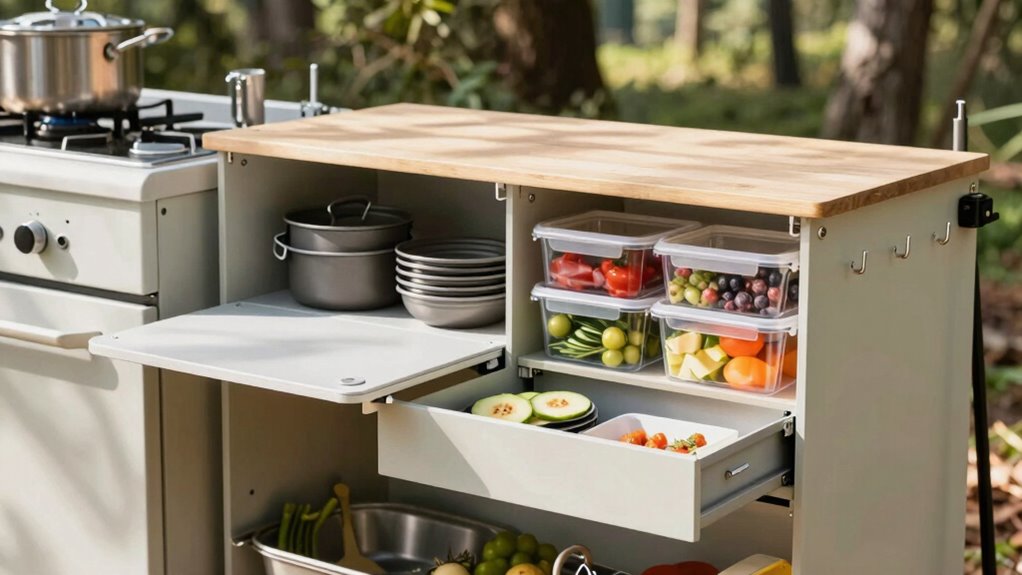
Keeping your campsite kitchen organized can be challenging, especially when space is limited. Smart storage solutions help you maximize every inch and keep clutter at bay. Use stackable containers for ingredients and utensils, making it easy to access what you need quickly. Magnetic strips or hooks can hold knives and tools, freeing up drawer space and guaranteeing safety during campfire recipes. Vertical storage, like hanging baskets or wall-mounted racks, keeps cookware and supplies within reach without taking up valuable counter space. Label everything to prevent mix-ups and maintain order. When your kitchen stays tidy, you reduce the risk of accidents and guarantee safe cooking. Efficient storage not only simplifies meal prep but also allows you to enjoy campfire recipes with confidence and peace of mind.
Using Multi-Functional Furniture in Your Small Campsite Kitchen
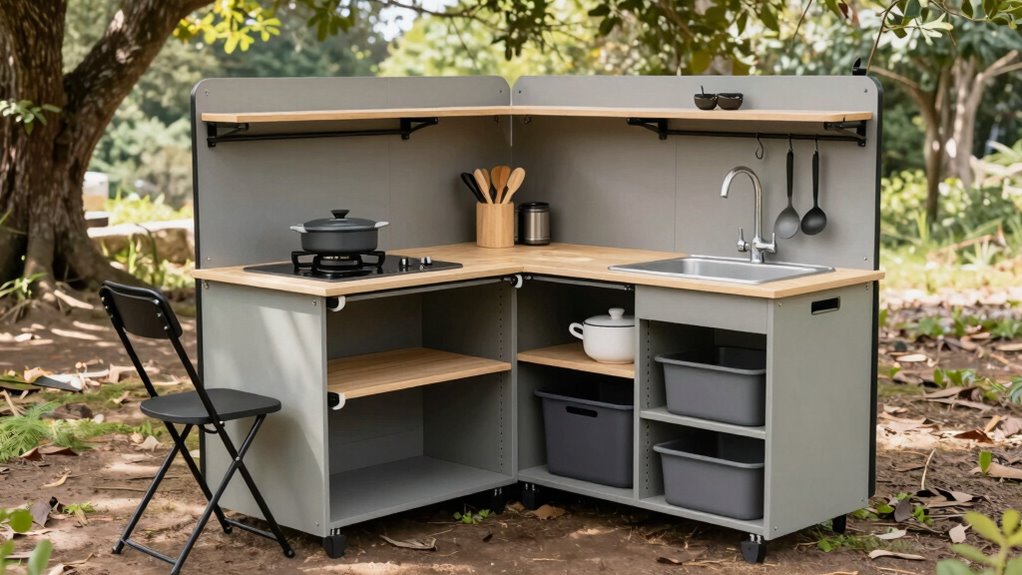
In small campsite kitchens, space is at a premium, so using multi-functional furniture can make a big difference. Convertible furniture allows you to adapt your space quickly—think fold-away tables or beds that double as counters. Modular shelving offers flexibility, letting you customize storage and keep essentials within reach without clutter.
Here are four ways to maximize your tiny kitchen:
- Use a convertible coffee table that transforms into a prep station.
- Opt for modular shelving to organize cookware and ingredients efficiently.
- Choose a fold-out dining table that tucks away when not in use.
- Incorporate stackable or collapsible chairs to save space and add seating as needed.
These solutions make your campsite kitchen both functional and comfortable.
Lighting and Power Options for Your Tiny Outdoor Kitchen
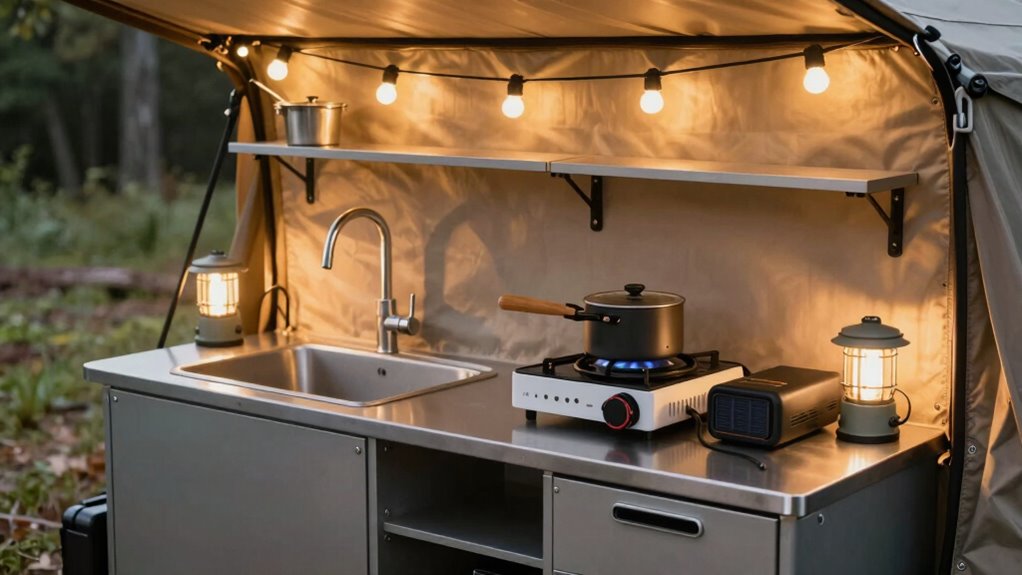
Maximizing your tiny outdoor kitchen’s functionality requires reliable lighting and power sources, especially after the sun sets or on cloudy days. Solar lighting is an excellent eco-friendly option, providing illumination without needing electrical outlets, and it’s easy to install in small spaces. String lights or lanterns powered by solar panels add ambiance and visibility. For power needs, portable power stations are versatile and convenient, allowing you to run small appliances or charge devices without bulky wiring. Keep a few charged power banks on hand for extra flexibility. Combining solar lighting with portable power ensures your tiny kitchen remains functional, safe, and inviting after dark, making your camping experience more comfortable and efficient.
Common Mistakes to Avoid When Planning a Campsite Kitchen
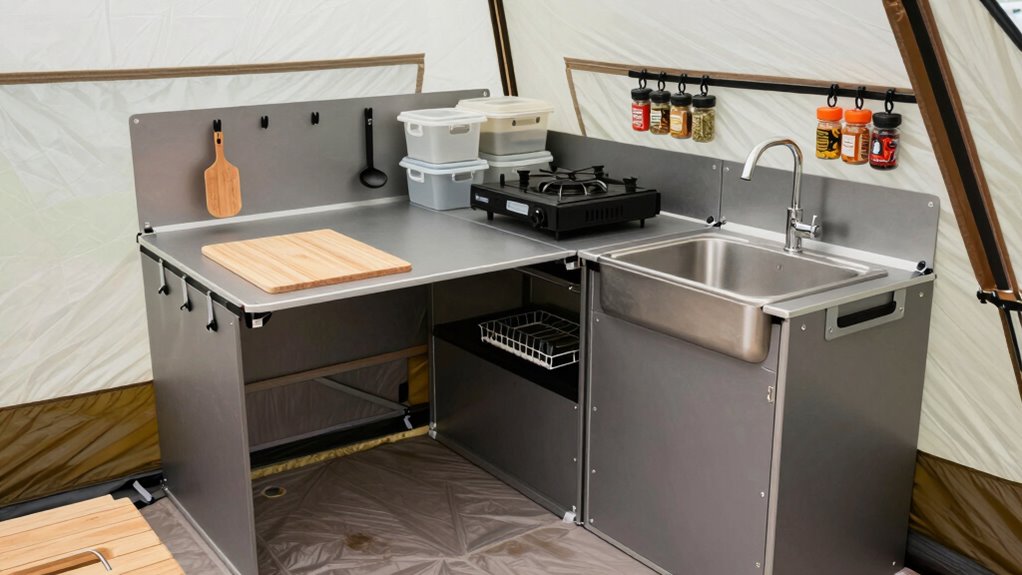
Planning your campsite kitchen can be tricky, especially if you overlook common pitfalls. Mistakes can turn your outdoor cooking experience into a hassle. First, avoid cluttering your space—an organized layout helps prevent accidents and makes preparing campfire recipes easier. Second, neglecting cooking safety can lead to dangerous situations; always keep fire extinguishers nearby and monitor your flames. Third, skipping proper ventilation can cause smoke buildup, making your cooking uncomfortable. Finally, rushing your setup might cause you to overlook essential tools or safety measures. Pay attention to these pitfalls to create a safe, efficient space for cooking and enjoying campfire recipes. A thoughtful layout minimizes risks and maximizes fun during your outdoor culinary adventures.
Adjusting Your Campsite Kitchen Setup for Better Comfort and Safety
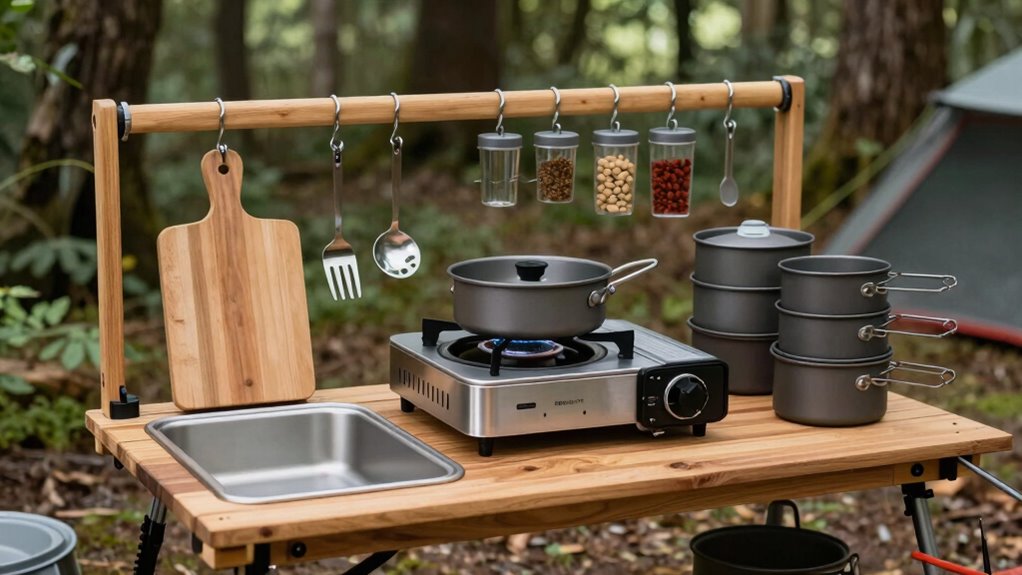
Adjusting your campsite kitchen setup can considerably improve both comfort and safety during your outdoor cooking adventures. For effective campfire cooking, make sure your fire is on a flat, stable surface away from tents and flammable materials. Keep a water source or fire extinguisher nearby in case of emergencies. When refining your tent kitchen setup, organize utensils and ingredients within easy reach to prevent clutter that could cause accidents. Elevate your stove or cooking area to reduce dirt and debris contamination. Also, design your space so that the cooking zone is separate from sleeping areas, minimizing smoke and safety hazards. Regularly check your setup, making certain all equipment is secure and stable, so you can enjoy your outdoor culinary experience with peace of mind.
Frequently Asked Questions
How Do I Ensure Proper Drainage in a Tiny Campsite Kitchen?
To guarantee proper drainage in your tiny campsite kitchen, you should set up a portable sink with an effective drainage solution. Position the sink slightly above ground level, allowing gravity to help water flow away. Use a flexible hose or drainage pipe directing water to a designated area or container. Regularly check and clear any clogs or blockages, and consider using gravel or a drain pan to prevent pooling and ensure smooth water runoff.
What Materials Are Best for Outdoor Kitchen Countertops?
You’ll want countertops that can withstand anything—think ultra-durable materials like stainless steel, concrete, or high-quality composite. These surfaces handle the chaos of outdoor cooking, spills, and weather like champs. Pair them with portable grills and compact storage solutions for maximum efficiency. You’ll love how these tough, easy-to-clean materials keep your tiny campsite kitchen looking sharp, no matter the adventure or mess that comes your way!
How Can I Secure Lightweight Cooking Gear Against Wind?
To secure lightweight cooking gear against wind, use wind-resistant cookware like pots with tight-fitting lids or heavier-bottomed pans. Set up portable wind shields around your stove to block gusts, which keeps flames steady and prevents gear from tipping over. You can also anchor lightweight items with clips or weights. Combining wind-resistant cookware with portable wind shields offers reliable protection, making your camping cooking experience safer and more efficient.
Are There Eco-Friendly Options for Campsite Kitchen Waste Management?
Think of your campsite waste as a garden needing gentle care. You can choose eco-friendly options like composting solutions to turn organic waste into nourishing soil, reducing landfill impact. Use biodegradable utensils that break down naturally, leaving no trace behind. These choices help protect nature’s beauty, ensuring your campsite remains pristine for others and future adventures. Embracing eco-conscious waste management transforms your campsite into a sustainable haven.
How Do I Prevent Wildlife From Accessing My Campsite Kitchen?
To prevent wildlife from accessing your campsite kitchen, use effective wildlife deterrents like bear-proof containers and secure storage bins. Always keep food stored properly, ideally in airtight, wildlife-proof containers or lockers. Avoid leaving food or scraps out in the open, and clean up thoroughly after cooking and eating. These steps help minimize odors and make your campsite less attractive to curious animals, ensuring both your safety and theirs.
Conclusion
With clever cuts and creative configurations, your campsite kitchen can be compact, convenient, and crystal-clear. By balancing boldness with basics, you’ll build a beautiful, bug-free baking and brewing space. Keep it clean, compact, and cleverly organized, and your outdoor cooking will be a breeze. Embrace efficiency, enjoy ease, and elevate your outdoor experience—ensuring your tiny, tasty, and totally terrific campsite kitchen is always ready for your next culinary adventure.