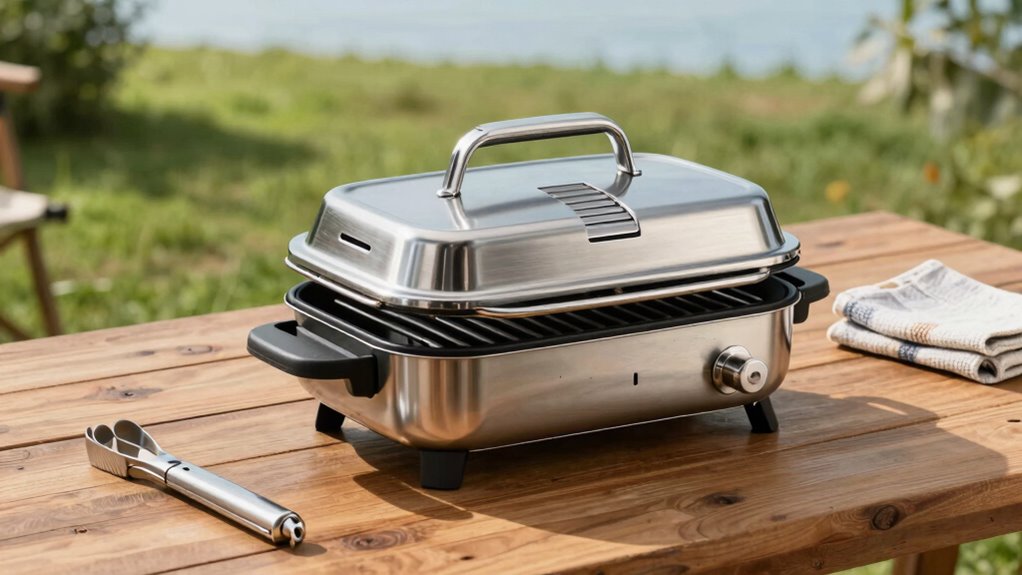

When choosing a portable grill, focus on your main outdoor activities and how many people you’ll typically cook for. Think about size, weight, and fuel type to match your setup, whether it’s camping, tailgating, or backyard grilling. Avoid extra features you won’t use, and pick a model that offers the right heat control for your cooking style. If you want to find the perfect fit without overbuying, keep exploring for helpful tips that guarantee you get just what you need.

Get travel and outdoor gear delivered free — and shop member deals
- Fast, free delivery on millions of items
- Access to Prime Big Deal Days deals on October 6–7
- Prime Video, Amazon Music and more included
Key Takeaways
- Assess your typical cooking needs, such as meal size, complexity, and preferred cooking techniques, to choose appropriate features.
- Determine the most important fuel type for your lifestyle—gas, charcoal, or propane—for convenience and flavor.
- Consider portability features like weight, carrying handles, and size to match your outdoor activity frequency and location.
- Match grill size and surface area to your usual number of diners and cooking style to avoid unnecessary extra capacity.
- Prioritize essential features over extras, focusing on what enhances your outdoor cooking experience without overbuying.
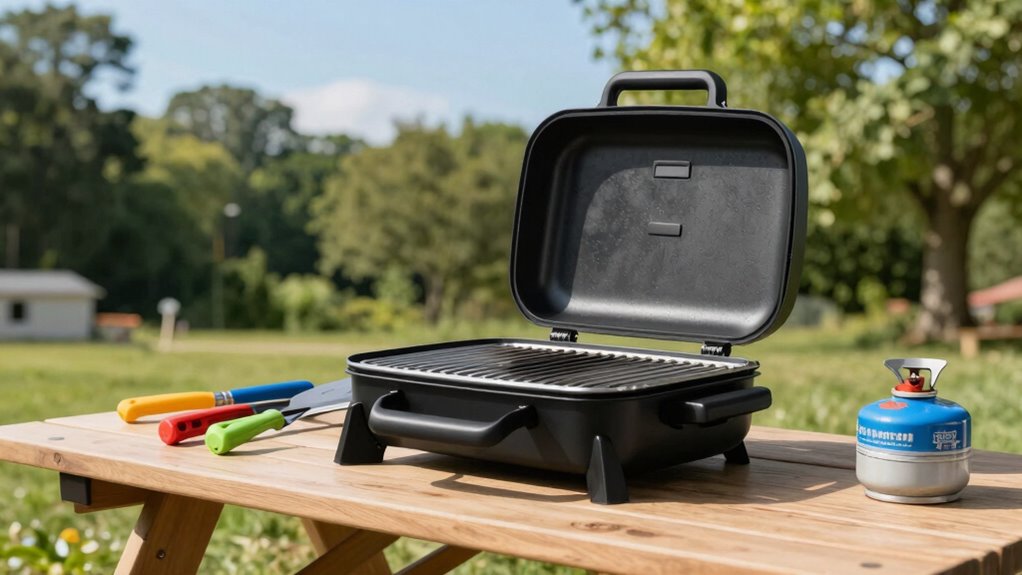
Choosing the right portable grill can make all the difference whether you’re tailgating, camping, or hosting a backyard get-together. You want a grill that fits your needs without overwhelming you with unnecessary features or size. To do that, start by considering how you’ll use it most often. Will you be cooking for two or a dozen? Do you prefer quick, simple meals or more involved cooking? Answering these questions helps narrow your options. Remember, outdoor accessories like portable utensils, collapsible prep stations, or compact storage containers can complement your grill, so think about what extras you might need to make your outdoor cooking smooth and enjoyable.
Choose a portable grill that fits your cooking style and outdoor needs for a seamless grilling experience.
Next, pay attention to cooking techniques. Different grills excel at different styles—some are better for direct heat searing, while others are ideal for slow, indirect cooking. If you favor quick grilling of burgers and steaks, a small gas or charcoal grill with a decent heat output will serve you well. If you’re into smoking or slow-roasting, look for models with adjustable heat controls and larger cooking surfaces. Understanding your preferred cooking techniques ensures you pick a grill that matches your culinary style, saving you from frustration later on. Additionally, considering air quality and ventilation solutions can help keep your outdoor space comfortable and safe, especially when cooking with charcoal or gas. Proper ventilation is important not only for safety but also to maintain a pleasant outdoor environment.
Size and portability matter, of course. If you’re often on the go, choose a lightweight, compact model that’s easy to carry and store. If you mainly grill at home or in one location, a slightly larger grill with more cooking space might be more practical. Think about how you’ll transport it—will it fit in your car trunk? Does it come with a carrying case or handle? These features can make your outdoor experience more convenient. When selecting a portable grill, also consider fuel efficiency, which can impact how often you’ll need to refill or replace fuel sources and overall convenience. In addition, understanding ventilation solutions can further enhance your safety and comfort during outdoor cooking sessions.
Fuel type also plays a key role. Gas grills tend to heat quickly and offer precise temperature control, making them great for versatile cooking techniques. Charcoal grills provide a smoky flavor that’s hard to replicate and are favored for traditional grilling styles. Propane models combine convenience with good heat control, but the choice depends on how much effort you’re willing to put into setup and cleaning.
Ultimately, you want a portable grill that aligns with your cooking habits, outdoor accessories, and convenience needs. Avoid the temptation to buy the biggest or most feature-rich model if you rarely need those features. Instead, focus on what will truly enhance your outdoor cooking experience. By keeping your specific needs in mind, you’ll select a grill that’s perfect for your adventures without buying more than you need.
As an affiliate, we earn on qualifying purchases.
Frequently Asked Questions
What Is the Average Lifespan of a Portable Grill?
A portable grill typically lasts around 3 to 5 years, depending on factors like grill material and how well you maintain it. If your grill is made from durable stainless steel, it’ll likely endure longer, especially with proper cleaning. Temperature control features also help prevent damage from overheating, extending its lifespan. Regularly checking for rust and replacing worn parts can keep your portable grill in great shape for years to come.
How Much Does a Portable Grill Typically Weigh?
A portable grill typically weighs between 10 to 30 pounds, making it easy to carry along with your cooking accessories and fuel types. If you prefer lightweight options, look for models made from aluminum or lightweight steel, perfect for camping or tailgating. Consider how you’ll transport it, and choose a weight that balances portability with cooking capacity, so you won’t struggle carrying or storing it during your outdoor adventures.
Are Portable Grills Suitable for All Types of Food?
You can cook a variety of foods on a portable grill, but it’s a bit of a mixed bag. While they excel with burgers, hot dogs, and veggies, some grills may not handle delicate items like fish or certain baking techniques well. To maximize food versatility, choose a grill with adjustable heat settings and versatile grates. This way, you’re not limited in your cooking techniques, and your meals stay delicious.
Can Portable Grills Be Used Indoors Safely?
You can use portable grills indoors if you prioritize indoor safety and ventilation requirements. Make sure your space has proper ventilation to prevent smoke buildup and carbon monoxide poisoning. Use grills specifically designed for indoor use, typically electric models, and keep windows open or use exhaust fans. Never use charcoal or propane grills inside, as they pose serious fire and health risks. Always follow manufacturer instructions for safe indoor grilling.
What Maintenance Is Required for Portable Grills?
Think of your grill as a trusted friend that needs care. You should regularly follow cleaning routines, like wiping down surfaces and removing grease after each use. Storage tips matter too; keep it in a dry, sheltered spot to prevent rust. Also, check for any loose parts or corrosion periodically. Proper maintenance guarantees your portable grill stays in top shape, ready for your next outdoor adventure or impromptu cookout.
compact charcoal grill with heat control
As an affiliate, we earn on qualifying purchases.
As an affiliate, we earn on qualifying purchases.
Conclusion
Choosing the right portable grill means considering your cooking needs and how often you’ll use it. For instance, if you enjoy weekend camping trips, a compact charcoal grill might be perfect. On the other hand, if you host tailgate parties regularly, a propane grill with more features could be better. By matching the grill type to your lifestyle, you’ll avoid overspending and end up with a device that truly enhances your outdoor cooking adventures.
As an affiliate, we earn on qualifying purchases.
small outdoor grill with carrying case
As an affiliate, we earn on qualifying purchases.
As an affiliate, we earn on qualifying purchases.
Halloween Picks
halloween
As an affiliate, we earn on qualifying purchases.