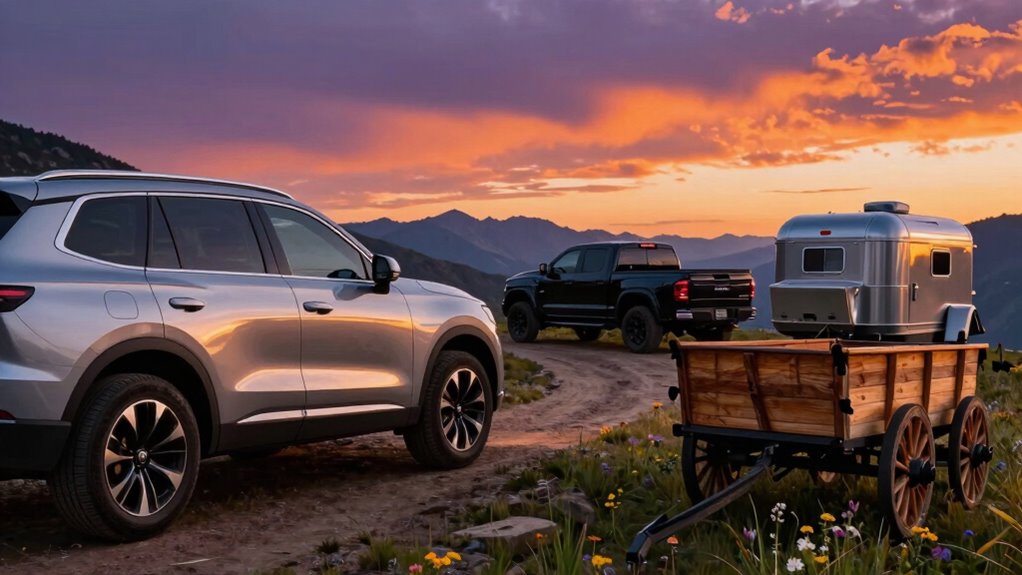

When choosing between an SUV, wagon, truck, or trailer, focus on your travel priorities like fuel efficiency, space, and towing needs. SUVs and wagons are great for long-distance comfort and fuel economy, while trucks excel at hauling heavy loads. Trailers expand your storage and camping options but impact handling and fuel use. Consider your destinations and how you travel—more insights can help you pick the best fit for your style.

Get travel and outdoor gear delivered free — and shop member deals
- Fast, free delivery on millions of items
- Access to Prime Big Deal Days deals on October 6–7
- Prime Video, Amazon Music and more included
Key Takeaways
- Assess your primary needs: fuel efficiency, cargo capacity, passenger space, or towing requirements.
- Consider your typical travel destinations and whether maneuverability or off-road capability is essential.
- Match vehicle size and features to your comfort preferences for long-distance journeys.
- Determine if you need to tow trailers or heavy loads, influencing the choice of trucks or SUVs.
- Evaluate how often you require additional gear space or mobile accommodations for planning trips.
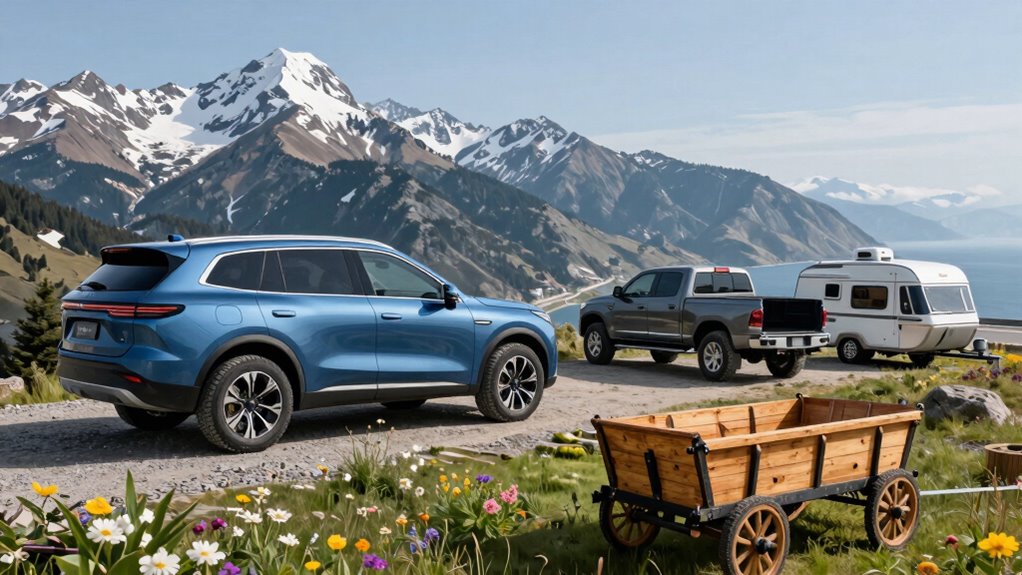
Are you unsure how to pick the right vehicle for your next trip? The choice can seem overwhelming with options like SUVs, wagons, trucks, and trailers, but understanding your travel needs makes it easier. First, consider what matters most—whether it’s fuel efficiency or interior comfort. If saving on fuel costs is a priority, a wagon or a smaller SUV might be your best bet. Wagons are known for their excellent fuel economy, especially on long highway drives, making them ideal if you want to stretch your budget. They also tend to have a lower profile, which helps with handling and parking in tight spaces. On the other hand, some compact SUVs offer comparable fuel efficiency with added interior comfort, providing a bit more space and features for a comfortable ride.
Choosing the right vehicle depends on your needs—fuel efficiency, comfort, or capacity.
Interior comfort plays a *considerably* significant role when choosing a vehicle, especially if you plan to spend hours on the road. SUVs generally provide more space for passengers and cargo, along with adjustable seats and advanced climate controls, making long trips more enjoyable. Wagons also excel in this area, offering a spacious cargo area with rear seats that fold flat, giving you flexibility for both passengers and gear. If your journey involves hauling heavy loads or towing, trucks come into the picture. They’re built for durability, with sturdy interiors and powerful engines, though they might sacrifice some fuel efficiency and have a larger footprint that affects maneuverability. Additionally, vehicle versatility can be a crucial factor depending on your specific needs. An understanding of vehicle types and their capabilities can help you make a more informed choice tailored to your travel style. Recognizing how different vehicle features align with your needs can also help you optimize your overall travel experience. Incorporating fuel efficiency considerations into your decision-making process can further ensure you select a vehicle that aligns with your budget and travel plans.
Trailers, however, are a different story entirely. They are ideal if you’re traveling with large equipment, boats, or camper setups. While trailers don’t have an interior for passengers, they expand your travel possibilities by allowing you to bring along more gear or even a mobile living space. When considering trailers, think about ease of towing, the size of the trailer, and how it impacts your vehicle’s fuel consumption. Towing a trailer can *notably* impact fuel efficiency, so weigh this against your need for comfort and capacity. Additionally, understanding the differences in vehicle types can help you make a more informed choice tailored to your travel style. Recognizing how each vehicle type aligns with your specific requirements can significantly improve your overall travel experience. Moreover, researching hauling capacity can provide valuable insights into what each vehicle can handle safely and efficiently for your trips.
best fuel-efficient SUVs for long road trips
As an affiliate, we earn on qualifying purchases.
As an affiliate, we earn on qualifying purchases.
Frequently Asked Questions
Which Vehicle Type Offers the Best Fuel Efficiency for Long Trips?
For long trips, electric options like fuel-efficient electric SUVs are your best bet, offering impressive mileage and lower emissions. They often come with luxury features that make your journey comfortable. Hybrids are also a good choice if you prefer traditional vehicles with better fuel economy. Trucks and trailers tend to consume more fuel, so if efficiency’s your priority, stick to electric or hybrid vehicles with advanced technology for peak performance.
How Do Towing Capacities Vary Among SUVS, Trucks, Wagons, and Trailers?
Think of towing capacities like Hercules’ strength—varies greatly among vehicles. SUVs typically offer moderate towing tech, handling up to 5,000 pounds. Trucks boast the highest capacities, often surpassing 12,000 pounds, perfect for heavy loads. Wagons and trailers tend to have more specialized, sometimes limited, towing abilities. Your vehicle’s interior comfort and towing tech influence how much weight you can safely haul, so choose accordingly for your travel needs.
Are Certain Vehicles Better for Off-Road Adventures?
Yes, certain vehicles excel off-road terrain due to their vehicle durability and design features. SUVs and trucks typically perform better because they’re built for rugged conditions, offering higher ground clearance, durable suspensions, and four-wheel drive options. Wagons and trailers usually aren’t suited for tough off-road adventures. If you want a reliable off-road vehicle, go for a rugged SUV or truck with proven off-road capabilities and sturdy construction.
What Are the Safety Considerations for Each Vehicle Type?
Think of each vehicle as a shield protecting your journey. SUVs often boast advanced interior safety features, providing a cozy fortress for passenger comfort. Wagons focus on stability and visibility, reducing collision risks. Trucks might have sturdy frames but need extra caution with blind spots. Trailers require secure connections and awareness of weight distribution. Prioritize vehicle safety features, always wear your seatbelt, and stay alert to keep your adventure safe.
How Do Maintenance Costs Compare Across Different Travel Vehicles?
Maintenance costs vary across vehicle types, impacting your budget. SUVs and trucks often have higher expenses due to complex vehicle customization and more parts needing upkeep. Wagons typically cost less to maintain, while trailers usually have lower ongoing costs but might need frequent inspections. Insurance premiums also differ, with trucks and SUVs generally costing more. Consider these factors to choose a vehicle that fits your travel style and budget effectively.
cargo trailer for camping and travel
As an affiliate, we earn on qualifying purchases.
As an affiliate, we earn on qualifying purchases.
Conclusion
Choosing the right vehicle is like selecting the perfect vessel for your journey. Whether an SUV, wagon, truck, or trailer, each symbolizes a chapter of adventure waiting to unfold. Trust your instincts, embrace the freedom of the open road, and let your chosen vehicle carry your dreams forward. Remember, it’s not just about the miles traveled, but the memories etched into your soul along the way. Your adventure begins with the vehicle that speaks to your heart.
heavy-duty truck for towing and hauling
As an affiliate, we earn on qualifying purchases.
As an affiliate, we earn on qualifying purchases.
folding wagon for outdoor adventures
As an affiliate, we earn on qualifying purchases.
As an affiliate, we earn on qualifying purchases.
Halloween Picks
halloween
As an affiliate, we earn on qualifying purchases.