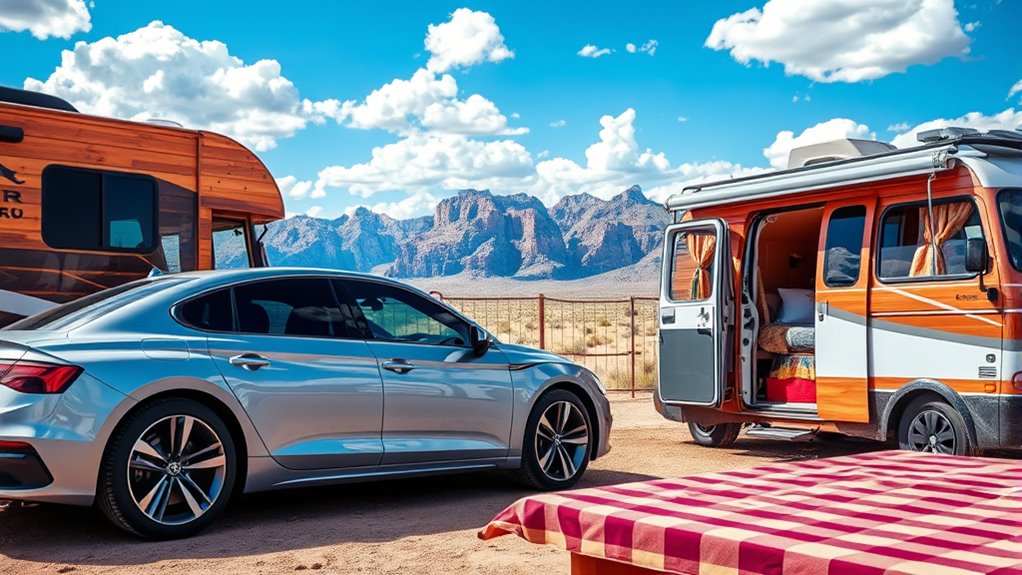

To choose the right road trip vehicle, consider your destination, the number of travelers, and your budget. A car works best for short trips and solo or couple adventures, offering easy parking and fuel efficiency. RVs and campervans provide convenience for longer or remote trips, combining home and travel but requiring more maintenance and insurance. Think about your travel style and needs; you’ll find helpful tips if you continue exploring.
Key Takeaways
- Consider your trip duration, destination, and number of travelers to determine the most suitable vehicle type.
- Evaluate maintenance needs and ensure thorough pre-trip inspections for safety and reliability.
- Match your vehicle choice with your budget, comfort preferences, and desired travel experience.
- Secure appropriate travel insurance covering vehicle-specific issues and roadside assistance.
- Prioritize vehicle comfort, fuel efficiency, and parking ease based on your planned routes and activities.
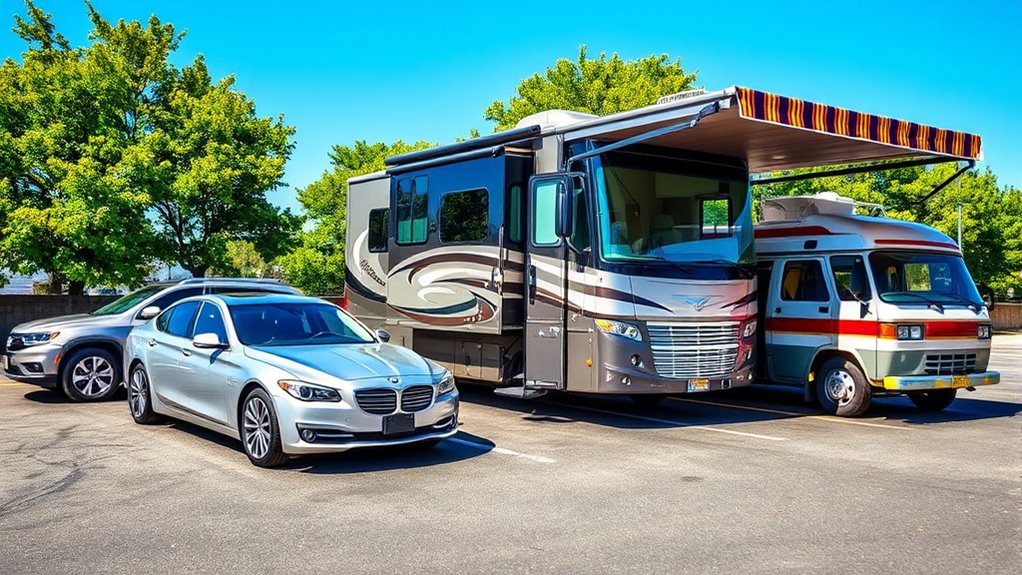
Planning a road trip starts with choosing the right vehicle, as it sets the foundation for a comfortable and enjoyable journey. When selecting between a car, RV, or campervan, you need to consider your destination, the number of travelers, and your budget. Each option offers distinct advantages and challenges, so think about how you’ll maintain your vehicle and what kind of travel insurance you’ll need to protect your trip. Proper vehicle maintenance is vital regardless of your choice, ensuring safety and minimizing breakdowns. For example, if you’re leaning toward an RV or campervan, you’ll want to check the mechanical condition thoroughly before hitting the road, including tires, brakes, and engine health. Having a reliable vehicle reduces stress and keeps your trip on track. Additionally, understanding your travel insurance options is essential—some policies cover breakdowns or roadside assistance, which can be a lifesaver on long trips. Regular vehicle maintenance also helps prevent unexpected issues and prolongs the lifespan of your vehicle.
Choosing the right vehicle and maintaining it ensures a safe, enjoyable road trip.
A car is typically ideal if you’re traveling solo or as a couple, especially for shorter trips or exploring cities and scenic routes. It’s easier to park, more economical on fuel, and generally requires less maintenance upfront. Still, you should guarantee your vehicle is up to date with regular vehicle maintenance, including oil changes and tire checks, to avoid surprises. For added peace of mind, invest in travel insurance that covers medical emergencies, trip cancellations, or accidents. This way, if something unexpected happens, you’ll have support and financial protection.
On the other hand, an RV or campervan offers a different experience altogether. It provides accommodation and transportation in one, making it perfect for extended trips or exploring remote areas. However, these larger vehicles demand more maintenance, especially for engine health and systems like plumbing and electrical setups. Before starting out, you should verify that your RV is thoroughly checked and insured appropriately. Travel insurance that covers RV-specific issues can save you from costly repairs or lodging expenses if something goes wrong. Plus, consider coverage for roadside assistance tailored to larger vehicles, so you’re prepared if you encounter mechanical issues far from help.
Choosing the right vehicle ultimately hinges on your travel style, but no matter what you pick, prioritizing vehicle maintenance and securing comprehensive travel insurance will help you enjoy a smooth, worry-free road trip. Proper preparation ensures that minor hiccups don’t derail your adventure, allowing you to focus on making memories along the way. Whether you’re cruising in a compact car or exploring in a fully-equipped campervan, the right vehicle combined with good planning makes all the difference.
Frequently Asked Questions
Which Vehicle Type Offers the Best Fuel Efficiency?
A car generally offers the best fuel efficiency, making it ideal if you’re concerned about gas consumption. Its smaller size and lighter weight reduce fuel consumption, helping you save on fuel costs during your trip. RVs and campervans tend to have lower fuel economy because of their larger size and heavier weight. If maximizing fuel economy is your priority, a compact car is your best choice for a road trip.
How Do Maintenance Costs Compare Among Cars, RVS, and Campervans?
Think of your vehicle as a wise old sage—its maintenance costs tell a story. Cars usually have lower maintenance and insurance premiums, making them cheaper to upkeep. RVs and campervans, akin to aging castles, face higher depreciation rates and costly repairs due to their size and complexity. You’ll spend more on maintenance, insurance, and repairs over time, so choose wisely based on your budget and travel style.
What Safety Features Are Most Important for Long Road Trips?
For long road trips, prioritize safety features like adaptive cruise control, lane departure warnings, and backup cameras to stay alert and avoid accidents. You should also focus on emergency preparedness, such as having a first aid kit and roadside assistance tools. Comfort enhancements like adjustable seats and climate control help reduce fatigue. These features guarantee you stay safe, comfortable, and ready for unexpected situations on your journey.
Can I Customize or Upgrade My Chosen Vehicle?
Yes, you can customize or upgrade your chosen vehicle with aftermarket modifications and interior upgrades. You might add new seat covers, install better sound systems, or enhance storage solutions to suit your travel needs. Always check compatibility and warranty implications before making changes. Upgrading your vehicle can boost comfort, functionality, and safety, making your road trips more enjoyable and personalized.
How Do Parking and Storage Considerations Differ?
Parking challenges vary depending on your vehicle type; cars fit into most parking spots easily, while RVs and campervans often require larger spaces or designated parking areas. Storage options also differ: cars can be kept in standard garages or parking lots, but RVs and campervans need more extensive storage solutions, like specialized facilities or off-site storage. Consider your travel plans and available parking facilities when choosing the best vehicle for your trip.
Conclusion
Choosing the right vehicle makes all the difference in your adventure. Whether you opt for a car, RV, or campervan, think about your comfort, budget, and trip length. Did you know that over 60% of road trip travelers say their vehicle choice directly impacts their overall experience? Picking wisely guarantees you create unforgettable memories without unnecessary stress. So, trust your needs, plan ahead, and hit the open road—your perfect journey awaits!