
To save your battery life, make sure your DC-DC charger is properly set with the correct voltage and current limits based on your battery’s chemistry. Adjust turn-on and turn-off thresholds to prevent over- or under-discharging, and use temperature compensation to avoid damage from environmental changes. Set charging profiles suited to your battery type, and use delay and pulse features to reduce wear. If you want to learn how fine-tuning these settings can extend your system’s lifespan, keep exploring.
Open a free Amazon Business account
Business pricing, bulk buying and tax-exempt orders.
As an affiliate, we earn on qualifying purchases.
Key Takeaways
- Match charger voltage and current settings precisely to your battery chemistry to prevent overcharging or undercharging.
- Set appropriate turn-on/turn-off voltage thresholds to avoid deep discharges and overvoltage damage.
- Regularly review and adjust charging parameters as batteries age or seasonal conditions change.
- Use correct charging profiles and temperature compensation to optimize performance and extend battery lifespan.
- Enable delay and pulse features to reduce internal stress and improve overall system efficiency.
DC-DC charger with adjustable voltage and current
As an affiliate, we earn on qualifying purchases.
As an affiliate, we earn on qualifying purchases.
Why Proper DC-DC Charger Settings Are Key to Battery Longevity
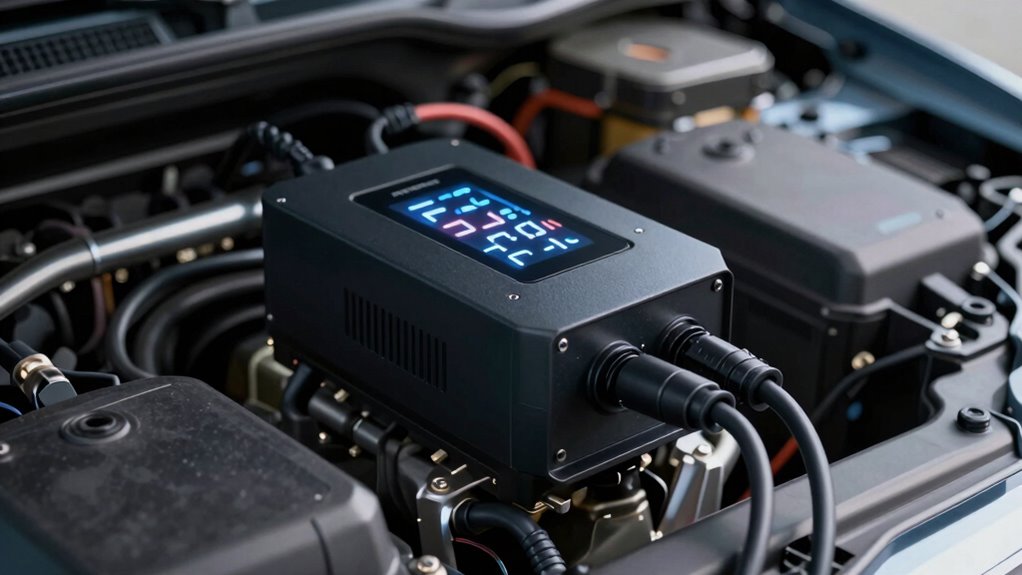
Proper DC-DC charger settings are essential because they directly impact your battery’s lifespan. You need to take into account your battery chemistry to set the correct charging parameters, as different types—like lithium-ion or lead-acid—require specific charging algorithms. If your charger doesn’t match these requirements, you risk overcharging or undercharging, leading to reduced capacity and early failure. Accurate settings ensure your battery receives ideal voltage and current levels, promoting healthy chemical reactions inside the cells. This tailored approach minimizes stress on your battery, prevents overheating, and preserves its overall health. Additionally, understanding battery maintenance best practices can further extend your battery’s life. Recognizing the importance of outdoor environment factors, such as temperature fluctuations, can also influence optimal charger settings. Maintaining appropriate charging conditions and adjusting for temperature effects helps prevent battery degradation over time, ensuring consistent performance. By paying close attention to these details, you maximize longevity and performance, ensuring your investment remains reliable over time. Proper settings are truly the foundation for a long-lasting, efficient power system.
battery management system for lithium-ion batteries
As an affiliate, we earn on qualifying purchases.
As an affiliate, we earn on qualifying purchases.
Understanding How Your Charger Affects Battery Life
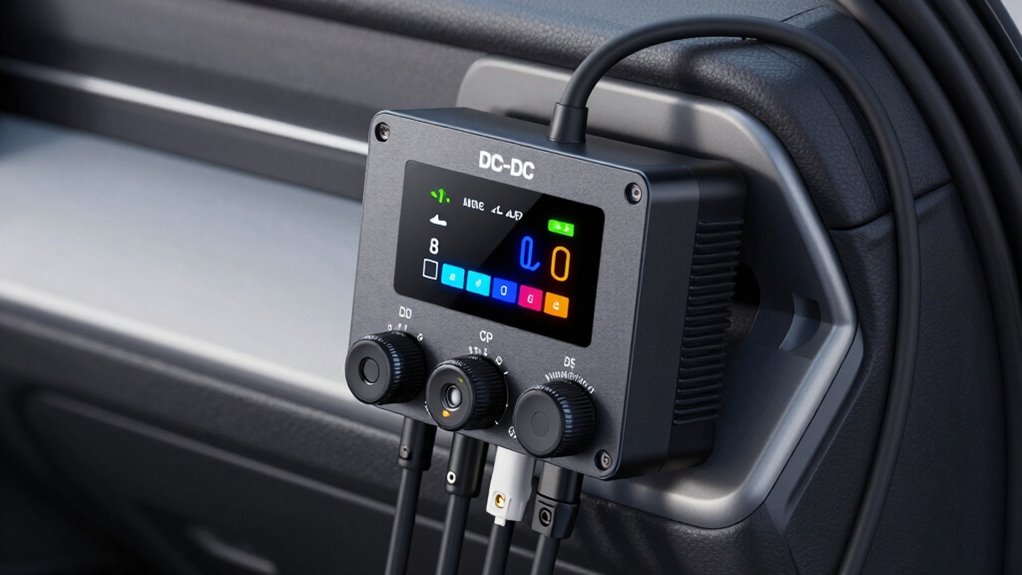
Your charger’s voltage settings directly influence how long your battery lasts, so setting it too high can cause unnecessary wear. Proper current regulation guarantees your battery charges efficiently without overheating or damage. Understanding these factors helps you optimize your charger for maximum battery lifespan. A wide color gamut can also improve the visual experience by providing richer, more vibrant colors. Being aware of potential manipulation tactics can also help you make informed decisions about your device management. Additionally, choosing a charger with the appropriate pressure and flow control can prevent overcharging and extend your battery’s overall health. Incorporating smart charging technologies that adapt to your usage patterns can further enhance battery longevity and safety. Recognizing voltage regulation as a key component can assist in maintaining optimal battery performance over time.
Charging Voltage Impact
Have you ever wondered how the voltage setting on your charger influences your battery’s lifespan? Higher voltage levels can push your battery to charge faster but may strain its insulation, risking damage over time. Conversely, lower voltages are gentler, extending battery life. It’s crucial to verify charger compatibility to avoid overvoltage, which can cause overheating or degrade battery components. Proper voltage settings help maintain peak performance without compromising safety. Additionally, understanding your system’s filter sizing/flow ensures efficient charging and prevents unnecessary strain on your batteries. Being aware of electrical safety practices can further protect both your system and your batteries from potential hazards. Ensuring your charger is correctly configured according to battery specifications is essential for long-term durability. Moreover, staying informed about voltage regulation practices can help optimize your system’s efficiency and longevity. Regularly monitoring your battery’s temperature can also prevent overheating and extend its overall lifespan.
Current Regulation Effects
Ever wonder how the current your charger delivers impacts your battery’s longevity? The amount of current directly influences your battery’s capacity and overall health. Delivering too much current can cause overheating and faster degradation, reducing the battery’s effective capacity over time. Conversely, a regulated, ideal current ensures better charging efficiency, helping your battery last longer. Proper current regulation minimizes stress on the battery cells, preventing premature aging. When your charger maintains consistent current levels, it supports a healthier charge cycle, preserving capacity and performance. Adjusting current settings carefully can extend your battery’s lifespan while maintaining efficient charging. Understanding how current regulation affects your battery helps you make smarter choices, ensuring you get the most out of your battery’s capacity without sacrificing its health. Additionally, battery management practices guided by responsible energy use can further extend your battery’s lifespan, especially when considering factors like temperature control and optimal charging environments. Proper wiring practices and managing heat buildup in your charging setup also play a crucial role in maintaining battery health over time.
As an affiliate, we earn on qualifying purchases.
How to Set Voltage and Current Limits for Safe Charging
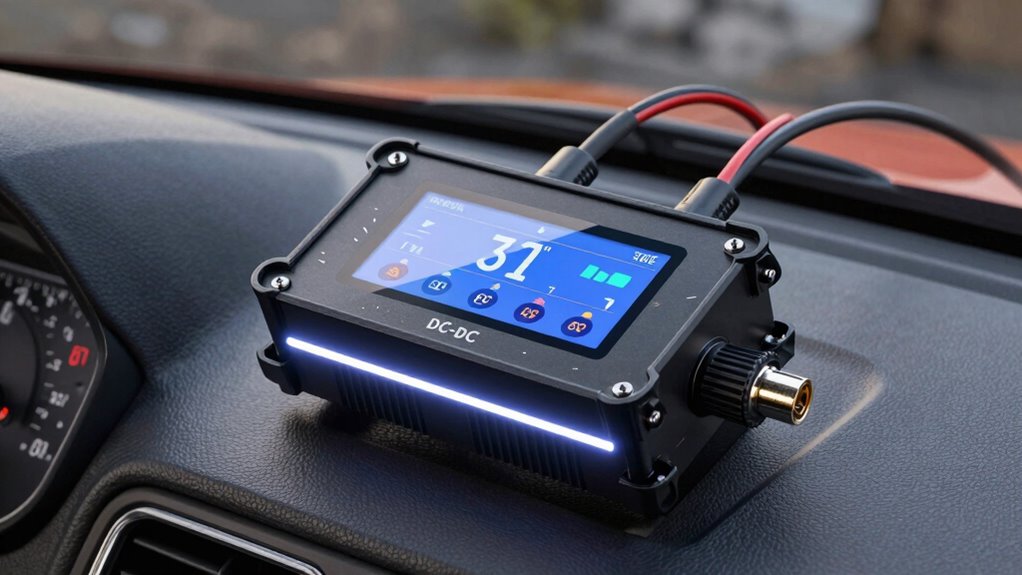
Setting appropriate voltage and current limits is essential for safe and efficient charging. You want to match these limits to your battery’s capacity to prevent damage and optimize charging speed. Too high, and you risk overheating or shortening your battery’s life; too low, and charging becomes unnecessarily slow. Incorporating astrological insights can even influence how you approach your charging routines, aligning your energy patterns with your device’s needs. To set these limits effectively, consider:
- Knowing your battery’s maximum voltage and current ratings
- Adjusting settings to stay within manufacturer recommendations
- Balancing charging speed with safety margins
- Monitoring temperature and voltage during charging
- Regularly reviewing and updating limits based on battery aging
- Using specialized kitchen gear like temperature sensors or timers can help maintain optimal charging conditions. Understanding style variations in charging settings can also optimize performance and extend battery life. Ensuring your power storage solutions comply with extension cord standards can further enhance safety and reliability during charging. Properly calibrated limits ensure quick yet safe charging, extending your battery’s lifespan while avoiding potential hazards.
smart battery charger for lead-acid batteries
As an affiliate, we earn on qualifying purchases.
As an affiliate, we earn on qualifying purchases.
Choosing the Right Charging Profile for Your Battery Type

Choosing the right charging profile for your battery type guarantees you maximize performance and longevity. Different battery chemistries, like lithium-ion, AGM, or gel, require specific charging algorithms to prevent damage and extend life. For example, lithium-ion batteries benefit from profiles that reduce voltage and current gradually, avoiding overcharge. AGM and gel batteries often need slower, more controlled charging to prevent sulfation or overheating. When selecting a charging profile, consider your battery’s chemistry and follow the manufacturer’s recommendations. Proper profiles ensure your charger delivers the correct voltage, current, and termination points. By matching the profile to your battery, you minimize risks of overheating, capacity loss, or premature failure, ultimately keeping your batteries healthier and performing at their best longer. Paying attention to charging algorithms helps optimize your battery’s lifespan and performance, especially since battery management systems can vary significantly between types.
Adjusting Temperature Compensation to Protect Your Batteries
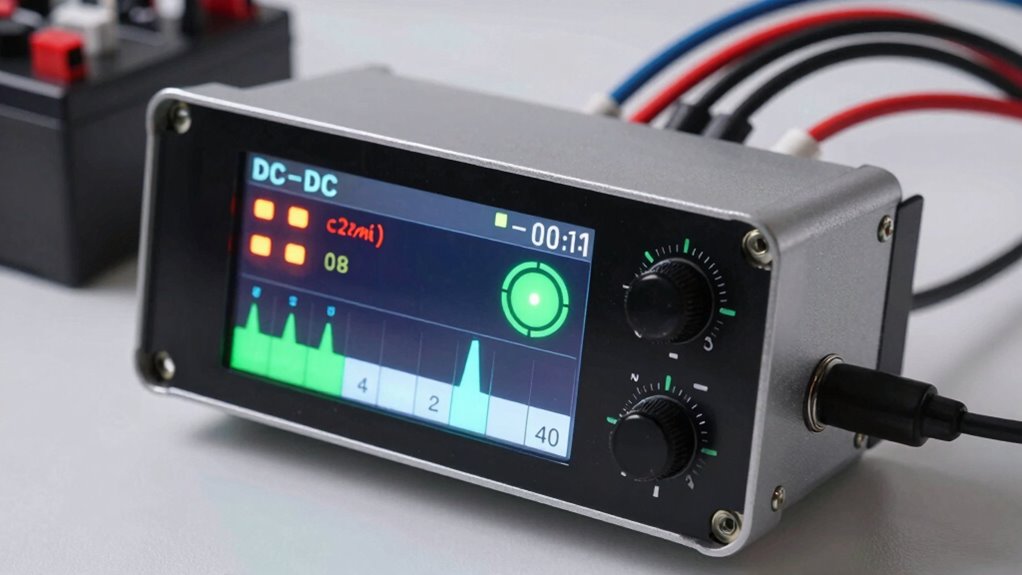
Temperature variations can crucially affect your battery’s performance and lifespan. By properly adjusting the temperature compensation settings, you guarantee your charger responds accurately to these changes. This helps protect your batteries from overcharging or undercharging caused by temperature fluctuations.
Impact of Temperature Variations
When the environment around your batteries changes, their charging needs also shift, which can impact their longevity and performance. Temperature fluctuations influence how batteries charge and discharge, affecting solar efficiency and the overall environmental impact. If you don’t adjust for temperature variations, you risk overcharging in cold weather or undercharging during heatwaves, shortening battery life. Proper temperature compensation guarantees consistent performance regardless of conditions.
- Maintains ideal charging rates across temperature ranges
- Extends battery lifespan by preventing thermal stress
- Preserves solar efficiency by adapting to environmental shifts
- Reduces environmental impact through efficient energy use
- Ensures safer operation in varying climates
Adjusting for temperature variations helps protect your investment and supports sustainable energy practices.
Proper Compensation Settings
Are you aware of how proper temperature compensation settings can safeguard your batteries? Adjusting these settings guarantees your charger adapts to changes in ambient temperature, protecting your battery chemistry from damage. Different battery chemistries, like lithium or lead-acid, require specific compensation values to prevent overcharging or undercharging. Correct compensation aligns with your charging algorithms, ensuring they operate efficiently across temperature variations. If you set compensation too high or too low, you risk shortening your battery’s lifespan or reducing performance. Regularly review and fine-tune these settings based on your battery type and environmental conditions. This proactive approach helps maintain ideal charge levels, minimizes wear, and extends your battery’s overall life. Proper temperature compensation is essential for safe, efficient, and long-lasting power management.
Balancing and Equalizing Your Batteries for Longer Life
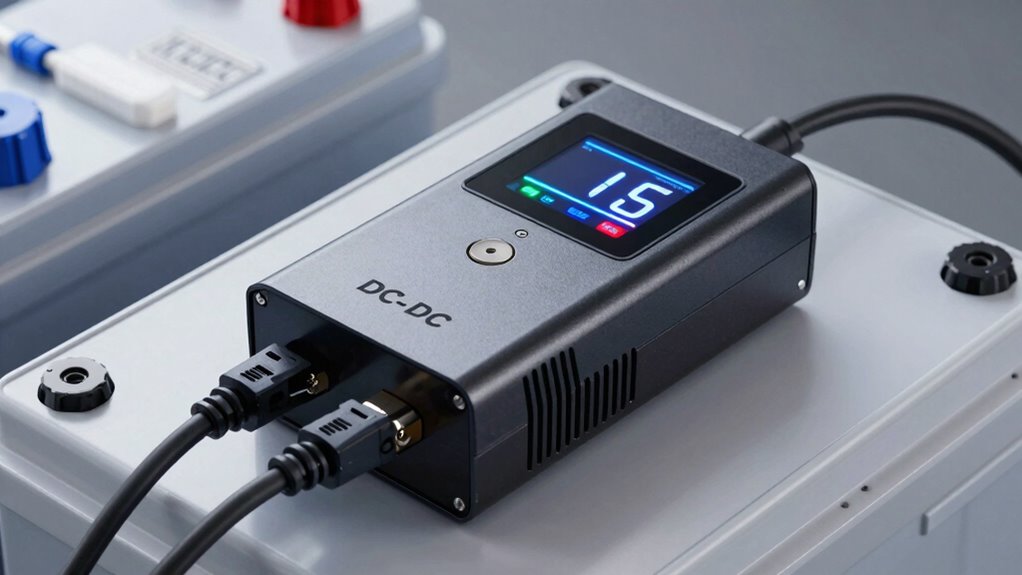
Balancing and equalizing your batteries is essential for maximizing their lifespan and guaranteeing reliable performance. Different battery chemistries require specific charging algorithms to prevent uneven charge levels, which can lead to capacity loss or damage. Proper balancing helps maintain consistent voltage across individual cells, reducing stress and prolonging life. Equalizing involves intentionally overcharging slightly to correct imbalances and remove sulfates or contaminants. Regularly balancing and equalizing your batteries ensures they operate efficiently and safely, especially in multi-cell setups. Use charging algorithms designed for your battery chemistry to optimize these processes and avoid under- or overcharging. Proper management reduces degradation and extends overall battery life.
- Prevents capacity loss from uneven charge levels
- Minimizes internal stress on individual cells
- Removes sulfates and contaminants effectively
- Ensures consistent voltage across cells
- Extends overall battery life and performance
Setting Turn-On and Turn-Off Voltages Correctly
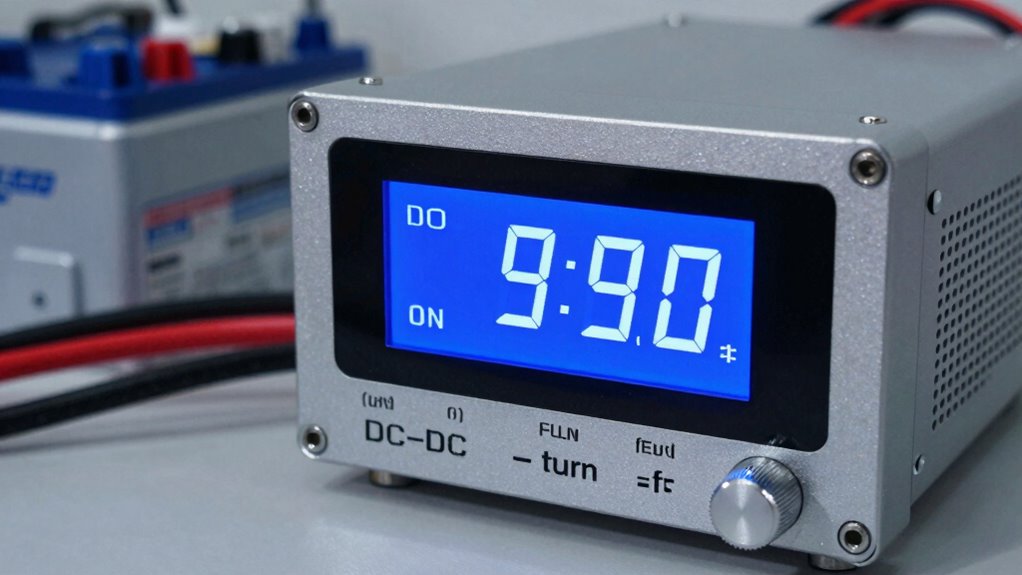
Setting the right turn-on and turn-off voltages is vital for your system’s performance. When you choose ideal voltage thresholds, you prevent battery draining and protect your batteries from damage. Properly configured, these settings guarantee your system stays reliable and efficient.
Optimal Voltage Thresholds
Have you ever wondered how to guarantee your DC-DC charger switches on and off at the right times? Setting ideal voltage thresholds is key. You need to match your voltage settings with your battery chemistry and charging algorithms to prevent overcharging or deep discharging. Proper thresholds ensure efficient charging and extend battery life.
Consider these points:
- Use voltage thresholds aligned with your battery’s chemistry for optimal performance.
- Adjust turn-on and turn-off points based on charging algorithms to avoid unnecessary cycling.
- Monitor voltage fluctuations that could indicate potential issues.
- Set conservative thresholds to prevent battery stress.
- Regularly review voltage settings as your batteries age or change chemistries.
Getting these thresholds right helps maintain battery health and maximizes lifespan.
Prevents Battery Draining
Properly configuring your turn-on and turn-off voltage points is essential for preventing your battery from draining unnecessarily. Accurate battery calibration ensures your charger recognizes the right voltage levels, avoiding premature shutdowns or over-discharge. Set the turn-on voltage high enough to let your battery fully charge without risking damage, while the turn-off voltage should be low enough to conserve power without risking deep discharge. This balance optimizes power conservation and extends your battery’s lifespan. Consistent calibration helps your system accurately detect voltage thresholds, reducing the chance of unintended drain. By carefully adjusting these settings, you prevent unnecessary battery depletion, ensuring your power stays available when you need it most. Proper voltage management is a key step in maintaining battery health and maximizing energy efficiency.
Ensures System Reliability
To guarantee your system remains dependable, accurately configuring the turn-on and turn-off voltage points is essential. Proper settings prevent undervoltage or overvoltage situations that could damage your battery or reduce efficiency. Consider your battery chemistry, as different types have specific voltage thresholds; for example, lithium-ion batteries require precise cut-off points. Ensuring compatibility with your solar setup is also key—solar fluctuations can cause voltage swings, so set your thresholds accordingly. Correctly configured voltages maintain system stability and extend battery lifespan.
- Match voltage settings to your battery chemistry for ideal performance
- Adjust thresholds to accommodate solar input variability
- Prevent unexpected shutdowns or damage from voltage spikes
- Maintain system reliability during fluctuating energy sources
- Protect your investment by ensuring consistent, safe operation
Using Delay and Pulse Features to Reduce Wear
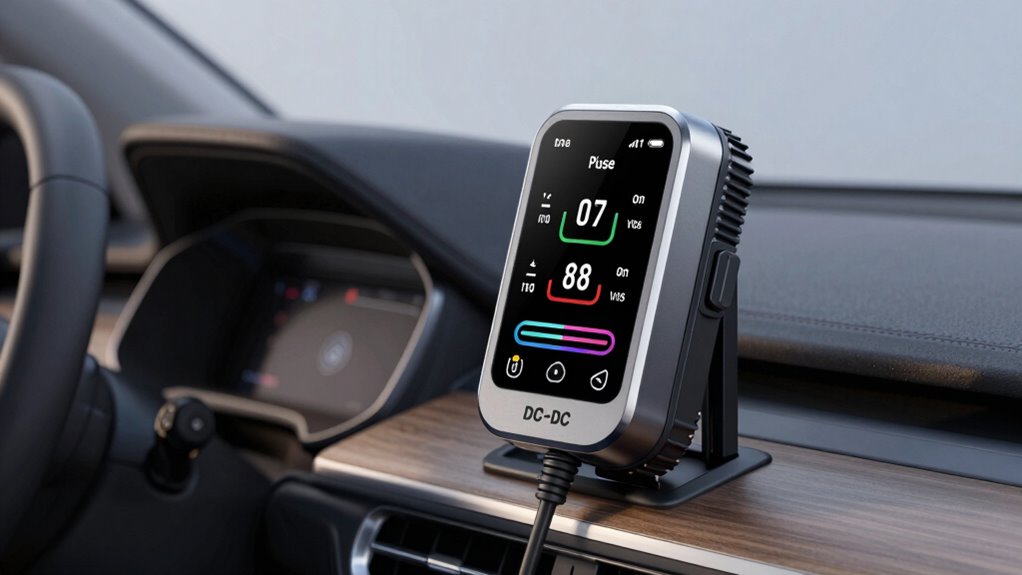
Using delay and pulse features can considerably reduce wear on your DC-DC charger by preventing rapid on-off cycles. Pulse optimization ensures the charger switches smoothly, minimizing stress on internal components. Incorporating delay benefits allows the system to stabilize before shutting down or restarting, which reduces thermal and mechanical strain. By setting appropriate delays, you prevent unnecessary cycling caused by fluctuating input voltages or load conditions. Pulsing also helps manage power more efficiently, avoiding constant on-off toggling that accelerates component fatigue. Adjusting these features guarantees your charger operates within peak parameters, extending its lifespan. Overall, leveraging delay and pulse settings helps maintain system health, reduces maintenance needs, and enhances reliability in the long run.
Monitoring and Fine-Tuning Charger Settings Over Time
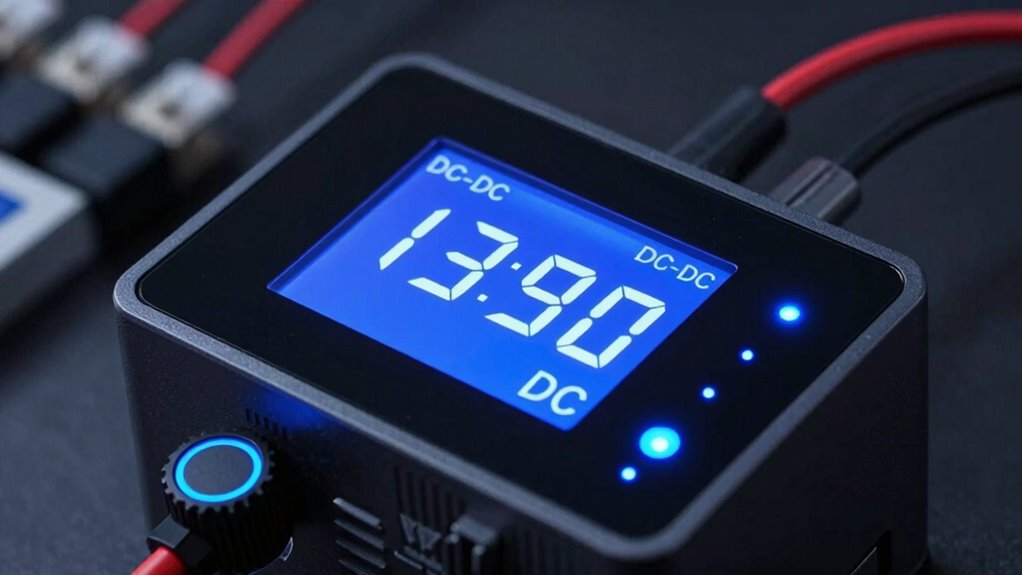
Monitoring your DC-DC charger regularly is essential to guarantee it continues running efficiently and reliably. Over time, battery recycling and solar integration can impact ideal settings, requiring adjustments. By tracking how your system performs, you can identify issues early and fine-tune parameters to extend battery life. Regular checks help prevent overcharging or undercharging, which can harm your batteries. Adjustments might include updating voltage thresholds or current limits based on usage patterns and environmental changes. Staying proactive ensures your setup adapts to seasonal shifts or increased solar input, maximizing efficiency.
Regularly monitor and adjust your DC-DC charger to optimize performance and extend battery lifespan.
- Keep an eye on voltage and current levels
- Adjust settings based on battery health and capacity
- Maximize for seasonal solar variation
- Reassess charging thresholds after battery recycling
- Ensure compatibility with evolving solar technology
Avoiding Common Mistakes That Shorten Battery Life
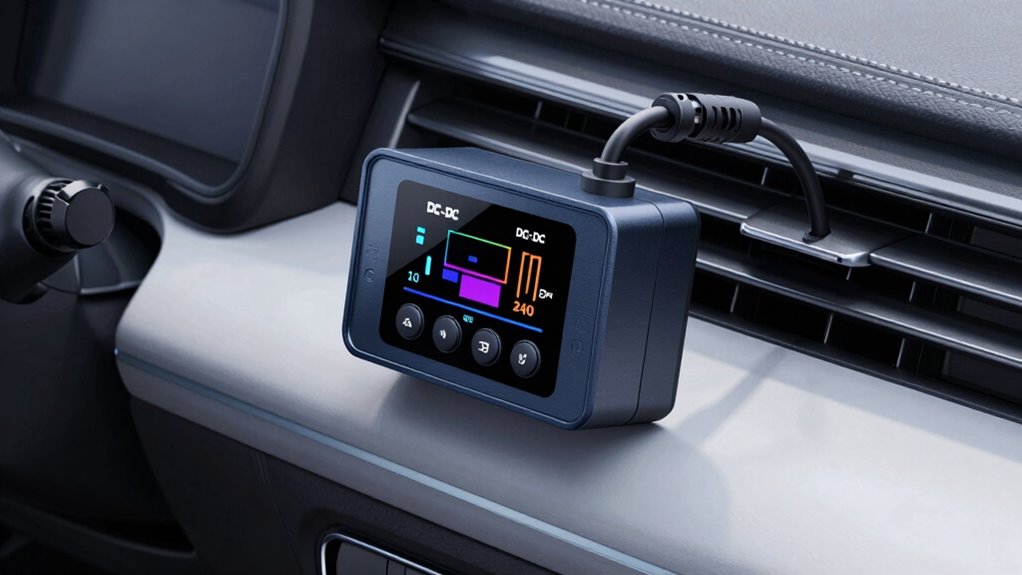
Avoiding common mistakes is essential for extending your battery’s lifespan and ensuring reliable performance. One key mistake is neglecting your battery chemistry, which influences ideal charging settings. Using a charger incompatible with your battery type can cause overcharging or undercharging, accelerating wear. Always verify charger compatibility and settings specific to your battery chemistry to prevent damage. Avoid setting your charger to high voltages or currents that exceed manufacturer recommendations, as this shortens battery life. Additionally, resist the temptation to frequently deep-discharge your battery, which can strain its chemistry. Regularly monitoring your charging process and adhering to manufacturer guidelines helps prevent these pitfalls. By paying attention to battery chemistry and charger compatibility, you protect your investment and keep your battery operating at peak performance longer.
Frequently Asked Questions
How Often Should I Recalibrate My DC-DC Charger Settings?
You should recalibrate your DC-DC charger settings whenever you notice inconsistent charging or voltage regulation issues, typically every 6-12 months. Regular calibration guarantees the charging algorithms operate effectively, maintaining accurate voltage regulation and battery health. Environmental changes, battery aging, or updates to your system can affect performance, so staying proactive helps prevent potential damage. Keep an eye on your system’s performance and recalibrate as needed to extend your battery’s lifespan.
Can Improper Settings Cause Battery Overheating or Damage?
Did you know improper settings can cause 30% of battery failures? If your DC-DC charger isn’t set correctly, overcharging risks increase, potentially leading to overheating or damage. Poor settings may also ignore cooling requirements, exacerbating heat buildup. Always make certain your charger’s voltage and current are appropriate for your battery, and monitor temperature levels. Proper calibration helps prevent overheating and extends your battery’s lifespan, saving you money and hassle.
What Safety Features Should I Enable on My Charger?
You should enable safety features such as battery protection and safety protocols on your charger. Battery protection prevents overcharging, overheating, and deep discharging, safeguarding your battery’s health. Safety protocols, like automatic shutoff and thermal regulation, guarantee safe operation during charging. Activating these features reduces risks of damage or fire, helping your battery last longer. Always check your charger’s manual to confirm these safety features are enabled and functioning correctly for maximum safety.
How Do Ambient Temperature Changes Affect Charging Settings?
Ambient temperature changes can considerably impact your charger’s performance. In fact, thermal drift can cause voltage fluctuations if temperature isn’t managed properly. To combat this, enable temperature compensation settings on your charger, which adjust charging parameters based on ambient conditions. This minimizes risks of overcharging or undercharging, ensuring your battery stays healthy and efficient, even as temperatures fluctuate. Proper settings help maintain ideal performance and extend your battery’s lifespan.
Are There Specific Settings for Different Battery Chemistries?
Yes, you should adjust your charging algorithms based on your battery chemistry. Different chemistries, like AGM, lithium-ion, or gel, require specific settings to optimize lifespan and performance. For example, lithium batteries often need higher voltage thresholds, while AGM batteries prefer lower, controlled charging. By customizing your charger’s settings for your battery chemistry, you guarantee safer, more efficient charging and extend your battery’s overall life.
Conclusion
So, next time you fiddle with your DC-DC charger settings, remember: it’s not just about saving your battery, it’s about avoiding the heartbreak of premature replacement. Because nothing says “smart decision” like pushing your luck and watching your batteries die a slow, expensive death. Keep those settings in check, and you’ll be the hero of your own battery story—until the next surprise voltage spike reminds you who’s boss. Happy charging, savvy saver!
NFL season / tailgating Picks
team gear
As an affiliate, we earn on qualifying purchases.