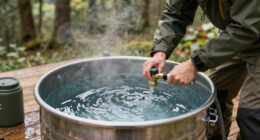
To keep food safe on long driving days, store perishables in high-quality coolers with ice packs, keeping them shaded and replenishing ice regularly. Avoid leaving food out of refrigeration for over two hours, especially in hot weather. Practice good hygiene by washing hands or using sanitizer and inspect snacks for spoilage. Keep the vehicle well-ventilated to maintain a cooler interior. Staying vigilant with these tips helps guarantee your snacks stay fresh and safe throughout your trip.

Get travel and outdoor gear delivered free with Prime
- Fast, free delivery on millions of items
- Prime Video, Amazon Music and more included
- Member-only deals all year
Key Takeaways
- Use high-quality coolers with ice packs and keep them in shaded areas to maintain proper food temperatures.
- Limit food exposure to heat by storing perishables in sealed, insulated containers.
- Regularly check and replenish ice, and discard any food showing signs of spoilage or off odors.
- Practice good hygiene by washing hands or using sanitizer before handling food and snacks.
- Avoid leaving food out of refrigeration for more than 2 hours to prevent bacterial growth.
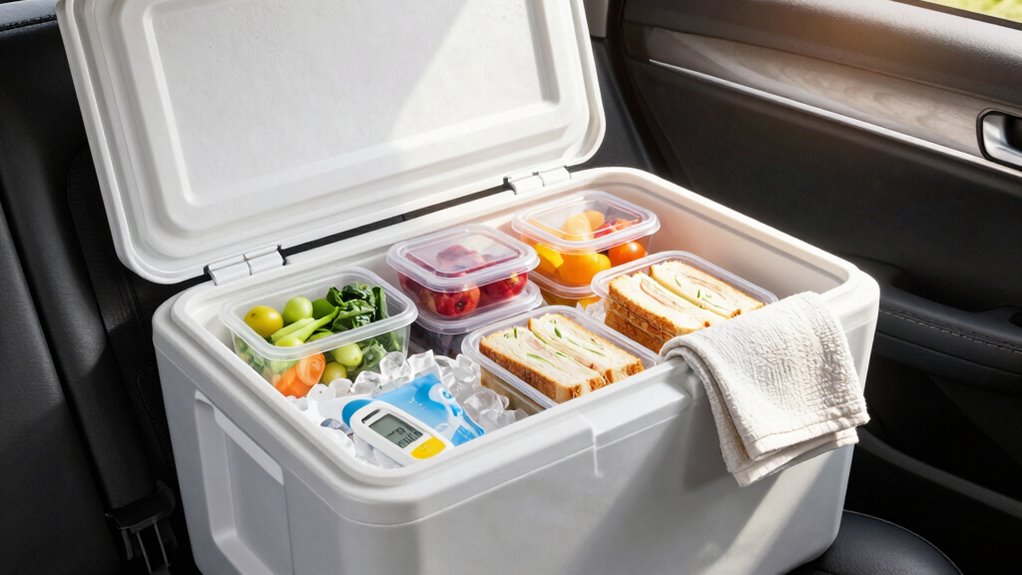
Long driving days can be enjoyable, but keeping your food safe during extended travel requires careful planning. When you’re on the road for hours, it’s easy to forget that food safety is just as important as packing the right snacks. You’ll want to bring along travel snack ideas that are both tasty and safe to eat, even if they sit in your car for a while. Think about options like nuts, dried fruits, granola bars, and fresh fruit that can withstand temperature changes without spoiling. These snacks are convenient and don’t require refrigeration, making them ideal for long trips.
However, it’s equally important to prepare emergency food supplies, especially if the trip extends into remote areas where access to stores might be limited. Non-perishable items like canned goods, jerky, or vacuum-sealed meals can be lifesavers if you get stuck without proper refrigeration. Make sure these supplies are stored properly in your vehicle, ideally in an insulated cooler or a well-sealed container to prevent spoilage. Label your emergency supplies clearly, so you know what’s safe to eat even if you’re tired or distracted.
Temperature control is a key factor in keeping your food safe. If you’re bringing perishable items like dairy or cooked meats, use a high-quality cooler with ice packs to keep them chilled. Keep the cooler in a shaded spot and avoid leaving it in direct sunlight for extended periods. Check the ice frequently and replenish it as needed. Be mindful of how long perishable foods stay at unsafe temperatures—generally, foods shouldn’t be left out of refrigeration for more than two hours, or one hour if the weather is particularly hot. Additionally, understanding the importance of indoor air quality and proper ventilation can help prevent the interior temperature from rising too much, protecting your food storage. Ensuring good vehicle ventilation can also help maintain a cooler interior temperature and prevent food spoilage. Proper temperature regulation is essential to keep your food safe and prevent the growth of harmful bacteria. Remember that food safety guidelines are crucial to avoid foodborne illnesses during your trip.
Pay attention to your vehicle’s temperature and ventilation. If you notice the interior getting too warm, open windows or vents to help regulate the temperature. When you take breaks, inspect your snacks and emergency supplies to ensure they’re still good to eat. Any food that’s been exposed to heat or has an unusual smell or appearance should be discarded to prevent foodborne illnesses.
Finally, practice good hygiene by washing your hands before handling food, especially when you’re on the move. Keep some hand sanitizer or wipes handy to clean your hands and surfaces if water isn’t available. By planning ahead with the right travel snack ideas and emergency supplies, and by staying vigilant about temperature and hygiene, you can enjoy your long drive without worrying about food safety.
high quality cooler with ice packs
As an affiliate, we earn on qualifying purchases.
As an affiliate, we earn on qualifying purchases.
Frequently Asked Questions
What Types of Foods Are Best for Long Drives?
You should pack healthy snacks like nuts, trail mix, and fresh fruit for long drives. Non-perishable foods such as granola bars, beef jerky, and crackers are also great because they don’t spoil easily. These options keep you energized and are easy to eat on the go. Avoid foods that spoil quickly or require refrigeration, ensuring your food stays fresh and safe throughout your trip.
How Do I Prevent Food From Spoiling in Hot Weather?
To prevent food from spoiling in hot weather, focus on food safety and temperature control. Keep perishable foods in a cooler with plenty of ice or ice packs, ensuring the temperature stays below 40°F. Avoid leaving food in direct sunlight or hot areas. Regularly check and replenish ice, and store foods in airtight containers. These steps help maintain safe temperatures, keeping your food fresh and safe throughout your drive.
Can I Pack Perishable Foods the Night Before?
Yes, you can pack perishable foods the night before, but follow proper food storage and packing tips to keep them safe. Use an insulated cooler with plenty of ice packs to maintain a safe temperature. Wrap foods tightly, and place the coldest items at the bottom. Keep the cooler in a shaded area and avoid opening it often. This way, your perishable foods stay fresh and safe during your drive.
What Are Safe Ways to Reheat Food During a Trip?
Imagine your food as a delicate passenger that needs careful handling. To reheat safely during your trip, use portable options like a thermos or a portable stove. Always guarantee your food storage is proper, keeping foods at safe temperatures. Reheating techniques like using a microwave or skillet can restore your meal’s warmth, but be sure to heat evenly, reaching the right internal temperature to prevent foodborne illnesses.
How Do I Keep Snacks Fresh Without Refrigeration?
To keep snacks fresh without refrigeration, focus on proper food preservation and snack storage techniques. Store dry, non-perishable items like nuts, granola bars, and dried fruit in airtight containers or resealable bags to prevent moisture and air exposure. Keep snacks in a cool, shaded spot in your car to avoid heat degradation. Consider insulated snack bags with ice packs for perishable items, and always check expiration dates to verify freshness during your trip.
insulated food storage containers
As an affiliate, we earn on qualifying purchases.
As an affiliate, we earn on qualifying purchases.
Conclusion
Keeping your food safe on long driving days is like steering a ship through calm waters—you need to stay vigilant and attentive. With proper storage, timely eating, and clean hands, you guarantee your journey remains smooth and enjoyable. Think of each step as a gentle wave guiding you safely to your destination. When you prioritize food safety, you’re charting a course that keeps hunger at bay and health on course, making every mile a worry-free adventure.
As an affiliate, we earn on qualifying purchases.
As an affiliate, we earn on qualifying purchases.
Evergreen bestsellers Picks
bestsellers
As an affiliate, we earn on qualifying purchases.