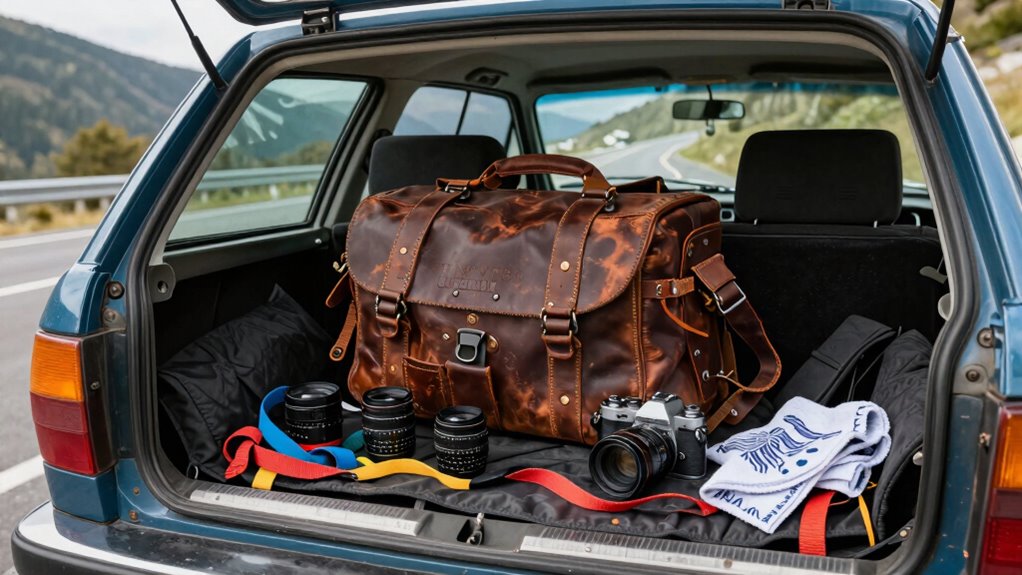

To travel with your camera gear on a road trip without babying it, pack your equipment in a sturdy, padded bag with dividers, and include extras like batteries and memory cards. Use weather protection like rain covers and keep gear secure and accessible. Practice shooting in different conditions to understand your gear’s resilience, and treat it as tough rather than fragile. You’ll discover more tips to keep your gear safe while capturing amazing shots along the way.

Get travel and outdoor gear delivered free with Prime
- Fast, free delivery on millions of items
- Prime Video, Amazon Music and more included
- Member-only deals all year
Key Takeaways
- Use a sturdy, padded camera bag with dividers to protect gear and keep it organized during travel.
- Pack extra batteries, memory cards, and cleaning supplies for quick access and maintenance on the go.
- Keep gear in a secure, accessible spot within the bag to prevent damage and facilitate easy retrieval.
- Practice shooting in various conditions to build confidence and understand your gear’s resilience.
- Treat your camera gear as resilient, using weather covers and proper handling without over-caution.
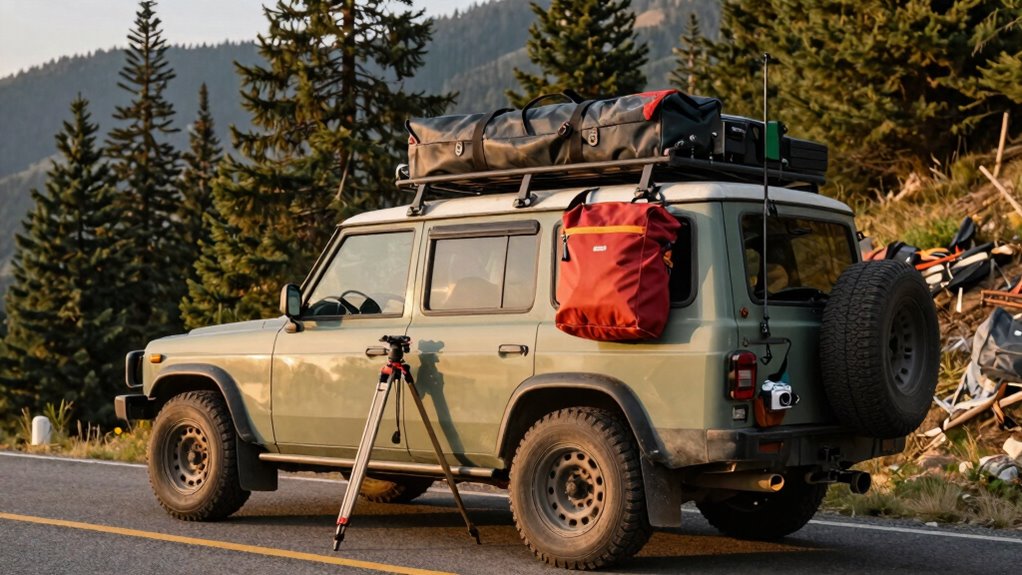
Beginning a road trip with your camera gear can be both exciting and challenging. You want to capture every breathtaking view, vibrant street scene, and spontaneous moment, but you also need to protect your gear from bumps, dust, and weather. To do this without babying it, you should pack smartly with the right camera accessories. A sturdy, padded camera bag is essential. Look for one with dividers to organize your gear, preventing lenses and bodies from knocking against each other during sudden stops or rough terrain. Include extra batteries and memory cards, so you’re never caught off guard. Lens cleaning supplies, a mini tripod, and a lens hood can also be invaluable. These accessories help you adapt to changing conditions and shooting scenarios, putting your camera in the best position to capture quality images without the need for delicate handling. Embracing biodiversity and understanding your environment can also inspire more meaningful shots, so be prepared to adapt to diverse settings. Additionally, familiarizing yourself with your camera’s resilience can help you better prepare for unexpected weather or rough handling, ensuring your gear stays protected and functional throughout your trip.
When it comes to shooting techniques, versatility is key. You’re better off mastering a few core methods that allow you to shoot confidently in diverse environments. For example, use wider apertures for low-light scenes or fast-moving landscapes, and switch to smaller apertures for expansive scenic shots. Don’t be afraid to shoot in manual mode; it gives you control over exposure, focus, and depth of field, so you’re not dependent on automatic settings that might struggle in tricky lighting. Keep your ISO as low as possible to avoid noise, but don’t hesitate to bump it up if lighting conditions demand it. Use a steady hand or lean on your mini tripod to avoid blurry shots when shooting long exposures or in low light, especially when you’re on the move. The key is to stay flexible—adapt your shooting techniques based on the environment, whether you’re capturing a sunset or a bustling street market. Additionally, understanding camera resilience can help you better prepare for unexpected weather or rough handling, ensuring your gear stays protected and functional throughout your trip.
It’s tempting to be overly cautious with your camera gear, but the best way to get great shots on the road is to treat your equipment as resilient. Use camera accessories like rain covers if weather turns bad, and always keep your gear in a secure, accessible spot within your bag. Practice shooting in different conditions, so you get comfortable with your gear’s capabilities and limitations. By doing this, you won’t need to baby your camera—just respect it, and it’ll reward you with stunning images from your trip. Remember, the goal is to enjoy the journey and let your camera do its job seamlessly, capturing memories without fuss or fussing over every bump.
sturdy padded camera bag with dividers
As an affiliate, we earn on qualifying purchases.
As an affiliate, we earn on qualifying purchases.
Frequently Asked Questions
How Do I Protect My Camera From Weather Conditions During the Trip?
To protect your camera from weather conditions, use camera weatherproofing techniques like applying a rain cover or weather-resistant shield. Always keep your camera in a protective gear, such as a sturdy, waterproof bag or case, when not in use. Carry lens cloths to wipe off moisture or dirt, and avoid exposing your gear to extreme temperatures. This guarantees your camera stays safe and functional throughout your trip.
What Are the Best Ways to Organize Multiple Lenses?
To organize multiple lenses, you should use dedicated lens pouches or cases, keeping each lens separate to prevent scratches and dust. Label each pouch for quick access and easier gear organization. Regularly check and clean your lenses to maintain peak image quality, ensuring proper gear maintenance. Store your lenses in a padded, accessible spot in your camera bag, so you can quickly switch lenses without hassle during your road trip.
How Can I Prevent Theft of My Camera Gear?
To prevent theft, you should use secure storage like lockable bags or safes whenever possible, especially in public or unfamiliar areas. Discreet carrying is key—avoid obvious camera cases that attract attention. Keep your gear close, stay aware of your surroundings, and never leave it unattended. Consider using theft-proof straps or locks, and always store your gear in a secure place when not in use, reducing the risk of theft during your trip.
What Should I Do if My Camera Gets Damaged?
If your camera gets damaged, first assess the issue carefully. Clean the lens and sensor if needed using proper camera cleaning techniques. Check if lens calibration is necessary to restore sharpness. If the damage is serious, consider professional repair or replacement. Avoid trying to fix complex problems yourself, as this could worsen the damage. Always handle your gear gently and store it properly to prevent future issues.
How Do I Carry Extra Batteries and Chargers Efficiently?
To carry extra batteries and chargers efficiently, focus on battery storage and charger organization. Use a dedicated, padded camera bag with compartments for batteries, ensuring each one is protected from impact and temperature fluctuations. Keep chargers organized with cable ties or roll-up pouches, and store spare batteries in a separate, clearly labeled container. This setup keeps your gear accessible, safe, and ready for quick swaps during your road trip.
As an affiliate, we earn on qualifying purchases.
Conclusion
So, next time you hit the road with your camera gear, will you treat it as just equipment or as your trusty travel companion? With a little planning, proper packing, and mindful handling, you can capture stunning shots without babying your gear. Remember, your camera is meant to adventure with you—so trust it, enjoy the journey, and let your images tell the story of your road trip. After all, isn’t the road where the best memories are made?
camera batteries and memory cards kit
As an affiliate, we earn on qualifying purchases.
As an affiliate, we earn on qualifying purchases.
mini tripod for travel photography
As an affiliate, we earn on qualifying purchases.
As an affiliate, we earn on qualifying purchases.
Halloween Picks
halloween
As an affiliate, we earn on qualifying purchases.