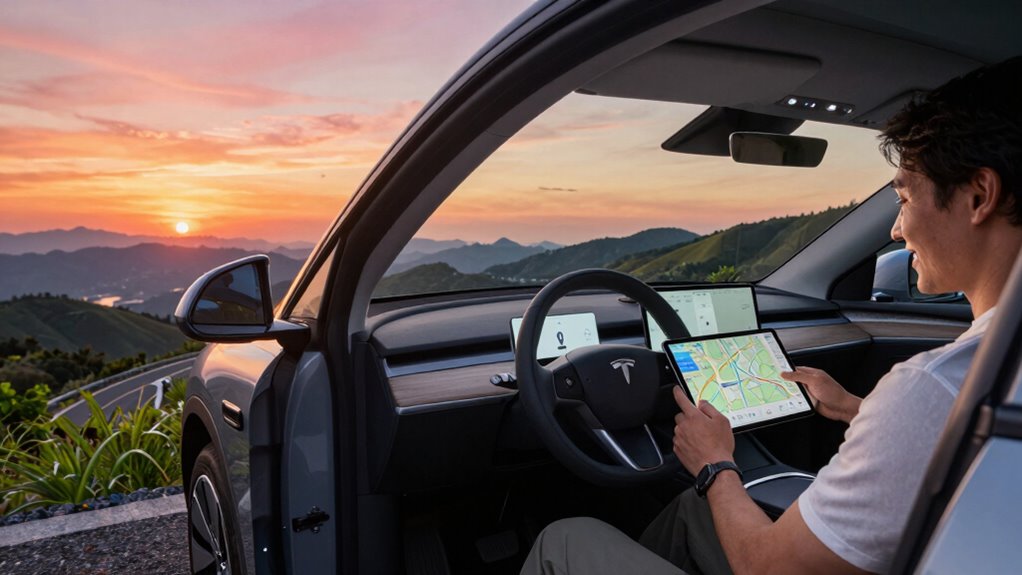

To plan an EV road trip without charger anxiety, map your entire route in advance, focusing on charging station locations using EV-specific apps and real-time updates. Prioritize fast chargers for longer stretches, and arrive with extra charge to stay safe. Stay informed about station reliability, peak hours, and backup options, and keep your navigation system updated. By preparing thoroughly and staying connected to reliable info, you’ll enjoy a smoother journey. Keep exploring to learn more tips for stress-free travel.

Get travel and outdoor gear delivered free with Prime
- Fast, free delivery on millions of items
- Prime Video, Amazon Music and more included
- Member-only deals all year
Key Takeaways
- Map out your entire route with charging station locations and determine charging times in advance.
- Prioritize fast chargers for longer stretches and keep backup charging options available.
- Use real-time EV apps and navigation tools to monitor charger availability during your trip.
- Arrive at stations with extra charge, considering peak hours and potential outages.
- Stay updated on station reliability and network coverage through community resources and reliable data sources.
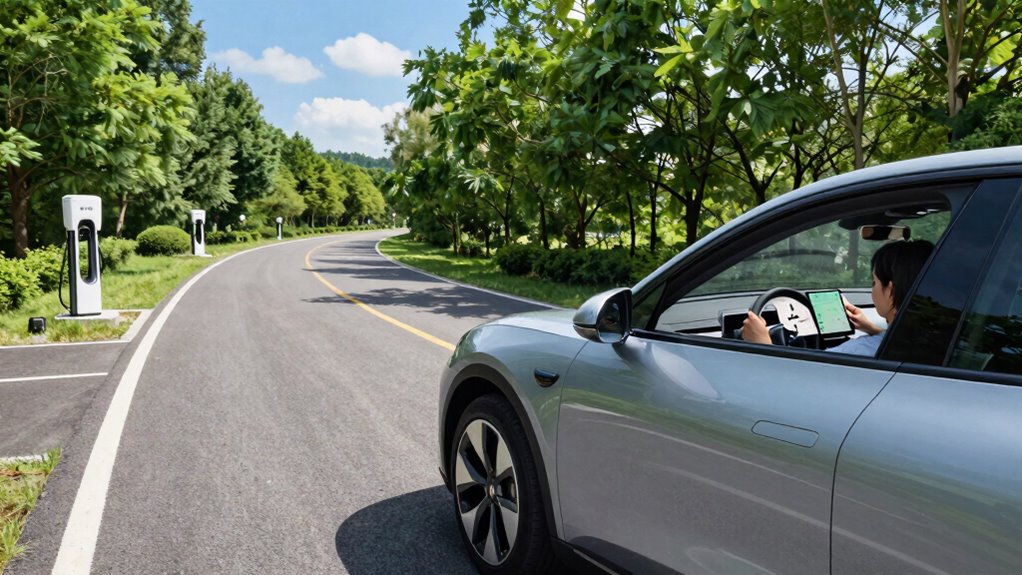
Ever wondered how to enjoy a long-distance EV road trip without the stress of running out of charge? The key lies in thorough route planning, especially when it comes to locating charging stations along your path. Before you hit the road, spend some time mapping out your entire route, paying close attention to where charging stations are situated. Many EV-specific apps and navigation tools now let you plot your journey with real-time updates on charger availability, so you can avoid surprises. By doing this, you’ll know exactly where to stop, how long you’ll need to recharge, and if any alternatives are nearby. It’s all about reducing uncertainty—once you know your charging options, the trip becomes much more manageable.
You should also consider the types of chargers available at each station. Not all charging stations are created equal; some might only offer slow charging, while others provide rapid chargers that can juice up your battery in 20-30 minutes. When route planning, prioritize fast chargers for longer stretches or when you’re pressed for time. This way, you minimize downtime and keep your trip flowing smoothly. Also, make sure your vehicle’s navigation system is updated with the latest charging station data. Many EVs now come with built-in maps that automatically suggest nearby chargers, but it’s smart to double-check on apps or websites before setting out. This proactive approach helps you avoid last-minute detours or the dreaded “charge anxiety” that can disrupt your journey.
Another tip is to keep a buffer in your planning. Even if your EV’s range suggests you can reach the next charging station comfortably, plan to arrive with some extra charge. This gives you a safety net, especially if a charger is temporarily out of service or busy. Furthermore, consider the time of day and charging station availability—some stations are busier during peak hours, so timing your stops can make a difference. Always have backup options in mind, just in case your first choice is unavailable. Additionally, familiarize yourself with charging station network coverage to ensure you have a reliable fallback during your trip. Being aware of charging station reliability can help prevent unexpected stops or delays. To further enhance your planning, check for real-time station updates to stay informed about current charger statuses. Knowing how to access reliable charging information can significantly improve your overall experience. It’s also helpful to stay connected to EV community resources for tips and shared experiences from other travelers.
Frequently Asked Questions
How Do I Find Real-Time Charging Station Availability?
You can find real-time charging station availability through apps like PlugShare, ChargePoint, or EVgo. These apps show current station status, so you won’t waste time at a busy or out-of-service charger. Always follow proper charging etiquette by moving your car once charged and reporting any issues to maintain station reliability. This way, you help keep charging stations accessible and efficient for everyone on the road.
What Should I Do if My EV Runs Out of Charge Unexpectedly?
If your EV runs out of charge unexpectedly, stay calm and activate your hazard lights. Use your emergency kit to stay safe and, if possible, contact roadside assistance or a nearby charging station. Keep an eye on your battery health, as it impacts how far you can go. Meanwhile, plan to get your vehicle charged as soon as possible to avoid further issues and guarantee a safe journey ahead.
Are There Apps That Optimize My EV Route for Charging?
Did you know that apps like PlugShare and A Better Routeplanner can optimize your EV route for charging? They help you find charging stations along your path, saving you time and reducing range anxiety. Remember to follow proper charging etiquette at stations and keep up with regular EV maintenance to guarantee smooth trips. These tools make planning easier, letting you focus on enjoying your journey without stressing over charging spots.
How Long Can Most EVS Typically Stay on a Single Charge?
Most EVs can typically stay on a single charge for about 150 to 300 miles, depending on their battery capacity and driving conditions. Higher battery capacity means longer range, while faster charging speeds allow quicker top-ups during stops. You should also consider your driving habits, terrain, and weather, which can impact how far your EV can go before needing a recharge. Planning ahead guarantees less range anxiety on your trip.
What Are the Best Practices for Charging During Overnight Stops?
During overnight stops, you should follow good charging etiquette by plugging in your EV at designated stations and avoiding monopolizing chargers. To maintain your battery’s health, use Level 2 chargers for overnight stays, which provide a gentle, steady charge. Always disconnect once fully charged, and consider using timers or scheduling apps to optimize charging times. Proper charging habits help sustain battery life and ensure you’re ready for the road ahead.
Conclusion
By planning ahead and knowing your charging options, you can turn EV road trips into enjoyable adventures rather than sources of stress. Imagine Sarah, who once hesitated on long drives but now confidently explores new cities, thanks to a well-mapped charging plan. With a little preparation, you’ll stay charged, confident, and free to enjoy every mile. Don’t let charger anxiety hold you back—your next great adventure is just a charge away.
Halloween Picks
halloween
As an affiliate, we earn on qualifying purchases.