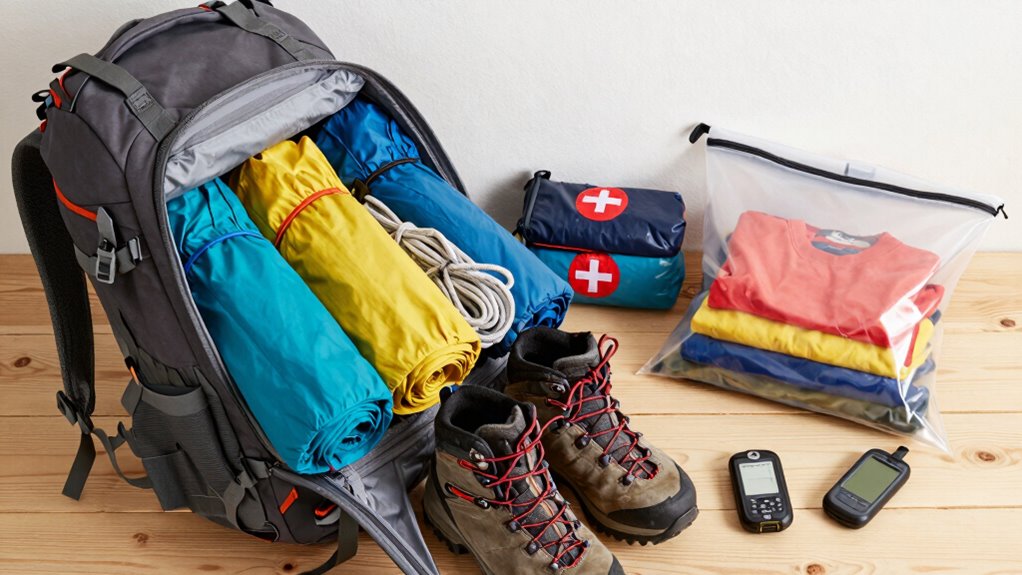

To pack outdoor gear so it stays ready, dry, and reachable, plan ahead by categorizing items into groups like clothing, cooking supplies, and navigation tools. Use waterproof or dry bags for electronics and delicate gear, and roll clothes to save space. Place heavier items at the bottom and keep frequently used gear on top or in accessible compartments. Make certain your pack is waterproof and pack wet items separately to prevent moisture. Keep gear organized for quick access, and learn tips to improve your packing efficiency.

Get travel and outdoor gear delivered free with Prime
- Fast, free delivery on millions of items
- Prime Video, Amazon Music and more included
- Member-only deals all year
Key Takeaways
- Categorize gear by type and store in dedicated, accessible compartments or packing cubes for quick retrieval.
- Use waterproof or dry bags for clothing, electronics, and delicate items to prevent moisture damage.
- Pack by rolling clothes tightly and placing heavier items at the bottom for a stable, space-efficient setup.
- Keep frequently used items near the top or in easy-to-reach compartments for quick access during outdoor activities.
- Regularly check and dry gear before packing to ensure everything remains dry, functional, and ready for use.
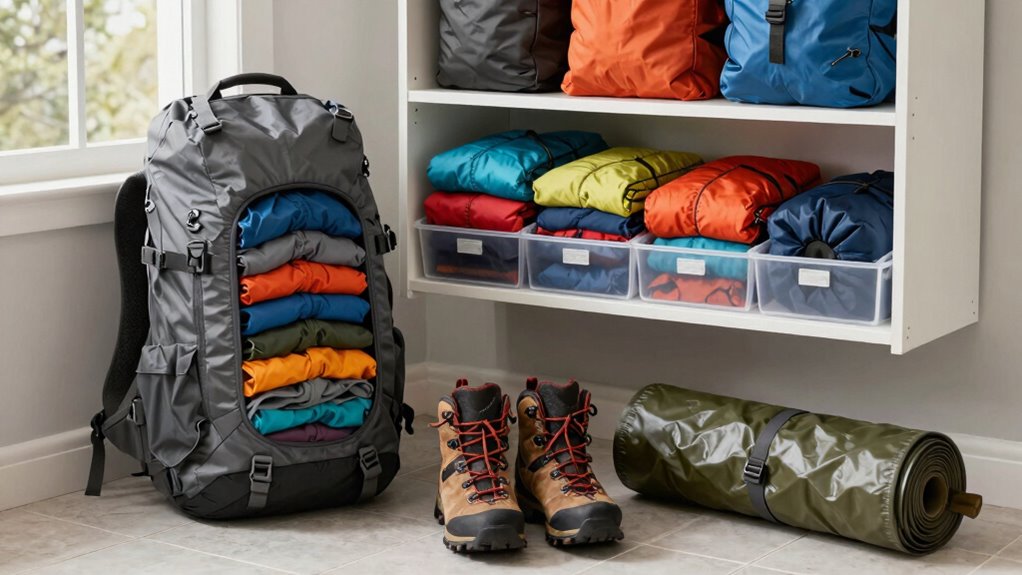
Packing outdoor gear efficiently can make or break your trip, so it’s vital to plan ahead. When you focus on gear organization, you guarantee everything you need is accessible, protected, and ready to go when you arrive at your destination. Good packing techniques start with knowing what gear you’ll need and how best to arrange it, which saves you time and frustration in the field.
First, categorize your gear. Separate clothing, cooking supplies, navigation tools, first aid items, and sleeping gear into distinct groups. This way, you can pack smarter and avoid rummaging through your bag when you need something quickly. Use packing cubes or small bags to keep each group contained; these help maintain organization and make it easier to find what you need without unpacking everything. When you pack, place the most frequently used items near the top or in accessible compartments to streamline your journey.
Organize gear by category, using packing cubes for quick access and efficiency.
Another key element is choosing the right container for your gear. Hard-shell or waterproof bags are great for protecting electronics, clothes, and delicate items from moisture. For overnight trips, a waterproof dry bag can keep your clothing and sleeping gear dry, especially if you encounter rain or water crossings. For smaller essentials like maps, matches, or snacks, use zippered pouches or small cases to prevent losing or damaging them. This gear organization not only keeps things dry and protected but also maximizes space within your pack. Additionally, understanding the specific waterproof capabilities of your gear can help prevent surprises in wet conditions. To further safeguard your belongings, consider investing in gear with advanced waterproofing features, which can offer extra protection in unpredictable weather.
Packing techniques are vital for maintaining order and ensuring your gear stays dry and reachable. Roll your clothes tightly rather than folding them; this technique saves space and minimizes wrinkles. Place heavier items, like boots or cookware, at the bottom of your pack to create a stable base. Lighter, softer items go on top, and fragile items should be wrapped in clothing or placed in padded compartments. If your pack has multiple compartments, designate specific sections for different gear categories. This segmentation helps you locate items quickly without unpacking everything. Incorporating gear organization strategies can further enhance your efficiency and prevent unnecessary unpacking.
To keep your gear ready and dry, always check that your pack is waterproof or rain-resistant, and consider adding rain covers if needed. Pack your gear in a way that prevents moisture from seeping in—never pack wet items with dry ones, and always dry your gear before storing it if possible. When setting up camp or preparing to leave, your well-organized pack should allow you to access essentials swiftly, reducing stress and keeping your gear in top shape for the duration of your adventure. Proper gear organization and packing techniques are the foundation for a successful outdoor experience. Additionally, staying informed about outdoor gear-related news and tips can help you improve your packing strategies over time.
waterproof dry bags for outdoor gear
As an affiliate, we earn on qualifying purchases.
As an affiliate, we earn on qualifying purchases.
Frequently Asked Questions
What Are the Best Materials for Waterproofing Outdoor Gear?
The best materials for waterproofing outdoor gear include waterproof fabrics like Gore-Tex, nylon, and polyester with a waterproof coating. You should also use sealant sprays to enhance water resistance on non-waterproof materials. These sprays create a protective barrier, keeping your gear dry and ready for unexpected weather. Applying waterproof fabrics and sealant sprays regularly guarantees your outdoor gear stays dry, durable, and easily accessible during your adventures.
How Often Should I Clean and Maintain My Outdoor Gear?
You should clean and maintain your outdoor gear regularly to keep it in top shape. Aim for a maintenance schedule that suits your adventures—after each trip, do a quick gear cleaning to remove dirt and moisture, and at least once a season, give it a thorough check-up. This way, your gear stays reliable, dry, and ready for your next adventure, ensuring you enjoy every moment outdoors.
What Are Space-Saving Packing Tips for Bulky Equipment?
To save space with bulky equipment, use compression bags to reduce volume and keep gear compact. Invest in gear organizers to efficiently compartmentalize items, making them easier to access and preventing clutter. Roll your gear tightly before placing it in compression bags, and label your organizers for quick identification. This approach guarantees your gear stays organized, dry, and ready for your next adventure while maximizing your packing space.
How Can I Prevent Mold and Mildew on Stored Gear?
To prevent mold and mildew on your stored gear, you should use proper ventilation techniques by storing items in a well-ventilated area. Regularly airing out your gear helps reduce moisture buildup. Additionally, moisture absorbers like silica gel packs or desiccants can be placed inside storage containers to keep humidity levels low. Make sure your gear is completely dry before storing, and check on it periodically to catch any signs of mold early.
What Safety Precautions Should I Take When Packing Fragile Gear?
Did you know that improperly packed fragile items can break in transit 30% of the time? To prevent this, always use protective padding like bubble wrap or foam to cushion delicate gear. Clearly label these items as “Fragile” to alert handlers. When packing, handle with care, ensuring heavy items don’t crush fragile ones. Taking these precautions keeps your gear safe, intact, and ready for your next adventure.
As an affiliate, we earn on qualifying purchases.
Conclusion
If you master packing your outdoor gear properly, you’ll never be caught unprepared or drenched in surprise storms again. Your gear will stay perfectly dry, instantly accessible, and ready for any adventure — no matter how wild or unpredictable. With just a little effort, you’ll transform your packing routine into a fortress of preparedness that could withstand a hurricane or a mountain avalanche. So gear up smartly, and conquer the outdoors with confidence that’s unbreakable!
waterproof electronics bags for outdoor activities
As an affiliate, we earn on qualifying purchases.
As an affiliate, we earn on qualifying purchases.
compact outdoor gear storage containers
As an affiliate, we earn on qualifying purchases.
As an affiliate, we earn on qualifying purchases.
Halloween Picks
halloween
As an affiliate, we earn on qualifying purchases.