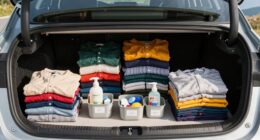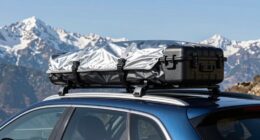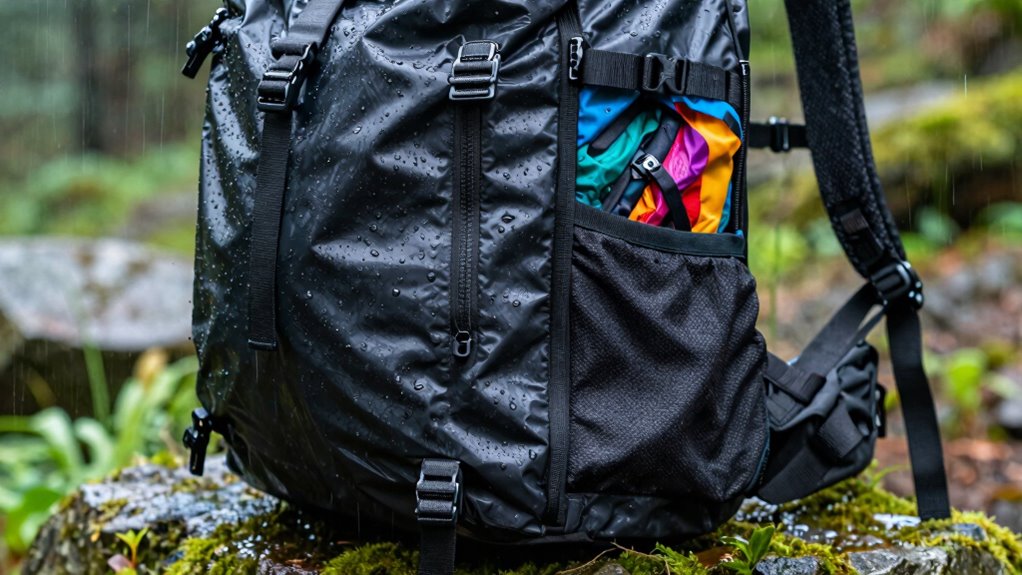
To keep your gear dry while packing, use waterproof bags, sealed containers, and protective covers to prevent water from seeping in. Make sure closures are secure and seams are sealed properly, and wrap critical items with extra layers for added protection. Organize your load so wet items stay away from dry ones, and quickly address any leaks or damage during your trip. Keep your system maintained for lasting waterproof performance—more tips are just ahead.
Key Takeaways
- Use waterproof bags with reliable seals, airtight zippers, and seam reinforcements to prevent water infiltration.
- Pack critical items in the center, surrounded by dry gear for added protection against rain.
- Seal all openings with waterproof tape or zip ties during packing to ensure maximum water resistance.
- Choose durable, water-resistant materials like high-denier nylon or TPU-coated fabrics for packing gear.
- Regularly inspect and maintain waterproof gear, repairing tears and lubricating zippers to preserve long-term dryness.
Why Water Damage Ruins Your Gear and How Rain-Proof Loading Helps
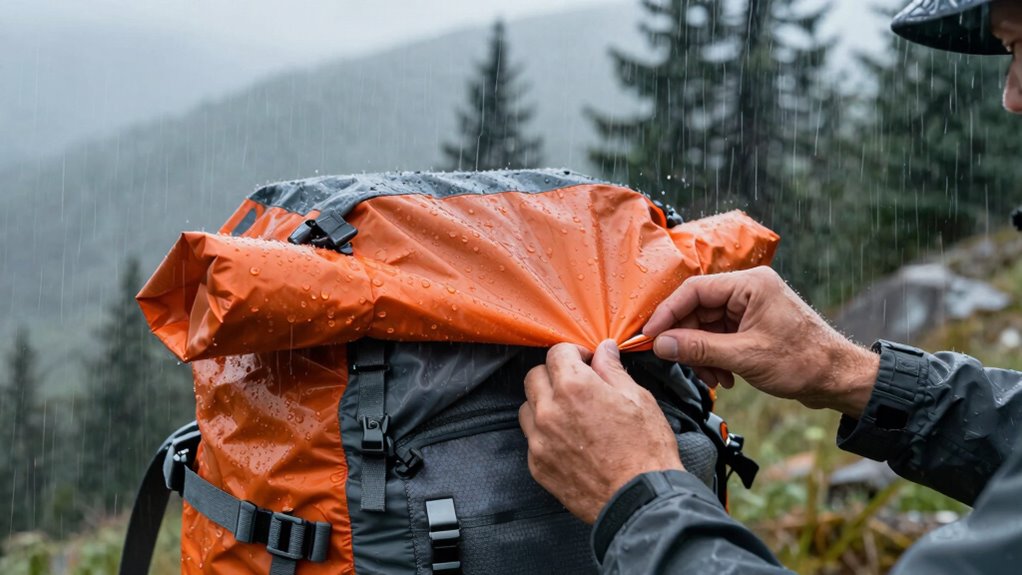
Water damage can quickly ruin your gear, especially when you’re caught in unexpected rain or wet conditions. If you don’t safeguard yourself, your weatherproof clothing and water-resistant footwear won’t be enough to keep everything dry. Water seeps into your belongings, causing mold, odors, and even damage to electronics or delicate items. That’s where rain-proof loading comes in. By packing carefully and using the right techniques, you prevent water from penetrating your gear. Proper loading ensures your clothing stays dry, and your footwear remains protected from splashes and rain. When you prioritize rain-proof loading, you reduce the risk of water damage, so you can focus on your activities without worrying about soggy gear or ruined valuables. Additionally, understanding how ventilation affects moisture buildup can help prevent condensation and further protect your belongings. Recognizing the importance of water-resistant materials in your gear can also significantly enhance its ability to stay dry in wet conditions. Incorporating waterproof storage solutions can further safeguard your items from unexpected splashes or rain. Using proper packing techniques can make a significant difference in keeping your gear dry and well-organized. Being aware of clothing layers helps optimize moisture management and keep you comfortable in changing weather.
Choose the Right Waterproof Bags and Containers
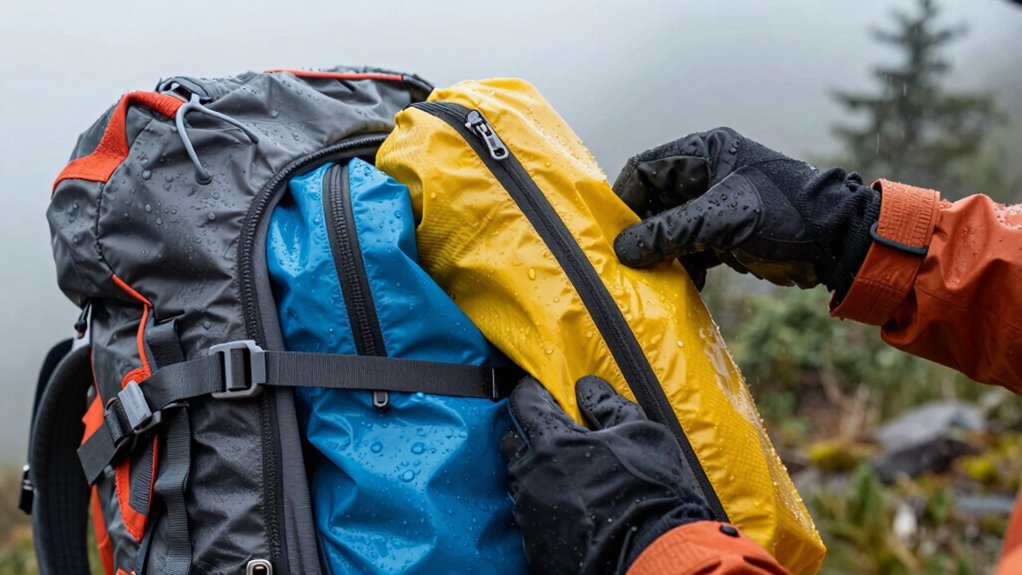
When selecting waterproof bags and containers, you need to take into account their material durability and resistance to wear and tear. Make sure they come in sizes and capacities that fit your gear and your load. Also, check that their closures and seals are reliable to keep water out under tough conditions. Incorporating smart furniture features such as modular and adaptable storage options can further enhance protection and accessibility. Considering grocery savings strategies can also help you allocate funds toward higher-quality waterproof gear for long-term reliability. Additionally, evaluating weather resistance features can ensure your gear stays dry even in unpredictable or severe conditions. For instance, understanding how water parks use water-resistant materials in their attractions can give insight into selecting more durable waterproof gear. Moreover, selecting gear with seam sealing can prevent water infiltration at vulnerable points.
Material Durability and Resistance
Choosing the right waterproof bags and containers hinges on their material durability and resistance. You want gear that withstands tough conditions, which means considering how well the material performs during durability testing. Flexibility is also key, allowing the bag to adapt without tearing or cracking. Look for materials like high-denier nylon or TPU-coated fabrics, known for their resilience. Additionally, selecting materials with proven material resistance can ensure long-lasting protection against the elements. Incorporating sustainable textile innovations can further enhance durability and reduce environmental impact. Regular testing for material toughness can help identify products that meet rigorous outdoor standards. Ensuring these materials also offer UV and water resistance over time is crucial for maintaining performance in unpredictable weather. Employing advanced protective coatings can add an extra layer of defense against moisture and UV damage, extending the lifespan of your gear.
Size and Capacity Options
Selecting the right size and capacity for waterproof bags and containers guarantees you have enough space for your gear without unnecessary bulk. Consider how much gear you’ll need to pack, and choose a size that fits comfortably without overstuffing. Modular compartments help you organize items efficiently, making it easier to access what you need quickly. Look for bags with compression straps, which allow you to tighten the load and reduce bulk, increasing capacity without sacrificing stability. If your gear varies, opt for adjustable or expandable options. Remember, overly large bags can be cumbersome, while too-small containers risk damaging or squishing your belongings. Balancing capacity with practicality assures you stay organized and dry, ready for whatever weather comes your way. Emerging trends in sports tech can offer innovative solutions for waterproof gear and smart packing options to enhance your experience. Additionally, selecting appropriate waterproof protection helps ensure your belongings stay dry even in unexpected weather conditions. Being aware of personal packing needs can further help you choose the most suitable options for your specific activities and environment. Incorporating backyard transformation essentials such as durable, weather-resistant storage options can also be beneficial for outdoor gear storage. For example, understanding weather-resistant materials can guide you in choosing the most durable containers for outdoor storage.
Closure and Seal Effectiveness
Ensuring your waterproof bags and containers have reliable closures is essential to keep moisture out and protect your gear. Good closure effectiveness guarantees the seal integrity needed during heavy rain or accidental submersion. When choosing containers, look for features like airtight zippers, roll-top closures, or locking mechanisms that resist leaks. Confirm that seals are made from durable, flexible materials that prevent air or water seepage. Additionally, check for reinforced edges and double-sealed designs for added security. Proper closure techniques, like fully sealing and testing before use, are vital. Remember, even the best bags can fail if the closure isn’t secure. Prioritize high-quality closures to maintain seal integrity and ensure your gear stays dry in unpredictable weather conditions.
Use Protective Covers and Rain Gear to Keep Equipment Dry
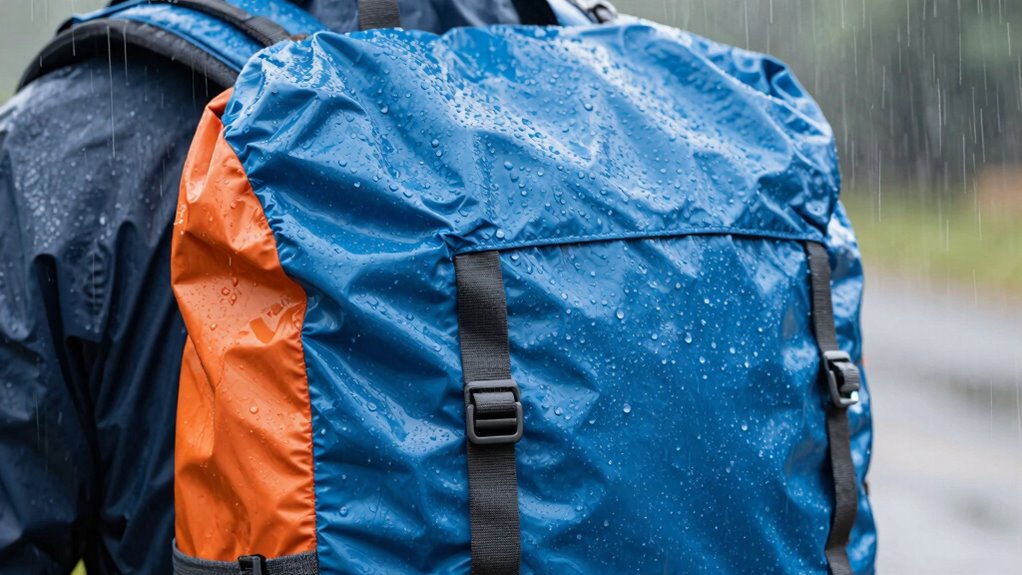
When rain starts falling, it’s essential to protect your equipment from getting soaked. Using protective layers, like rain covers or waterproof bags, creates a barrier that keeps moisture out. Invest in reliable rain gear designed for outdoor use—such as waterproof jackets, pants, and hats—to stay dry while moving your gear. These items act as an extra shield, preventing rain from seeping into your belongings. Make sure your equipment is fully covered before setting out in wet conditions. Quick-drying protective covers are especially useful for shielding gear during transport or brief stops. By combining these rain gear options with protective layers, you minimize the risk of water damage, ensuring your equipment stays dry and ready for use, no matter how heavy the rain falls. Incorporating soundscapes like waterfall noises can also create a soothing outdoor environment despite the weather. Additionally, choosing weather-resistant equipment can further enhance your protection in unpredictable conditions, especially since water-cooled mattress pads can help regulate humidity and keep your sleeping area dry in damp environments. Proper exfoliation with protective gear can also prevent skin irritation caused by prolonged moisture exposure.
Seal and Wrap Your Gear for Maximum Waterproofing
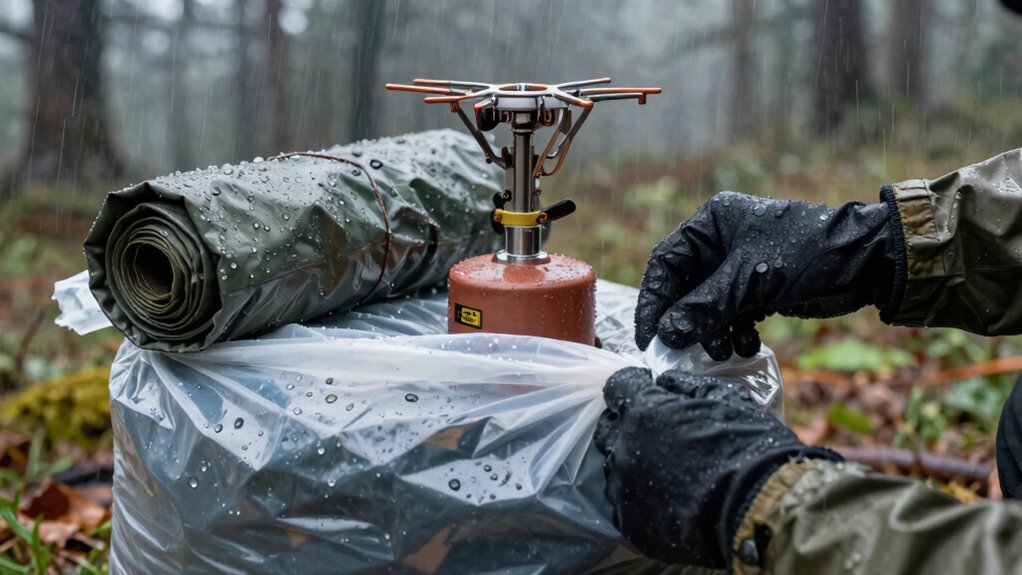
After covering your gear with protective covers and rain gear, the next step is to seal and wrap it to achieve maximum waterproofing. Proper sealing techniques guarantee no water seeps in during heavy rain or splashes. Use durable wrapping materials like waterproof bags, plastic wraps, or specialized rain sleeves to enhance protection. Wrap items tightly, smoothing out air pockets that could trap moisture. Seal all openings with waterproof tape or zip ties to prevent leaks. Double wrapping critical gear adds an extra layer of security. Remember, the goal is to eliminate gaps and create a tight barrier against water intrusion. Effective sealing and wrapping minimize the risk of water damage, keeping your gear dry and ready for use in wet conditions. Incorporating temperature regulation techniques can also help prevent condensation buildup inside your gear, further safeguarding it from moisture.
Organize Your Load to Prevent Water Damage
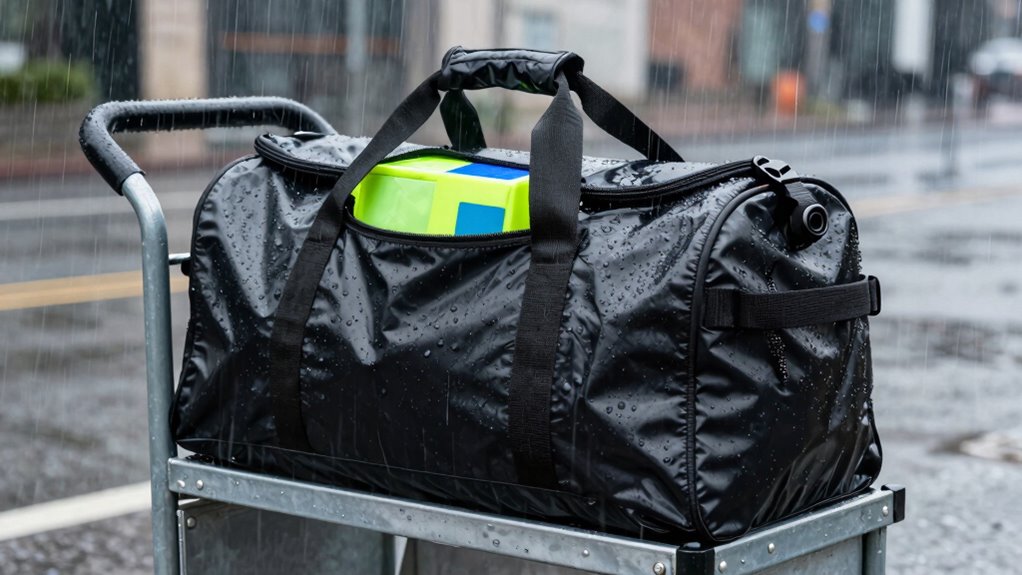
Organizing your load effectively is essential to preventing water damage during wet conditions. Use smart packing techniques by placing waterproof gear at the core of your load, surrounded by dry items for added protection. Consider weather considerations by checking forecasts and adjusting your packing accordingly. For rain-heavy conditions, store valuables in sealed, waterproof bags or dry sacks, ensuring they stay dry even if your outer layers get soaked. Distribute weight evenly to avoid shifting that could expose vulnerable items. Keep frequently accessed items easily reachable, so you don’t need to rummage through wet gear. Proper organization minimizes the risk of water seeping in and damaging your gear, making your packing both efficient and rain-proof.
Quick Fixes for Common Waterproofing Problems
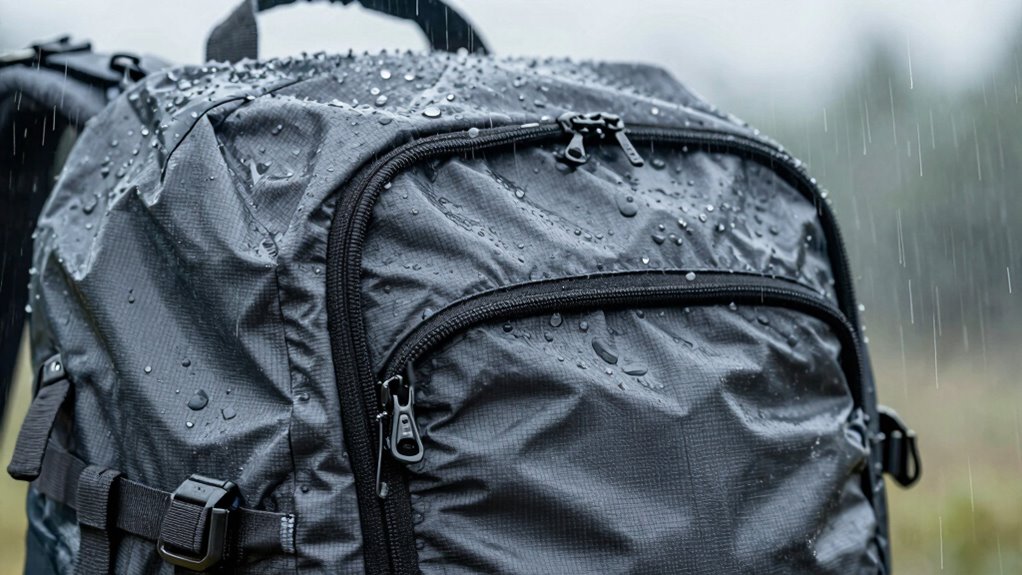
Waterproofing gear isn’t always foolproof, so quick fixes can save your trip when problems arise. If you notice leaks or wet spots, address them promptly to keep your gear dry. Check for small tears in your waterproof bags or jackets and seal them with waterproof tape. For larger holes, use patch kits to reinforce the area. Confirm your gear’s color coordination with the rest of your pack to avoid overloading one side, which can compromise waterproof layers. Also, adjust weight distribution to prevent strain on vulnerable spots. Sometimes, re-wrapping items or adding an extra layer of plastic can provide immediate protection. Quick fixes like these help maintain the integrity of your waterproof system, so you stay dry and comfortable in unpredictable weather.
Maintain Your Rain-Proof Packing System for Long-Term Use
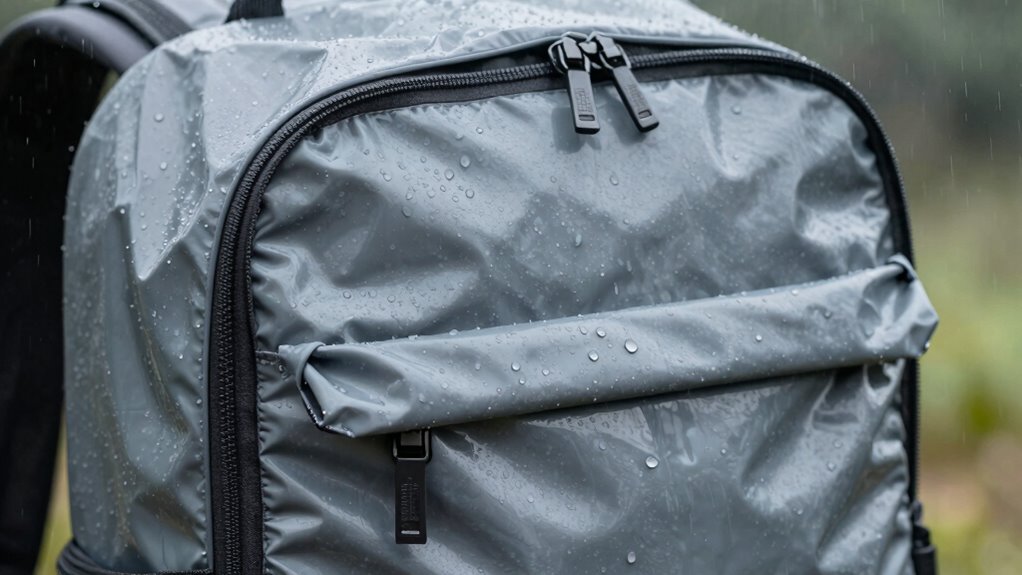
Keeping your waterproof gear in top shape over time requires regular maintenance beyond quick fixes. To guarantee your rain-proof packing system stays effective, inspect your rain resistant fabrics for signs of wear or tears, and repair any damage promptly. Clean your gear with gentle soap and water to remove dirt that can weaken the fabric’s water resistance. Check waterproof zippers regularly, lubricating them if needed, to prevent sticking or leaks. Store your gear in a cool, dry place away from direct sunlight to preserve its waterproof properties. Avoid storing it in compressed conditions for long periods, which can damage the fabric and zippers. Proper maintenance keeps your rain-resistant gear reliable, so you stay dry no matter how long your adventures last.
Frequently Asked Questions
How Do I Test My Gear’s Waterproof Effectiveness?
To test your gear’s waterproof effectiveness, perform waterproof testing by submerging it in water or spraying it with a hose to simulate rain. Check for leaks or water inside, focusing on seams and zippers. This hands-on approach helps assess gear durability and guarantees it stays dry during rain. Regular testing keeps your gear reliable, giving you confidence in its waterproof capabilities when you need it most.
Are There Eco-Friendly Waterproofing Options Available?
Yes, eco-friendly waterproofing options exist. While traditional coatings often rely on harmful chemicals, sustainable waterproofing uses eco-friendly coatings made from natural or biodegradable materials, reducing environmental impact. These options guarantee your gear stays dry without compromising sustainability. By choosing eco-friendly coatings, you support responsible consumption and protect the planet, proving that effective waterproofing doesn’t have to come at an environmental expense.
Can I Waterproof Gear Without Special Bags or Covers?
Yes, you can waterproof gear without special bags or covers. Use waterproof sprays to treat your gear, creating a water-resistant barrier that repels moisture. Additionally, apply seam sealing to reinforce vulnerable areas like seams and zippers, preventing leaks. Regularly reapply the waterproof spray for continued protection. This approach offers an eco-friendly and cost-effective way to keep your gear dry during rain, without needing specialized waterproof bags or covers.
How Often Should I Reapply Waterproof Coatings?
You should reapply waterproof coatings whenever you notice signs of wear or after exposure to harsh conditions. Regular durability testing helps determine when your gear’s protection weakens. Typically, recoat every few months for durable, long-lasting waterproofing. Keep an eye on the coating’s performance, and reapply promptly to maintain dryness. Proper maintenance guarantees your gear stays protected, especially after intense use or prolonged exposure to water.
What Are the Signs of Compromised Waterproofing?
You’ll know your waterproofing is compromised when water seeps through, your gear feels damp inside, or there’s visible wear on the coating. Regular gear maintenance helps preserve waterproof durability, so inspect your gear often. Look for cracks, peeling, or patches where water penetrates. If these signs appear, reapply waterproof coatings promptly to maintain protection. Staying vigilant guarantees your gear stays dry and performs well in wet conditions.
Conclusion
Did you know that water damage causes over $1.8 billion in gear repairs annually? By adopting rain-proof loading techniques, you can protect your equipment from costly damage and extend its lifespan. Remember, using the right waterproof bags, sealing your gear, and organizing your load are simple steps that make a big difference. Stay proactive with maintenance and quick fixes to guarantee your gear stays dry no matter the weather. Keep your adventures worry-free and gear protected!