
To avoid wasting battery capacity, guarantee your inverter matches your energy needs and operates within its ideal load range of 20% to 80%. Oversized inverters waste energy at low loads, while undersized ones risk overloads. Manage your system and usage habits to keep the inverter working efficiently and prolong its life. Following these principles boosts your system’s performance and saves money. Keep exploring for more tips to enhance your energy setup.

Get travel and outdoor gear delivered free — and shop member deals
- Fast, free delivery on millions of items
- Access to Prime Big Deal Days deals on October 6–7
- Prime Video, Amazon Music and more included
Key Takeaways
- Match inverter capacity closely with your typical energy consumption to prevent inefficiency and energy waste.
- Maintain inverter load between 20% and 80% of its rated capacity for optimal efficiency.
- Avoid oversized inverters that run at low loads or undersized ones that risk overloads.
- Schedule high-power device usage during inverter’s peak efficiency periods to optimize performance.
- Proper system design and load management extend battery life and maximize energy utilization.
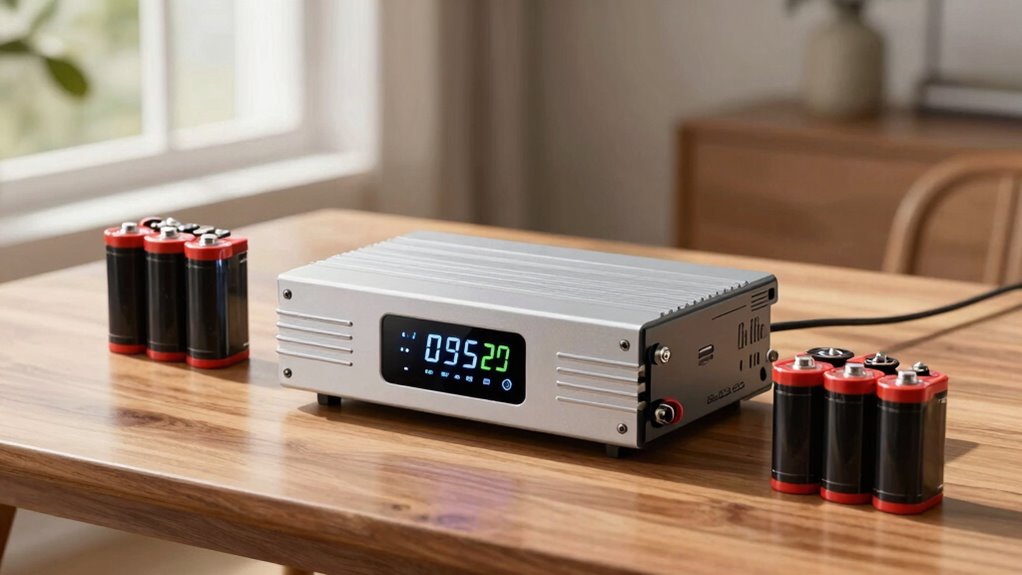
If you want to extend your battery’s lifespan, understanding the inverter rule is essential. This rule is a simple yet powerful concept that helps you avoid wasting valuable battery capacity. When dealing with renewable energy systems or battery-powered devices, the inverter’s role is to convert direct current (DC) into alternating current (AC) so your appliances can run. However, not all inverters operate at the same efficiency, and using an inverter improperly can lead to unnecessary energy loss. That’s where the inverter rule comes into play, guiding you to optimize your system for better solar efficiency and overall power management.
Understanding the inverter rule helps maximize battery life and energy efficiency in renewable systems.
The core idea of the inverter rule is to match your inverter’s capacity closely with your energy needs. If your inverter is too large, it may run inefficiently or waste energy during idle periods. Conversely, an undersized inverter can cause overloads or limit your system’s capacity. By choosing an inverter that aligns with your typical energy consumption, you maximize power optimization. This means you get more usable energy from your solar panels or battery system without wasting excess capacity. It’s about striking a balance so your system operates at peak efficiency, reducing heat loss and minimizing energy dissipation. Additionally, understanding the inverter efficiency can help you make smarter choices for your setup.
Another key aspect of the inverter rule involves operating your inverter within its optimal load range, typically between 20% and 80% of its rated capacity. Running the inverter consistently at low loads can decrease its efficiency, while overloading it causes stress and potential damage. When you stay within this range, you help ensure that your inverter works smoothly, providing better solar efficiency and prolonging its lifespan. This practice also reduces the risk of unnecessary battery drain, helping you get the most out of your stored energy. Proper load management, including energy consumption patterns, further enhances overall system performance. Recognizing the importance of system sizing ensures your inverter remains within its most efficient operational parameters.
In addition, being aware of the inverter’s operational limits and designing your system accordingly can significantly improve its longevity and performance. Power optimization isn’t just about choosing the right inverter; it also involves managing your energy consumption patterns. For example, scheduling high-power devices during periods when your inverter operates at its most efficient point can make a noticeable difference. By understanding the inverter rule and applying it to your system setup, you optimize your solar efficiency, ensuring your battery capacity is used wisely. This not only saves you money on energy costs but also extends the overall life of your batteries.
In essence, following the inverter rule helps you avoid waste and enhances the performance of your energy system. It’s a straightforward principle that, when applied correctly, ensures you get the most out of your investment in renewable energy. By paying attention to inverter size, load management, and operational practices, you maximize power optimization and keep your battery capacity healthy for the long term.
As an affiliate, we earn on qualifying purchases.
Frequently Asked Questions
How Does the Inverter Rule Affect Battery Lifespan?
The inverter rule helps extend your battery lifespan by reducing battery degradation caused by unnecessary high loads. By managing power efficiency more effectively, it prevents overworking your battery, which can lead to faster wear and tear over time. When you follow this rule, you minimize stress on your battery, ensuring it maintains its capacity longer and performs better, ultimately saving you money and hassle in the long run.
Can the Inverter Rule Be Applied to All Types of Batteries?
Applying the inverter rule is like fitting a key to the right lock—it’s not one-size-fits-all. Not all batteries match the inverter’s specifications, affecting battery compatibility and inverter efficiency. You need to check if your battery type is compatible, especially between lithium-ion, lead-acid, or other chemistries. When the inverter matches your battery, you maximize efficiency and lifespan, avoiding unnecessary energy loss or damage.
What Are Common Mistakes When Implementing the Inverter Rule?
You might make mistakes like neglecting proper battery calibration, which affects inverter efficiency and overall performance. Avoid pushing batteries beyond their recommended voltage or depth of discharge, as it reduces lifespan and efficiency. Also, don’t overlook regular maintenance checks or underestimate the importance of matching your inverter to your battery type. These errors can lead to wasted capacity and decreased system reliability, so stay attentive to calibration and efficiency guidelines.
Does Ambient Temperature Impact the Inverter Rule’s Effectiveness?
Ever wonder if ambient temperature affects the inverter rule’s efficiency? It does, due to temperature sensitivity that impacts inverter performance variability. When it’s too hot or cold, your inverter might not operate at its best, risking energy loss or reduced battery life. This subtle factor can make a big difference in how well your system performs, so keep an eye on temperature conditions to maximize your inverter’s effectiveness and truly save battery capacity.
How Often Should I Check My Battery Capacity When Using the Inverter Rule?
You should check your battery capacity regularly, ideally every few months, to guarantee accurate capacity monitoring. Performing a battery calibration during these checks helps keep your battery’s capacity readings precise. This way, you avoid overestimating your battery’s remaining power, which can lead to unexpected shutdowns. Consistent calibration and monitoring allow you to optimize your inverter rule, extending your battery’s lifespan and maintaining reliable performance over time.
As an affiliate, we earn on qualifying purchases.
Conclusion
So, next time you think about maxing out your inverter’s capacity, remember the inverter rule. It’s the clever little trick that’s actually saving your battery from a slow death—yet, ironically, most folks ignore it until they’re stranded in the dark. Embrace the rule now, and you’ll avoid the inconvenience later. Who knew that a simple guideline could be your secret weapon against battery heartbreak? Turns out, saving your battery is just a rule away.
battery inverter with load management
As an affiliate, we earn on qualifying purchases.
As an affiliate, we earn on qualifying purchases.
solar inverter with peak efficiency
As an affiliate, we earn on qualifying purchases.
As an affiliate, we earn on qualifying purchases.
Fall Picks
fall essentials
As an affiliate, we earn on qualifying purchases.