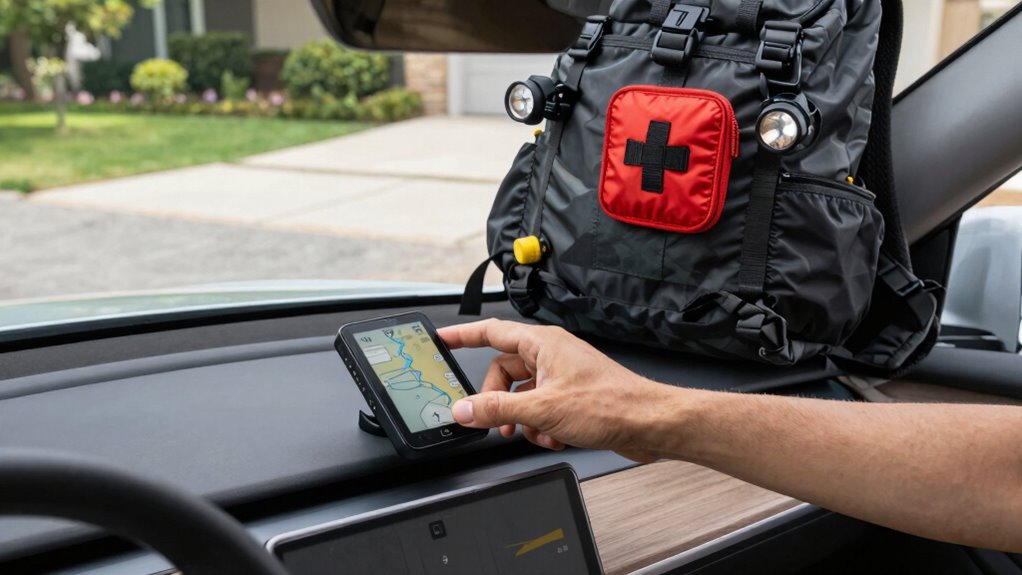

Before your long trip, thoroughly test your new gear by checking that all safety features and electronics work properly, like navigation devices, dashcams, and backup cameras. Load your vehicle with packed items and take a short drive to observe how the gear performs and stays in place. Make sure comfort items are effective and climate controls function. Confirm safety systems and mechanical parts are operational. Keep exploring for more tips to make certain your gear is ready for the road.

Get travel and outdoor gear delivered free — and shop member deals
- Fast, free delivery on millions of items
- Access to Prime Big Deal Days deals on October 6–7
- Prime Video, Amazon Music and more included
Key Takeaways
- Fully charge and test all electronic devices, including navigation, cameras, and chargers, to ensure proper functionality.
- Pack gear as planned and take a short drive to assess stability and comfort during movement.
- Verify all safety features and mechanical components are operational through functional tests.
- Check that comfort items like pillows and climate controls work effectively for long-term use.
- Confirm that all essential items are present, accessible, and properly organized for easy retrieval during the trip.
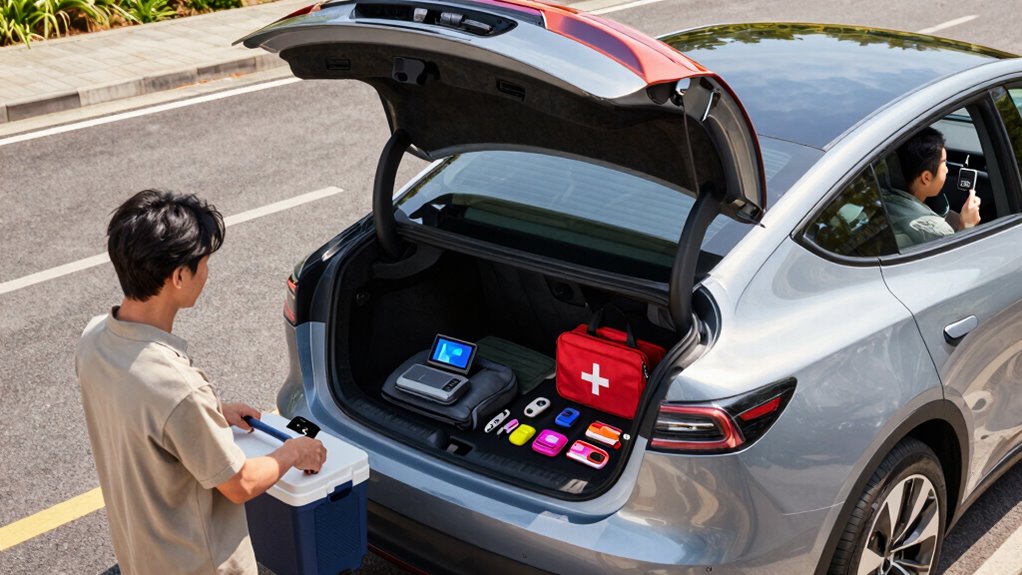
Before hitting the road, it’s essential to thoroughly test your new trip gear to make sure everything works smoothly and keeps you comfortable. This step helps you avoid surprises during your long journey and guarantees that your tech safety measures are effective. Start by unpacking your packing essentials and checking each item. Confirm that your first aid kit is fully stocked, your snacks are sealed, and your clothing layers are appropriate for the weather forecast. It’s easy to overlook small things, but double-checking these essentials saves you time and stress later on.
Next, focus on testing your tech safety gear. If you’ve invested in new navigation devices, make sure they’re fully charged and updated with the latest maps. Practice using voice commands or touchscreen controls to make sure they’re intuitive and responsive. If you have a dashcam or backup camera, run a quick test to verify they record correctly and display clear images. Connecting your devices to your car’s power source and making sure they stay charged during a long drive is critical. Don’t forget to test your mobile devices as well—update your apps, check your data plan, and make sure your chargers and mounts are secure.
As part of your gear check, take time to test some of your comfort items. For instance, if you’re bringing a new travel pillow or seat cushion, sit with it for a few minutes to see if it provides enough support. Adjust your window shades and sun visors to ensure they block out sunlight effectively. Make sure your climate control settings work properly, so you stay comfortable throughout the trip. If you’re planning to listen to music or podcasts, test your new Bluetooth speaker or headphones to confirm they connect easily and sound good. Additionally, understanding your vehicle safety features**** can boost your confidence and help you respond effectively in emergencies.
Don’t forget about safety features. Test your vehicle’s emergency brake, lights, and turn signals. Check your tire pressure and make sure your spare is ready to go. If your car has a new safety device, like a collision warning system or blind-spot monitor, read the manual and do a quick functional test. This step guarantees that your tech safety is up to date and reliable, giving you peace of mind as you start your trip. Performing a comprehensive vehicle safety check can help identify potential issues before they become problems on the road.
Lastly, do a trial run with all your gear packed. Load your vehicle as you would for the trip, then go for a short drive. Pay attention to how everything feels—whether your gear shifts positions or becomes cumbersome. Adjust as needed. This final check helps you identify any issues early, so when you’re ready for the long route, you can do so confident that your gear is tested, safe, and ready to support your adventure.
As an affiliate, we earn on qualifying purchases.
Frequently Asked Questions
What Safety Precautions Should I Take During Gear Testing?
You should prioritize safety gear and emergency preparedness when testing new gear. Wear protective equipment like helmets, gloves, and reflective vests during testing to prevent injuries. Test in a controlled environment to identify potential issues without risking yourself on the road. Make sure your safety gear fits properly and functions well. Keep emergency supplies handy, so you’re prepared for unexpected situations, ensuring your safety throughout the testing process.
How Often Should I Update or Replace Road Trip Gear?
Like a trusty knight updating armor, you should replace your road trip gear annually or after any major use, especially camping essentials and emergency preparedness items. Regularly check for wear and tear, expiration dates, and functionality. If gear shows signs of damage, or if safety standards have evolved, it’s time for an upgrade. Staying current guarantees your gear remains reliable, keeping you safe and prepared for any adventure or unexpected emergency.
Can I Test Gear in Real Driving Conditions?
Yes, you can test your gear in real driving conditions. Load your gear into your vehicle’s storage compartments to evaluate how well it fits and stays secure, especially considering gear storage options. Drive through different weather conditions to see how weather impact affects your gear’s performance and durability. This practical test helps identify potential issues, ensuring everything functions smoothly and stays safe during your long road trip.
What Should I Do if a Piece of Gear Fails During Testing?
If a piece of gear fails during testing, you should assess its gear durability and identify the failure point. Replace or repair the item if needed, then retest to meet your testing benchmarks. Don’t ignore minor issues, as they could worsen during a long trip. Document the failure and your fixes to guarantee the gear performs reliably on the road, giving you peace of mind before your journey begins.
Are There Any Legal Considerations When Testing New Gear on the Road?
When testing new gear on the road, you need to verify legal compliance to avoid fines or penalties. Check local laws about modifications or equipment use, especially if the gear affects vehicle safety or emissions. You may also need testing permits if the gear is considered experimental or modifies the vehicle considerably. Always research regulations beforehand, and consider consulting local authorities to prevent legal issues during your road trip.
portable Bluetooth speaker for cars
As an affiliate, we earn on qualifying purchases.
As an affiliate, we earn on qualifying purchases.
Conclusion
Before hitting the open road, testing your gear is like giving your trusty sidekick a quick trial run—trust builds with every mile. Make sure everything works smoothly, so you’re not caught off guard miles from home. Think of it as tuning a fine instrument; when all parts harmonize, your journey flows effortlessly. So, take the time to test, tweak, and prepare—your adventure will sail as smoothly as a well-oiled machine, ready to embrace whatever comes your way.
As an affiliate, we earn on qualifying purchases.
As an affiliate, we earn on qualifying purchases.
Halloween Picks
halloween
As an affiliate, we earn on qualifying purchases.