
Maintaining proper tire pressure is a simple habit that can prevent costly repairs and safety hazards. Regularly checking your tire pressure helps you catch leaks, valve stem issues, or under/overinflation caused by temperature changes. This proactive step boosts safety, extends tire life, and improves fuel efficiency. Don’t overlook this easy routine—you’re more protected than you think. Keep going to discover more tips on how consistent tire care can save you money and trouble.

Get travel and outdoor gear delivered free with Prime
- Fast, free delivery on millions of items
- Prime Video, Amazon Music and more included
- Member-only deals all year
Key Takeaways
- Regularly checking tire pressure prevents under- or overinflation, reducing the risk of blowouts and accidents.
- Inspecting valve stems ensures air leaks are detected early, maintaining proper pressure and safety.
- Seasonal pressure adjustments avoid damage caused by temperature fluctuations, extending tire life.
- Routine maintenance with reliable tools ensures accurate readings, preventing costly repairs.
- Proper tire care improves fuel efficiency and even wear, avoiding premature tire replacement.
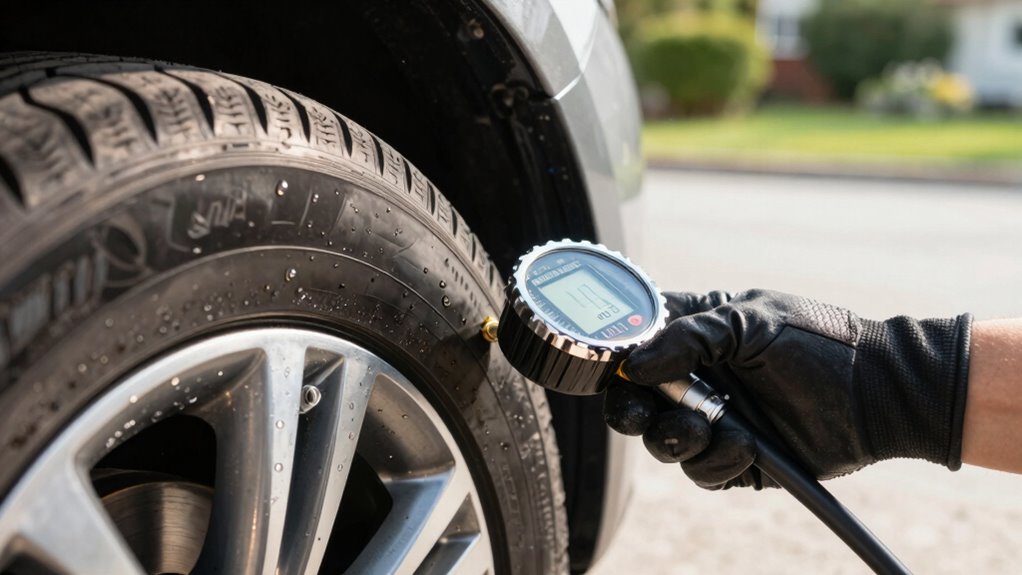
Maintaining proper tire pressure isn’t just a routine task—it’s a vital habit that can improve your safety, extend your tires’ lifespan, and boost fuel efficiency. One of the key components often overlooked is valve stem integrity. Your valve stems are small but crucial parts of your tires, preventing air leaks and maintaining consistent pressure. Over time, they can degrade, crack, or become clogged, leading to slow leaks that are easy to miss. Regularly inspecting your valve stems ensures they remain in good condition, avoiding sudden pressure drops that could compromise your safety on the road.
Seasonal pressure adjustments are equally important. Temperature fluctuations cause air to expand and contract, which affects tire pressure. During colder months, you’ll notice a drop in pressure, and in warmer months, it tends to increase. Ignoring these changes means you’re likely to drive with underinflated or overinflated tires, both of which can cause uneven tire wear, reduced fuel economy, and increased risk of blowouts. To prevent these issues, you should check and adjust your tire pressure more frequently during seasonal transitions. This practice helps you maintain optimal pressure year-round, keeping your tires performing at their best regardless of the weather.
Your habit of checking tire pressure shouldn’t be limited to just the pressure gauge reading. You need to pay attention to the condition of the valve stems as part of your routine inspection. Look for signs of cracking, corrosion, or damage, and replace them if necessary. A damaged valve stem can cause slow leaks, which may not be immediately noticeable but can lead to significant problems over time. Ensuring valve stem integrity is a simple step that can save you from costly tire replacements or dangerous blowouts. Additionally, understanding the importance of tire pressure maintenance can help emphasize the safety benefits of these routine checks. Regular air pressure monitoring can also help you identify potential issues early on, saving you money and inconvenience in the long run. Incorporating valve stem inspections into your routine can further enhance your overall tire care strategy. Recognizing the role of proper inflation tools in accurate pressure measurement ensures you get the most reliable readings during each check.
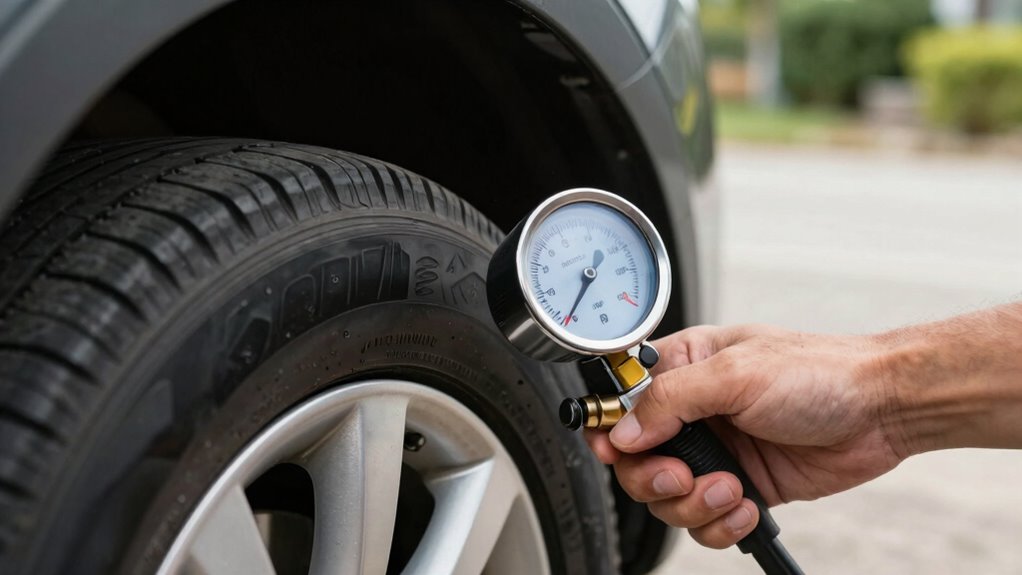
Furthermore, using a reliable tire pressure gauge and calibrating it regularly ensures your readings are accurate. Proper tools and techniques make all the difference when maintaining your tires. Incorporating these simple but effective habits—monitoring valve stem integrity and adjusting for seasonal changes—can prevent more trouble than most people realize. It’s a proactive approach that protects your safety, saves money, and keeps your tires rolling smoothly for miles to come.
As an affiliate, we earn on qualifying purchases.
Frequently Asked Questions
How Often Should I Check My Tire Pressure?
You should check your tire pressure at least once a month and before long trips. Many fall for tire pressure myths, thinking it’s unnecessary often. Seasonal tire checks are especially important as temperature changes affect pressure. Regular checks help maintain safety, fuel efficiency, and tire longevity. Don’t rely on visual cues—use a reliable gauge to confirm your tires are properly inflated, preventing issues caused by under- or over-inflation.
Can Over-Inflating Tires Cause Damage?
Over-inflating your tires can cause serious damage, like turning them into fragile glass balls ready to shatter at any bump. It weakens tire durability, increasing the risk of blowouts, and compromises road safety. When tires are over-inflated, they won’t grip the road properly, making your drive unpredictable. Always stick to the recommended pressure to protect your tires and guarantee safe, smooth journeys.
What Tools Are Best for Checking Tire Pressure?
You should use a reliable tire pressure gauge to get accurate readings. Digital gauges are often preferred because they provide precise tire pressure accuracy and are easy to read, especially in low light. However, analog gauges are durable and simple to use. Whichever you choose, make sure it’s calibrated correctly and used consistently to keep your tires properly inflated, preventing potential damage and ensuring safer driving.
Does Temperature Affect Tire Pressure Readings?
You might notice your tire pressure readings change with temperature fluctuations, and that’s no coincidence. As outdoor temperatures drop or rise, tire pressure variations occur because air expands in warmer weather and contracts in colder conditions. This natural response means you should check your tire pressure more frequently during temperature swings. Keeping an eye on these changes helps you maintain proper tire pressure, ensuring safety, fuel efficiency, and longer tire life.
When Is the Best Time to Check Tire Pressure?
You should check your tire pressure when tires are cold, ideally before driving or after at least three hours of no driving, to avoid temperature-influenced readings. Don’t fall for tire pressure myths that suggest pressure changes are only seasonal; regular checks are essential year-round. Seasonal tire care includes monitoring pressure as temperatures fluctuate, ensuring your tires stay ideal and safe. This habit helps prevent uneven wear and improves fuel efficiency.
As an affiliate, we earn on qualifying purchases.
Conclusion
By making tire pressure checks part of your routine, you prevent costly repairs and guarantee safety on the road. It’s a small habit with a big payoff, much like checking your mirror before a turn—simple, yet essential. Ignoring this simple step might seem harmless, but it can lead to bigger issues down the line. In the end, the quiet diligence you invest today keeps you moving smoothly, where neglect could leave you stranded in unforeseen trouble.
As an affiliate, we earn on qualifying purchases.
As an affiliate, we earn on qualifying purchases.
Halloween Picks
halloween
As an affiliate, we earn on qualifying purchases.