To use binoculars better on wildlife-focused road trips, start by choosing a pair that fits comfortably and is compatible with your camera. Practice focusing quickly with the central wheel and fine-tuning for each eye. Keep your hands steady or use a tripod to avoid blurry images. Scan slowly and patiently, adjusting focus as needed to get clear views. Respect wildlife distances to avoid disturbing animals. If you explore these tips further, you’ll discover even more ways to elevate your wildlife sightings.
Key Takeaways
- Practice focusing techniques and adjust diopters for clear, sharp images of moving wildlife.
- Keep lenses clean and use appropriate eye cups for comfortable, unobstructed viewing.
- Stabilize binoculars with elbows or tripods to prevent blurry images during long observation periods.
- Maintain a respectful distance to avoid disturbing animals while maximizing viewing effectiveness.
- Familiarize yourself with device features and lighting conditions for optimal performance in various environments.
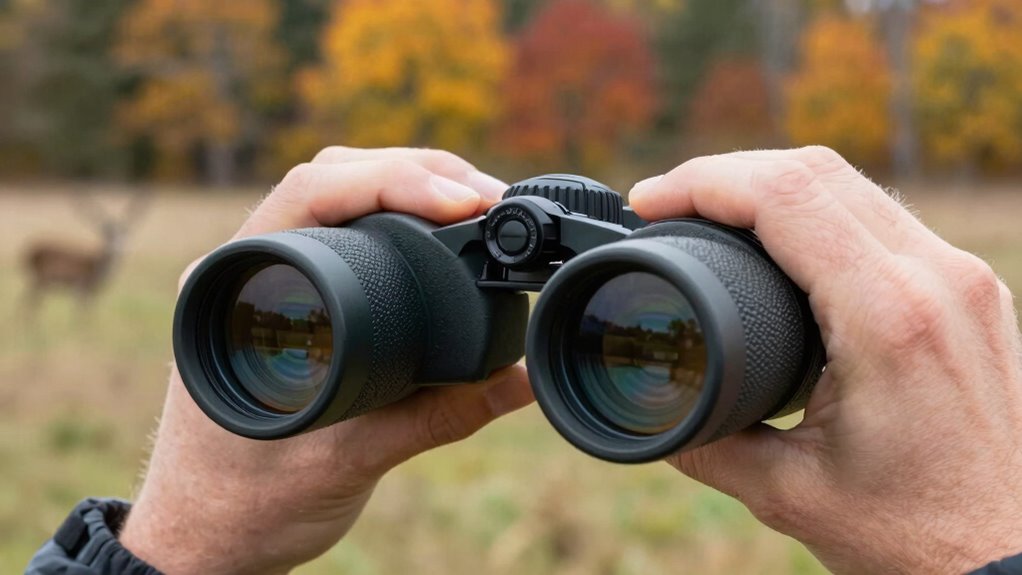
Have you ever missed a stunning wildlife sighting simply because you didn’t have the right tools? When you’re out on a wildlife-focused road trip, your binoculars are your best chance to see animals clearly and up close. But knowing how to use them effectively makes a huge difference. First, ensure your binoculars are comfortable to hold and fit your eyes well. Adjustable eyecups are essential, especially if you wear glasses, so you can get a full, clear view without straining. Before you set out, practice focusing in different lighting conditions—dawn, midday, or dusk—to get quick, precise adjustments when you spot something interesting.
Bird watching is a common reason people invest in binoculars, and it’s no different on a road trip. To maximize your experience, learn how to quickly identify and focus on distant birds. Use the central focus wheel to sharpen the image and the diopter adjustment to fine-tune focus for each eye. This ensures that even fast-moving or distant birds are clear. Keep your binoculars clean; smudges or dirt can obscure your view, so carry a soft cloth and clean your lenses regularly. Having a pair that’s compatible with a camera is a bonus, especially if you want to capture those fleeting moments. Many binoculars now come with adapters that allow you to connect your smartphone or camera, making it easier to take photos without missing the action.
When you spot wildlife, don’t just stare through your binoculars and move on. Take the time to scan your surroundings slowly, adjusting your focus as needed to get a detailed look. If you’re using binoculars with camera compatibility, frame your shot carefully and stabilize your device to prevent blurry images. Remember, the key is quick and smooth focus adjustments; the more familiar you are with your binoculars, the faster you can lock onto a moving target. Also, make sure to keep your hands steady—resting elbows against your body or using a tripod adapter can help. Additionally, becoming familiar with different gadget features can enhance your overall experience and ensure you’re prepared for any situation. Practicing patience and observation will help you develop a sharper wildlife viewing skill set, making each sighting more rewarding.
Familiarizing yourself with proper techniques can also significantly improve your viewing success and enjoyment. Developing a better understanding of binocular optics will allow you to maximize image clarity and brightness, especially in challenging lighting conditions. It’s also helpful to learn how to quickly switch between different focusing methods, depending on what you are observing. Finally, respect wildlife by maintaining a safe and non-intrusive distance. Use your binoculars as your eyes, getting as close as possible without disturbing animals. With practice, your binoculars become an extension of your vision, transforming your wildlife encounters from fleeting glimpses into memorable, detailed views. Whether you’re bird watching or trying to capture a rare animal, mastering your binoculars ensures you won’t miss the best moments on your road trip.
bird watching binoculars with camera adapter
As an affiliate, we earn on qualifying purchases.
As an affiliate, we earn on qualifying purchases.
Frequently Asked Questions
How Should I Clean and Maintain My Binoculars for Optimal Use?
To keep your binoculars in top shape, regularly clean the lenses with a soft, lint-free cloth, avoiding harsh chemicals that can damage lens coatings. Always store them with waterproof seals intact to prevent moisture and dust from entering. When not in use, keep the binoculars in a protective case, and check the seals periodically for wear. Proper maintenance guarantees clear views and extends your binoculars’ lifespan.
What Are the Best Binocular Features for Wildlife Viewing?
Did you know binoculars with a magnification power of 8x or 10x are preferred by 80% of wildlife enthusiasts? For wildlife viewing, look for binoculars offering a wide field of view, which helps you track fast-moving animals. A good balance between magnification and field of view guarantees clarity and ease of use. Features like image stabilization and waterproofing also enhance your experience, making spotting wildlife more rewarding.
How Do I Stabilize Binoculars During Long Viewing Sessions?
To stabilize binoculars during long viewing sessions, you should use a tripod or monopod for better tripod stability, reducing hand fatigue. Additionally, rest your elbows on a stable surface or use wrist support to keep your hands steady. Taking these steps helps eliminate shaky images, allowing you to focus on wildlife details. Practice slow, controlled breathing to further improve steadiness, enhancing your overall viewing experience.
Can Binoculars Be Used Effectively at Night or in Low Light?
Binoculars can be used effectively at night or in low light if they feature good night vision and high low light performance. Look for models with larger objective lenses, which gather more light, and multi-coated lenses for clearer images. Keep the binoculars steady to maximize visibility, and consider using a tripod for stability. While they won’t match night vision devices, quality binoculars enhance your low light wildlife viewing experience.
What Accessories Can Enhance Binocular Viewing Experiences?
To enhance your binocular viewing experience, consider accessories like a sturdy tripod to stabilize your view, especially at higher magnification settings. A neck strap or harness helps prevent drops during long observations. Waterproof coatings on binoculars protect against moisture and rain, ensuring durability. Additionally, lens cleaning kits keep your lenses clear, providing crisp images. These accessories make wildlife spotting easier, more comfortable, and more reliable during your road trips.
compact binoculars for wildlife viewing
As an affiliate, we earn on qualifying purchases.
As an affiliate, we earn on qualifying purchases.
Conclusion
By mastering your binoculars, you’ll open a world of hidden wildlife treasures waiting just beyond your line of sight. Think of them as your trusty wings, giving you a bird’s-eye view of nature’s secrets. With a little practice, you’ll be spotting shy animals and distant details like a seasoned explorer. So, keep your binoculars close, stay patient, and let your curiosity be the compass guiding you through unforgettable wildlife adventures. Happy wildlife watching!
As an affiliate, we earn on qualifying purchases.
As an affiliate, we earn on qualifying purchases.