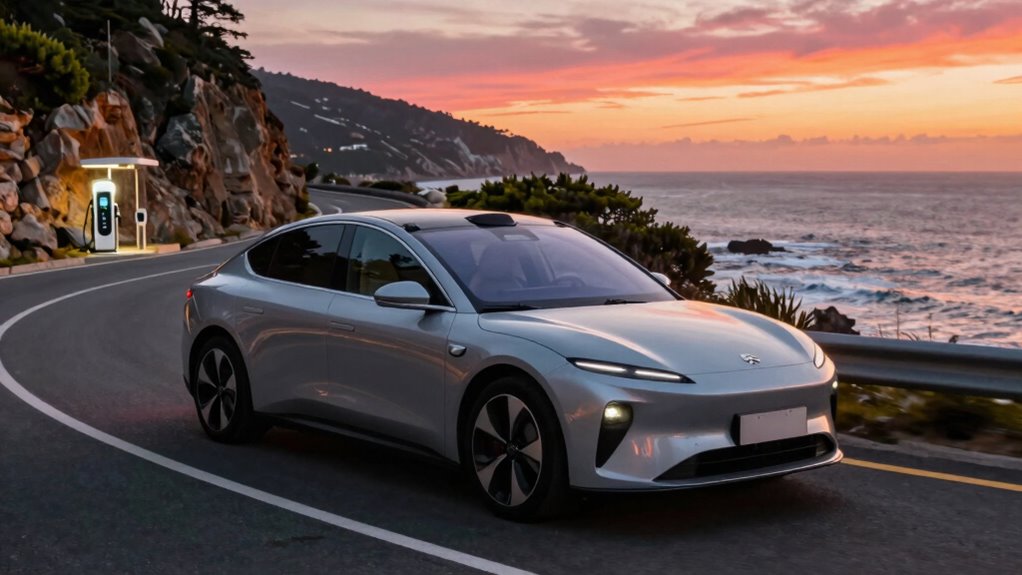

The EV Road Trip Buffer Rule helps you kill range anxiety by encouraging you to set aside a safety margin of charge before reaching low levels, giving you confidence to manage your battery effectively. By recharging around 20-30% instead of waiting until the battery is almost empty, you avoid surprises and protect your battery’s lifespan. Using smart tools and adjusting your driving style can boost your energy efficiency. Keep going to learn more ways to stay confident on the road.

Get travel and outdoor gear delivered free — and shop member deals
- Fast, free delivery on millions of items
- Access to Prime Big Deal Days deals on October 6–7
- Prime Video, Amazon Music and more included
Key Takeaways
- The buffer rule encourages proactive recharging, preventing fear of running out of charge far from stations.
- It involves setting aside extra battery capacity to handle unexpected route changes or delays.
- Monitoring tools help drivers maintain a healthy charge buffer, reducing anxiety during long trips.
- Proper battery management and driving strategies conserve energy and build confidence.
- The buffer rule extends battery lifespan and ensures preparedness, easing range-related stress.
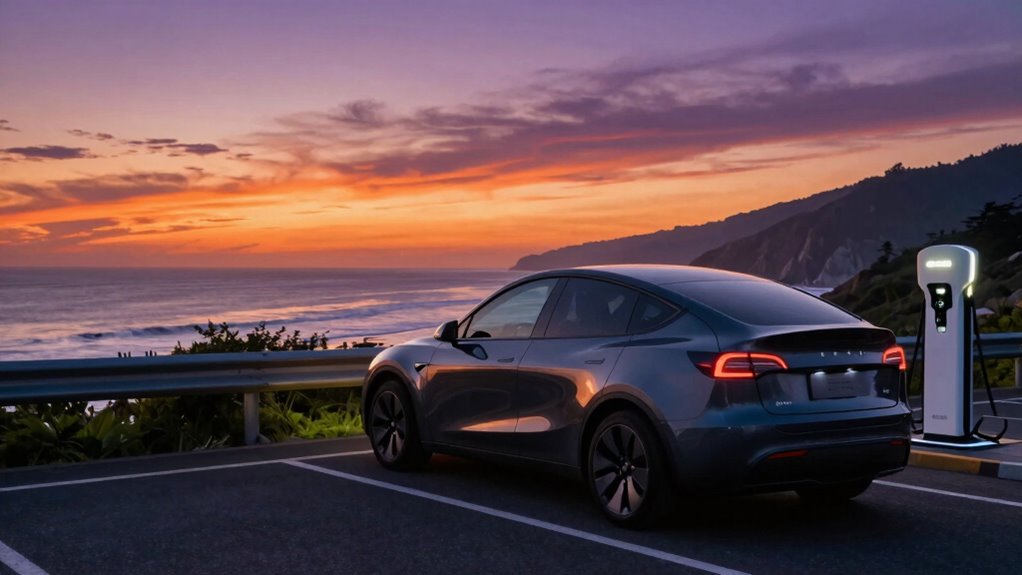
Planning an electric vehicle (EV) road trip can be intimidating, especially with concerns about running out of charge far from charging stations. The fear of being stranded is real, but with a smart approach, you can turn this worry into confidence. One effective strategy is to adopt the EV road trip buffer rule, which helps you stay ahead of potential range issues. This rule involves setting aside a safety margin of extra charge, so you’re not pushing your battery to its absolute limit. It’s about more than just knowing where charging stations are; it’s about managing your battery wisely throughout the journey.
When you plan your trip, don’t just look for charging stations along your route. Instead, think of your battery like a bank account—you want to keep a healthy balance at all times. By maintaining a buffer, you guarantee that if your route takes an unexpected turn or a charging station isn’t available, you won’t be caught off guard. This method encourages you to recharge before your battery dips too low, rather than waiting until you’re nearly out of juice. This strategy also aligns with battery management principles that help prolong your vehicle’s lifespan and optimize performance. Incorporating energy efficiency techniques can further enhance your trip planning and help conserve power. It’s a simple but powerful way to improve your confidence and reduce range anxiety.
Battery management plays a vital role here. Modern EVs often have features that help you monitor your battery’s health and optimize its use. Use these tools to keep track of your remaining charge and plan your stops accordingly. The buffer rule means you’ll be planning your charging stops with a margin—like charging to 80% instead of 100%, or stopping for a recharge at around 20-30% remaining instead of letting your battery run down to near empty. This approach not only extends your battery’s lifespan but also gives you peace of mind that you’re prepared for any detours or delays. Additionally, understanding the latest in battery technology can help you make more informed decisions about your charging strategies. Incorporating advanced battery monitoring systems can further enhance your trip planning and ensure you stay within safe operating limits.
As you drive, stay mindful of your battery’s state of charge and keep an eye on your energy consumption. Adjust your driving style—accelerate gradually, maintain steady speeds, and avoid unnecessary idling—to conserve power. When it comes to charging, don’t wait until the last minute. Instead, plan your stops with the buffer rule in mind, guaranteeing you always have more charge than the minimum needed to reach the next station. This proactive approach is especially important as battery capacity can vary between models and impacts your overall range. This not only prevents panic stops but also reduces the stress associated with range anxiety.
As an affiliate, we earn on qualifying purchases.
Frequently Asked Questions
How Do I Calculate My Ev’s Optimal Buffer Distance?
To calculate your EV’s ideal buffer distance, consider your battery degradation and charging speed. Start by knowing your vehicle’s maximum range and subtract a safety margin to account for battery wear over time, which reduces range. Also, factor in charging speed—faster chargers let you extend your buffer with quick top-ups. This way, you prevent range anxiety by maintaining a reliable buffer that accounts for battery health and charging efficiency.
Does Weather Affect the Buffer Rule’s Effectiveness?
Weather impact can turn your buffer zone into a fragile bubble, making it less reliable. When conditions are harsh—like extreme cold, heat, or strong headwinds—you should adjust your buffer distance accordingly. Don’t be afraid to increase your buffer to account for these variables; a simple buffer adjustment keeps you safe and confident. Remember, weather’s an unpredictable co-pilot, so stay flexible and prioritize safety on your journey.
Can This Buffer Rule Be Applied to All EV Models?
The buffer rule can generally be applied to most EV models, but you should consider charging stations and battery degradation. Different vehicles have varying ranges, and some batteries degrade faster over time, affecting overall range. By maintaining a buffer, you guarantee access to charging stations before running out of power, protecting your battery’s health and reducing range anxiety. Always check your EV’s specifications to optimize this approach effectively.
What Apps Help Track My Ev’s Range and Buffer?
Apps like PlugShare, A Better Route Planner (ABRP), and ChargePoint can help track your EV’s range and buffer. These apps simplify your search for charging stations, showcasing locations along your route. They enhance battery efficiency awareness and give you real-time updates, reducing range anxiety. With these tools, you can confidently navigate your journey, knowing where to stop and how to optimize your EV’s energy for a smooth, stress-free trip.
How Does Traffic Impact Buffer Planning on Road Trips?
Traffic congestion can considerably impact your buffer planning on road trips. When you hit slow-moving traffic, your EV consumes more energy, reducing your remaining range. To counter this, adjust your route planning by avoiding known congestion zones or timing your trip for off-peak hours. Staying flexible with your route and monitoring real-time traffic updates helps guarantee you maintain an adequate buffer, preventing range anxiety and keeping your trip smooth.
As an affiliate, we earn on qualifying purchases.
Conclusion
By embracing the EV road trip buffer rule, you can confidently conquer countless miles without concern. This simple strategy safeguards your stamina, secures your stops, and soothes your stress. With a little planning and a smart buffer, you’ll breeze past barriers and banish battery blues. So, stay savvy, stay strategic, and enjoy every exciting excursion — because a well-watched walk guarantees worry-free wandering on your wonderful road trip!
As an affiliate, we earn on qualifying purchases.
As an affiliate, we earn on qualifying purchases.
Halloween Picks
halloween
As an affiliate, we earn on qualifying purchases.