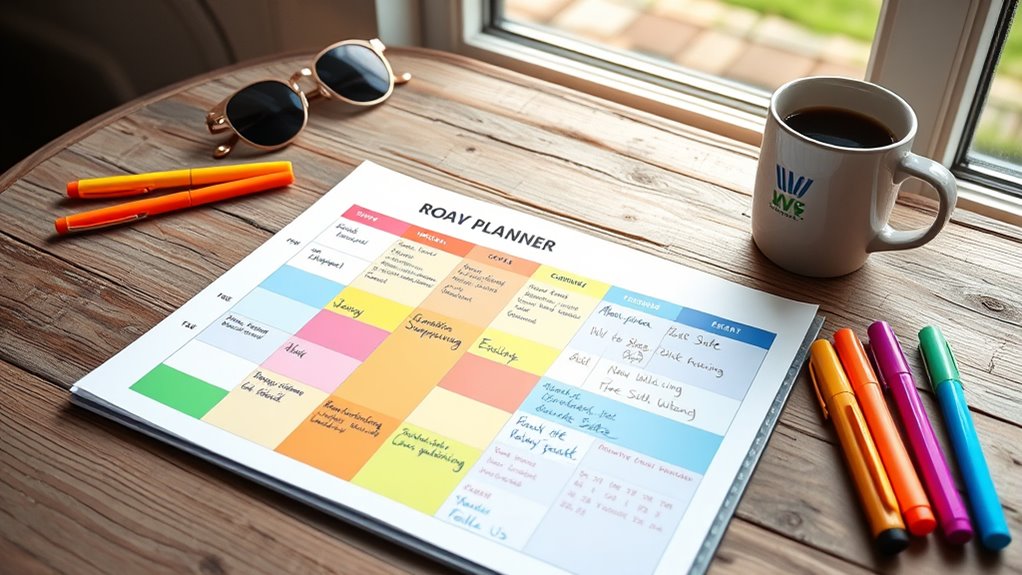

A road trip day planner template helps you structure your itinerary by balancing driving, sightseeing, and relaxing moments. Start by mapping out key destinations, planning scenic routes, and marking snack stops for energy. Break your day into manageable segments with estimated times, including buffer periods for spontaneous adventures. Keep it flexible for traffic or detours, and use your planner as both a roadmap and checklist to stay organized and enjoy every moment. Continue along to discover how to craft the perfect trip.
Key Takeaways
- Create a detailed schedule with designated start and finish times for each activity and driving segment.
- Map out key destinations, scenic routes, and optimal stops for sightseeing and snacks throughout the day.
- Incorporate buffer periods to accommodate delays, spontaneous stops, and adjustments to the plan.
- Balance driving, exploration, and relaxation to ensure a comfortable, enjoyable experience without feeling rushed.
- Use the planner as a checklist and roadmap to stay organized, mindful, and fully present during the trip.

Planning a successful road trip starts with a well-organized day planner that keeps you on track and maximizes your adventure. A good itinerary ensures you hit all the must-see sights, enjoy scenic routes, and still have time for spontaneous moments. When designing your daily plan, start by mapping out your key destinations and the best routes to reach them. Scenic routes are the highlight for many travelers—they turn a simple drive into a memorable experience, so include those winding roads or coastal highways that offer breathtaking views. As you plot your course, mark out a few strategic snack stops along the way. These breaks aren’t just about refueling; they’re opportunities to stretch, take photos, and soak in the scenery. Incorporate designated stop times into your planner to avoid rushing and to make the most of each location.
A well-planned road trip includes scenic routes, strategic snack stops, and flexible timing for memorable adventures.
Your day planner should balance driving, sightseeing, and relaxing. Break your day into manageable segments, allotting enough time for each activity but leaving room for flexibility. For example, if you’re passing through a charming town or a national park, plan extra time for exploration. When you hit a scenic overlook or a quirky roadside attraction, giving yourself a moment to enjoy it makes the trip more memorable. Keep your snack stops in mind—these aren’t just for hunger but also for recharging your energy and sharing moments with travel companions. Pack a variety of snacks beforehand, and note potential stop points in your planner, so you’re not scrambling for food or missing out on top sights.
Your itinerary should also include estimated times, so you can stay on schedule without feeling rushed. Use the planner to set realistic start and finish times for each segment of your trip. If an unexpected detour or traffic delay occurs, you’ll be able to adjust smoothly. Remember, sometimes the best moments happen off the beaten path, so leave some buffer time for spontaneous adventures. Keep a list of alternative spots or routes handy, especially if you’re exploring scenic routes known for their unpredictability. This way, you won’t feel thrown off track and can adapt your plan easily.
Additionally, incorporating mindfulness techniques into your travel routine can help enhance your enjoyment and reduce stress during the trip, allowing you to stay present and appreciate each moment. Ultimately, your road trip day planner acts as a roadmap and a checklist, helping you stay organized and enjoy every moment. By prioritizing scenic routes and planning snack stops thoughtfully, you turn a simple drive into a series of memorable experiences. With a clear structure, you’ll navigate your day confidently, making the most of your journey while leaving room for the surprises that make road trips special.
Frequently Asked Questions
How Can I Customize My Road Trip Day Planner Template?
To customize your road trip day planner template, start with route customization by adding or removing stops based on your interests. Then, focus on activity selection by including specific attractions, meals, and rest periods tailored to your preferences. You can also adjust timing and prioritize must-see spots. This way, your itinerary becomes personalized, flexible, and fun, ensuring a memorable journey that suits your style and pace.
What Tools Are Best for Creating a Digital Itinerary?
You should use travel apps like Google Maps or Roadtrippers for digital mapping and itinerary planning. These tools let you customize routes, add stops, and access real-time traffic updates, making your trip smoother. Apps like TripIt can organize your reservations and schedules. Combining these digital tools helps you create an efficient, personalized itinerary that adapts on the go, so you can enjoy your trip without stress.
How Do I Handle Unexpected Changes in My Schedule?
When unexpected changes occur, stay calm and adapt quickly. Keep emergency contacts handy, so you can call for help or advice if needed. Create contingency plans for common disruptions like bad weather or closed roads. Flexibility is key; reschedule activities or find nearby alternatives. By staying prepared with emergency contacts and ready plans, you can navigate surprises smoothly and keep your trip enjoyable.
What Are Some Tips for Balancing Driving and Sightseeing?
To balance driving and sightseeing, plan scenic routes that align with your sightseeing priorities, so you enjoy beautiful views without sacrificing time. Schedule regular breaks to stretch and explore, ensuring you stay energized and engaged. Keep a flexible itinerary to accommodate spontaneous stops or delays. Prioritize must-see attractions, but remain open to new discoveries along the way. This way, you get the best of both worlds—driving enjoyment and memorable sightseeing experiences.
How Can I Include Meal and Rest Breaks Effectively?
Planning your meal and rest breaks is like scheduling pit stops for a marathon—you need fuel and recovery. To do this effectively, map out meal timing around your driving, ensuring you avoid hunger crashes. Incorporate rest stop planning into your route, choosing scenic or convenient spots. Regular breaks keep you refreshed, prevent fatigue, and make your trip more enjoyable. Stay flexible, and listen to your body’s signals for a smoother journey.
Conclusion
Think of your road trip like a well-orchestrated symphony—you’re the conductor, guiding every note and pause. With a solid day planner, you’ll avoid the chaos of lost time and missed sights, turning each stop into a memorable verse. Just like a traveler once discovered a hidden waterfall by following their carefully planned route, your organized itinerary guarantees you’ll uncover unexpected treasures. Embrace your plan, and let your adventure flow smoothly, creating stories to cherish long after the trip ends.