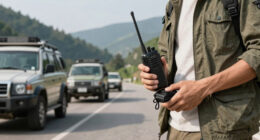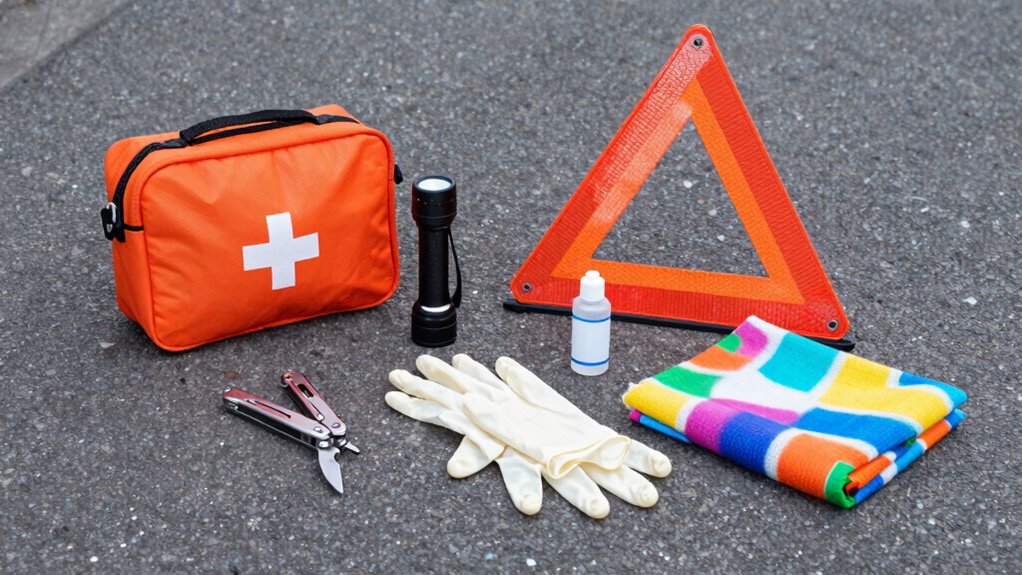

To stay prepared, pack essential safety items like a flashlight, first aid kit, jumper cables, and reflective warning devices. Include food and water for emergencies, but skip bulky or decorative items that add weight without use. Keep your kit organized in clear containers and check it regularly for expired supplies or broken tools. Avoid overpacking to guarantee quick access. If you want to learn more about creating an effective roadside emergency kit, keep exploring the details.

Get travel and outdoor gear delivered free — and shop member deals
- Fast, free delivery on millions of items
- Access to Prime Big Deal Days deals on October 6–7
- Prime Video, Amazon Music and more included
Key Takeaways
- Pack essential safety items like a flashlight, first aid kit, reflective triangles, and basic repair tools for quick roadside response.
- Include water and non-perishable snacks, regularly check expiration dates, and organize supplies for easy access.
- Skip bulky, non-essential tools or luxury items that add weight and clutter, focusing on practical safety gear.
- Store your kit in a designated, accessible spot within your vehicle and keep it well-maintained with periodic inspections.
- Tailor your kit seasonally, and avoid overpacking to ensure quick retrieval and effective emergency preparedness.
As an affiliate, we earn on qualifying purchases.
How to Choose the Right Emergency Supplies for Your Road Trip
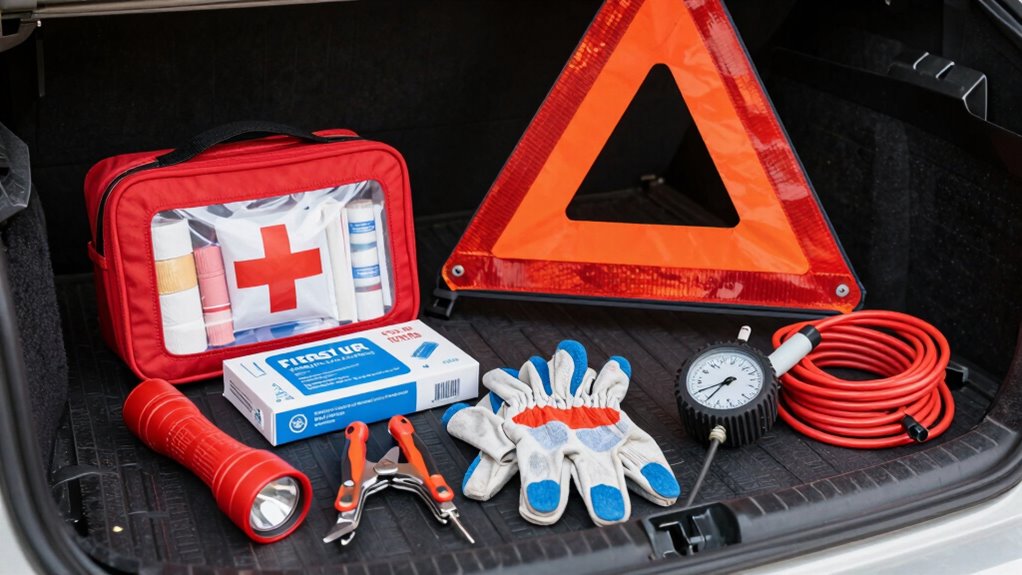
When preparing a roadside emergency kit, choosing supplies that match your specific needs and the conditions you’ll encounter is vital. Start by considering your destination and the weather forecast, as well as your vehicle type. Think about what emergencies are most likely — flat tires, breakdowns, or minor injuries — and include relevant items. It’s also wise to have travel insurance that covers roadside assistance, so you’re prepared for costly repairs or towing. This coverage can save you money and reduce stress if you face a serious problem. While assembling your kit, focus on essential supplies that will help you handle common issues confidently. Remember, the goal is to be prepared without overpacking, so select items that align with your trip’s unique risks and your comfort level.
As an affiliate, we earn on qualifying purchases.
Must-Have Items for Your Roadside Emergency Kit
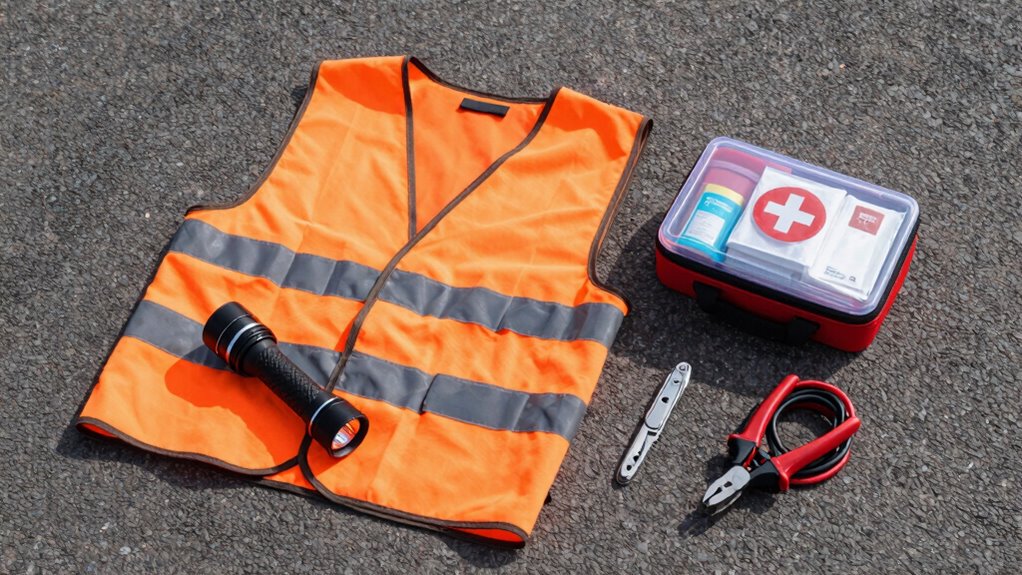
Every roadside emergency kit should include essential safety equipment like a flashlight and first aid supplies to keep you safe. Basic repair tools, such as a wrench and jumper cables, can help you handle minor breakdowns. Don’t forget to pack non-perishable food and water to stay nourished if you’re stranded for a while. Incorporating items that address vehicle lighting conditions can further improve your safety during emergencies. Considering the importance of engine performance upgrades, ensuring your vehicle is well-maintained can prevent breakdowns in the first place. Regularly checking your vehicle maintenance routines can help you identify potential issues before they lead to roadside emergencies. Additionally, understanding proper wiring best practices can reduce the risk of electrical problems that might cause breakdowns or fires. Being aware of vehicle electrical systems can further help you troubleshoot and prevent electrical failures.
Essential Safety Equipment
A well-stocked roadside emergency kit should include essential safety equipment that can help you stay safe and alert others if you find yourself stranded. This includes items for emergency communication and vehicle safety. This equipment is crucial for effective emergency communication, especially in areas with poor cell service. A reflective warning triangle, flares, or LED flares make your vehicle visible to others, reducing the risk of accidents. An emergency blanket keeps you warm, while a flashlight ensures visibility during nighttime. Incorporating cycling safety skills into your preparedness can further enhance your ability to respond effectively in emergencies. Understanding emergency preparedness can also help you better assemble and utilize your kit in critical situations. Using protective styling benefits like reflective gear or high-visibility accessories can also increase your safety during roadside emergencies.
Basic Repair Tools
Having a basic set of repair tools in your roadside emergency kit is essential for addressing common vehicle issues and getting back on the road quickly. Well-organized tools help you handle small repairs confidently and efficiently. Focus on including essential items that fit easily into your emergency kit organization. Consider packing:
- A tire pressure gauge to check your tires
- A jumper cable set for dead batteries
- Basic screwdrivers and pliers for minor fixes
- A compact wrench or socket set for various bolts
These basic repair tools allow you to manage minor problems without delay. Keeping them properly arranged ensures quick access when needed. A well-stocked and neatly arranged emergency kit can make all the difference in stressful roadside situations, especially when understanding vehicle hydraulics can help you troubleshoot more effectively.
Emergency Food & Water
When you’re dealing with unexpected delays or roadside emergencies, staying hydrated and fueled can make a significant difference in your ability to stay calm and focused. Pack portable water containers to guarantee easy access to clean water, and include emergency snack ideas that are non-perishable and energy-boosting. Consider lightweight options like granola bars, trail mix, or dried fruit. Here’s a quick guide:
| Item | Purpose | Tips |
|---|---|---|
| Portable water containers | Hydration | Opt for durable, leak-proof bottles |
| Granola bars | Quick energy boost | Choose high-protein varieties |
| Dried fruit | Sustained energy | Avoid overly sweet options |
| Trail mix | Balanced snack | Mix nuts, seeds, and dried fruit |
Additionally, incorporating landscaping to enhance natural beauty can create a more relaxing environment around your emergency kit setup. Incorporating nutritional balance into your emergency supplies ensures sustained energy during longer waits. Choosing suitable cultural artifacts for your space can also add a touch of authenticity and aesthetic appeal. These items keep you nourished and hydrated during roadside emergencies, especially when emergency preparedness is a priority.
As an affiliate, we earn on qualifying purchases.
Items You Can Skip to Keep Your Kit Light
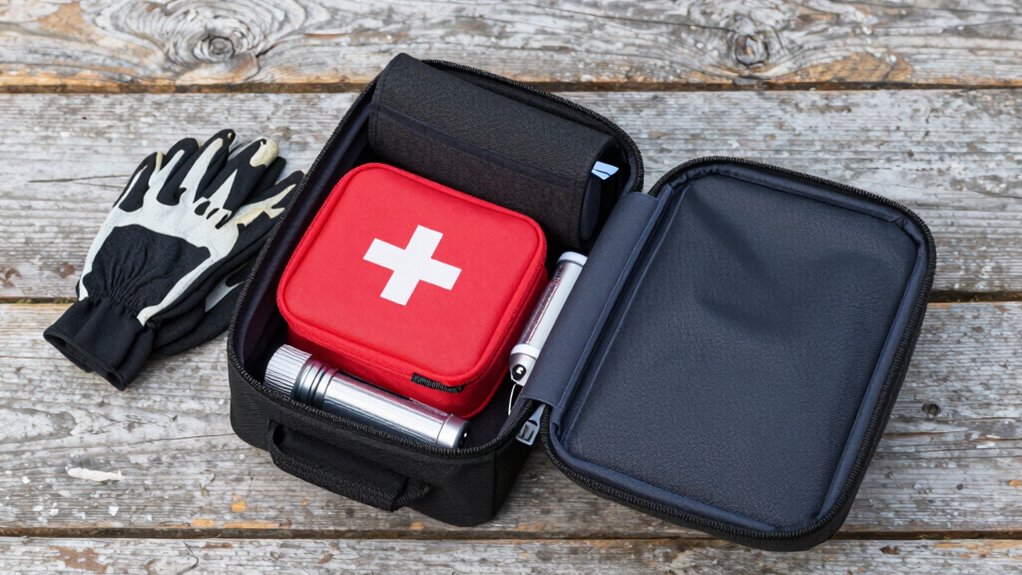
To keep your roadside kit manageable, you can skip non-essential items that rarely come in handy. Bulky tools like large jacks or extra flashlights often add weight without much benefit. Focus on carrying only the supplies you’ll genuinely need in an emergency. Incorporating essential items ensures your kit remains practical and effective, just as having the right training concepts can make a difference in achieving your fitness goals. Additionally, understanding template compatibility can help you streamline your gear selection and organization for maximum efficiency. Being mindful of ethical considerations in your gear choices can also guide responsible and sustainable packing decisions. Paying attention to water and tile quality can help you select durable, long-lasting tools that stand up to outdoor conditions.
Non-Essential Items
While it might be tempting to pack every possible item for your roadside emergency kit, including non-essential items can quickly turn it into a bulky burden. Items like luxury accessories and entertainment gadgets may seem nice to have, but they don’t contribute to safety or functionality during an emergency. These extras add weight and clutter, making your kit harder to carry and access when needed most. Instead, focus on essentials that can truly help you stay safe and get back on the road.
Consider skipping:
- Fancy jewelry or luxury accessories
- Portable gaming devices or entertainment gadgets
- Extra clothing or decorative items
- Non-essential comfort items like plush toys or decorative items
Stick to the basics, and your kit will be lighter and more effective.
Bulkier Tools Unnecessary
Packing your roadside emergency kit with bulky tools might seem like a good idea, but it can quickly turn into an unnecessary burden. Large tools, such as heavy wrenches or bulky jumper cables, add weight and take up space without offering enough benefit during roadside emergencies. These unnecessary equipment items often go unused and can slow you down when quick access is needed. Instead, opt for compact, multi-functional tools that serve multiple purposes without the extra weight. Keeping your kit lightweight and organized ensures you’re prepared without being burdened by oversized items that aren’t essential. Focus on essentials that are portable, reliable, and easy to store, so your kit remains practical and efficient during emergencies. Additionally, understanding battery capacity can help you choose compact power solutions that keep your devices running without adding bulk.
Rarely Used Supplies
Many supplies in a roadside emergency kit are unlikely to be used, yet they add unnecessary weight and clutter. Items like luxury items or sentimental keepsakes may hold emotional value but serve no practical purpose during an emergency. Incorporating these can make your kit bulky and harder to manage when seconds count. Skip things like decorative jewelry, expensive watches, or heirloom photos that can’t help you stay safe. Instead, focus on essentials that provide real help, like a flashlight or first aid supplies. Remember, your goal is a lightweight, functional kit. Keeping out these rarely used supplies ensures you’re prepared without carrying unnecessary weight. Additionally, avoiding non-essential items can help prevent overpacking, which can lead to a more manageable and effective emergency kit. When assembling your kit, prioritize practicality over sentimentality to ensure you have what’s truly needed in critical moments. For example, opting for a simple, reliable electric bike conversion kit over bulky accessories can inspire confidence in your gear’s performance when you need it most. Incorporating cybersecurity tactics such as secure storage for sensitive items can also prevent data breaches or loss during an emergency.
As an affiliate, we earn on qualifying purchases.
Tips for Packing Your Kit for Quick Access
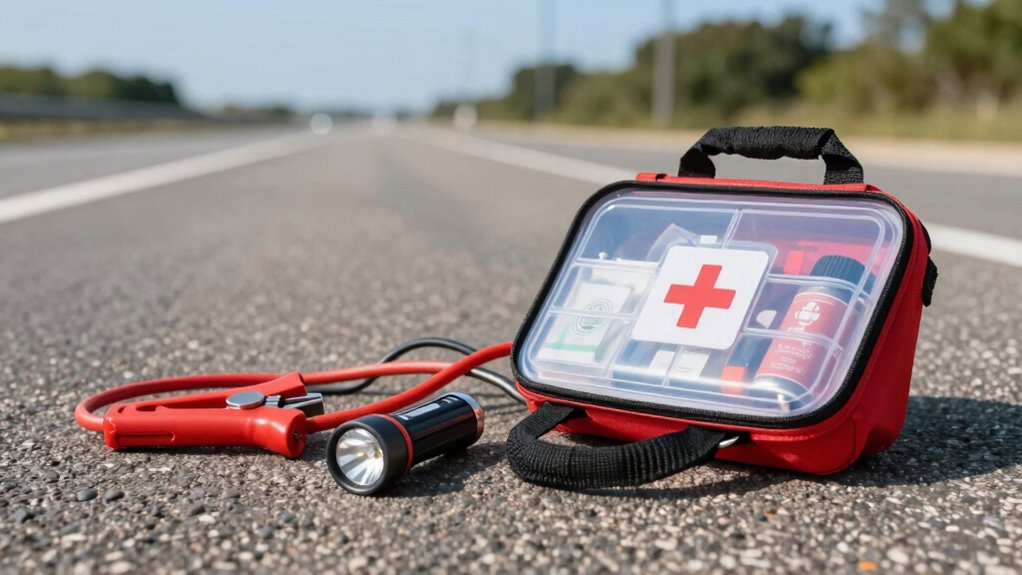
To make certain you can access your roadside emergency kit quickly when every second counts, it’s essential to organize it thoughtfully. Start with emergency kit storage that keeps items visible and easy to reach. Use clear containers or labeled bins so you know exactly where everything is without rummaging. Accessibility tips include placing frequently used items—like flashlights, first aid supplies, and gloves—at the top or in front. Keep your kit in a designated, easily accessible spot in your vehicle, such as the trunk or under a seat. Avoid clutter and guarantee nothing is buried deep inside. Regularly check that your kit remains organized, replacing items as needed. Additionally, choosing the right vacuum for quick cleanup can help you maintain your vehicle’s interior and ensure it’s tidy and ready for emergencies. Proper emergency kit storage and smart organization help you respond swiftly in a crisis.
How Often Should You Check and Update Your Emergency Kit
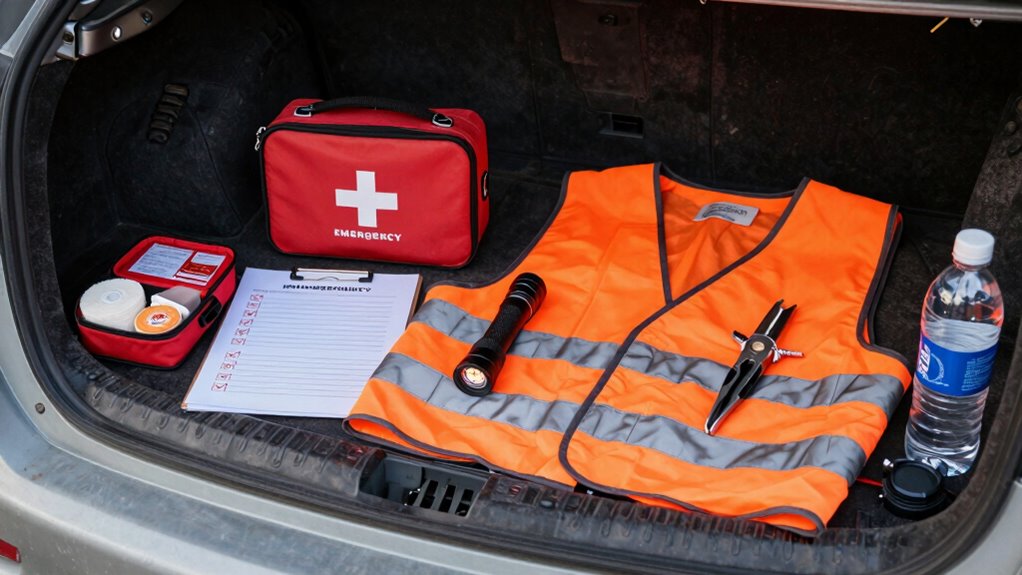
Regularly checking and updating your roadside emergency kit guarantees all supplies remain functional and ready for use when needed. Conduct routine inspections at least every three to six months to assure items are intact, not expired, and in working condition. Seasonal updates are also essential; replace cold-weather gear before winter and upgrade supplies for summer trips. During inspections, verify items like batteries, first aid supplies, and flashlights. Consider these key steps:
- Check expiration dates on food, water, and medications
- Test flashlights and batteries
- Restock used or expired items
- Adjust supplies based on seasonal needs
Sticking to a schedule of routine inspections and seasonal updates keeps your kit reliable, giving you peace of mind during roadside emergencies.
Common Mistakes to Avoid When Filling Your Roadside Kit
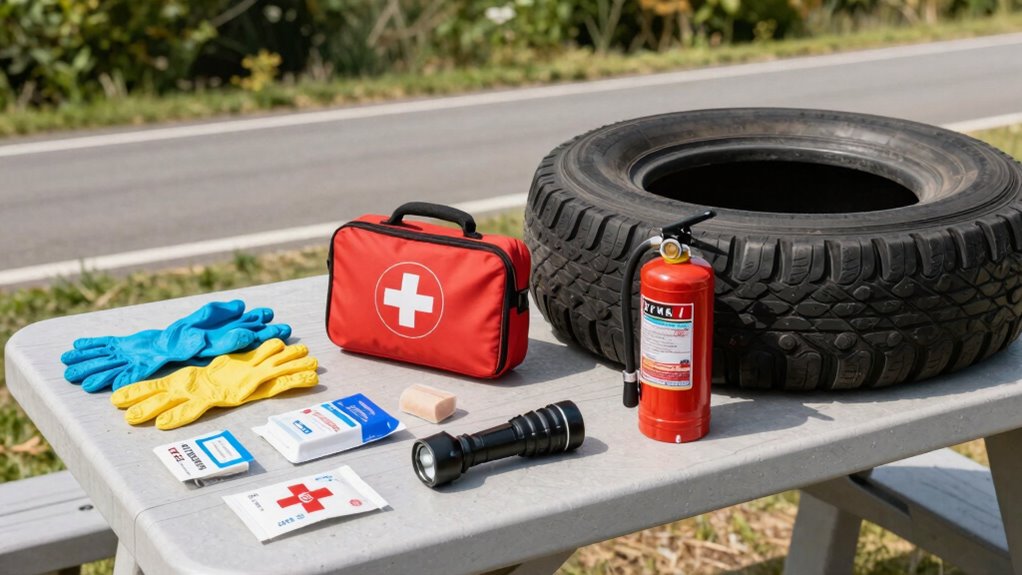
Filling your roadside emergency kit carefully can make all the difference during a crisis, but common mistakes can leave you unprepared when it matters most. One mistake is overpacking hazards, which can make your kit bulky and difficult to store or quickly access. Focus on essentials rather than unnecessary items. Another pitfall is ignoring weather considerations—what’s suitable for summer might not work in winter. For example, neglecting to include items like thermal blankets or extra clothing can leave you vulnerable in cold conditions. Avoid packing items that won’t withstand the environment or that you’re unlikely to use. Being mindful of size, weight, and climate will guarantee your kit remains practical, accessible, and effective when you need it most.
Quick Checklist: What to Pack and What to Leave Behind
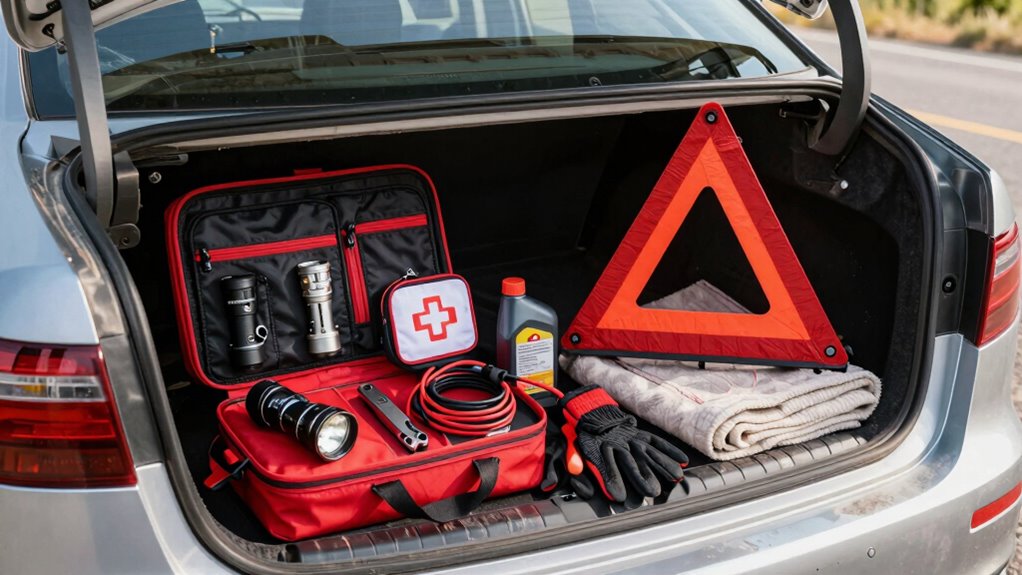
Creating a quick checklist guarantees you pack only what’s necessary and leave behind what’s not, saving space and reducing clutter. Effective emergency kit organization is essential for quick access during an emergency. Focus on essentials that boost road trip safety, and skip items you won’t need.
Consider packing:
- First aid supplies for immediate injury care
- Flashlight and extra batteries for visibility
- Basic tools like a multi-tool or jumper cables
- Non-perishable snacks and water for sustenance
Leave behind bulky items or duplicate tools that won’t fit easily. This streamlined approach ensures your emergency kit is both practical and accessible, helping you stay prepared without overwhelming your vehicle. A well-organized kit minimizes stress and maximizes safety on the road.
Frequently Asked Questions
How Do I Personalize My Roadside Emergency Kit for Different Seasons?
To personalize your roadside emergency kit for different seasons, add seasonal clothing like warm layers or rain gear for winter and summer essentials for heat. Keep items like a battery maintainer or jumper cables handy for colder months when batteries are more vulnerable. Adjust your kit regularly, ensuring it’s suited for the weather conditions you might face, so you’re prepared no matter the season.
What Are the Legal Requirements for Emergency Kits in Different States or Countries?
Think of your roadside emergency kit as a legal passport. In different states or countries, legal mandates and regional regulations set the passport stamps, dictating what essentials you must carry. Some places require reflective triangles or fire extinguishers, while others don’t. To stay compliant, check local laws before your trip. Ignoring these guidelines is like traveling with an invalid passport—you risk fines or safety issues.
Can I Include Non-Essential Items That Might Improve Comfort During a Breakdown?
Yes, you can include comfort items and luxury accessories in your roadside emergency kit to make a breakdown more bearable. Items like a cozy blanket, snacks, or a portable charger can provide comfort, while small luxury accessories, like a foldable pillow or soothing music, can help reduce stress. Just make certain these extras don’t clutter your kit and don’t replace essential safety gear, keeping your kit both functional and comfortable.
How Do I Store My Emergency Kit to Prevent Damage or Spoilage?
Imagine your emergency kit as a fortress against time and elements. Store it in a waterproof, durable container to prevent damage and spoilage. Keep items like food and batteries in a cool, dry place, away from direct sunlight, to maintain food preservation. Regularly check and replace expired supplies. This way, your kit stays ready, resilient, and effective when you need it most, guarding your peace of mind.
Are There Eco-Friendly Options for Common Roadside Emergency Supplies?
Yes, you can choose eco-friendly roadside emergency supplies. Opt for biodegradable batteries to power flashlights or devices, reducing environmental impact. Reusable first aid kits are also a great choice—they let you replenish supplies without waste. Look for products made from sustainable materials and avoid single-use plastics. By selecting these eco-friendly options, you help protect the environment while staying prepared for emergencies on the road.
Conclusion
A well-packed roadside emergency kit is your trusty compass in the stormy seas of the open road. Keep it lean but loaded with essentials, like a skilled navigator, so you’re ready to steer through unexpected twists. Regular checks guarantee your safety armor stays sharp, and avoiding clutter keeps your path clear. With each item carefully chosen and positioned, your kit becomes a silent guardian—ready to turn chaos into calm, and uncertainty into control.
Halloween Picks
halloween
As an affiliate, we earn on qualifying purchases.