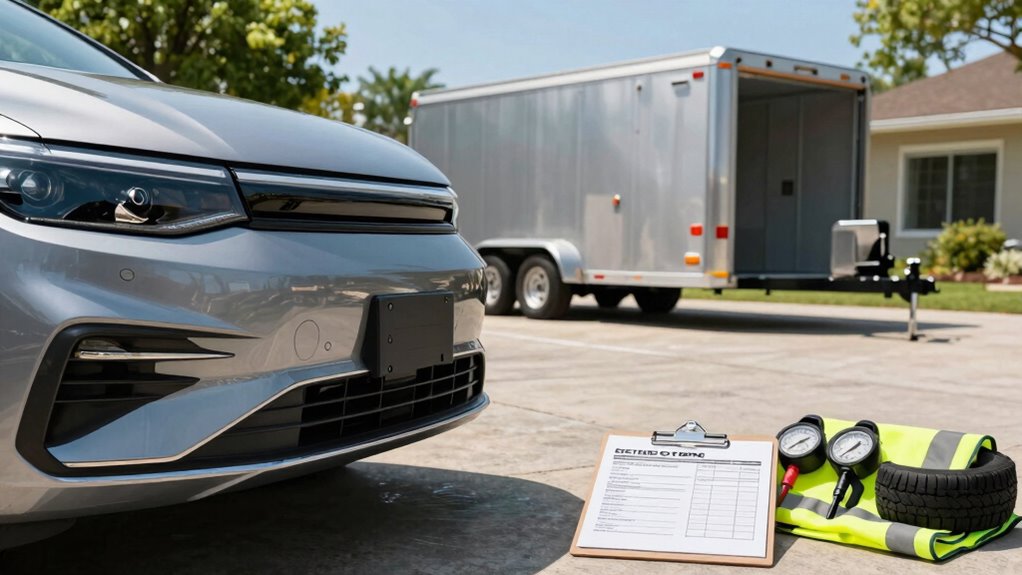

Ensuring your tow vehicle is ready for departure makes the day much easier and safer. Check your vehicle’s maintenance, including oil, brakes, and transmissions, to avoid breakdowns. Inspect tires for proper pressure and visible damage. Confirm all lights and signals work correctly, and secure the trailer’s load with safety chains and balanced weight. Pack essential safety gear and plan your route ahead of time. Keep these steps in mind, and you’ll find departure day less stressful and more confident—keep exploring for more helpful tips.
Key Takeaways
- Perform thorough vehicle maintenance, including oil changes and fluid checks, to prevent breakdowns on departure day.
- Inspect and properly inflate tires on both vehicle and trailer for safety and optimal handling.
- Verify all lights, signals, and reflectors function correctly to ensure visibility and communication with other drivers.
- Secure and balance the load, double-checking hitch, safety chains, and wiring to prevent detachment or sway.
- Prepare emergency supplies, navigation tools, and route plans to streamline departure and ensure readiness.
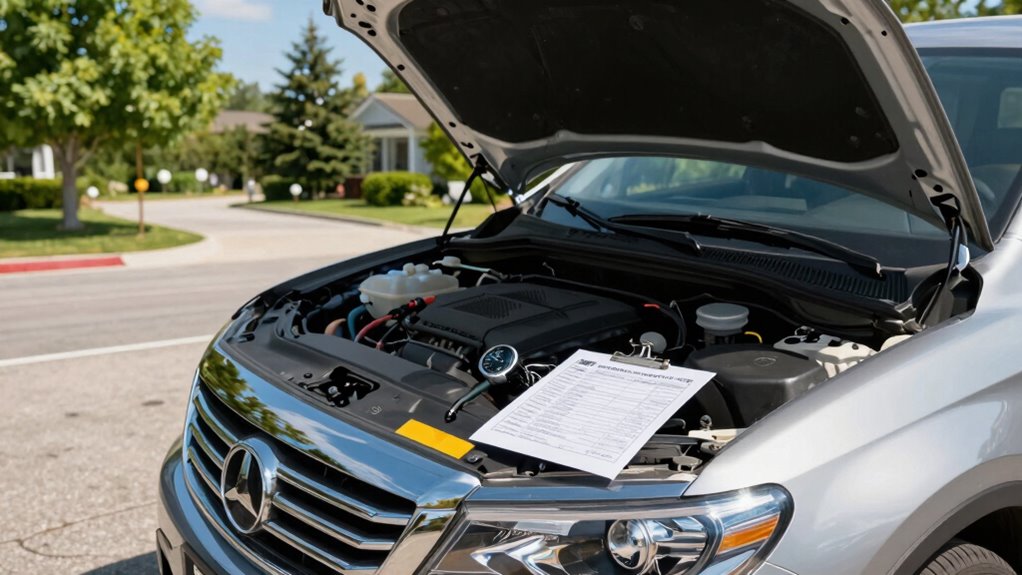
Before hitting the road with your trailer or camper, it’s crucial to make sure your tow vehicle is fully prepared. Proper vehicle maintenance is the foundation of a safe and smooth journey. You want to double-check that your vehicle’s engine, brakes, and transmission are in top shape. Regular maintenance, like oil changes, fluid top-offs, and tire inspections, ensures everything runs reliably when you need it most. Don’t forget to review your owner’s manual for specific maintenance recommendations tailored to your vehicle. Keeping your vehicle in good shape reduces the risk of breakdowns and enhances towing safety, giving you peace of mind on the road.
Next, focus on the tires. Both your vehicle’s tires and the trailer’s tires should be properly inflated according to manufacturer specifications. Underinflated tires can cause blowouts or poor handling, especially when hauling heavy loads. Before departure, check for any visible signs of wear or damage—like cuts, bulges, or uneven tread wear—and replace any compromised tires. A thorough tire inspection is a quick step that can prevent dangerous blowouts and improve overall towing safety. Regularly inspecting your tire pressure can help maintain optimal handling and fuel efficiency. Additionally, proper tire maintenance can extend the lifespan of your tires and save you money in the long run. Being aware of tire wear patterns can also help you identify issues early before they compromise safety.
Make sure your lights and signals are functioning correctly. Turn on your headlights, brake lights, turn signals, and hazard lights, and ask a friend or use reflective surfaces to verify they’re working. Proper lighting is critical for visibility, especially during night driving or in poor weather conditions. This simple check ensures other drivers can see your intentions, reducing the risk of accidents.
Your towing setup should be secure and balanced. Check that your hitch, coupler, safety chains, and wiring harness are all properly connected and in good condition. A loose or damaged connection can lead to dangerous detachment or failure during transit. Remember to inspect your trailer brakes, if applicable, and test their operation before leaving. Ensuring your trailer is loaded correctly, with weight distributed evenly, also plays an important role in maintaining stability and control. Properly balanced loads prevent swaying and improve steering responsiveness.
Finally, review your emergency kit and other essentials. Pack a first aid kit, fire extinguisher, spare tire, and basic tools. Keep your registration, insurance documents, and roadside assistance info readily accessible. Confirm your GPS or navigation system is updated, and plan your route ahead of time. Vehicle maintenance is a key component of safe towing, and paying attention to these details can make departure days much easier. Taking these extra steps in vehicle maintenance and towing safety makes departure days much easier, letting you focus on enjoying your trip rather than stressing over potential mishaps. Proper preparation not only guarantees safety but also makes your travel experience more enjoyable from start to finish.

NBJINGYI 3/16" X 48" Trailer Safety Chain with Spring Clips Grade 30 with 2 S Hook 2PCS (3/16" X 48")
- Chain Size: 3/16" x 48" trailer safety chain
- Quantity: Includes 2 safety chains with hooks
- Material: Zinc plated alloy steel for durability
As an affiliate, we earn on qualifying purchases.
As an affiliate, we earn on qualifying purchases.
Frequently Asked Questions
How Often Should I Perform Maintenance on My Tow Vehicle?
You should perform maintenance on your tow vehicle every 3,000 to 5,000 miles or at least once a year. Regularly check your tire pressure to guarantee safety and fuel efficiency, especially before long trips. Don’t forget to schedule brake inspections to keep stopping power reliable. Keeping up with these maintenance tasks helps prevent breakdowns, prolongs your vehicle’s life, and makes departure days smoother and stress-free.
What Should I Do if My Tow Vehicle Overheats?
When your tow vehicle overheats, it’s like a warning shot across your bow. Pull over safely, turn off the engine, and check coolant levels—low coolant is often the culprit. Inspect the radiator for leaks or blockages, and make certain the cap is secure. If you’re unsure, give your radiator a thorough inspection before hitting the road again. Staying vigilant keeps your journey smooth and prevents small issues from becoming big disasters.
How Can I Improve Fuel Efficiency When Towing?
To improve fuel efficiency when towing, focus on eco-friendly driving and fuel-saving techniques. Keep your speed steady and avoid rapid acceleration or braking. Make certain your tires are properly inflated to reduce rolling resistance. Use cruise control on highways to maintain consistent speed. Minimize idling and remove unnecessary weight from your vehicle. These practices help you save fuel, reduce emissions, and make your towing experience more eco-friendly and economical.
What Safety Gear Should I Carry for Towing Emergencies?
Think of your towing trip as a journey on stormy seas—you need safety gear as your lifeboat. Carry emergency supplies like first aid kits, flashlights, and reflective triangles. Also, follow safety protocols, such as checking brakes and tires before departure. These essentials prepare you for unexpected waves, ensuring your safety and peace of mind throughout the trip. Being prepared helps you navigate emergencies smoothly and confidently.
How Do I Choose the Right Trailer Hitch for My Vehicle?
To choose the right trailer hitch, first consider your vehicle’s towing capacity and the type of trailer you’ll use. Review trailer hitch types like receiver, fifth-wheel, and gooseneck hitches to find the best fit. For hitch installation tips, guarantee compatibility with your vehicle, follow the manufacturer’s instructions carefully, and use the proper tools. Proper selection and installation ensure safe towing and enhance your vehicle’s performance.

ETENWOLF Pencil Tire Pressure Gauge 2 Pack (10-50PSI, 20-120PSI)
- High Accuracy Calibration: Calibrated to ANSI B40.1 Grade B
- Dual Pressure Ranges: 10-50 PSI and 20-120 PSI
- All Metal Construction: Zinc alloy head and stainless steel body
As an affiliate, we earn on qualifying purchases.
As an affiliate, we earn on qualifying purchases.
Conclusion
Follow this tow vehicle checklist, and you’ll turn departure day into a breeze—no more last-minute panic or forgotten essentials! Imagine cruising down the road knowing your vehicle is fully prepared, avoiding breakdowns or mishaps that could ruin your trip. It’s like having a superpower that guarantees smooth sailing every time. So, get your checklist ready, check everything twice, and transform your departure day into the easiest, most stress-free adventure ever!

ATQYZLM 22FT 4 Pin 5 Wire Trailer Wiring Harness with Nylon Net Tube Guard
- Corrosion-Resistant Material: PVC-coated, pure copper wiring
- Waterproof and Dirtproof: Plug cover and nylon mesh tubing
- Easy to Install: Forked design with color-coded labels
As an affiliate, we earn on qualifying purchases.
As an affiliate, we earn on qualifying purchases.

Tow Truck Daily Inspection Checklist: Pre-Operation Safety & Maintenance Record for Tow Trucks and Recovery Vehicles.
As an affiliate, we earn on qualifying purchases.
As an affiliate, we earn on qualifying purchases.