
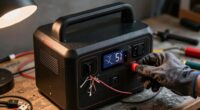
To keep your car battery reliable in cold weather, regularly check and clean terminals, keep electrolyte levels topped with distilled water, and consider insulating your battery with foam or blankets. Warm up the engine briefly before starting, use a block heater if available, and park in sheltered areas. Staying proactive with maintenance helps prevent struggles during cold snaps. Keep these tips in mind to extend your battery’s lifespan and guarantee it performs when you need it most. More useful advice awaits if you continue exploring.

Get travel and outdoor gear delivered free — and shop member deals
- Fast, free delivery on millions of items
- Access to Prime Big Deal Days deals on October 6–7
- Prime Video, Amazon Music and more included
Key Takeaways
- Regularly inspect and clean battery terminals to prevent corrosion and ensure optimal electrical flow.
- Use battery insulation or blankets to maintain consistent temperature and protect against cold-induced power loss.
- Keep the battery fully charged; cold weather reduces capacity, so maintain charge with smart chargers or portable jump starters.
- Warm up the engine briefly before starting in freezing temperatures to reduce strain on the battery.
- Store emergency supplies like jumper cables, warm blankets, and portable chargers to stay prepared for cold weather breakdowns.
As an affiliate, we earn on qualifying purchases.
How Does Cold Weather Affect Your Car Battery Performance?
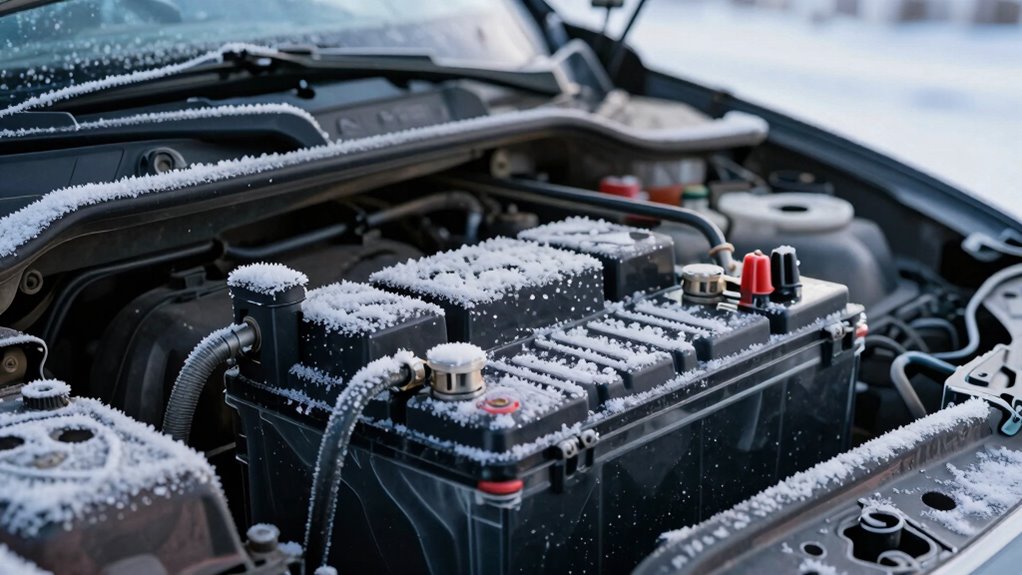
Cold weather can markedly reduce your car battery’s performance because low temperatures slow down the chemical reactions inside the battery. Battery chemistry relies on these reactions to generate power, but when it’s cold, they occur more slowly, decreasing overall output. Additionally, cold-induced corrosion becomes a concern, as moisture and low temperatures can accelerate corrosion inside the battery terminals and plates. This corrosion can hinder electrical flow, making starting your car even harder. The electrolyte’s viscosity increases in the cold, further impairing the flow of ions and reducing capacity. As a result, your battery struggles to deliver the necessary power, especially during starting. Understanding how cold affects battery chemistry and promotes corrosion helps you take proactive steps to maintain your battery’s health in winter, including proper protective measures for your battery. Recognizing the impact of temperature effects on battery performance can help you better prepare for colder months and extend your battery’s lifespan. Additionally, ensuring your battery is properly charged and maintained can mitigate some of these cold-weather challenges. Being aware of how chemical reactions slow down in cold temperatures allows for more effective battery management during winter months.
As an affiliate, we earn on qualifying purchases.
How Can You Tell If Your Battery Is Failing in Winter?
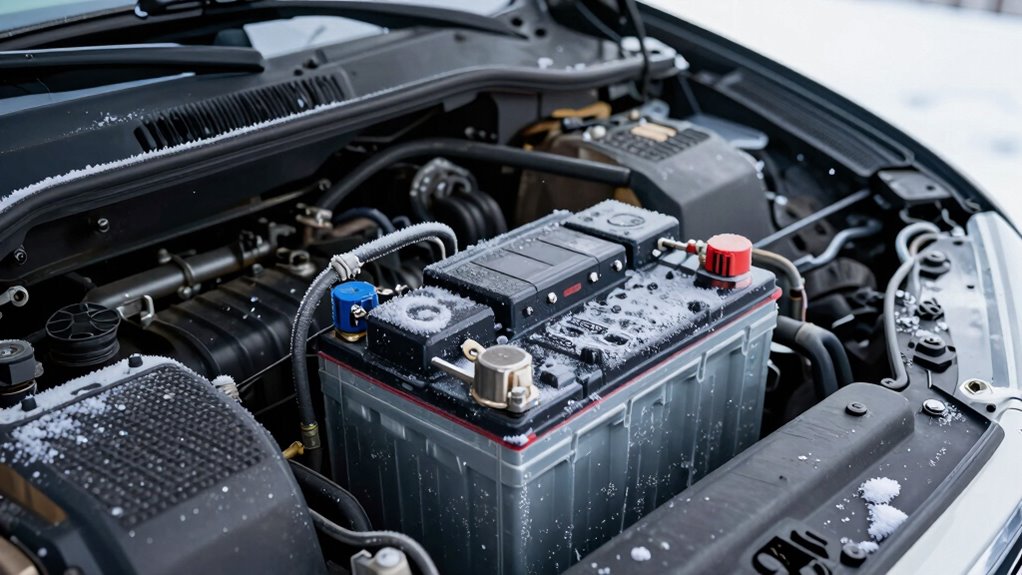
If your engine cranks slowly or struggles to start, your battery might be weakening. Noticeable dimming of headlights or interior lights is another sign of reduced power. Additionally, longer starting times can indicate your battery is failing in cold weather. Using a reliable battery charger can help maintain optimal performance during the winter months. Being aware of electrical system indicators can also help you catch potential issues early before they leave you stranded. Monitoring your battery health regularly can provide early warning signs and prevent unexpected failures. Checking for corrosion on terminals is also crucial, as corrosion can hinder proper electrical flow and contribute to battery failure.
Reduced Engine Crank Power
During winter, a noticeable drop in your engine’s cranking power often signals a failing battery. When your battery weakens, it struggles to provide the necessary power to start your engine, especially in cold conditions. You might notice slow or labored cranking, or the engine turning over fewer times before starting. Reduced cranking power can also cause engine overheating and lower fuel efficiency, as the engine works harder to reach ideal temperature. To spot problems early, watch for these signs:
- Longer start times or multiple attempts
- Dimming dashboard lights during startup
- Unusual engine hesitation
- Frequent need for jump-starts
- Pomade Vs Putty Vs Styling Cream can sometimes indicate battery performance issues if your vehicle’s electrical accessories are affected. Regular maintenance and understanding cultural activities in Washington D.C. can also help you stay aware of your vehicle’s health. Additionally, being aware of battery testing methods can help you assess your battery’s condition before it fully fails. Using proper charging techniques is essential to maintain battery health and prevent winter-related power issues. Keeping your battery healthy through proper charging techniques can also extend its lifespan and improve winter performance.
Keeping your battery healthy helps prevent engine overheating and maintains fuel efficiency, especially during the cold months. Regular testing and maintenance are your best defenses against winter battery failures.
Dimming Headlights Noticeably
Dimming headlights are often one of the first signs that your battery is struggling in winter. When your battery weakens, it can’t supply consistent power to your vehicle’s electrical system, leading to headlight dimming. You might notice your headlights are noticeably less bright, especially when starting the engine or accelerating. This visibility reduction can make driving at night or in poor weather more hazardous. If your headlights flicker or dim unexpectedly, it’s a clear indication that your battery is failing or losing its charge. Cold weather puts extra strain on your battery, so pay close attention to headlight performance. Proper maintenance of your vehicle’s electrical system can help prevent these issues and ensure your battery remains reliable through the colder months. Regularly inspecting small wood stoves and ensuring they are clean and well-maintained can also serve as a helpful reminder to check your vehicle’s electrical connections. Additionally, understanding how to identify early signs of battery failure can save you from unexpected breakdowns and costly repairs. Being aware of battery capacity and how it diminishes over time can help you better anticipate when a replacement might be needed. Recognizing voltage fluctuations can also be an important indicator of declining battery health, especially during winter. Addressing this issue early can prevent more serious problems and assure you maintain proper visibility on the road.
Longer Starting Times
Cold weather can markedly impact your car’s starting process, often causing longer delays before the engine turns over. If you notice sluggish starts or multiple attempts needed, your battery might be failing. Signs include dimming dashboard lights, slow cranking, or a clicking noise when turning the key. To check if your battery is near the end, consider professional testing or monitoring its voltage. Proper maintenance helps extend its life, and when it’s time to replace, prioritize eco-friendly options like battery recycling. Exploring alternative power sources, such as hybrid or electric vehicles, can also reduce winter starting issues. Being aware of these signs guarantees you address problems early, preventing breakdowns and supporting sustainability efforts. Additionally, protecting your battery from extreme cold with proper insulation can help improve its performance during winter months.
As an affiliate, we earn on qualifying purchases.
Top Tips to Maintain Your Car Battery During Cold Months
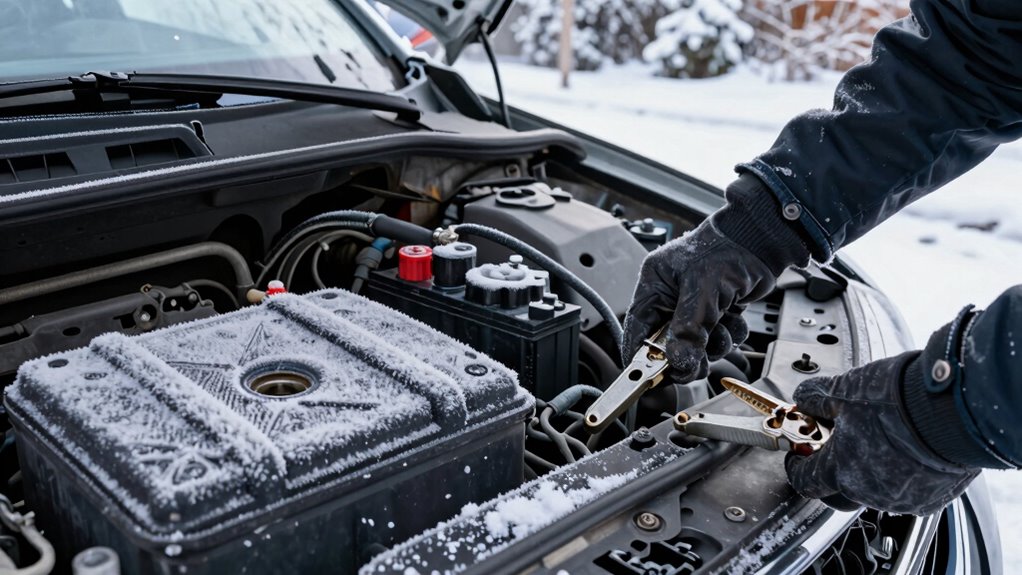
As temperatures drop, your car battery can become a weak link in your winter driving experience. To protect it, consider adding battery insulation; it helps maintain consistent temperature and prevents power drain. Regularly check your battery’s terminals for corrosion and clean them with a wire brush if needed. Keep your battery’s charge level topped off—cold weather reduces its efficiency, so a healthy, fully charged battery is essential. If your battery struggles in winter, think about alternative power options like a portable jump starter or a smart charger to avoid being stranded. Additionally, parking in a garage or sheltered spot can shield your battery from extreme cold. Incorporating sustainable textile care practices, such as using eco-friendly insulating materials, can also contribute to a more environmentally conscious approach. Understanding battery chemistry can help you choose the most effective maintenance strategies and replacement options. Being aware of your vehicle’s electrical system can help identify potential issues before they become major problems. Proper battery maintenance ensures your vehicle remains reliable in cold conditions and can extend the overall lifespan of your battery. Using weather-resistant materials in your car can provide additional protection against harsh winter elements. These simple steps keep your battery healthier and guarantee reliable starts, even during the coldest months.
As an affiliate, we earn on qualifying purchases.
Best Practices for Starting Your Car in Freezing Temperatures
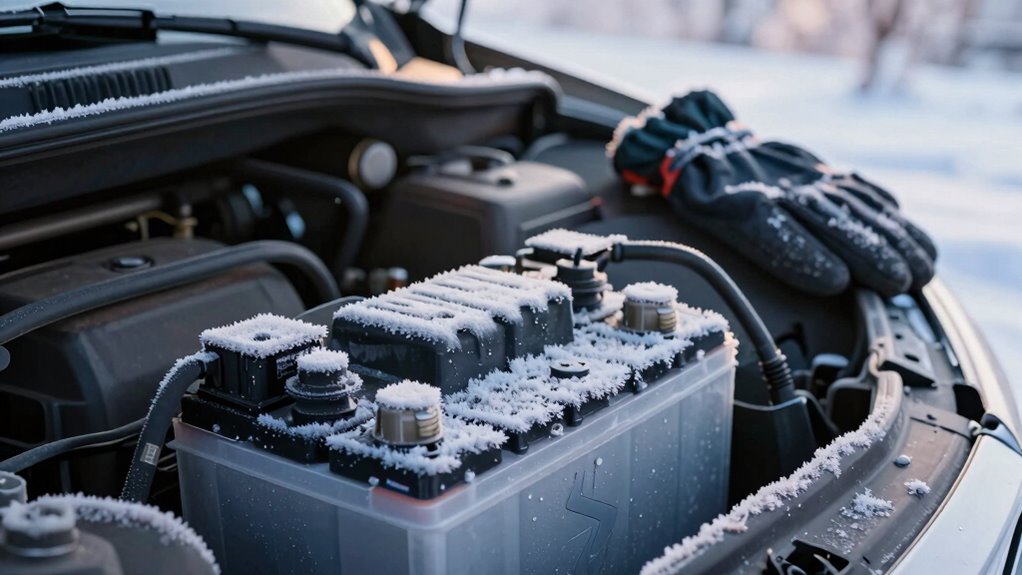
When starting your car in freezing weather, make certain your battery is well-maintained to prevent issues. Warm up the engine briefly before attempting a full start, and keep emergency supplies like jumper cables on hand. These practices help guarantee a smooth start and keep you prepared for unexpected problems. Additionally, ensuring your car’s cooling system is functioning properly can help prevent overheating once the engine is running.
Use Proper Battery Maintenance
Maintaining your battery properly is essential for reliable starts in freezing weather. Regularly check electrolyte levels to verify they’re topped off with distilled water, preventing the plates from being exposed and freezing. Proper maintenance also means practicing responsible battery recycling when your battery nears the end of its life, avoiding environmental harm and ensuring safety. Keep terminals clean and free of corrosion, which can hinder current flow. Additionally, schedule periodic inspections to catch early signs of wear or damage. Taking these steps helps your battery stay in prime condition, reducing the risk of failure during cold snaps. Remember, a well-maintained battery not only boosts starting power but also extends its lifespan, keeping your vehicle reliable in the toughest winter conditions.
Warm Up Before Starting
Before attempting to start your vehicle in freezing weather, it’s important to give the engine a moment to warm up. This allows the battery to stabilize and reduces strain on your electrical system. To improve your chances, consider enhancing battery insulation; a well-insulated battery loses less heat. Additionally, review your charging habits—regular, moderate charging keeps the battery healthy and ready for cold starts.
| Tip | Explanation |
|---|---|
| Warm up engine | Let your engine run briefly before driving. |
| Insulate battery | Use battery blankets or insulation kits. |
| Check charging habits | Maintain consistent, moderate charging to prevent depletion. |
| Avoid quick starts | Allow the engine to warm slightly before driving off. |
| Use a block heater | When possible, use a block heater for extra warmth. |
Keep Emergency Supplies Ready
In freezing temperatures, having emergency supplies on hand can make all the difference if your vehicle refuses to start. Proper emergency preparedness guarantees you’re ready for winter setbacks and promotes winter safety. Keep a well-stocked kit in your car with essentials like jumper cables, a flashlight, warm blankets, and non-perishable snacks. These items can help you stay safe and comfortable while waiting for help or attempting to start your car again. Being prepared minimizes risks during winter breakdowns and keeps you calm in stressful situations. Remember, winter safety isn’t just about your car; it’s about your safety and peace of mind. Regularly check and update your supplies to guarantee they’re ready when needed, and always stay alert to changing weather conditions.
Easy Ways to Keep Your Battery Warm and Extend Its Lifespan
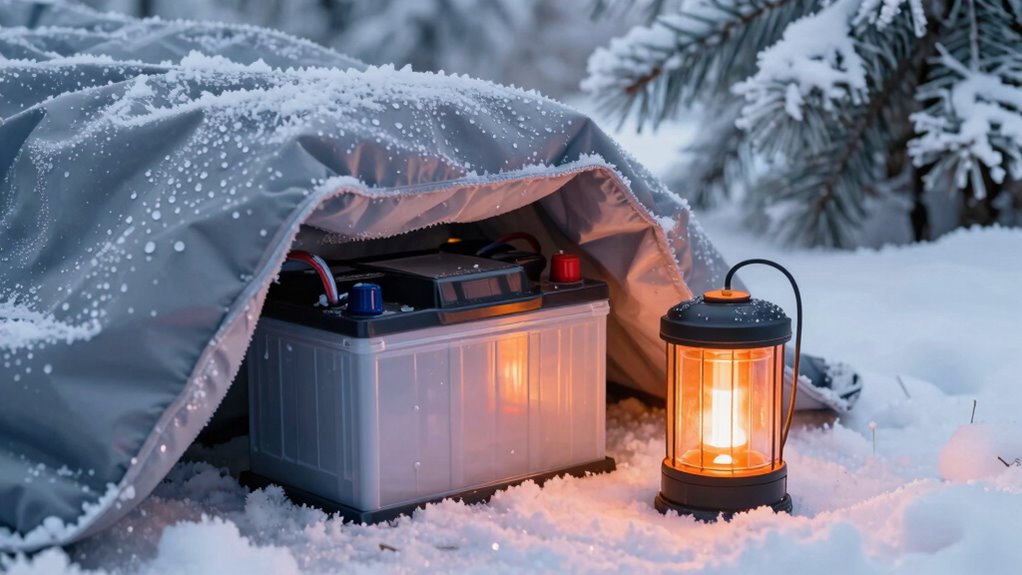
When the weather turns cold, your battery can struggle to perform at its best. To keep it warm and extend its lifespan, start with battery insulation. Wrap your battery with foam or specialized insulating materials to protect it from cold air exposure. This simple step helps retain heat and prevents rapid power loss. Additionally, consider using portable chargers to keep your devices and backup batteries warm when you’re on the go. Portable chargers can provide extra power without draining your main battery, especially in freezing temperatures. Regularly check and clean battery terminals to guarantee efficient power flow. These easy tactics—insulating your battery and using portable chargers—can make a significant difference in maintaining performance during cold weather.
Is It Time to Replace Your Car Battery Before the Next Cold Snap?
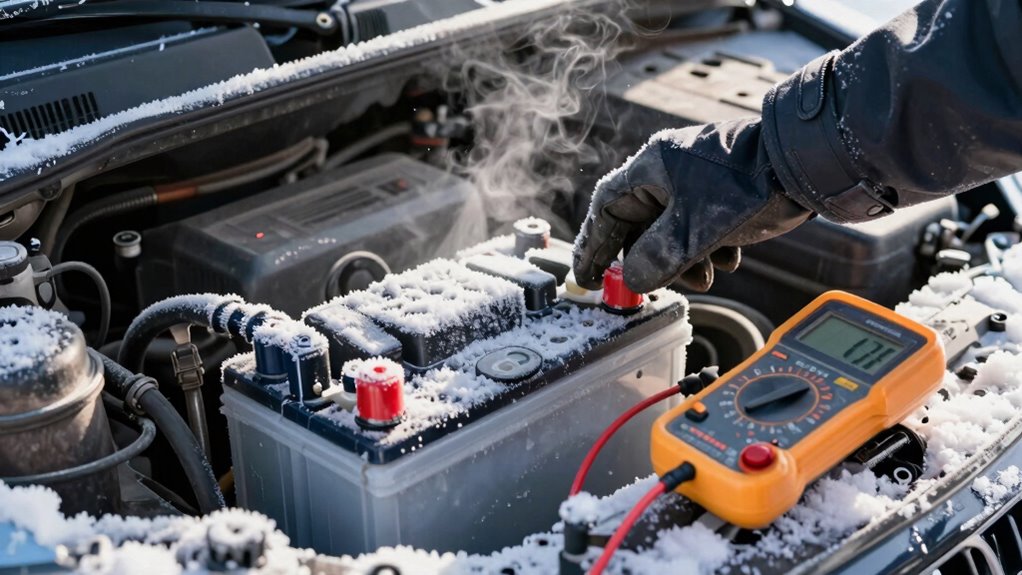
As winter approaches, it’s essential to evaluate whether your car battery is ready to handle the cold weather ahead. A weak or aging battery can leave you stranded during a cold snap. If your battery is over three years old, consider testing its capacity or visiting a mechanic. Signs like slow engine cranks or dimming headlights indicate it’s time for a replacement. Replacing your battery now helps prevent sudden failures and guarantees reliable starts. When you do replace it, choose eco-friendly options like battery recycling or explore alternative power sources such as hybrid or electric vehicles. Remember, investing in a new battery not only boosts performance but also supports sustainable practices, keeping your winter travels smooth and eco-conscious.
Evaluate your car battery before winter to ensure reliable starts and eco-friendly options.
- Proper disposal through battery recycling
- Guaranteeing reliable cold-weather starts
- Exploring alternative power options
- Reducing environmental impact
Frequently Asked Questions
Can Using a Battery Blanket Really Improve Cold Weather Performance?
Yes, using a battery blanket can substantially improve cold weather performance. It provides insulation that helps keep your cold climate batteries warmer, especially in freezing temperatures. This added battery insulation reduces the strain on your vehicle’s charging system and improves starting power. By maintaining a higher battery temperature, a battery blanket ensures your battery stays efficient, lasts longer, and performs reliably in cold conditions.
How Often Should I Have My Battery Tested in Winter?
Like a trusty sidekick, you should have your battery tested at least once every spring and fall, especially during winter. Regular battery maintenance helps you catch problems early. Keep an eye on charging habits—avoid letting the battery drain completely. Cold weather puts extra strain on your battery, so frequent testing guarantees it’s in good shape, reducing the risk of breakdowns when you need your car most.
Are There Specific Types of Batteries Better Suited for Cold Climates?
Yes, certain batteries are better suited for cold climates. Opt for batteries with absorbed glass mat (AGM) or enhanced flooded battery (EFB) chemistry, as they perform better in low temperatures. These types resist cold storage issues and maintain power more effectively. When storing your vehicle, keep the battery in a warm, dry place if possible, and guarantee it’s fully charged to prevent cold weather damage and prolong lifespan.
Does Driving Style Impact My Battery’s Cold Weather Efficiency?
Your driving habits do impact your battery’s cold weather efficiency. Frequent short trips prevent the battery from fully charging and can slow its performance, ultimately affecting your battery lifespan. Smooth, steady driving helps maintain ideal battery temperature and charge levels, while aggressive driving strains it more. By adjusting your driving style—avoiding rapid acceleration and ensuring longer trips—you can help preserve your battery’s strength during cold months.
What Are the Signs of Corrosion Affecting Battery Performance?
Corrosion on your battery can look like a tiny, icy volcano erupting right on your terminals, silently sabotaging performance. You’ll notice white, powdery or crusty deposits, and if corrosion worsens, it might cause slow engine starts or electrical issues. To prevent this, prioritize corrosion prevention by regularly cleaning terminals and using protective sprays. Proper battery maintenance keeps your vehicle reliable, especially in cold weather, preventing corrosion from turning into a major problem.
Conclusion
As the winter winds howl like a Norse saga, remember these tips to keep your battery roaring like a Viking longship. Regular checks, proper maintenance, and a bit of warmth can prevent your car from leaving you stranded in the cold. Don’t wait for a chariot’s last gasp—stay ahead of the frost and give your battery the care it deserves. With a little effort, you’ll conquer winter’s chill, ensuring your trusty steed is always ready to go, rain or shine.
Halloween Picks
halloween
As an affiliate, we earn on qualifying purchases.