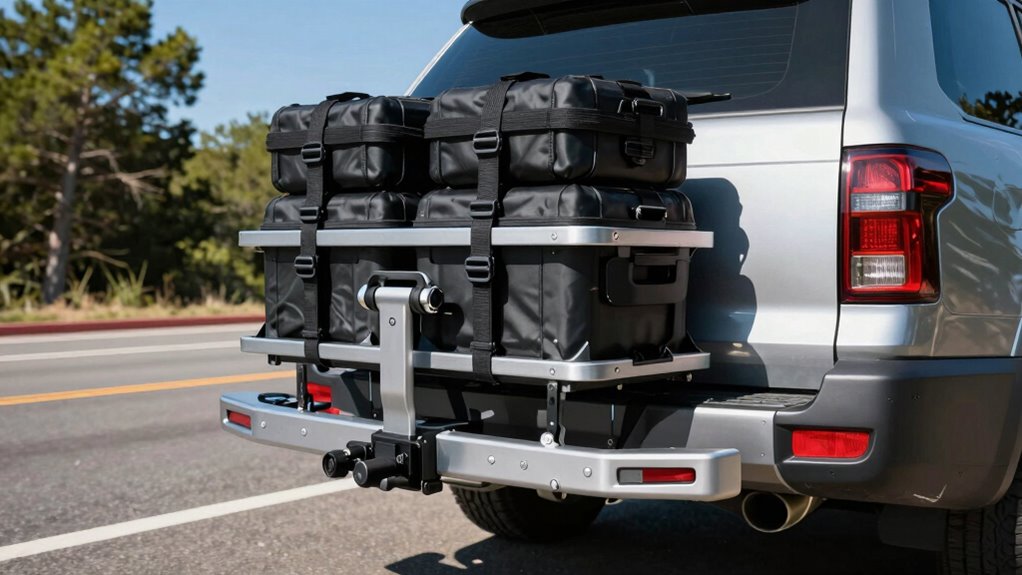

To stop scary sway, guarantee your hitch carrier is properly loaded with weight evenly distributed and secured tightly with straps. Verify your hitch setup is compatible, level, and stable before starting your trip. Use anti-sway devices or stabilizers to control movement and keep an eye on cargo during travel, making adjustments as needed. Proper maintenance and attention to signs of instability can prevent dangerous sway altogether. Keep exploring to discover more effective tips for safer towing.

Get travel and outdoor gear delivered free with Prime
- Fast, free delivery on millions of items
- Prime Video, Amazon Music and more included
- Member-only deals all year
Key Takeaways
- Ensure hitch and load are properly balanced and secured to prevent shifting during transit.
- Use anti-sway devices and reinforce load distribution to minimize instability.
- Regularly inspect and tighten all hitch components and fasteners before each trip.
- Set the hitch height level and evenly distribute weight for better vehicle control.
- Avoid overloading beyond weight limits and re-adjust load if sway begins.
Why Does Hitch Carrier Sway, and How Can You Stop It?
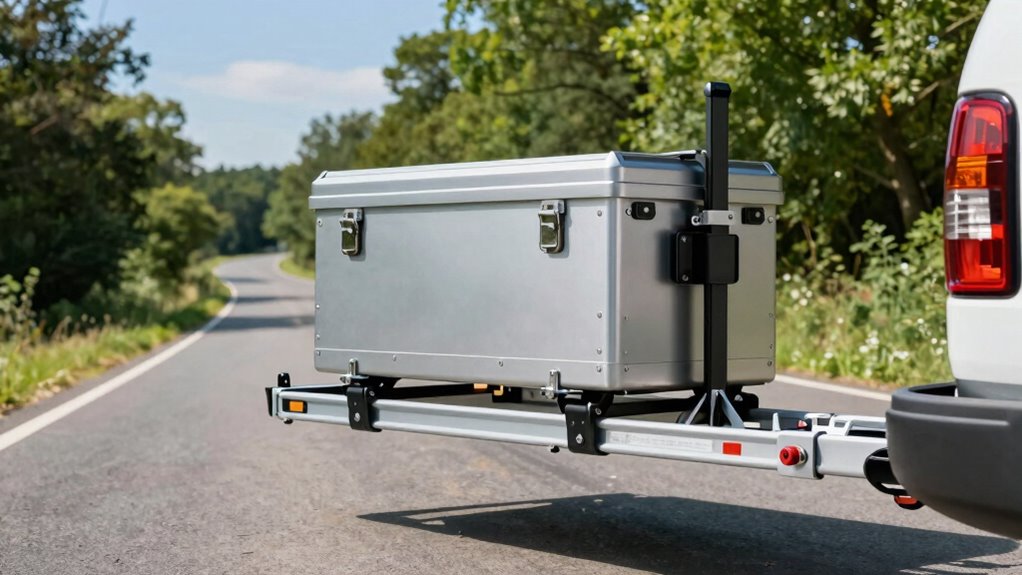
Have you ever noticed your hitch carrier swaying while driving? This often happens because the trailer hitch isn’t secure enough or the load isn’t balanced properly. The hitch receiver can cause instability if it’s not tightly fitted or if it’s worn out. When the load shifts or the trailer hitch isn’t properly secured, it creates movement that leads to sway. Excessive sway makes steering difficult and can be dangerous. To prevent this, make sure your hitch receiver is properly installed and tightened. Distribute the weight evenly on your hitch carrier, and consider using anti-sway bars or stabilizers. Properly securing your trailer hitch and checking for any wear or damage help maintain stability, making your drive safer and smoother.
How to Choose a Hitch Carrier That Stays Steady
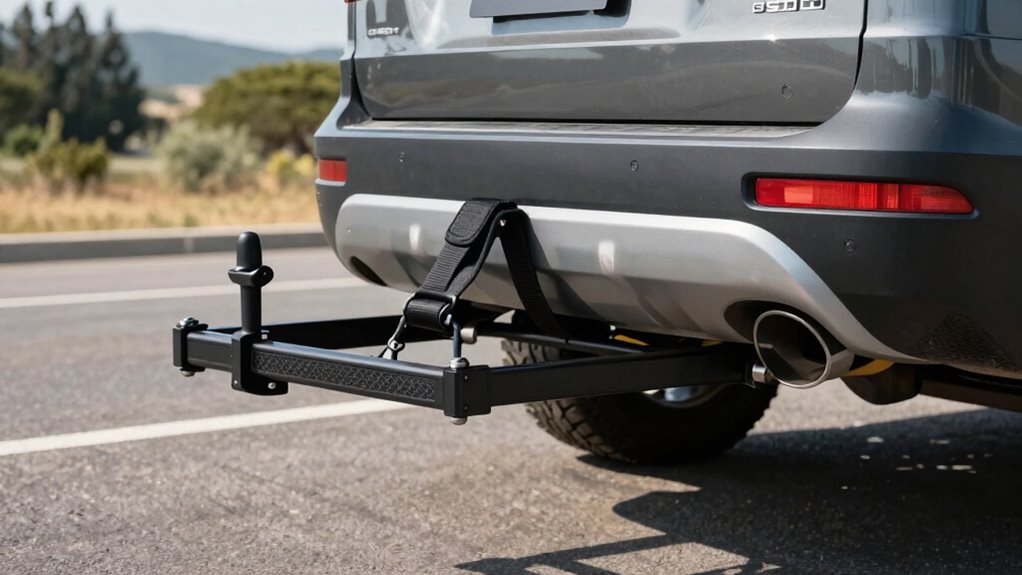
Choosing the right hitch carrier can make a significant difference in preventing sway and ensuring a stable, safe ride. To do this, focus on hitch compatibility—make sure the carrier fits securely with your vehicle’s hitch type and weight capacity. Next, consider carrier materials; sturdy options like steel or aluminum offer durability and reduce unwanted movement. Look for features that enhance stability, such as reinforced frames or anti-sway attachments. Incorporating product recommendations can also help identify the most reliable options on the market. Additionally, understanding battery inverter generator capacity can inform your choices for accessories that support your vehicle’s power needs during trips. Being aware of the environmental impact of tissue paper can also inspire eco-friendly choices when selecting packaging or gift options for accessories. Moreover, paying attention to hitch compatibility ensures that your carrier remains secure and steady during transit. Ensuring the proper projector technology can also help in creating a safer and more comfortable driving experience during long trips.
How to Properly Install Your Hitch Carrier for Safety
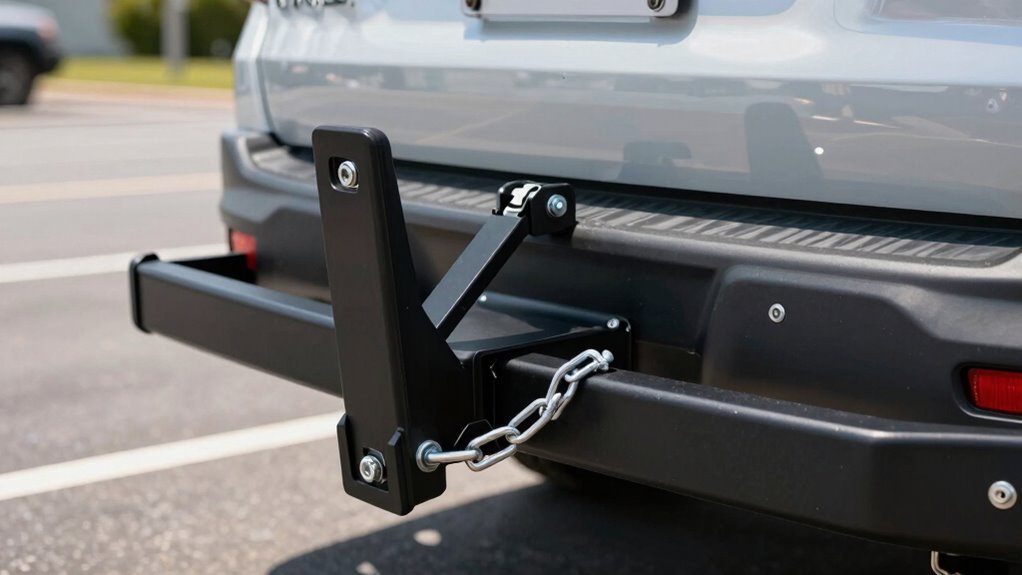
Ensuring your hitch carrier is installed correctly is essential for safety and stability during your ride. Start by selecting the right hitch installation for your vehicle and carrier, ensuring compatibility. Follow the manufacturer’s instructions carefully, tightening all bolts and connections securely. Check that the hitch receiver is clean and free of debris before mounting the carrier. Make sure the carrier is level and properly seated in the hitch receiver, then lock it in place with the provided pins or locks. Always adhere to safety regulations, such as weight limits and proper hitch class, to prevent sway or detachment. Regularly inspect the installation before each use, looking for loose or damaged parts. Proper hitch installation is key to safe, steady hauling. Additionally, inspecting the weatherproof tool storage can prevent damage caused by weather conditions, ensuring your gear remains secure and protected. Maintaining the hitch compatibility with your vehicle can also help prevent installation issues and improve overall safety. Being aware of installation best practices can further enhance your safety and peace of mind. Incorporating energetic alignment principles can also help in maintaining a stable and secure setup during travel.
Loading Tips to Keep Your Cargo Stable and Sway-Free
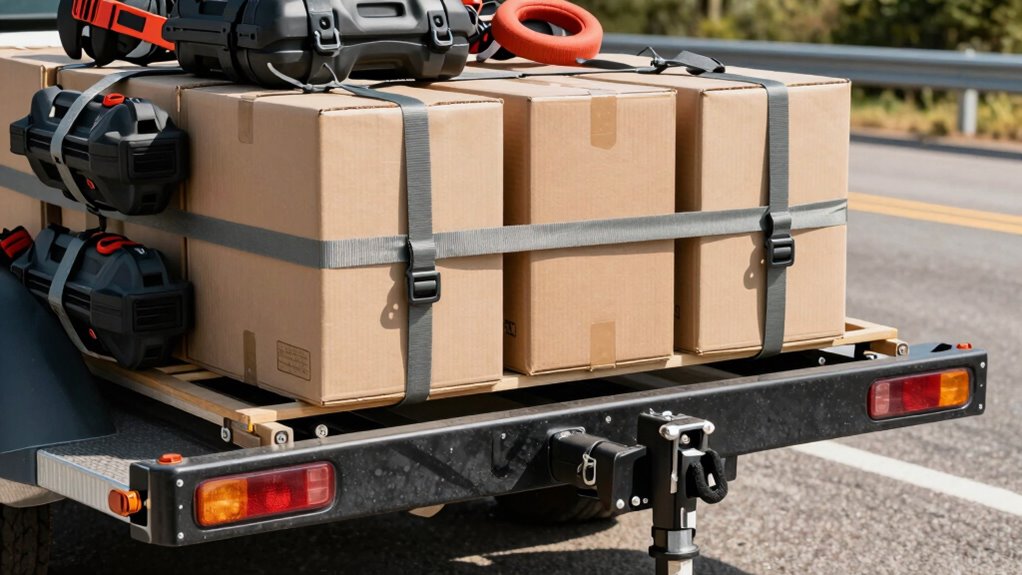
To keep your cargo stable and sway-free, start by properly distributing the weight across your hitch carrier. Make sure to use secure straps effectively to prevent shifting during transit. Remember, overloading can compromise safety, so always load within the carrier’s weight limit. Additionally, content formats play a crucial role in understanding how to best organize and secure your cargo for safe transport. Proper wall surfaces and finishes can also enhance the durability and safety of your cargo area, ensuring it withstands the stresses of transit. Paying attention to load distribution can significantly improve overall stability during travel, especially when considering vehicle weight capacity to avoid dangerous sway. Using accessibility features can help ensure safety procedures are clear and easily followed during loading and unloading.
Properly Distribute Weight
Have you ever experienced sway or instability while hauling cargo on a hitch carrier? Proper weight distribution is key to a stable ride. Start by evenly spreading the load, keeping most weight centered over the hitch. This prevents excessive sway and maintains control. Make sure your tires are properly inflated; underinflated tires can cause poor handling and affect brake performance. Always check your load’s weight limits to avoid overloading, which can strain your vehicle and hitch. Consider these tips:
- Keep the heaviest items low and close to the hitch
- Balance the load side to side
- Regularly check tire pressure and brake function
- Understanding sound vibrations and their impact can help you maintain a smoother, safer haul.
Use Secure Straps Effectively
Using secure straps correctly is vital to keep your cargo stable and prevent sway during transit. Start by choosing the right secure straps that fit your load and hitch carrier. Wrap the straps tightly around your cargo, ensuring they’re snug but not overly tight to avoid damage. Proper tension adjustment is essential—tighten the straps evenly to prevent shifting, but don’t overstretch them. Check each strap’s tension after initial tightening and periodically during your trip. Make sure the straps are secure and not frayed or worn, as compromised straps can loosen or break. Keep straps flat and free of twists for maximum holding power. Regularly inspect and re-tighten as needed to maintain stability and reduce sway, ensuring a safer and smoother journey. For added safety, consider using smart lock systems on your cargo to monitor security remotely. Maintaining the right tension and inspection routine is crucial for work-life harmony when managing your cargo safety, especially since proper safety practices can significantly impact your overall safety during travel. Additionally, understanding the importance of proper strap tension can help prevent accidents caused by loose cargo. Ensuring your straps are properly tensioned and secured is also key to avoiding dangerous sway.
Avoid Overloading Cargo
Overloading your cargo can considerably compromise vehicle stability and increase sway during transit. When you pack too much, it shifts the weight distribution and makes your hitch carrier more prone to sway. To keep your cargo secure and stable, avoid exceeding weight limits and evenly distribute the load. Proper weight distribution helps maintain control and reduces sway, ensuring safer travel.
- Use cargo security techniques like tie-downs to keep items from shifting.
- Balance the weight on both sides of the hitch carrier to prevent uneven load.
- Check your vehicle’s maximum payload capacity before loading to avoid overloading.
Using Anti-Sway Devices and Stabilizers Effectively
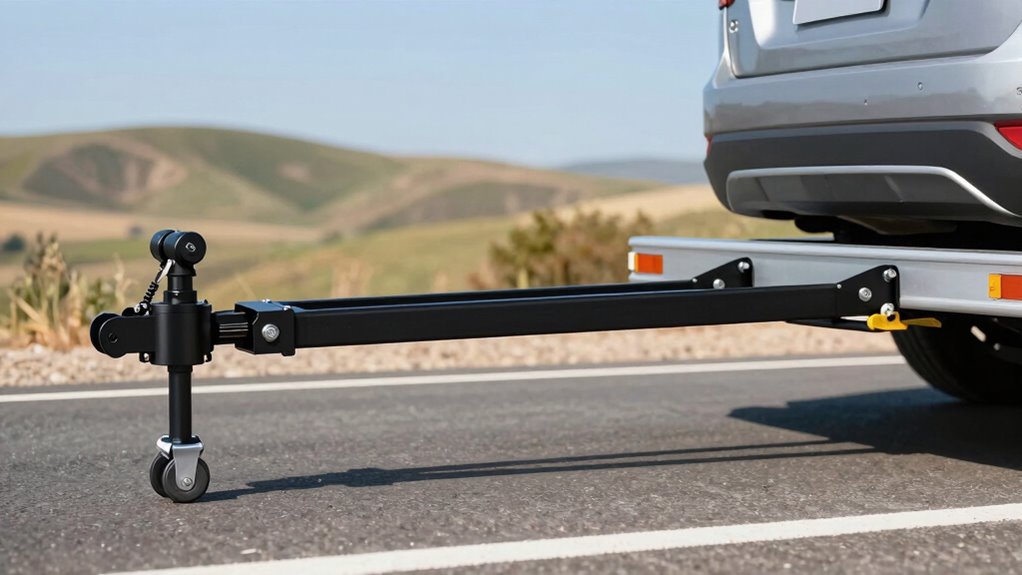
To get the most out of anti-sway devices and stabilizers, you need to guarantee they’re installed correctly and securely. You should also regularly adjust them for proper balance and perform maintenance checks to keep them functioning effectively. Staying proactive with these steps helps keep your cargo stable and your trip safe. Understanding the challenges in nanotech fabrication can also inspire more reliable and innovative stabilization solutions. Recognizing the importance of strong, meaningful names can inspire confidence and resilience during challenging trips. Additionally, incorporating wealth protection strategies can ensure your assets remain secure even during unpredictable circumstances. Exploring cybersecurity tactics such as proactive monitoring and threat detection can help prevent vulnerabilities in your setup. Incorporating landscaping to enhance natural beauty into your setup can also improve overall stability and aesthetic appeal, making your outdoor space more functional and appealing.
Proper Device Installation
Proper installation of anti-sway devices and stabilizers is essential for safe and effective hitch carrier use. Ensuring compatibility with your hitch and carrier enhances safety and performance. Start by verifying hitch compatibility to prevent issues down the road. Properly securing the stabilizer or anti-sway device maintains stability without compromising carrier aesthetics. Misaligned or loose installations can cause sway or damage, so double-check all connections. Keep in mind that a well-installed device doesn’t just improve safety; it also preserves the sleek look of your carrier. Remember, the goal is a secure, stable setup that minimizes sway and keeps your load steady on the road. Follow manufacturer instructions carefully and periodically inspect the installation for signs of wear or looseness.
Adjusting for Balance
Once your anti-sway devices and stabilizers are installed correctly, the next step is to adjust them for ideal balance. You’ll want to fine-tune your setup based on tire pressure and road conditions. Proper tire pressure ensures your hitch carrier remains stable, while adjusting stabilizers helps counter sway caused by uneven surfaces. Use the table below as a quick guide:
| Adjustment Step | Action | Result |
|---|---|---|
| Check tire pressure | Inflate to manufacturer’s recommended PSI | Improves stability on rough roads |
| Tighten stabilizers | Secure stabilizers firmly | Reduces sway during turns |
| Adjust anti-sway device | Fine-tune tension for balance | Minimizes movement on uneven terrain |
| Test drive and observe | Make further adjustments as needed | Ensures perfect road handling |
Regularly refining these settings keeps your hitch carrier steady, no matter the road.
Regular Maintenance Checks
How often should you check your anti-sway devices and stabilizers to guarantee they’re working effectively? Regular maintenance is key to trail safety and preventing dangerous sway. You should inspect your hitch system before each trip, especially after rough roads or weather considerations like rain or wind. Look for worn or damaged parts, loose bolts, and proper lubrication.
- Confirm stabilizers are firmly attached and functioning correctly
- Check for rust, corrosion, or cracks that might compromise stability
- Test anti-sway devices by gently applying pressure to see if they hold steady
Consistent checks help avoid unexpected sway, especially during adverse weather. Staying vigilant keeps your load secure, your trailer stable, and your trail safety high. Regular maintenance is your best defense against scary sway and potential accidents.
Adjusting Your Vehicle and Hitch Setup for Better Balance

To guarantee your hitch carrier remains stable and safe during transit, you need to fine-tune your vehicle and hitch setup for better balance. Proper adjustments improve towing etiquette and enhance road safety. Start by ensuring your hitch ball matches your carrier’s coupler size, and set the correct height to keep the load level. Distribute weight evenly across your carrier, avoiding overloads on one side. Additionally, check tire pressure and suspension for optimal performance. Properly aligning your vehicle and hitch reduces sway, making driving smoother and safer. Below is a helpful guide:
| Adjustment Area | What to Check | Why It Matters |
|---|---|---|
| Hitch Height | Level load | Prevents sway and imbalance |
| Weight Distribution | Even load | Enhances stability |
| Tire Pressure | Correct PSI | Ensures control and safety |
| Suspension | Proper setup | Absorbs shocks and maintains balance |
| Towing Etiquette | Follow road rules | Ensures safety for all on the road |
Common Mistakes That Cause Excessive Hitch Sway

Excessive hitch sway often occurs when you make common mistakes in your setup or driving habits. Poor hitch safety practices or incorrect carrier design can worsen sway and compromise your load stability. To prevent this, avoid these mistakes:
- Using an undersized or incompatible hitch that doesn’t match your carrier’s weight requirements
- Overloading the carrier beyond its rated capacity, causing imbalance
- Not properly securing the load, leading to shifting and instability
These errors can significantly increase sway, making your drive unsafe. Ensuring your hitch safety and choosing a carrier with the correct design are key steps. Always follow manufacturer guidelines for weight limits and secure your cargo tightly. Proper setup and awareness of common mistakes help you maintain control and reduce the scary sway during your trips.
Signs Your Hitch Carrier Is Unstable and Needs Attention
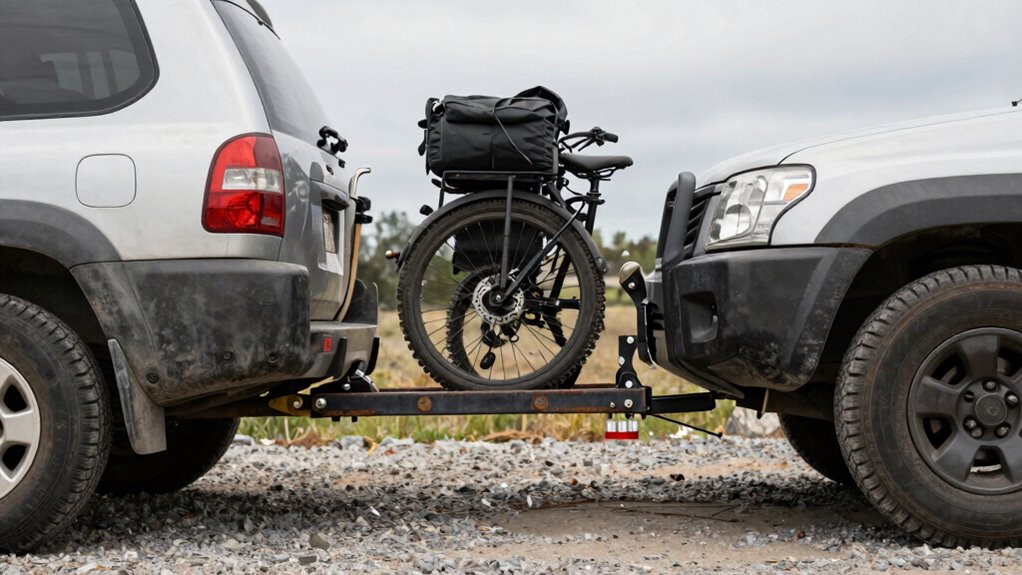
A hitch carrier that feels unstable during your drive is a clear warning sign that it needs your attention. One key indicator is inconsistent sway or wobbling, which can signal poor hitch compatibility or improper attachment. If your carrier shifts or jerks unexpectedly, it’s time to check if it’s securely mounted. Additionally, if you notice the cargo isn’t aerodynamically optimized, it can cause uneven airflow, increasing sway and instability. Uneven weight distribution or excessive cargo movement also point to potential issues. Pay close attention to how the carrier responds at different speeds. Any signs of excessive sway, looseness, or difficulty in controlling your vehicle suggest you need to reevaluate the hitch setup and verify everything is properly installed and balanced.
Maintenance Tips to Keep Your Hitch Carrier Sway-Free

Regular maintenance of your hitch carrier can prevent instability and keep it sway-free during your drives. Start by checking hitch compatibility before each trip to guarantee a secure fit. Regularly inspect the hitch and receiver for rust, wear, or damage that could affect stability. Also, pay attention to road conditions; rough or uneven surfaces can increase sway, so drive carefully and adjust your load accordingly. To keep sway at bay, consider tightening bolts and connections periodically. Properly balancing your load and securing all items minimizes shifting that causes sway. Keep these maintenance practices in mind:
Regularly inspect and secure your hitch to prevent sway and ensure safe, stable drives.
- Verify hitch compatibility and locking mechanisms
- Inspect for rust, damage, and wear on hitch components
- Adjust and secure your load to maintain balance
Consistent maintenance helps you stay safe and avoid scary sway.
Frequently Asked Questions
Can Weather Conditions Influence Hitch Carrier Sway?
Yes, weather conditions can influence hitch carrier sway. Wind resistance from strong winds or storms impacts your vehicle’s stability, making sway more likely. Rain and icy conditions can also reduce traction, increasing sway risk. You should check weather impact before your trip and adjust your driving accordingly. Reducing your speed and ensuring your hitch carrier is properly secured helps minimize sway, especially in adverse weather.
Is There a Maximum Weight Limit for Hitch Carriers?
Yes, there is a maximum weight limit for hitch carriers. You should always check weight limits to prevent piling on problems. Proper weight distribution and carrier compatibility are essential to avoid sway and guarantee safety. Exceeding weight capacity can cause instability, damage, or dangerous detachment. Always read manufacturer recommendations, weigh your load, and match your carrier’s capacity with your vehicle’s hitch to keep your trip trouble-free and safe.
How Often Should I Inspect My Hitch and Carrier for Safety?
You should inspect your hitch and carrier at least once a month for safety. Follow a maintenance checklist to check for rust, cracks, or worn parts, ensuring proper attachment and secure bolts. Before each trip, do a quick visual check to confirm everything is tight and properly connected. Regular inspections help prevent sway issues and keep your load safe, giving you peace of mind on the road.
Are There Specific Hitch Types Better for Stability?
Think of your hitch as the backbone of your setup. For better stability, choose a hitch type designed for improved Hitch compatibility, like a weight-distributing hitch or a sway control hitch. These options improve Carrier aerodynamics, reducing sway and wobble. Always guarantee your hitch matches your vehicle and carrier for peak performance. Selecting the right hitch type makes your ride smoother and safer, like a steady ship in choppy waters.
Can Driving Habits Reduce Hitch Carrier Sway?
Yes, your driving habits can reduce hitch carrier sway. Keep your driving speed moderate; driving too fast can increase sway. Always guarantee proper loading by distributing weight evenly and securing items tightly. When you maintain a steady speed and load your carrier correctly, you minimize instability. These habits help improve overall safety and make your towing experience smoother, reducing the scary sway that can occur during travel.
Conclusion
To keep your hitch carrier stable, always double-check your setup and load distribution. For example, if you notice sway during a road trip, adjusting the weight or adding anti-sway devices can make a huge difference. Regular maintenance and mindful loading prevent dangerous sway and guarantee safer travels. Remember, a well-balanced hitch carrier isn’t just about comfort—it’s about your safety and peace of mind on every journey.
Halloween Picks
halloween
As an affiliate, we earn on qualifying purchases.