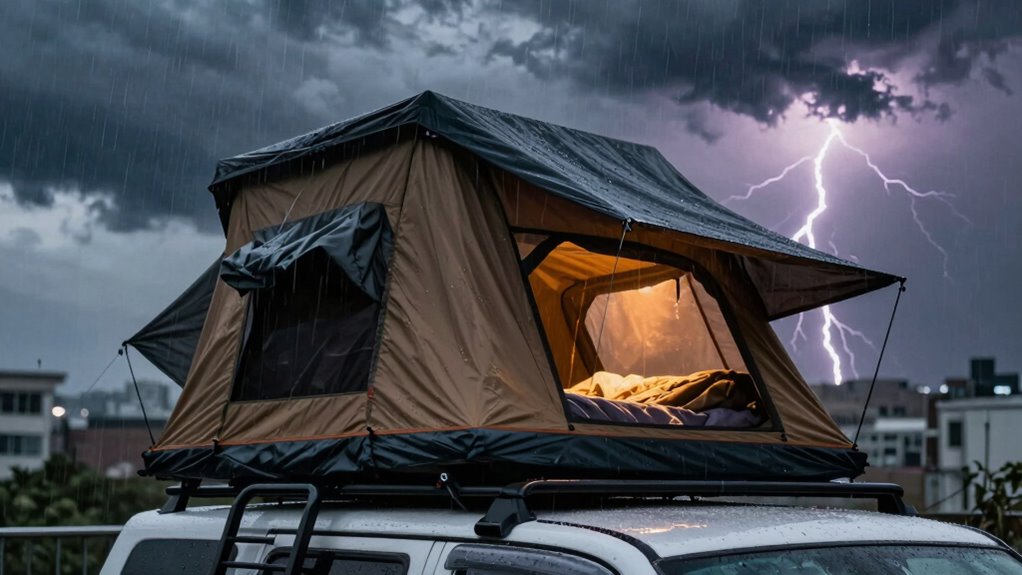

To sleep safely in your rooftop tent during stormy weather, make certain your campsite is well-chosen and safe from high winds, flooding, and falling debris. Secure all tent anchors tightly, add extra tie-downs, and use weatherproof coverings like rainflies and tarps to stay dry. Keep your gear secured and stay alert to changing weather conditions. If you want to learn more about staying safe and comfortable during storms, there’s valuable advice to explore further.
Key Takeaways
- Secure and reinforce your rooftop tent with heavy-duty stakes, tie-downs, and check all fastenings before storm conditions worsen.
- Attach rainflies and additional tarps to enhance waterproofing and prevent water ingress during heavy rain.
- Ensure proper ventilation to reduce condensation while sealing gaps to prevent wind and rain from entering.
- Monitor weather forecasts continuously to decide whether to stay in the tent or seek safer shelter.
- Keep emergency supplies, flashlight, and safety gear accessible in case of sudden weather changes or emergencies.
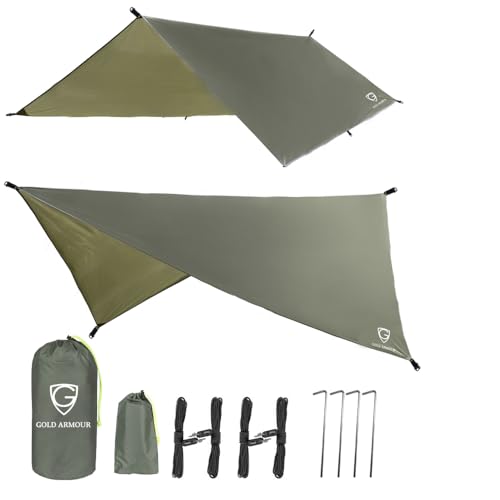
Gold Armour Rainfly Tarp for Hammock and Tent, 12x10ft Waterproof Lightweight Camping Accessories, Survival Gear
- High-Quality Waterproof Tarp: Keeps you dry with 3000mm waterproof rating
- Lightweight & Versatile Design: Suitable as tent tarp, hammock shelter, ground sheet
- Complete Camping Package: Includes stakes, ropes, tensioners, and tie-down points
As an affiliate, we earn on qualifying purchases.
As an affiliate, we earn on qualifying purchases.
Understanding the Storm Risks for Rooftop Tent Camping
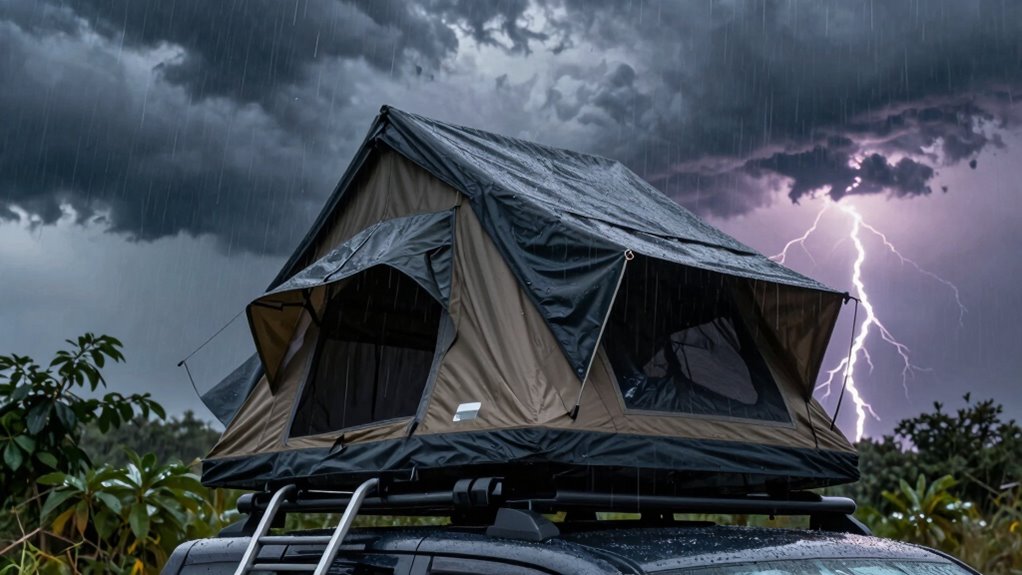
Stormy weather can pose significant risks when camping in a rooftop tent, so it’s essential to understand what you’re up against. Lightning safety is a top concern, as a tent offers little protection from lightning strikes. If you hear thunder or see lightning, it’s safest to seek shelter elsewhere. Flood risks are also critical; heavy rain can lead to pooling or flooding around your campsite, potentially compromising stability and safety. Water can seep into your tent or cause the vehicle to become unstable if the ground becomes too saturated. Being aware of these risks helps you prepare better, like avoiding low-lying areas prone to flooding and staying alert for changing weather conditions. Knowing these dangers keeps you safer during stormy nights in your rooftop tent. Additionally, understanding local weather patterns can help you plan better and avoid unexpected storms. Being familiar with the typical storm severity in your region can also guide your decision-making and safety precautions. It’s also helpful to learn about safe camping practices during adverse weather, so you can respond appropriately if conditions worsen unexpectedly. Recognizing the importance of security measures can help you secure your campsite against high winds and falling debris, reducing potential hazards.

Trampoline Anchors Stakes Tent Garden Stake Heavy Duty Trampoline Parts Tent Canopies,Carports,Swing Sets Small Stake Corkscrew Shape Steel Stakes Anchor Kit,Bonus 6 Strong Belt,Black
- Number of Stakes: 6 steel stakes included
- Stakes Material: Heavy-duty steel for durability
- Additional Accessories: Includes 6 strong straps
As an affiliate, we earn on qualifying purchases.
As an affiliate, we earn on qualifying purchases.
How to Choose a Safe Campsite During Stormy Weather
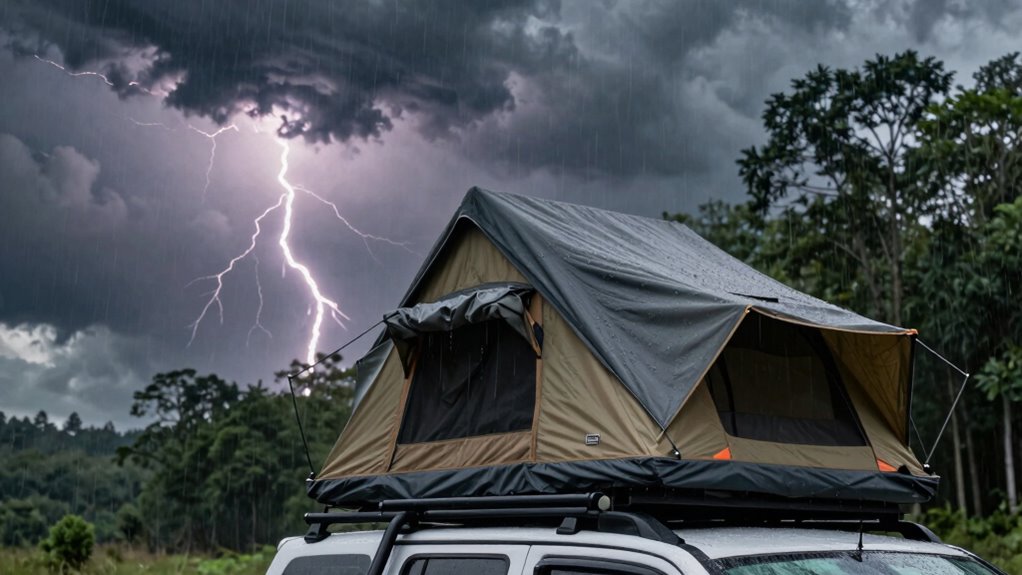
Choosing the right campsite is essential to staying safe during stormy weather. You want a spot that minimizes risks and keeps you protected. Look for a flat, well-drained area away from tall trees, which could fall during strong winds. Avoid areas prone to flooding or close to water sources. Keep campfire safety in mind by selecting a cleared, open space, far from tents and overhanging branches. Be mindful of wildlife encounters; choose a site that’s not attracting animals or their trails. Also, steer clear of rocky or unstable ground that could worsen in a storm. By selecting a safe, open, and stable location, you reduce hazards and improve your chances of staying dry and secure throughout the storm. Incorporating knowledge about auditory processing can help you better interpret weather sounds and stay alert to changing conditions.

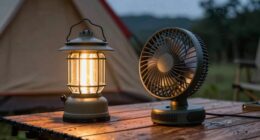
Odoland Portable LED Camping Lantern with Ceiling Fan – Hurricane Emergency
- Essential Camping Lighting: Provides bright illumination for camping
- Multi-Functional Light and Fan: Combines LED light with adjustable fan
- High-Performance Fan: Whisper-quiet motor with strong airflow
As an affiliate, we earn on qualifying purchases.
As an affiliate, we earn on qualifying purchases.
Preparing Your Rooftop Tent for Storms: Essential Tips
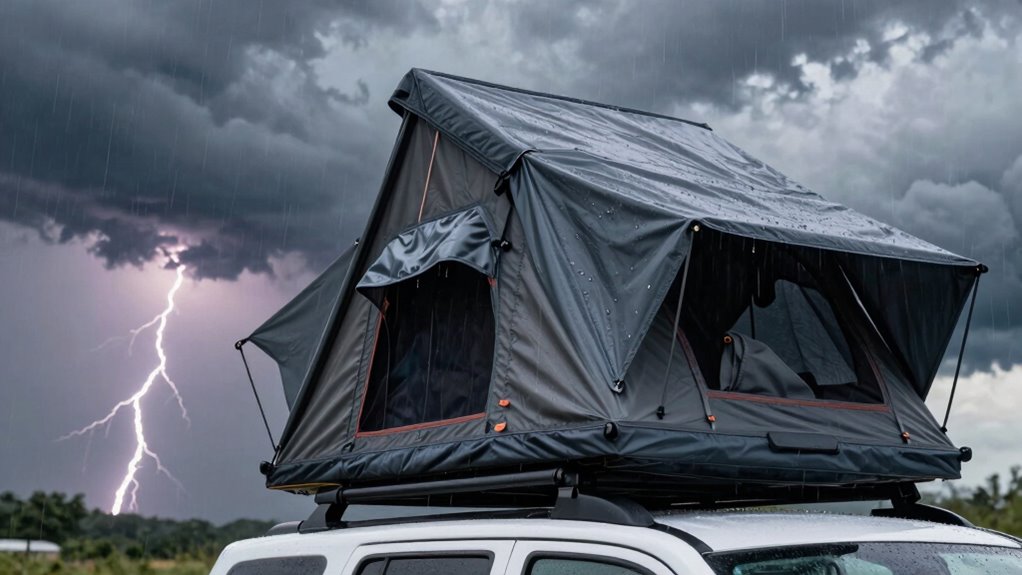
To prepare your rooftop tent for storms, start by securing the tent anchors tightly to prevent movement. Always check the weather forecast before setting up to stay informed about approaching severe weather. Don’t forget to pack emergency supplies, like a flashlight, first aid kit, and extra clothing, in case conditions worsen. Additionally, consider incorporating interactive murals or other innovative wall art elements to create a calming environment inside the tent during stormy nights. Using appropriate weatherproofing techniques can further protect your setup from harsh elements and ensure a safer, more comfortable experience. Properly securing your tent with reliable anchoring methods can make a significant difference during high winds or heavy rain, especially when understanding the importance of brewing science in maintaining a stable setup during storms. Paying attention to safety tips for portable oil radiators can also help prevent fire hazards if you decide to use portable heating devices inside or near your tent during cold, stormy nights.
Secure Tent Anchors
Securing your tent anchors properly is essential to prevent your rooftop tent from becoming a sail in strong winds. Strong anchors maintain rooftop stability during storms, so choose quality anchor materials suited for your terrain. Use high-quality stakes, heavy-duty ratchet straps, or specialized anchors designed for rocky or sandy ground. Make sure your anchors are firmly embedded and tensioned correctly to resist gusts. Regularly inspect and tighten your setup as weather conditions change. Proper anchoring reduces movement, keeps your tent stable, and minimizes the risk of damage. Remember, the right anchor materials and proper placement are key to weathering storms safely. Additionally, utilizing appropriate tools can help ensure your anchors are installed correctly and securely. For added peace of mind, consider weather-resistant anchors that are specifically designed to withstand harsh conditions. Understanding Bank SWIFT/BIC Codes can also be useful if you need to quickly access emergency funds or make timely transactions during travel disruptions caused by storms. Being aware of terrain considerations can help you select the most suitable anchors for your specific environment. Incorporating molecular-scale research into your anchoring methods can lead to innovations that improve stability and safety during extreme weather conditions. With secure tent anchors, you’ll enjoy peace of mind and better rooftop stability during stormy nights.
Check Weather Forecasts
Monitoring the weather forecast before setting up your rooftop tent helps you prepare effectively for storms. Use reliable weather apps to stay updated on current conditions and potential changes. Check for storm alerts in your area, so you can decide whether to postpone your trip or reinforce your setup. Paying close attention to forecast details like wind speeds, rainfall, and lightning risks is essential. If a storm is approaching, it’s better to delay setting up or to find shelter elsewhere. Consistently monitoring forecasts guarantees you’re aware of any sudden weather shifts, giving you time to make informed decisions. Staying proactive with weather updates helps keep you safe and allows you to adapt your plans before storm conditions become severe. Being aware of storm safety precautions ensures you’re fully prepared for unexpected weather changes. Additionally, understanding weather patterns can help you anticipate and recognize signs of worsening conditions, further enhancing your safety. Recognizing local climate tendencies can also help you better anticipate potential storm developments in your area. Regularly reviewing storm forecasting methods can improve your ability to predict and respond to severe weather accurately.
Pack Emergency Supplies
Even if you’ve checked the weather forecast, it’s crucial to pack emergency supplies to guarantee your safety if conditions worsen unexpectedly. An emergency kit is necessary, containing items like a flashlight, batteries, first aid supplies, and a multi-tool. Stay alert to weather alerts on your phone or radio, so you’re aware of any sudden changes. Preparing in advance ensures you’re ready to handle emergencies without panic. Keeping your emergency supplies accessible and well-organized inside your rooftop tent for quick retrieval is essential. Remember, stormy weather can be unpredictable, so having these essentials on hand can make a significant difference in your safety. Being proactive with your emergency preparedness helps you stay calm and confident, even when the weather takes a turn for the worse. For smart shopping, consider checking out best gear and knife roundups for smart shopping, so you’re equipped with reliable tools and accessories for any situation. Additionally, understanding cloud service vulnerabilities can help you better plan for potential disruptions during severe weather. Being aware of water-related hazards, such as flooding or water intrusion, is also crucial when preparing for storms. Incorporating knowledge about storm preparedness can further enhance your safety measures. Moreover, familiarizing yourself with emergency communication methods ensures you can stay connected with others if traditional networks fail.

Survival Kit, 250Pcs Survival Gear First Aid Kit with Molle System Compatible Bag and Emergency Tent, Emergency Kit for Earthquake, Outdoor Adventure, Hiking, Hunting, Gifts for Men Women
- 250-Piece Survival Kit: Includes 250 essential survival tools
- Comprehensive First Aid Supplies: Bright red bag with medical essentials
- Molle System Compatible Bag: Water-resistant, attach to gear or vest
As an affiliate, we earn on qualifying purchases.
As an affiliate, we earn on qualifying purchases.
Securing Your Tent and Gear Against Heavy Winds
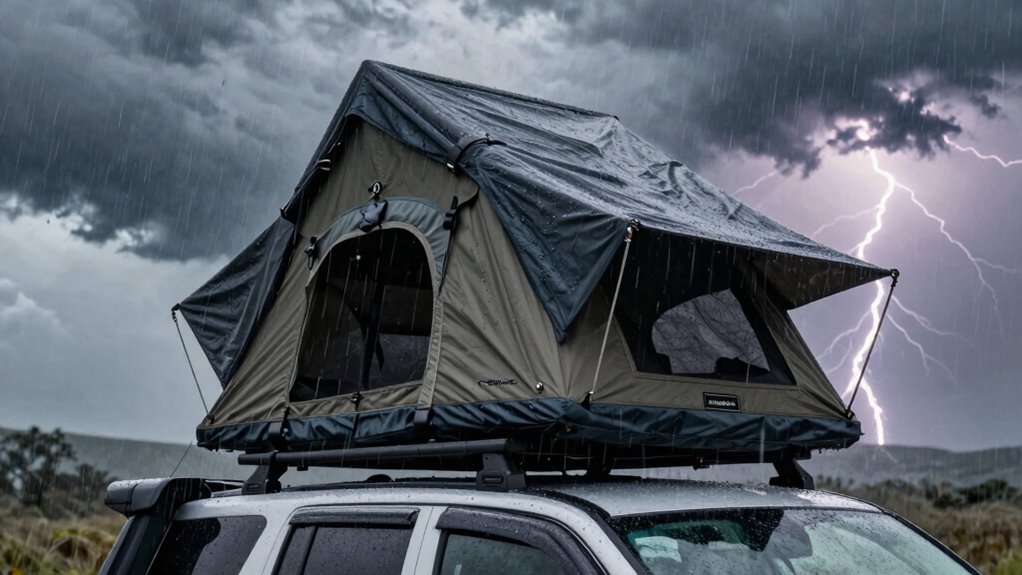
To keep your rooftop tent safe in heavy winds, start by reinforcing the tent anchors securely into the roof rack or vehicle. Make sure all loose gear is tightly secured to prevent it from acting as a sail, and check the wind direction to adjust your setup if needed. Taking these steps helps minimize the risk of damage or accidents during storms.
Reinforce Tent Anchors
Heavy winds can quickly turn your rooftop tent into a dangerous liability if it isn’t properly secured. Reinforcing your tent anchors is essential to prevent movement or collapse during a storm. Start by checking your camping accessories, making sure all anchors are sturdy and in good condition. Use heavy-duty stakes or anchors designed for high winds, and consider adding extra tie-downs for added stability. Proper tent maintenance includes inspecting existing anchor points for wear and tear, replacing weak components, and guaranteeing all connections are tight. This reduces the risk of your tent shifting or ripping loose. Remember, well-reinforced anchors keep you safe and protect your gear, giving you peace of mind in stormy weather.
- Use heavy-duty stakes or anchors
- Add extra tie-downs for stability
- Inspect and replace worn components
- Ensure all connections are tight
Secure Loose Gear
After reinforcing your tent anchors, the next step is to secure all loose gear inside and outside your rooftop tent. Proper gear organization prevents items from flying around or causing damage during heavy winds. Use straps or bungee cords to secure loose equipment, especially items near tent vents that could disrupt airflow. Keep essential gear neatly stored to maintain balance and stability.
| Item | Method to Secure | Notes |
|---|---|---|
| Camping Chairs | Tie down with cords or straps | Prevents tipping over |
| Sleeping Bags | Store in sealed compartments | Avoid wind damage |
| Cooking Gear | Store inside locked containers | Prevents spills |
| External Gear | Use carabiners or bungee cords | Keeps gear in place |
| Tent Ventilation | Keep vents clear and secured | Ensures good airflow |
Check Wind Direction
Ever wondered how understanding wind direction can protect your rooftop tent during a storm? Knowing wind patterns helps you anticipate gusts and adjust your setup accordingly. By monitoring the wind, you can position your tent to face away from the strongest gusts, reducing strain on your gear. Use a wind vane or observe the flag movements to determine the current direction. This awareness allows you to tighten anchor points and secure loose items effectively. Staying alert to gust prediction helps prevent surprises that could damage your tent or cause it to collapse. Remember, wind shifts can happen quickly, so continuously check the wind’s flow and adjust your setup as needed.
- Position your tent to face away from prevailing winds
- Reinforce stakes and anchors before gusts arrive
- Secure loose gear and accessories tightly
- Monitor wind patterns for sudden shifts
How to Stay Dry and Comfortable During a Storm
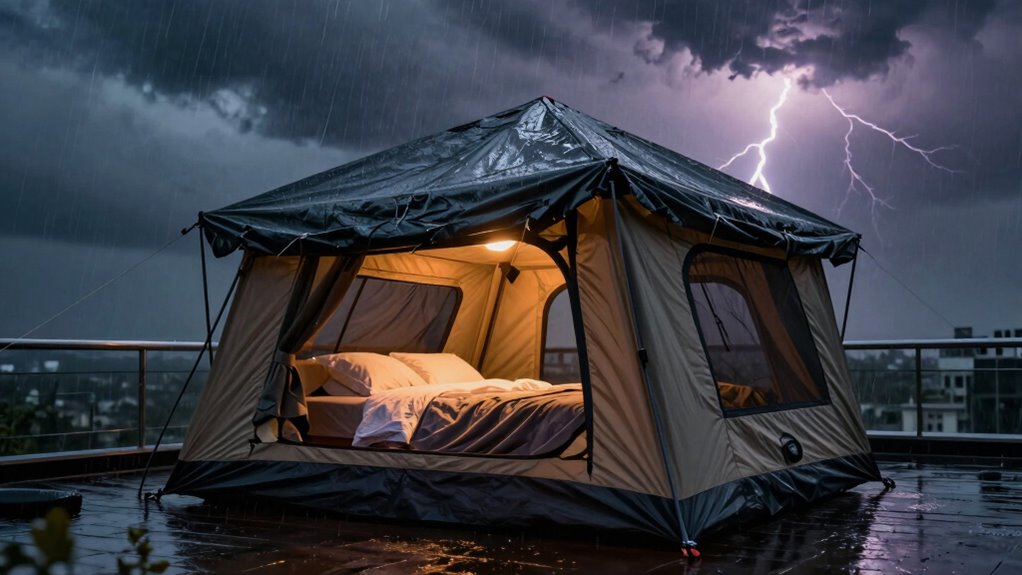
Wondering how to stay dry and comfortable during a storm in your rooftop tent? First, ensure your tent is properly sealed and the rainfly is securely attached to prevent leaks. Use a tarp or additional rain cover if needed for extra protection. Keep your bedding elevated to avoid dampness from condensation. Be mindful of campfire safety—if you decide to light a fire, stay far from the tent and always have water nearby to extinguish sparks. Wildlife encounters can increase during storms, so store food securely and avoid attracting animals. Ventilate your tent to reduce condensation, but keep windows closed tightly to prevent rain from seeping in. Staying dry and comfortable is about preparation, vigilance, and respecting nature’s unpredictability.
Managing Noise and Light Disruptions in Stormy Conditions
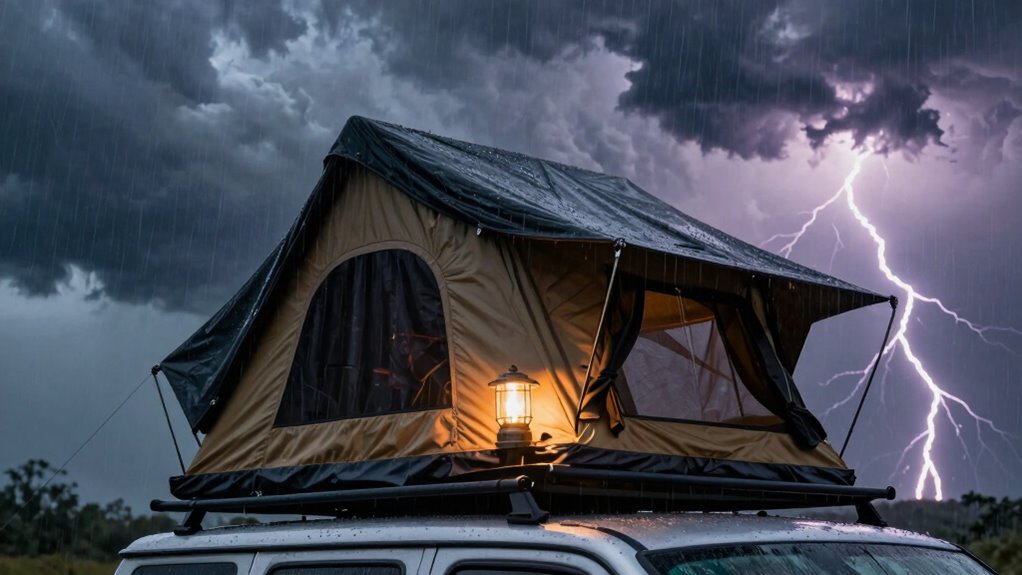
Stormy weather can bring unexpected noise and light disruptions that disturb your sleep, but you can manage these challenges with some proactive strategies. To reduce noise, use soundproofing techniques like adding extra bedding or foam panels inside your tent to absorb sound. For light disruptions, implement light blocking solutions such as blackout curtains or a sleep mask to create a dark environment. Secure any loose fabric or flaps to prevent wind from whistling through. Consider placing a thick ground mat or rug beneath your tent to dampen external sounds. These measures help you maintain restful sleep despite stormy conditions, ensuring you stay comfortable and undisturbed throughout the night.
Use soundproofing, blackout solutions, and secure fabrics to stay restful during stormy nights.
- Use foam panels or extra bedding for soundproofing
- Install blackout curtains or wear a sleep mask
- Seal any gaps or flaps to block out light and wind
- Place a ground mat to reduce external noise
What to Do If Your Tent Gets Damaged During a Storm?
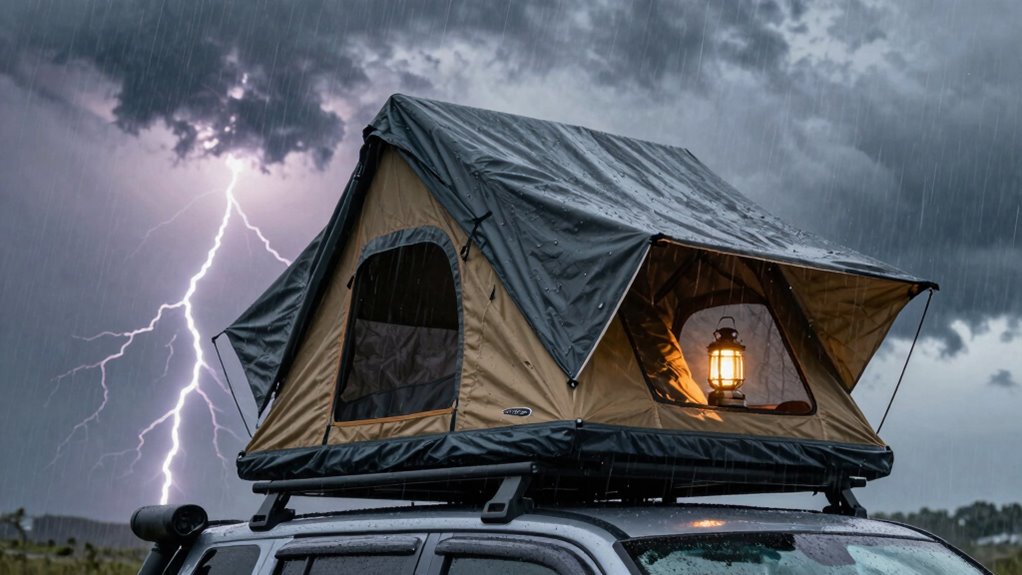
When your tent sustains damage during a storm, it is essential to act quickly to minimize further issues. First, assess the damage carefully, paying attention to the tent material and any tears or holes. If the damage affects the tent’s waterproofing, try to patch it using a repair kit suited for your tent’s material. Stay alert to storm warnings and avoid exiting the tent unless necessary, as weather conditions can worsen. Secure loose fabric or flaps to prevent additional tearing. If the damage is severe or the storm intensifies, consider packing up and relocating to a safer shelter if possible. Your priority is to prevent the damage from worsening while ensuring your safety during the storm.
Post-Storm Inspection and Cleanup Tips

After the storm has passed, it’s vital to conduct a thorough inspection of your tent and surrounding area to identify any damage or safety hazards. Check your rooftop tent for tears, loose poles, or water leaks. Clear away fallen branches or debris that could cause injury or damage. Guarantee your campfire area is safe and extinguished completely to prevent wildfires, especially after heavy rain. Be alert for wildlife encounters, as animals may be displaced or attracted to your campsite. Examine the area for signs of erosion or unstable ground, and secure loose gear. Proper cleanup reduces hazards and prepares you for future stays. Remember to prioritize safety, and always follow campfire safety guidelines to prevent accidents during cleanup.
Planning Future Storm-Ready Rooftop Camping Trips
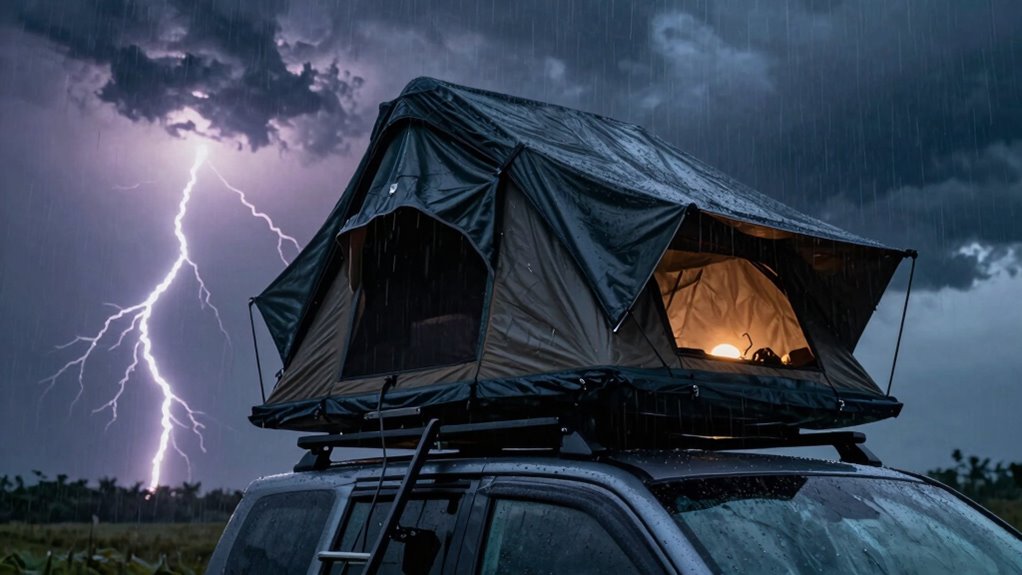
Planning ahead is essential to guarantee your rooftop camping trips are prepared for unexpected weather changes. Start by packing the right camping gear, including rain-resistant tents, sturdy stakes, and weatherproof clothing. Check weather forecasts regularly before you hit the road, especially if you want to enjoy scenic views without interruptions. Choose campsites with reliable shelter options and easy access to emergency services. Map out alternative spots in case of storms or high winds. Keep safety equipment like flashlights, first aid kits, and emergency blankets handy. Preparing in advance helps you adapt quickly, ensuring a comfortable experience despite weather surprises. By planning carefully, you can fully enjoy scenic views and the adventure of rooftop camping without worry.
Frequently Asked Questions
Can I Sleep in My Rooftop Tent During a Tornado Warning?
You shouldn’t sleep in your rooftop tent during a tornado warning. Instead, seek a sturdy storm shelter or basement nearby. If staying inside your tent, make sure it’s securely anchored, but recognize it’s not safe during tornadoes. Lightning, high winds, and debris pose serious risks. Prioritize your safety by heading to an approved shelter immediately, rather than risking exposure in the tent.
How Do I Handle Electrical Storms Safely in a Rooftop Tent?
During an electrical storm, prioritize lightning safety by staying inside your rooftop tent and avoiding metal components. Make sure your tent has good insulation to prevent heat loss and reduce the risk of condensation. Keep a safe distance from tall objects and metal poles, and avoid touching metal zippers or frames. If lightning strikes nearby, exit the tent only when the storm subsides completely, and seek shelter in a sturdy building if possible.
Is It Safe to Stay in a Rooftop Tent During Hailstorms?
Staying in a rooftop tent during hailstorms isn’t safe because the hail can damage the tent and pose a risk to your camping comfort. The tent’s insulation may not withstand the impact, leading to potential leaks or breakage. It’s best to seek shelter indoors or in a sturdy building. Prioritize your safety over comfort, and avoid risking damage or injury during severe hailstorms.
What Emergency Supplies Should I Keep in My Rooftop Tent?
You should keep essential emergency supplies in your rooftop tent, like a first aid kit, flashlight, batteries, and a multi-tool. Add weather preparedness gear such as a weather radio, extra blankets, and waterproof clothing to handle sudden storms. Packing durable, compact camping gear guarantees you’re prepared for any emergency. Always prioritize safety, and keep these supplies easily accessible, so you can respond quickly during unexpected weather changes or emergencies.
How Can I Prevent My Rooftop Tent From Collapsing in Heavy Snow?
To prevent your rooftop tent from collapsing under heavy snow, guarantee it has adequate tent insulation and a sturdy support system. Regularly clear snow buildup to reduce snow load, and consider installing a snow guard or cover. Check your tent’s weight limits, and avoid parking on uneven ground. Reinforce the tent’s frame if needed, and always monitor weather conditions to stay safe during winter storms.
Conclusion
Camping in a rooftop tent during a storm is like riding a wild wave—you need to stay alert and prepared to stay afloat. Remember, safety always comes first; a well-secured tent and a solid plan can turn a stormy night into a story of resilience. Just like a captain navigates rough seas, trust your preparation and instincts—your safe, cozy night depends on it. Stay vigilant, and you’ll emerge stronger from the storm.