To keep your food safe during summer road trips, the most important rule is to maintain your cooler at or below 40°F (4°C). This slows bacterial growth and prevents spoilage. Place ice packs strategically around your perishables for even cooling, and monitor the temperature regularly with a digital thermometer. Good insulation and proper ice pack management make a big difference. Stay on top of these tips to guarantee your food stays fresh—there’s more to discover for your next adventure.
Listen free for 30 days with Audible
Thousands of audiobooks and originals — cancel anytime.
As an affiliate, we earn on qualifying purchases.
Key Takeaways
- Keep the cooler’s interior at or below 40°F (4°C) to prevent bacterial growth and ensure food safety.
- Regularly monitor temperature with a digital thermometer to maintain consistent cooling.
- Properly place ice packs around perishables, especially at the top or sides of the cooler.
- Use insulated covers or blankets to protect the cooler from external heat and maintain the correct temperature.
- Ensure vehicle insulation and check for gaps to minimize heat transfer and keep perishables cold.
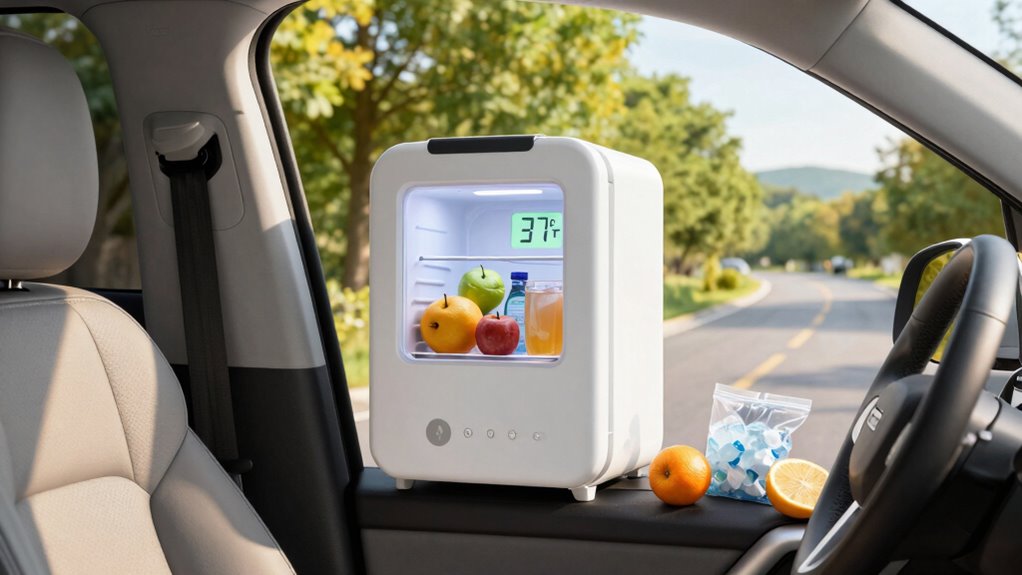
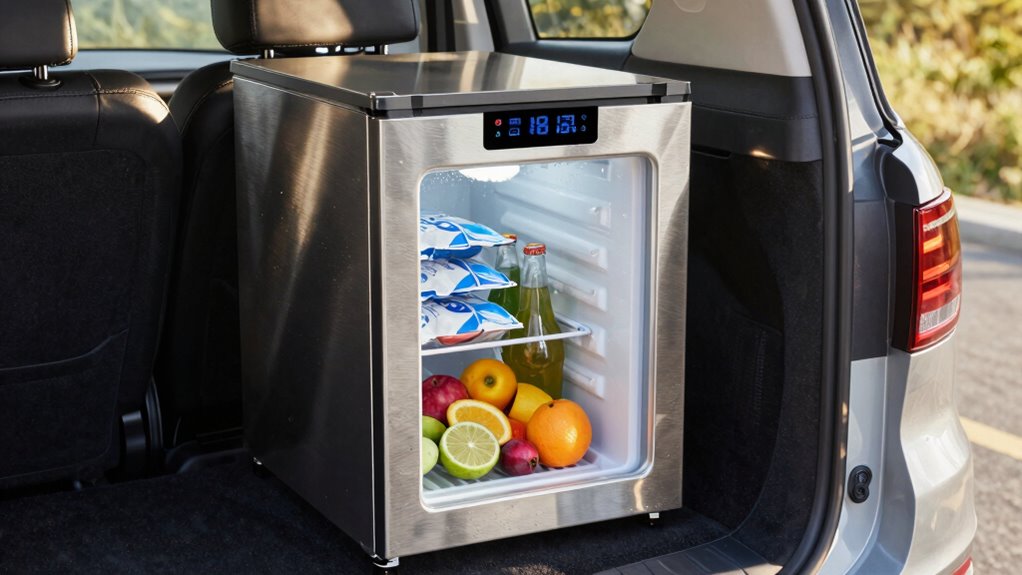
When hitting the road during summer, maintaining the right fridge temperature is essential to keep your food fresh and safe. You want to avoid spoilage, unpleasant odors, and potential health risks that come with improperly stored perishables. The key to success lies in understanding and adhering to one crucial fridge temperature rule: keep the interior at or below 40°F (4°C). This temperature slows bacterial growth, ensuring your food stays safe throughout your trip. But maintaining this temperature isn’t just about the fridge itself; it’s also about how you manage ice pack placement and vehicle insulation. Proper cooler organization can make a significant difference in maintaining consistent temperatures. Ice packs are your best friends when it comes to keeping the interior cool. Proper placement of these packs is vital. You should position them around the perishable items, especially at the top or sides of your cooler, where cold air tends to settle. By spreading the packs evenly, you ensure consistent cooling, preventing hot spots that could allow bacteria to thrive. Don’t forget to freeze your ice packs thoroughly before your trip, as partially thawed packs won’t do their job efficiently. Additionally, keep some extra packs on hand for quick replacements if the temperature starts to rise during the day, especially in hot weather. Using a digital thermometer** to monitor the internal temperature helps you respond promptly to any temperature fluctuations. Vehicle insulation plays a significant role in maintaining the proper fridge temperature on the road. A well-insulated vehicle or cooler minimizes heat transfer from the outside environment, helping to maintain a steady, safe temperature inside. Before setting off, check that your vehicle’s insulation is intact—seal any leaks or gaps around doors and windows that could let warm air in. If you’re using a portable cooler, consider investing in insulated covers or blankets designed for coolers. These add an extra layer of protection, especially during long stretches when you might not be able to access cold packs or when ambient temperatures soar. Monitoring the temperature inside your cooler is crucial. Use a digital thermometer to keep an eye on the internal temperature, ensuring it stays at or below 40°F. This way, you can quickly take action if the temperature starts creeping upward by adding more ice packs or adjusting the cooler’s placement. Proper insulation and thoughtful ice pack placement work together to create a reliable environment for your perishables, giving you peace of mind and allowing you to focus on enjoying your summer adventure. Additionally, understanding the effects of heat transfer** can help you better optimize your cooler setup and prevent temperature fluctuations.
portable cooler with digital thermometer
As an affiliate, we earn on qualifying purchases.
As an affiliate, we earn on qualifying purchases.
Frequently Asked Questions
How Often Should I Check My Fridge Temperature During a Trip?
You should check your fridge temperature at least once every few hours during your trip to keep camping snacks fresh and prevent spoilage. Regular checks help maintain ideal coolness, which also boosts fuel efficiency since your fridge won’t overwork trying to stay cold. Keep a thermometer handy, and adjust as needed to guarantee food stays safe and your energy use stays efficient.
What Types of Food Are Safest at Specific Fridge Temperatures?
Sure, because everyone loves playing fridge roulette, right? In reality, food safety depends on your fridge’s temperature zones. Keep your dairy and leftovers at or below 40°F to prevent bacteria growth, while fruits and vegetables thrive in slightly warmer zones. Meats should stay in the coldest area, ideally around 35°F. Understanding these zones helps you avoid food poisoning and keeps your road trip snacks safe and delicious.
Can a Portable Fridge Maintain Consistent Temperatures in Extreme Heat?
A portable fridge can maintain consistent temperatures in extreme heat if it’s energy-efficient and has a reliable power source. Opt for models with good insulation and adjustable thermostats, and guarantee your power source—whether a car outlet or battery—is stable and sufficient. Regularly check the temperature, especially in hot conditions, to prevent spoilage. Proper maintenance and choosing the right unit help keep your food safe during summer adventures.
How Do I Troubleshoot a Fridge That Won’T Keep Consistent Temperature?
If your fridge isn’t maintaining a consistent temperature, start by checking the power source and ensuring the thermostat is set correctly. Clean the coils and vents to improve energy efficiency, which helps stabilize temperature. Listen for unusual noise levels that could indicate a malfunction. Adjust the temperature dial if needed, and make sure the door seals tightly. Regular maintenance like this can keep your fridge running smoothly and efficiently.
What Are the Signs My Food Has Spoiled Despite Proper Fridge Temperature?
Think of your fridge as a guardian of freshness. If your food smells sour or rancid, has a slimy texture, or shows mold, it’s a clear spoiled indicator. Discoloration or an off taste also signals food safety issues. Even if the temperature stays correct, these signs mean your food has broken the guardian’s trust. Trust your senses—when in doubt, toss it out to keep safe.
insulated cooler cover for road trips
As an affiliate, we earn on qualifying purchases.
As an affiliate, we earn on qualifying purchases.
Conclusion
Think of your fridge like a trusted co-pilot on summer road trips—they keep your food fresh and your spirits high. I once ignored the proper temperature, and spoiled snacks left us stranded in a heatwave, craving cool drinks. Just like a well-tuned engine, maintaining the right fridge temperature guarantees smooth sailing. Remember, a simple rule keeps your journey enjoyable: keep that fridge at or below 40°F. Trust me, your future self will thank you.
rechargeable ice packs for coolers
As an affiliate, we earn on qualifying purchases.
As an affiliate, we earn on qualifying purchases.
vehicle insulation kit for temperature control
As an affiliate, we earn on qualifying purchases.
As an affiliate, we earn on qualifying purchases.
Flea & tick season Picks
flea and tick prevention
As an affiliate, we earn on qualifying purchases.