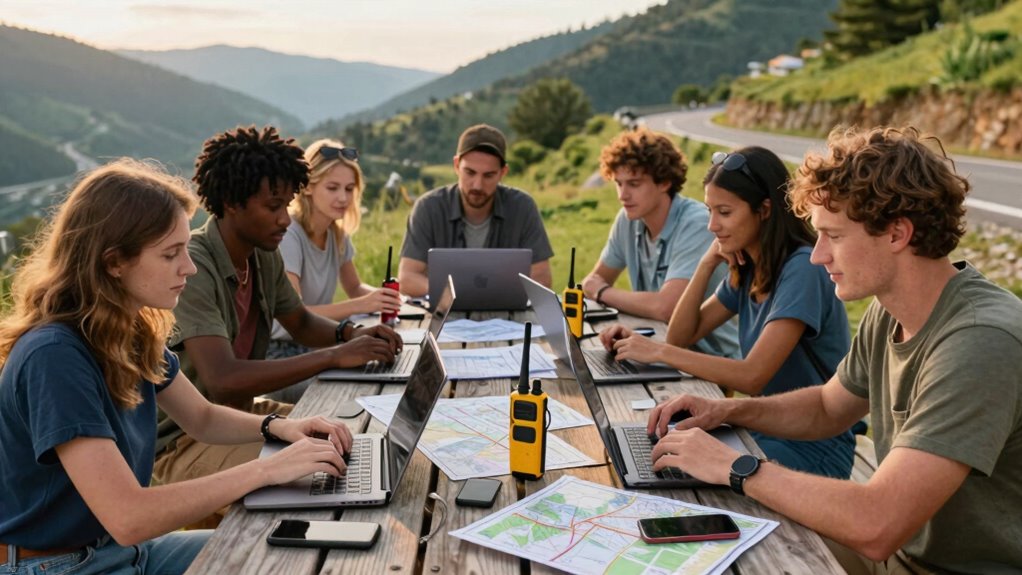

To build a convoy comms plan, start by establishing clear emergency protocols, including specific steps for vehicle breakdowns, getting lost, or emergencies, and guarantee everyone knows these procedures. Choose reliable communication devices like two-way radios and apps, testing them beforehand for compatibility and effectiveness. Plan backup methods for technical failures, and conduct practice sessions to reinforce understanding. Continuing will help you craft an all-encompassing, safe, and coordinated communication strategy that keeps everyone connected.
Key Takeaways
- Establish clear emergency protocols and designated communication channels for all convoy members.
- Select reliable communication devices like two-way radios and mobile apps, ensuring compatibility and ease of use.
- Conduct pre-trip testing and practice sessions to familiarize participants with communication procedures.
- Assign specific contacts and roles for different emergency scenarios to streamline responses.
- Regularly update and reinforce communication best practices to ensure preparedness and safety.
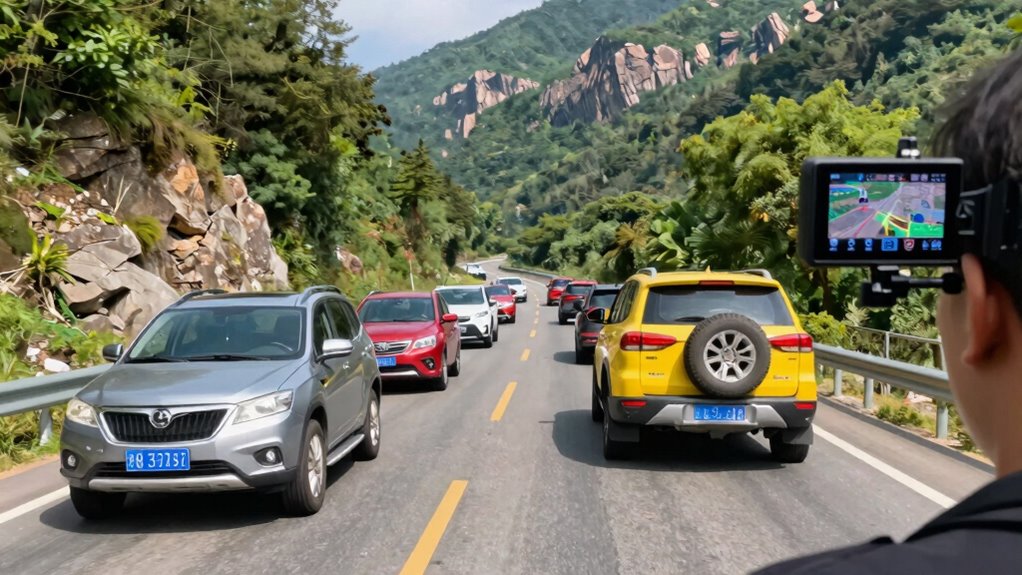
Organizing a group road trip can be exciting, but without a solid convoy communications plan, it can quickly become chaotic. You need a strategy that keeps everyone connected, informed, and safe, especially if something unexpected happens. The first step is establishing clear emergency protocols. Decide in advance what everyone should do if a vehicle breaks down, gets lost, or if someone needs immediate help. These protocols should include specific instructions, like pulling over safely, using designated communication channels, and who to contact in different scenarios. Make certain every participant understands these procedures before hitting the road. Clear emergency protocols prevent confusion and ensure quick, coordinated responses during stressful moments.
Establish clear emergency protocols to keep everyone safe and coordinated during unexpected situations on your road trip.
Next, focus on technology selection. Your choice of communication devices can make or break your convoy’s efficiency. Consider whether to use two-way radios, mobile apps, or a combination of both. Two-way radios are reliable, especially in areas with poor cell service, and they’re simple to operate. However, they often have limited range, so pick models that suit your trip’s geography. Mobile apps, like dedicated convoy communication platforms, offer features like location sharing, text messaging, and group calls. They’re ideal if your group has good cell coverage and everyone has smartphones. When selecting technology, prioritize ease of use, durability, and compatibility across devices. Test your chosen tools before the trip to ensure everyone can operate them comfortably and that they work well in different environments. Additionally, consider interoperability between different communication devices to avoid compatibility issues during your journey. Planning for potential technical failures, such as backup communication methods, can help prevent disruptions. Regularly updating your group on best practices for using these tools ensures everyone remains confident and connected throughout the trip. Incorporating training or practice sessions before the trip allows participants to familiarize themselves with the equipment and procedures, reducing the risk of miscommunication.
two-way radios for road trips
As an affiliate, we earn on qualifying purchases.
As an affiliate, we earn on qualifying purchases.
Frequently Asked Questions
What Is the Best Communication Device for Long-Distance Convoy Trips?
The best communication device for long-distance convoy trips is a CB radio or GMRS radio. These devices use wireless protocols optimized for vehicle-to-vehicle communication, offering reliable signals over a wide signal range. They’re easy to operate, provide real-time updates, and don’t depend on cell service. Selecting a device with a good signal range guarantees you stay connected, no matter how far apart your vehicles are during the trip.
How Do I Handle Language Barriers in a Diverse Group?
Like the Tower of Babel, language barriers can cause confusion, but with thoughtful planning, you can navigate them smoothly. Use language translation apps to bridge gaps quickly, and encourage cultural sensitivity among your group. Speak slowly, use simple words, and verify understanding regularly. Emphasize patience and openness, ensuring everyone feels valued and heard. This approach keeps your convoy united, turning potential misunderstandings into opportunities for connection.
What Backup Plans Should Be in Place if Communication Fails?
If communication fails, you should have backup plans ready. Establish emergency procedures, like pulling over safely and using hand signals or flashers to signal stops or hazards. Make certain everyone understands signal protocols beforehand. Carry a basic first aid kit and have a list of emergency contacts. These steps guarantee safety and coordination, even when your primary communication methods break down during the trip.
How to Ensure All Group Members Know the Comms Plan?
To guarantee all group members know the comms plan, hold a clear briefing before departure, emphasizing emergency protocols and signal clarity. Use simple, consistent signals everyone understands, and confirm each person knows how to use the communication devices. Distribute a written guide or quick-reference card, and practice the plan during the trip. Regularly check in to reinforce the protocols, ensuring everyone stays informed and prepared for emergencies.
What Legal Considerations Are There for Convoy Communication Systems?
Think of legal considerations as the guardrails keeping your convoy safe. You must guarantee legal compliance by choosing communication systems that respect privacy laws, avoiding unauthorized recordings or data sharing. Be aware of privacy concerns, especially if sharing location data or personal info. Always use encrypted channels when needed, and get consent from group members. Staying within legal boundaries helps prevent fines or legal disputes, keeping your trip smooth and worry-free.
convoy communication apps
As an affiliate, we earn on qualifying purchases.
As an affiliate, we earn on qualifying purchases.
Conclusion
Crafting a clear, concise convoy comms plan keeps your crew coordinated, communication consistent, and chaos at bay. By blending basic tools with bold, best practices, you guarantee everyone’s on the same page, no matter the road ahead. Remember, a well-woven communication plan isn’t just about safety—it’s about strengthening your shared adventure, sparking smiles, and securing serenity on the stretch. So, synchronize, strategize, and set sail for a smooth, successful road trip!
GMRS radio for vehicles
As an affiliate, we earn on qualifying purchases.
As an affiliate, we earn on qualifying purchases.
group trip emergency communication devices
As an affiliate, we earn on qualifying purchases.
As an affiliate, we earn on qualifying purchases.