To avoid overpacking your massage gun and recovery gear, focus on compact, versatile items that serve multiple purposes. Use a lightweight massage gun with basic attachments and carry only essential recovery tools like resistance bands or foam rollers if they’re frequently used. Opt for multi-purpose accessories and compress gear to save space. Keep backup essentials in an accessible spot, and prioritize items that support your recovery efficiently. For more tips on traveling light with your gear, keep exploring.
Key Takeaways
- Select a lightweight, multi-purpose massage gun with essential attachments to minimize space and maximize functionality.
- Prioritize compact recovery tools like resistance bands or foam rollers that serve multiple muscle groups.
- Use versatile recovery wear that combines compression and support, reducing the need for extra clothing.
- Pack recovery gear and massage tools in a dedicated, easily accessible compartment for quick access and organization.
- Limit recovery items to essentials based on your specific needs and destination climate, avoiding unnecessary bulk.
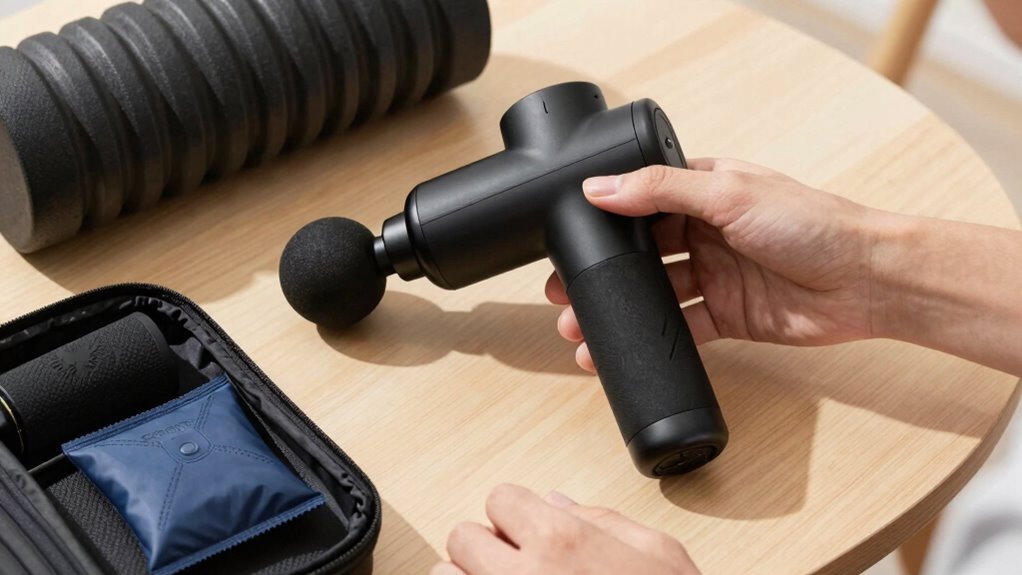
When packing your recovery gear, including a massage gun, it’s easy to bring more than you need, but overpacking can make travel cumbersome and inefficient. To keep things manageable, create a packing checklist that focuses on essentials. Think about what truly helps your recovery and comfort during your trip. For instance, if you rely on travel skincare routines to maintain your skin health, include only the products that are necessary, rather than your entire collection. This way, you save space and avoid carrying excess weight.
Pack only essential recovery gear and skincare to stay light, efficient, and comfortable on your trip.
When considering your recovery gear, prioritize versatility. A massage gun can be your go-to for relieving muscle tension, but choose a compact, lightweight model that’s easy to pack. Instead of multiple attachments or accessories, stick to the basics that serve the most common needs. This reduces bulk and streamlines your packing process. When assembling your packing checklist, include items that support your recovery, such as resistance bands, foam rollers, or compression sleeves, but only take what you’ll genuinely use. Remember, the goal is to stay effective without cluttering your luggage.
In terms of travel skincare, focus on multi-purpose products that can serve multiple functions—moisturizers with SPF, or a gentle cleanser that suits various skin types. Keep your skincare routine simple yet effective, and avoid bringing full-sized bottles if travel size is available. This not only helps save space but also keeps your routine straightforward, making it easier to stick with your recovery plan on the go. When packing your gear, think about the environment and your destination climate. For example, if you’re heading somewhere humid, opt for lightweight, breathable recovery wear instead of bulky layers. Additionally, considering sustainable packing practices can help you reduce waste and support eco-friendly travel choices. Incorporating environmental impact into your packing decisions can also influence your selection of eco-conscious products and accessories. Being mindful of your carbon footprint during packing can further promote responsible travel behavior.
To avoid overpacking, consider what you’ll do if your recovery gear gets damaged or lost. Pack a few essential items in a separate, easily accessible compartment. This way, you can quickly replace or access what’s necessary without rummaging through your entire bag. Including backup essentials in your packing strategy ensures you’re prepared for unforeseen circumstances and minimizes stress. Additionally, incorporating environmental considerations into your packing process can help you choose sustainable and eco-friendly options that support conservation efforts. Remember, the key is balance—bring enough to support your recovery and skincare needs, but don’t go overboard. With a well-thought-out packing checklist and mindful selection of your travel skincare and recovery gear, you’ll be ready for a smooth, efficient trip. Stay focused on what truly benefits you, and travel light with confidence.
compact massage gun with essential attachments
As an affiliate, we earn on qualifying purchases.
As an affiliate, we earn on qualifying purchases.
Frequently Asked Questions
Can I Share My Massage Gun With Others During Travel?
Yes, you can share your massage gun with others during travel, but you should take hygiene precautions. Make sure to clean the device thoroughly before and after use to prevent the spread of germs. Use disposable covers or wipe down the attachment points. Shared equipment increases the risk of infections, so communicate with others about hygiene practices, and always prioritize cleanliness to keep everyone safe and healthy during your trip.
How Long Should I Use a Massage Gun on Each Muscle Group?
You should use a massage gun on each muscle group for about 1 to 2 minutes, focusing on areas with muscle tension. Keep therapy duration moderate to avoid over-stimulation or soreness. Use gentle, steady pressure and move the device slowly over the muscle. If you notice any discomfort, reduce the time or intensity. This approach helps effectively relieve tension without risking overstimulation or fatigue.
Are Recovery Gear Items Safe for All Skin Types?
Think of recovery gear as a gentle breeze; most items are safe for various skin sensitivities if you choose wisely. Always check product compatibility and opt for hypoallergenic options if you have delicate skin. Test new gear on a small area first, and follow manufacturer instructions. If you notice irritation, discontinue use. With careful selection, recovery gear can be a soothing part of your routine, suitable for nearly everyone.
What Is the Best Way to Charge My Recovery Devices on the Go?
To keep your recovery devices powered on the go, opt for portable charging options like compact power banks. Make sure they have enough capacity to extend your device’s battery life. Charge your devices fully before heading out, and carry a portable charger for quick top-ups throughout the day. This way, you won’t worry about losing power, and your recovery gear stays ready whenever you need it.
Can I Use Recovery Gear Immediately After Injury or Surgery?
You shouldn’t use recovery gear immediately after injury or surgery without consulting your healthcare provider. Follow post-injury precautions and surgical recovery guidelines, which often recommend rest and avoiding certain devices initially. Using massage guns or other recovery tools too soon might worsen your condition. Always wait for your doctor’s approval, and gradually incorporate recovery gear into your routine as part of a safe, guided recovery process.
As an affiliate, we earn on qualifying purchases.
Conclusion
Think of your recovery gear as your trusty toolbox, packed smartly, not bursting at the seams. When you use your massage gun and gear wisely, they become your allies in the battle against muscle fatigue, not burdens weighing you down. Keep it simple, essentials only, and travel light. With this balance, you’ll glide through your journey like a well-oiled machine—ready to conquer each day’s challenges without the weight of overpacking dragging you down.
As an affiliate, we earn on qualifying purchases.
multi-purpose recovery wear compression sleeves
As an affiliate, we earn on qualifying purchases.
As an affiliate, we earn on qualifying purchases.