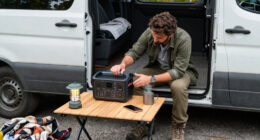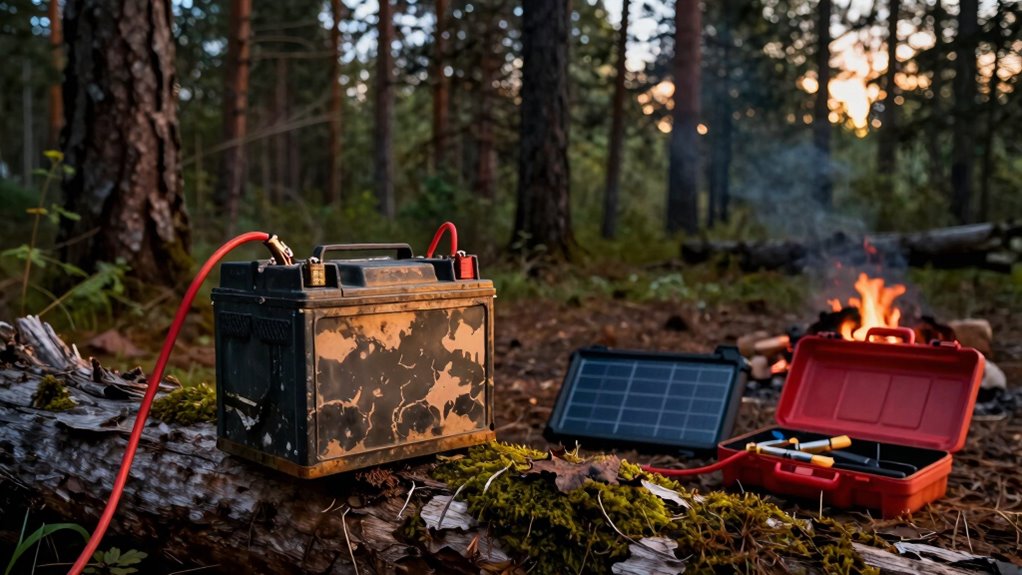

If your battery dies at a remote campsite, first run simple checks like turning on headlights or interior lights—faint or flickering lights suggest a low charge. Use battery testing tools like a multimeter or look for corrosion on terminals. Try jump-starting with jumper cables or a portable power bank, following safety precautions carefully. If that doesn’t work, you can explore alternative options. Stay prepared—more tips on handling and preventing dead batteries await you.

Get travel and outdoor gear delivered free with Prime
- Fast, free delivery on millions of items
- Prime Video, Amazon Music and more included
- Member-only deals all year
Key Takeaways
- Use a fully charged portable jump starter or battery pack to safely revive the dead battery.
- Connect jumper cables correctly, ensuring proper placement of positive and negative terminals.
- If jump-starting isn’t possible, seek nearby help via emergency communication devices or nearby resources.
- Perform a quick battery assessment for corrosion or damage before attempting to start the vehicle.
- Keep safety gear, such as gloves and glasses, on hand to prevent injury during handling.
As an affiliate, we earn on qualifying purchases.
How to Quickly Assess If Your Battery Is Dead
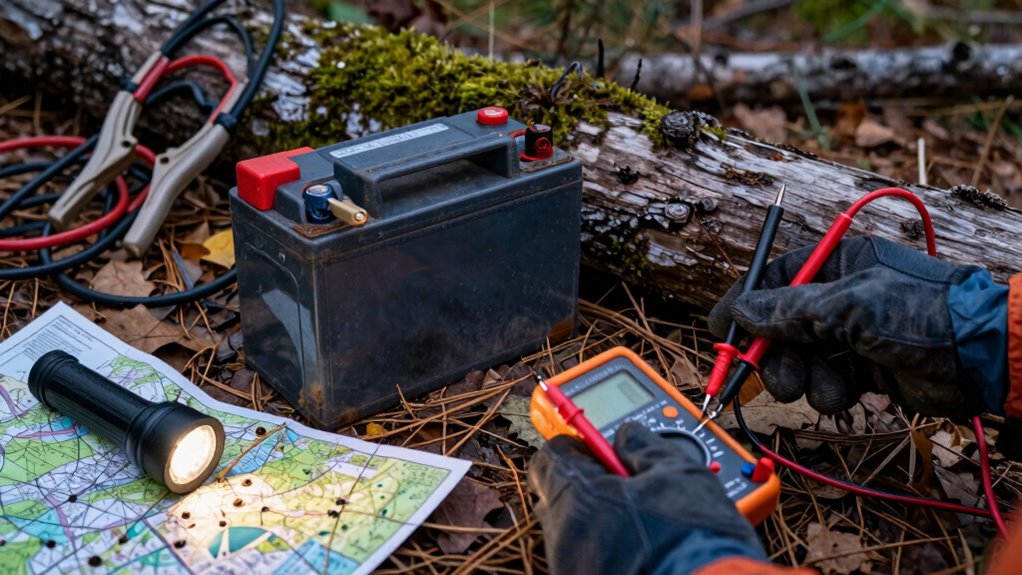
When your vehicle won’t start at a remote campsite, the first step is to quickly determine if the battery is dead. Begin with basic vehicle diagnostics by turning on the headlights. If they’re dim or don’t turn on at all, it’s a strong sign your battery is drained. Check for corrosion on the battery terminals, which can hinder power flow. Regular battery maintenance, like cleaning terminals and ensuring proper connections, helps prevent issues. You can also try turning on the interior lights; if they’re faint or flickering, it confirms a weak charge. If you have a multimeter, measure the voltage—around 12.6 volts indicates a healthy battery, while lower signals trouble. Understanding battery health can guide your next steps effectively, and knowing how to properly maintain your vehicle’s battery can extend its lifespan and reduce unexpected failures. Additionally, being aware of alternator function can help you diagnose whether the issue stems from the battery or the charging system. Regularly testing your battery’s charge capacity is a good practice for preventing unexpected dead batteries. To further ensure reliability, consider monitoring voltage levels during trips to catch potential issues early.
As an affiliate, we earn on qualifying purchases.
What Tools Do You Need at the Campsite to Fix a Dead Battery
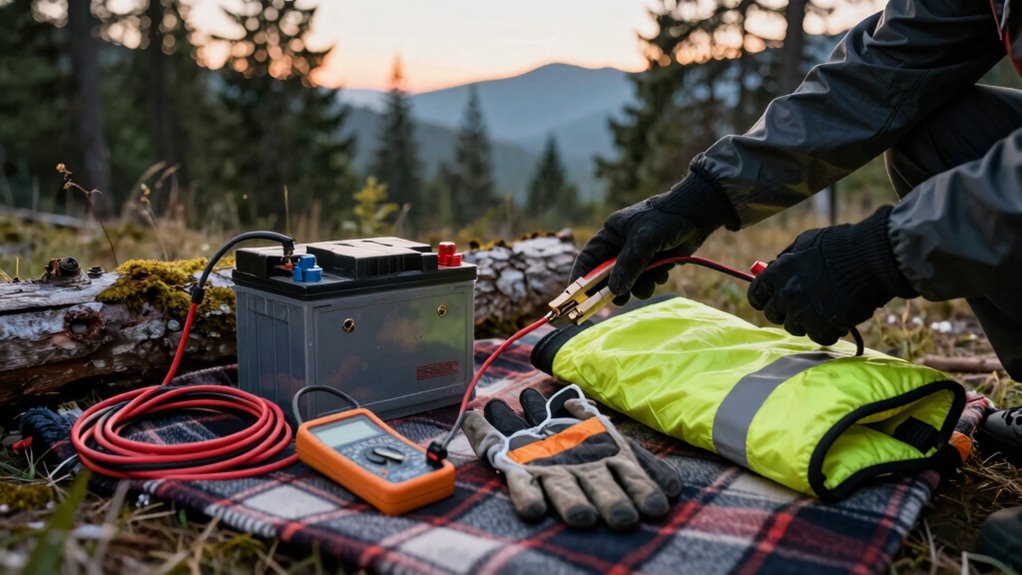
To effectively jump-start or recharge a dead battery at a remote campsite, you’ll need a few essential tools on hand. These tools help with battery maintenance and applying proper charging techniques. First, a set of jumper cables is indispensable for connecting your dead battery to a charged vehicle or power source. Second, a portable battery charger or jump starter allows you to recharge the battery without another vehicle. Third, a multimeter helps you check the battery’s voltage and condition, ensuring you’re applying the right charging techniques. Having these tools readily available lets you efficiently diagnose issues, maintain your battery, and get back on the road quickly. Proper tools are critical for safe, effective battery repairs in remote locations. Additionally, understanding battery maintenance best practices can extend the lifespan of your batteries and prevent future issues.
As an affiliate, we earn on qualifying purchases.
Step-by-Step Guide to Jump-Start Your Vehicle
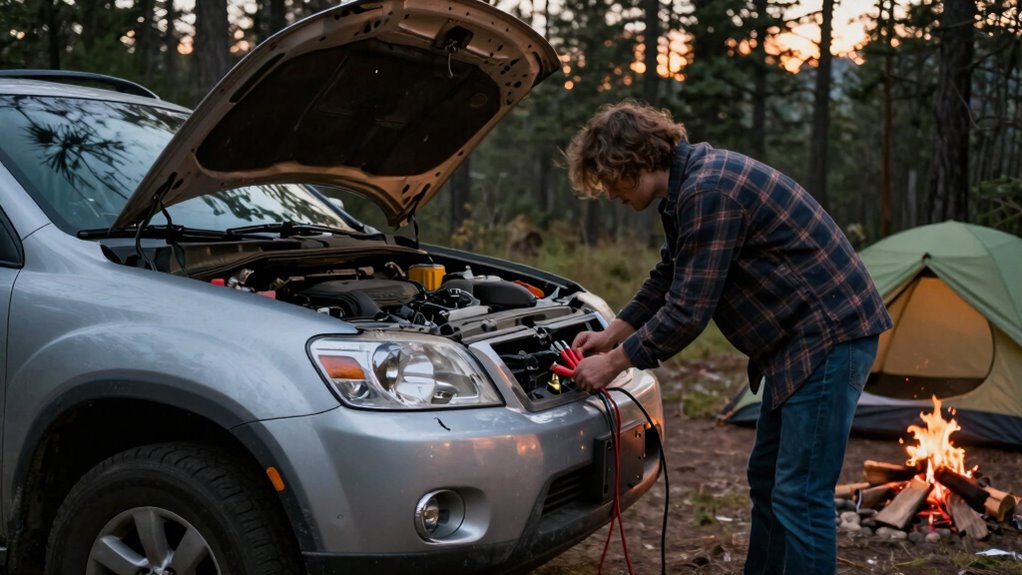
Jump-starting your vehicle at a remote campsite can be straightforward if you follow the right steps. First, connect the positive (red) clamp to your dead battery’s terminal. Then, attach the other end to the charged vehicle’s positive terminal. Next, connect the negative (black) clamp to the donor vehicle’s negative terminal, and finally, to an unpainted metal surface on your vehicle’s engine block. Start the donor vehicle, then your vehicle. Once running, remove the clamps in reverse order. Afterward, consider battery recycling options for your dead battery and explore alternative fuels to prevent future issues. Here’s a quick overview:
| Step | Action |
|---|---|
| Connect positive clamps | To dead and donor batteries |
| Connect negative clamps | To donor and engine block |
| Start donor vehicle | Then your vehicle |
| Remove clamps | In reverse order, safely |
Additionally, understanding battery maintenance can help extend the life of your vehicle’s electrical system and reduce the likelihood of experiencing a dead battery in remote locations. Regular inspections and proper care of your vehicle’s electrical components are essential for avoiding unexpected setbacks during outdoor adventures. Being aware of website performance metrics can also help you better understand how to optimize your vehicle’s electrical system and prevent future issues. Maintaining awareness of battery health is crucial for ensuring reliable operation in remote areas.
As an affiliate, we earn on qualifying purchases.
What Common Battery Problems Might Be Causing the Issue
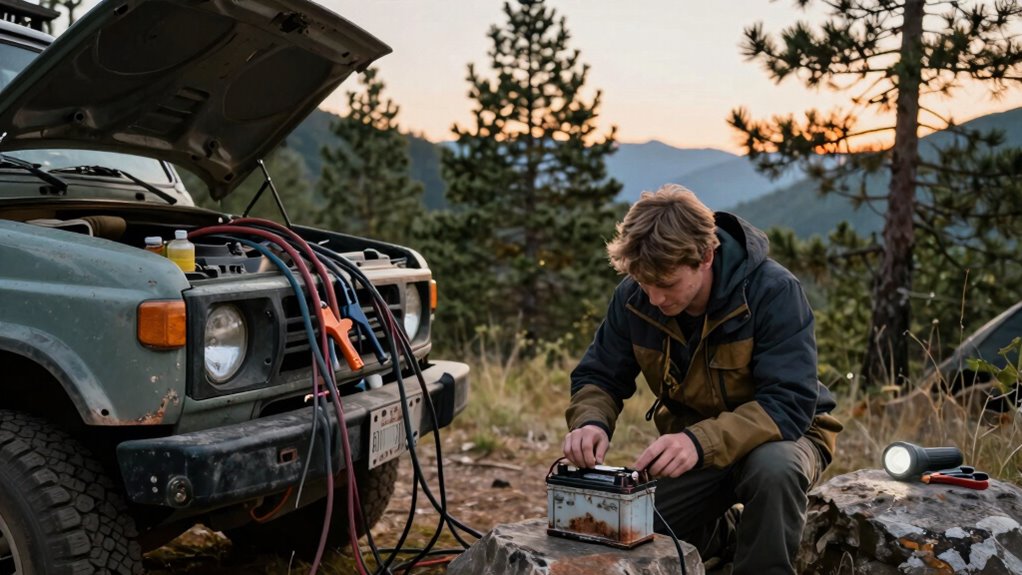
A common cause of a dead or unresponsive battery is simply age; over time, batteries lose their ability to hold a charge effectively. Several issues can cause this, including:
- Battery corrosion – buildup on terminals prevents proper power flow, leading to starting problems.
- Alternator failure – if your alternator isn’t charging the battery correctly, it can drain quickly and leave you stranded.
- Internal damage or wear – repeated discharges weaken the battery’s internal components, reducing its capacity.
- Manipulation or sabotage – in some cases, intentional interference or dark psychology tactics can cause unexpected battery issues, especially if malicious intent is suspected. Being aware of battery lifespan can help you anticipate when a replacement might be necessary before failure occurs. Additionally, understanding battery maintenance can extend its overall lifespan and ensure reliable performance at your campsite.
Regular maintenance, like cleaning corrosion and checking the alternator, can prevent these issues. If your battery shows signs of aging or corrosion, it might be time to replace it, especially when stranded at a remote campsite.
How to Use Portable Power Banks and Jump Starters Effectively
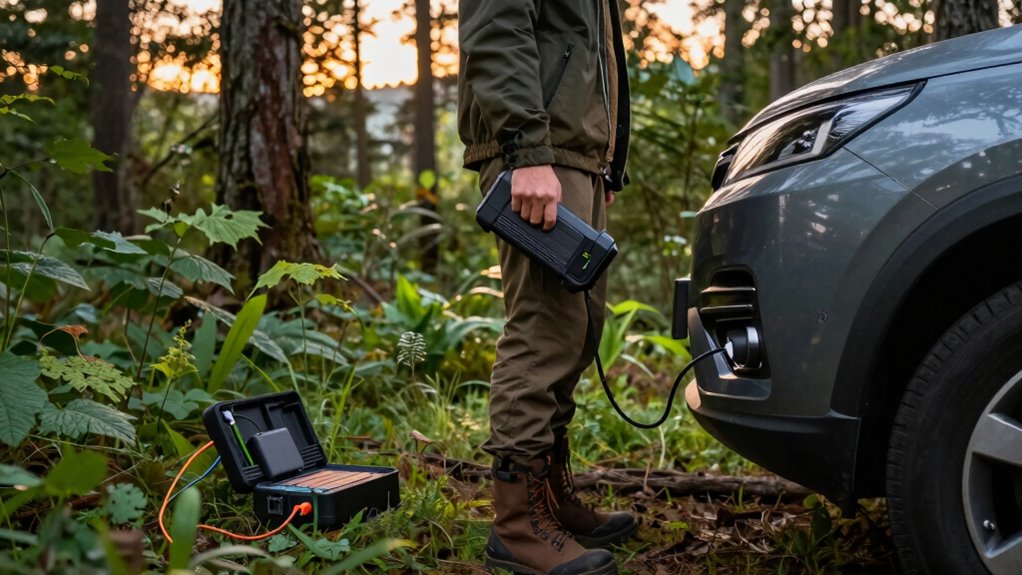
When your vehicle’s battery dies at a remote campsite, portable power banks and jump starters can be lifesavers. To use them effectively, understand your device’s battery chemistry—most are lithium-ion, which require proper handling. Always read the manufacturer’s instructions. Connect the jump starter’s clamps to the correct terminals—red to positive, black to negative—ensuring a solid connection. Use proper charging techniques: if your device is rechargeable, keep it fully charged before heading out, and recharge it after use. When using a power bank, verify it can supply the necessary voltage and current for your vehicle. Avoid overusing or mishandling devices, as improper use can damage the equipment or your vehicle’s electrical system. Properly managing these tools guarantees reliable starts in emergency situations. Understanding battery chemistry helps ensure safe and effective use of portable power devices.
When and How to Seek Help or Find Nearby Assistance
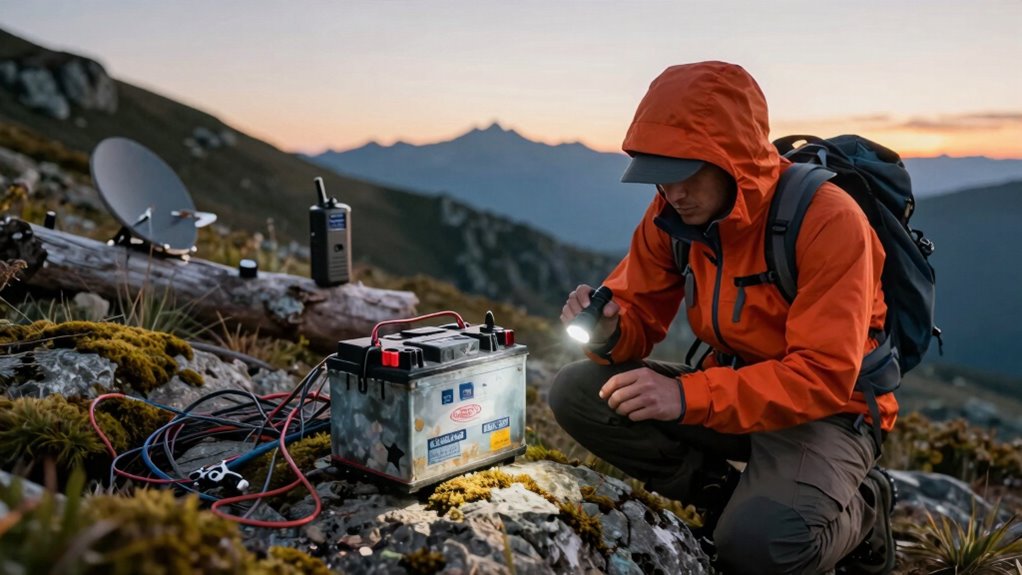
Knowing when a situation is an emergency helps you act quickly and avoid danger. Using emergency communication devices can connect you with help even if you’re far from others. Learning how to locate nearby resources guarantees you can get assistance when needed. Having access to reliable kitchen gear and gear can also be essential for handling unexpected situations effectively. Familiarizing yourself with outdoor safety tips can further prepare you to respond appropriately in various scenarios. Additionally, understanding emergency response procedures can make a significant difference in managing unforeseen issues efficiently. Recognizing signs of spiritual awakening, such as heightened intuition or new insights, can also help you stay calm and focused during stressful emergencies. Incorporating eco-friendly natural pools into your campsite can provide a sustainable water source for emergencies, such as filtration or cleaning needs.
Recognizing Emergency Situations
Recognizing emergency situations quickly can be a matter of life and death, especially when you’re far from help. Signs include severe battery corrosion, which indicates corrosion buildup that could cause failure, or if your vehicle won’t start despite charging techniques you’ve tried. Be alert for symptoms like unusual odors, smoke, or overheating, which signal immediate danger. If your battery is visibly corroded or if your vehicle’s electrical system behaves erratically, seek help promptly. Additionally, if you or others show signs of injury, dehydration, or exhaustion, don’t hesitate to find assistance. Remember, knowing when to seek help guarantees your safety and the safety of others around you in remote conditions. Always trust your instincts and prioritize immediate threats. Staying aware of emotional regulation can help you maintain calm and make rational decisions in stressful situations. Being familiar with the signs of battery corrosion can enable you to act swiftly before the issue worsens. Recognizing early warning signs and understanding emergency response procedures can make a crucial difference in remote environments. Developing a basic understanding of herbal remedies and natural first aid can also provide additional support until professional help arrives. Additionally, understanding power storage safety principles can prevent further hazards in such emergencies.
Using Emergency Communication Devices
Emergency communication devices are vital tools that can connect you to help quickly when you’re far from civilization. Regular battery maintenance guarantees these devices work when needed, so keep spare batteries or chargers in your emergency kit. Use your device immediately if you notice signs of trouble, like low battery alerts. Being prepared with an emergency communication plan can save valuable time. Keep a list of nearby help resources and communication methods accessible. Here’s a quick overview:
| Device Type | Best Use Case |
|---|---|
| Satellite Phone | Remote areas with no cell signal |
| Personal Locator Beacon | Emergency rescue in wilderness |
| Two-Way Radio | Short-range communication with group |
| Emergency Flare | Visual distress signal |
| Cell Phone with Charger | Limited-range emergencies |
Proper battery maintenance and emergency preparedness are vital to ensure your communication devices function when needed most.
Locating Nearby Help Resources
When you find yourself in need of help at a remote campsite, understanding when and how to seek assistance can make all the difference. If your battery is dead and you can’t rely on charging methods like portable chargers or solar panels, it’s essential to locate nearby help resources. First, check your emergency communication devices to see if you can reach rescue services or other campers. Second, utilize maps or GPS devices to identify nearby towns, ranger stations, or trailheads with reception. Third, consider reaching out to fellow campers or park rangers for assistance. Proper battery maintenance beforehand—such as conserving power and knowing alternative charging methods—can also guarantee you’re prepared to make these calls when needed. Additionally, understanding sustainable textile care techniques can help you pack lightweight, eco-friendly gear that reduces environmental impact and ensures durability during your adventure.
Tips to Prevent Dead Battery Accidents in the Future
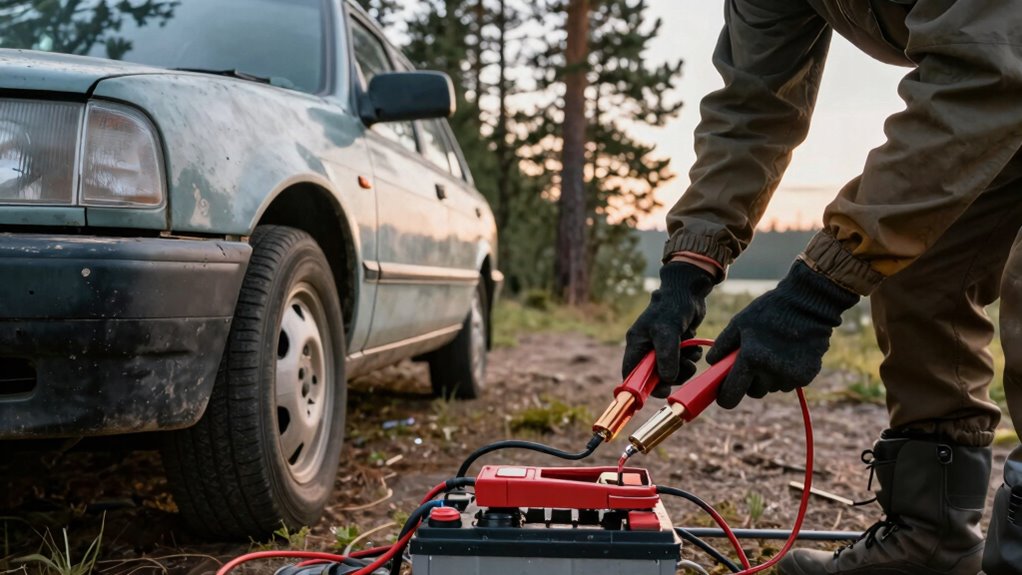
To avoid future dead battery mishaps at remote campsites, taking proactive steps can make all the difference. Focus on regular battery maintenance by checking terminals for corrosion and ensuring connections are tight. Use proper charging techniques, like avoiding deep discharges and charging before batteries run low. Keep a portable charger or spare power bank handy for emergency recharges. Additionally, monitor battery health with a multimeter to spot issues early. Proper storage in a cool, dry place also extends battery life. Here’s a quick guide:
| Maintenance Tip | Charging Technique | Preventative Measure |
|---|---|---|
| Clean terminals regularly | Use slow, steady charging | Store batteries properly |
| Check for corrosion | Avoid overcharging | Keep batteries cool |
| Tighten connections | Charge before low battery | Use quality batteries |
| Monitor voltage levels | Disconnect unused devices | Inspect for damage |
| Replace aging batteries | Follow manufacturer instructions | Schedule professional checks |
Important Safety Precautions When Troubleshooting Your Battery
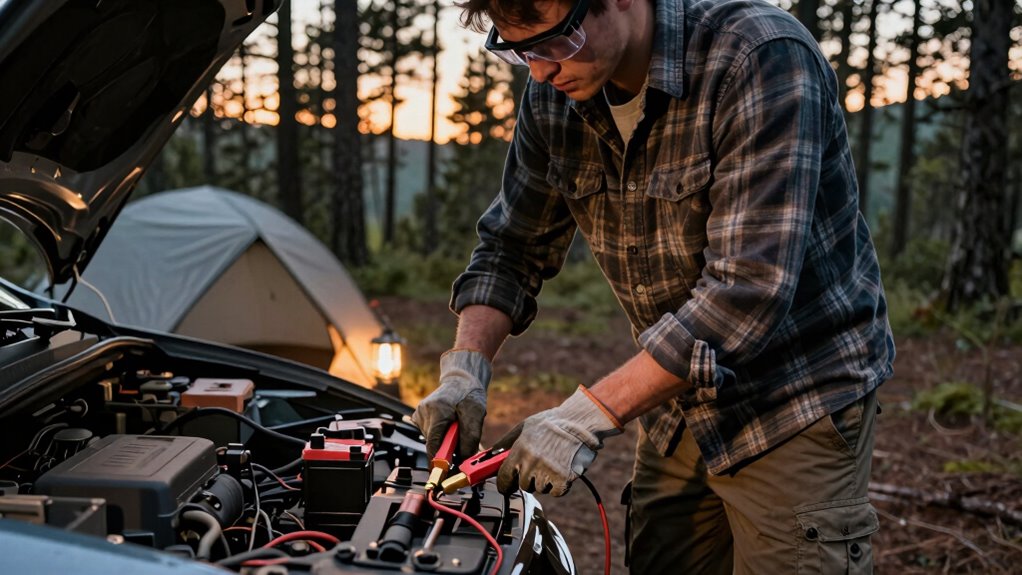
Before you begin diagnosing your battery, it’s crucial to prioritize safety to prevent injuries or damage. Proper battery maintenance and safe charging techniques are essential.
- Always wear protective gear like gloves and safety glasses to avoid acid leaks or sparks.
- Disconnect the battery carefully, following proper procedures, to prevent short circuits.
- Use the correct tools and avoid overcharging, which can cause overheating or explosions.
Keep your battery well-maintained to prevent issues and double-check connections before troubleshooting. When charging, stick to recommended charging techniques to ensure safety and efficiency. Remember, handling a dead battery in a remote campsite requires caution—never rush, and always prioritize your safety first.
What Are Your Alternatives If Jump-Starting Fails
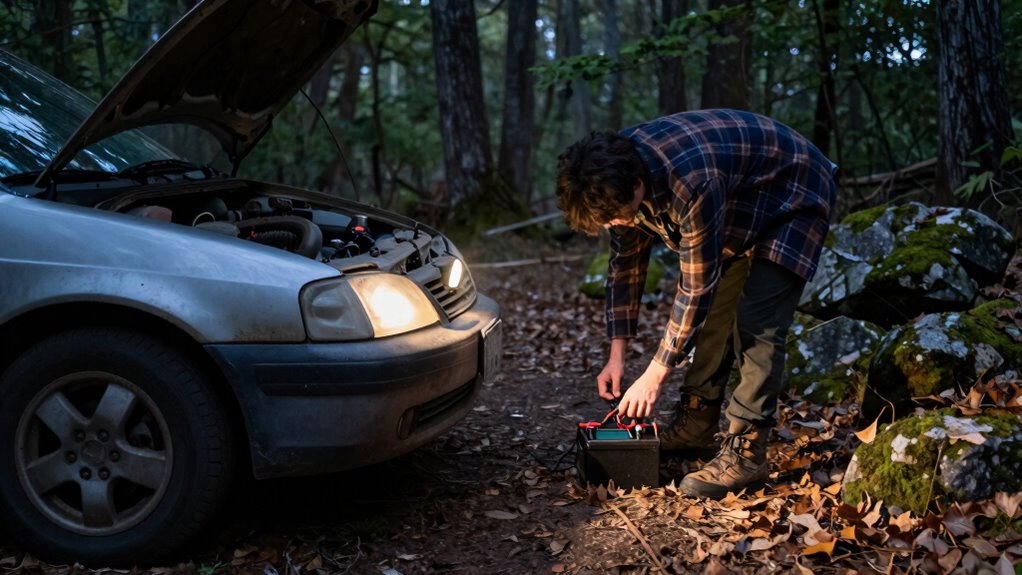
If jump-starting your vehicle doesn’t work, consider using a portable power pack to recharge your battery quickly. If that’s not an option, you might need to call for roadside assistance to get professional help. Knowing your alternatives guarantees you’re prepared for any situation at a remote campsite.
Using Portable Power Packs
When jump-starting your vehicle isn’t an option, portable power packs can be a lifesaver at a remote campsite. These compact devices provide immediate power, saving you from being stranded. To maximize their effectiveness, guarantee your power pack is fully charged beforehand using proper charging methods.
Here are key tips:
- Regularly check and maintain your power pack’s battery to ensure reliable performance.
- Use appropriate charging methods, like wall outlets or solar panels, to keep it ready.
- Keep your power pack handy and stored in an accessible location for quick use when needed.
Calling for Roadside Assistance
Sometimes, jump-starting your vehicle just isn’t possible, especially in remote areas where assistance may be far away. When this happens, calling for roadside assistance becomes your best option. Before dialing, verify your battery maintenance is up to date to prevent future issues. If you’re unsure why your battery failed, roadside technicians can perform vehicle diagnostics to identify underlying problems. They can also help with jump-starting or towing your vehicle if needed. Keep your phone charged and have your location ready to share with the service provider. While waiting, stay safe and avoid attempting to fix the problem yourself if it involves complex electrical issues. Roadside assistance offers expert help, giving you peace of mind and ensuring your vehicle gets the proper attention it needs.
Post-Recovery Steps to Keep Your Battery and Vehicle Ready
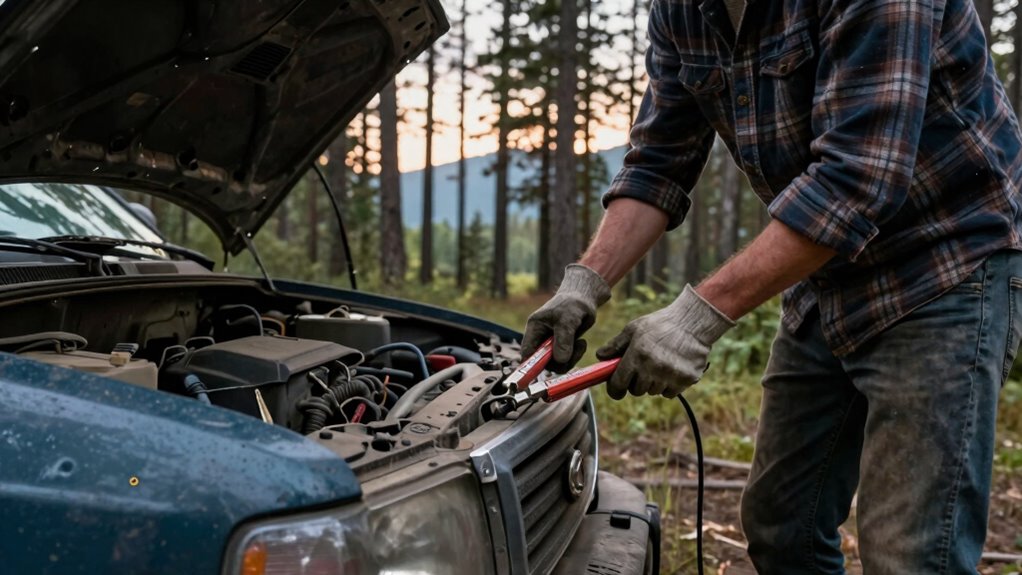
Once you’ve successfully recovered your dead battery, it’s essential to take immediate steps to guarantee your vehicle remains reliable and ready for future use. First, perform basic battery maintenance by cleaning corrosion from terminals and checking the fluid levels if applicable. Next, run vehicle diagnostics to identify any underlying issues that caused the battery failure. This helps prevent future problems. Finally, consider scheduling a professional inspection if you notice recurring battery or electrical system issues. Regular battery maintenance and diagnostics ensure your vehicle stays in good shape, especially when you’re far from help. Taking these steps helps keep your vehicle dependable, so you’re prepared for any adventure ahead. Proper care now minimizes the risk of another dead battery during your next remote trip.
Frequently Asked Questions
How Long Can a Dead Battery Typically Be Recharged at a Campsite?
A dead battery can usually be recharged in a few hours to overnight, depending on your charging methods and battery capacity. For effective battery maintenance, use reliable charging methods like a portable solar panel or a car charger. Keep in mind, if you’re using a solar panel, it may take longer on cloudy days. Always monitor the charge level to prevent overcharging and guarantee your battery’s longevity.
Can Extreme Temperatures Affect My Vehicle’s Battery Performance?
Extreme temperatures are like a rollercoaster for your battery’s performance. Cold weather slows chemical reactions, making your battery less efficient, while heat causes it to wear out faster. Proper battery insulation and temperature management are vital to protect it. By insulating your battery and monitoring temperature levels, you help maintain its health, ensuring reliable starts even in extreme conditions. Stay proactive to keep your vehicle running smoothly in any climate.
Are There Environmentally Friendly Ways to Dispose of or Recycle a Dead Battery?
You can recycle your dead battery through local battery recycling programs or designated eco-friendly disposal centers. Many communities offer battery recycling to safely handle hazardous materials and recover useful components. Always look for certified facilities that prioritize eco-friendly disposal methods, ensuring harmful substances don’t pollute the environment. By choosing battery recycling, you help reduce waste and support sustainable practices, making it an responsible way to dispose of your vehicle’s dead battery.
What Signs Indicate a Failing Battery Before It Completely Dies?
Did you know that battery failures account for nearly 50% of roadside breakdowns? Before your battery dies, watch for warning signs like slow engine cranking, dimming headlights, or electronics acting up. Regular battery maintenance can help spot these issues early. If you notice these signs, consider charging alternatives like jump-starting or using portable power banks to keep your trip on track.
How Do I Choose the Best Portable Jump Starter for Camping Trips?
You should choose a portable jump starter with reliable battery maintenance features and multiple charging techniques, like USB and AC outlets, for versatility. Look for models with high cranking amps to handle your vehicle’s needs. A compact, lightweight design guarantees easy packing. Prioritize devices with built-in safety features, such as overcharge protection. Regularly check and maintain your jump starter to keep it ready, and familiarize yourself with proper charging techniques before your trip.
Conclusion
Think of your car battery as the heart of your vehicle’s adventure. When it stalls, it’s like a pulse lost in the wilderness. But with the right tools, quick thinking, and safety precautions, you can revive that heartbeat and keep your journey alive. Remember, every challenge is just a bump in the road — with a little know-how, you’ll keep cruising smoothly, no matter how remote the destination. Stay prepared, and enjoy the ride!
Halloween Picks
halloween
As an affiliate, we earn on qualifying purchases.