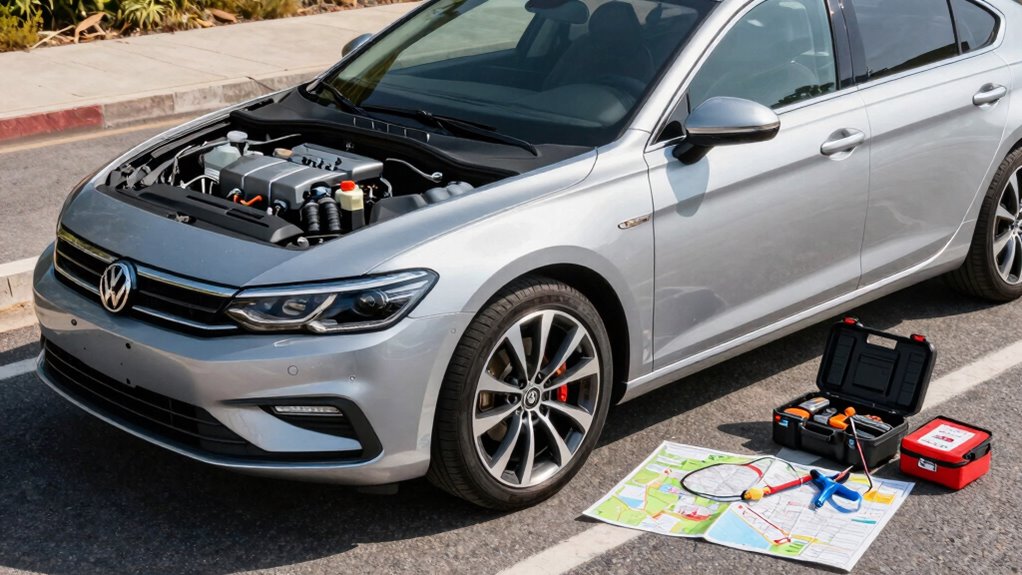
Before a 2,000-mile trip, check your tire pressure and make certain your spare is accessible. Top off fluids like oil, coolant, and windshield washer fluid. Inspect belts, hoses, and the battery for wear or corrosion. Test your brakes and replace worn pads if needed. Regular maintenance and safety checks help prevent breakdowns and guarantee a smoother journey. Stick around to discover even more tips to keep your car in top shape for the long haul.

Get travel and outdoor gear delivered free with Prime
- Fast, free delivery on millions of items
- Prime Video, Amazon Music and more included
- Member-only deals all year
Key Takeaways
- Ensure tire pressure is correct and spare is accessible to prevent flats and improve handling.
- Check and top off essential fluids like oil, coolant, and windshield washer for reliable performance.
- Inspect belts, hoses, and battery for wear or corrosion to avoid breakdowns mid-trip.
- Examine brake pads and rotors for wear to guarantee safe stopping power over long distances.
- Conduct a thorough vehicle inspection to identify and address potential issues before departure.
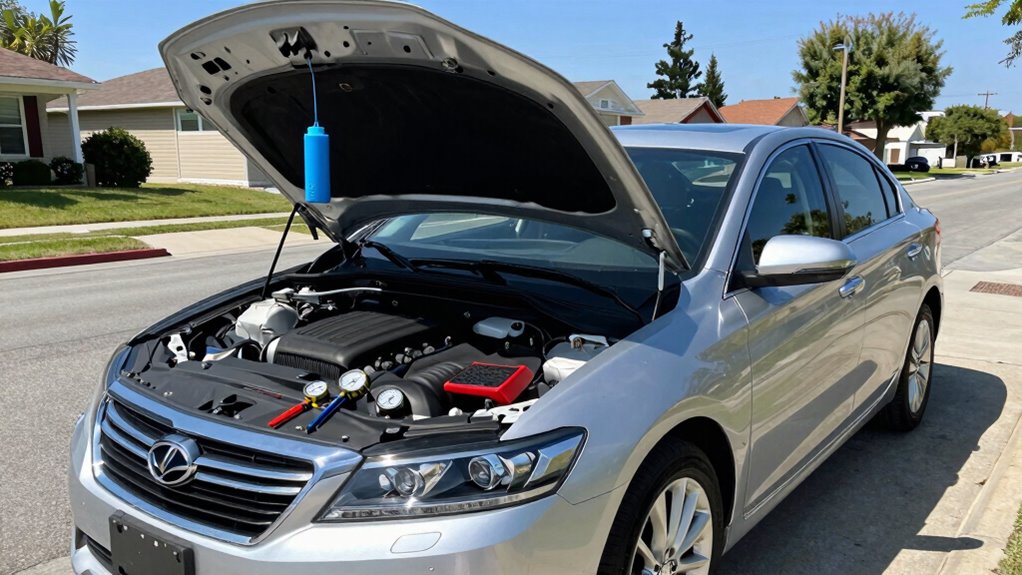
Beginning a 2,000-mile road trip requires careful preparation to guarantee your car runs smoothly from start to finish. One of the first things you should do is check your tire pressure. Properly inflated tires ensure better fuel efficiency, improved handling, and reduced risk of blowouts. Use a reliable tire pressure gauge to compare the current pressure against your vehicle’s recommended levels, usually found on a sticker inside the driver’s door or in the owner’s manual. Don’t forget to check the spare tire as well—it’s often overlooked but just as important. If your tires are underinflated, inflate them to the correct pressure, and if they’re overinflated, release some air for maximum performance. Maintaining proper tire pressure is essential for long-distance travel and can prevent unnecessary delays or breakdowns.
Check tire pressure and spare to ensure safety and efficiency on your long road trip.
Next, you need to assess your fluid levels. This step is critical because fluids keep your engine, transmission, brakes, and cooling systems functioning smoothly. Check the engine oil level with the dipstick; if it’s low, top it off with the recommended oil. Low oil can lead to engine wear or overheating during a long drive. Also, inspect the coolant level in the reservoir—adequate coolant prevents your engine from overheating. Don’t forget to check your windshield washer fluid, so you can keep your windshield clear in adverse weather conditions. If any fluid levels are below the recommended mark, fill them up before hitting the road. Doing so minimizes the chances of overheating, fluid leaks, or other mechanical issues that could arise over such a lengthy journey. Regularly inspecting vehicle components can help catch potential problems early, saving you time and money. Remember, a thorough inspection of vehicle systems can significantly reduce the risk of breakdowns. Additionally, scheduling a professional vehicle inspection before your trip can provide extra peace of mind and identify issues you might have missed.
Furthermore, consider inspecting your belts and hoses for cracks or signs of wear. These components are essential for engine performance and could fail unexpectedly if compromised. Remember to check your battery’s terminals for corrosion and ensure it’s securely mounted—weak or dead batteries could leave you stranded miles from home. While you’re at it, verify your brake pads and rotors, as good brakes are indispensable for safety over long distances, especially when driving through different terrains or traffic conditions. Checking your tire condition can also help identify potential issues before they become serious problems on the road. Proper maintenance and early detection of issues are key to a trouble-free trip. Taking these steps can help prevent preventable breakdowns and keep your vehicle running reliably.
Preparing your car for a long trip isn’t solely about fixing problems; it’s about preventing them. Taking the time to check tire pressure, fluid levels, and other essential components ensures that your vehicle is ready to handle the miles ahead. With a little effort upfront, you’ll enjoy a safer, smoother journey without unnecessary stops or mechanical issues. This way, you can focus on the adventure instead of worrying about your car breaking down mid-road trip.
As an affiliate, we earn on qualifying purchases.
Frequently Asked Questions
How Can I Improve Fuel Efficiency for Long Drives?
To improve fuel efficiency on long drives, focus on eco-friendly driving habits like maintaining steady speeds and reducing aggressive acceleration. Optimize your tire pressure to the manufacturer’s recommended levels, as under- or over-inflated tires waste fuel. Additionally, remove unnecessary weight and avoid idling. These simple steps help your car run more efficiently, saving you money and reducing your environmental impact during your 2,000-mile journey.
What Emergency Supplies Should I Carry in My Car?
Think of your car as a ship steering through long waters; you need a sturdy supply chest. Carry an emergency kit with essentials like first aid supplies, flashlight, and batteries. Check your tire pressure before departure to avoid breakdowns. Include basic tools, jumper cables, and a spare tire. These supplies guarantee you’re prepared for unexpected rough seas, keeping your journey safe and smooth from start to finish.
How Often Should I Stop for Breaks During a Long Drive?
You should plan to stop every 2 to 3 hours for rest break strategies that help manage driver fatigue. These frequent breaks keep you alert and improve safety. Use these stops to stretch your legs, hydrate, and refresh your mind. Incorporate short naps if needed, and avoid driving when extremely tired. Managing driver fatigue with regular breaks guarantees you stay focused and arrive safely at your destination.
What Are Signs My Car Needs Immediate Maintenance?
If your car’s tire pressure drops by more than 10%, or if oil levels are low, you need immediate maintenance. Imagine your tires as your car’s feet—if they’re underinflated, your ride becomes unsafe. Low oil can cause engine damage, leading to costly repairs. Check these signs regularly, especially before long trips, to keep your car running smoothly and avoid breakdowns. Stay vigilant for any warning lights too.
How Do Weather Conditions Affect My Vehicle’s Performance?
Weather conditions impact your vehicle’s performance considerably. Cold weather lowers your tire pressure, making your tires less effective and increasing wind resistance, which can decrease fuel efficiency. Rain or snow adds resistance and reduces traction, requiring you to adjust your driving. Hot weather can cause tire pressure to rise, risking blowouts. Stay aware of these changes to maintain ideal performance and safety during your 2,000-mile journey.
As an affiliate, we earn on qualifying purchases.
Conclusion
As you gear up for your 2,000-mile adventure, every detail counts. You’ve checked the essentials and prepared your car, but what unexpected challenge might lurk just around the bend? Stay alert and trust your preparations—you’re more ready than you think. The open road holds surprises, and with your careful planning, you’ll be ready to face them all. So, hit the ignition—your journey’s about to begin. Will you be prepared for what lies ahead?
As an affiliate, we earn on qualifying purchases.
As an affiliate, we earn on qualifying purchases.
Halloween Picks
halloween
As an affiliate, we earn on qualifying purchases.