TL;DR

Get travel and outdoor gear delivered free — and shop member deals
- Fast, free delivery on millions of items
- Access to Prime Big Deal Days deals on October 6–7
- Prime Video, Amazon Music and more included
The best kids’ road-trip headphones combine a volume limiter capped at 85 dB (the recommended safe level per WHO and NIOSH), a comfortable under-200g over-ear fit, and either active noise cancellation for engine drone or passive earmuff isolation for zero charging. Top category fits include the JBL JR 460NC, iClever BTH26, Candy Bila cat-ear set, and 28dB SNR toddler earmuffs. Because kids’ product lines rotate off shelves fast, verify every model’s current specs with official sources before buying.
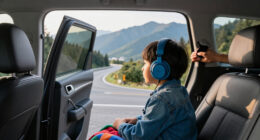
Your kid is three hours into a six-hour drive, the tires are humming, and the tablet volume is creeping up — notch by notch — until it sounds like a cartoon is being performed inside your trunk. That slow volume climb isn’t stubbornness. It’s your child’s brain fighting road noise, and it’s exactly how hearing damage starts.
The good news: the right pair of noise cancelling headphones for kids solves both problems at once. They quiet the road so your child can hear Bluey at a whisper, and a built-in volume limiter capped at 85 dB keeps their ears safe even when you’re watching the road instead of the volume bar.
This guide walks you through the key aspects to compare — safety tech, ANC versus passive isolation, fit, battery, and durability — plus four current replacement options if you’re shopping because a favorite kids’ model has become hard to find. One thing before we start: kids’ headphone lines change constantly, so confirm specs and availability with official manufacturer pages before you buy.
Insist on a hardware volume limiter capped at 85 dB — the WHO/NIOSH recommended safe level for children — and avoid switchable limiters a child can flip themse…
ANC beats passive isolation for constant car drone (engine, tires, wind), while passive 28dB SNR earmuffs are the better pick for toddlers and sensory-sensitiv…
Four solid replacement candidates for discontinued kids’ ANC models: JBL JR 460NC, iClever BTH26 (60-hour battery), Candy Bila cat-ear ANC set, and 28dB SNR to…
Prioritize under-200g over-ear designs with adjustable headbands, and run the one-hour home test before a long trip to catch comfort problems early.
Look for 20–35+ hours of battery plus a 3.5mm wired backup mode, and take hourly headphone-off breaks tied to rest stops on long drives.
Why 85 dB Is the Number That Decides Everything
A volume limiter capped at 85 dB is the single most important feature in any kids’ headphone, full stop. That’s the recommended safe level for children’s hearing according to the World Health Organization and NIOSH, and it exists because hearing damage in kids is cumulative and permanent — there’s no surgery, no app, no second chance for hair cells in the inner ear.
Here’s the part most parents miss: road noise inside a moving car runs roughly 70–85 dB on its own. So an unrestricted headphone at full volume can push past 100 dB just so your child can hear dialogue over the engine. That’s jackhammer territory, delivered directly to a small ear canal.
Not all limiters are equal, either. The best ones are hardwired into the hardware — no switch a clever six-year-old can flip, no app a nine-year-old can out-menu you on. Some models, like the BuddyPhones line, offer dual settings of 85 dB for travel and 94 dB for noisier settings like airplanes, but for car trips, stick to 85.
Hearing damage in children is permanent and builds silently over years. A hard 85 dB limit is the one feature you should never trade away for battery life or cat ears.
Real-world scenario: my friend’s daughter discovered the volume-up button on her old headphones during a single road trip to Grandma’s. By the time anyone noticed, she’d spent four hours at near-max volume. A hardware limiter turns that failure mode off entirely — the button simply stops doing anything past the cap.
ANC or Passive Isolation: Which Actually Quiets a Car?
Active noise cancellation (ANC) uses tiny microphones to listen to outside noise and generate an opposite sound wave that cancels it. It works brilliantly on low, constant sounds — which is precisely what a car is: engine drone, tire hum, wind rush. Passive isolation is just a good physical seal from padded ear cups, no electronics, no charging.
Think of it like curtains versus sunglasses. Passive isolation is a thick curtain — it blocks a lot of light but lets some through. ANC is sunglasses that dynamically adjust — they actively fight the glare that gets past. On a highway, you want the ANC working on the rumble while the ear cups handle the rest.
There’s a quiet debate among audiologists here, and it’s worth knowing: some argue ANC is actually safer for kids, not riskier. Why? Because when the road noise disappears, kids stop cranking the volume to compete with it. The cancellation itself is harmless — the concern was always volume, not the technology.
| Feature | Active Noise Cancellation | Passive Isolation / Earmuffs |
|---|---|---|
| Blocks engine/tire drone | Excellent | Moderate (about 28 dB SNR for kids’ earmuffs) |
| Battery required | Yes — look for 20–35+ hours | No — always works |
| Plays audio | Usually yes (Bluetooth models) | Earmuff styles: no audio, silence only |
| Price range | Higher | Lower |
| Best for | Long highway drives, movies, music | Toddlers, sensory-sensitive kids, nap time |
| Failure mode | Dead battery = no ANC | Almost none |
For a sensory-sensitive child who just wants the world to shut up — no music, no screens — a dedicated kids’ noise-isolation earmuff like the 28dB SNR ear muffs for kids and toddlers is often the better call. No pairing, no charging, no arguments. Just quiet.
4 Replacement Options Worth a Look Right Now
If you’re hunting cancelling headphones for kids because a model you loved — like the MIDOLA kids ANC set with its 85/94 dB limiter and 68-hour battery — has vanished from shelves, these four alternatives cover the same ground. Product lines rotate fast in this category, so treat this as a starting shortlist and verify current specs with each manufacturer.
- JBL JR 460NC Kids Headphones — A big-name audio brand making a proper kids’ ANC model. The pedigree matters here: JBL’s cancellation comes from a company that also builds adult flagships, wrapped in a kid-sized frame. Strong default pick for highway-heavy trips.
- iClever BTH26 Active Noise Cancelling Headphones for Kids — The closest spec-for-spec replacement for a discontinued long-battery model, with a 60-hour playtime claim. That’s roughly six coast-to-coast road trips on one charge, which matters when chargers live in the other car.
- Candy Bila Kids Bluetooth Headphones with ANC and Light-Up Cat Ears — Yes, the cat ears light up. No, they don’t help with noise. But if your child refuses to wear headphones, the ones they think are adorable are the ones that stay on their head for four hours straight.
- Noise Cancelling Ear Muffs for Kids and Toddlers, 28dB SNR — Pure passive protection with no audio at all. This feature is a quiet-reset button for toddlers and sensory-sensitive kids: slide them on at a noisy rest stop or during nap time and the world drops away.
How do you choose among them? Simple decision tree. Child wants to watch movies on a tablet? JBL JR 460NC or iClever BTH26. Child fights you on wearing headphones at all? Candy Bila cat ears. Child is under four, or noise itself is the problem? The earmuffs.
One honest caveat: overlap between old and new models is rarely exact. A discontinued 68-hour set may not have a perfect twin, so decide which specs you’ll compromise on — battery hours, limiter settings, or ANC strength — before you shop.
The Fit Test That Predicts a Peaceful Back Seat
A kids’ headphone that fits well is quiet; one that fits badly is a new argument every twenty minutes. The key aspects to check are weight under about 200 grams, an adjustable headband that grows with your child, and ear cups sized for small ears rather than shrunk-down adult cups that clamp like a vice.
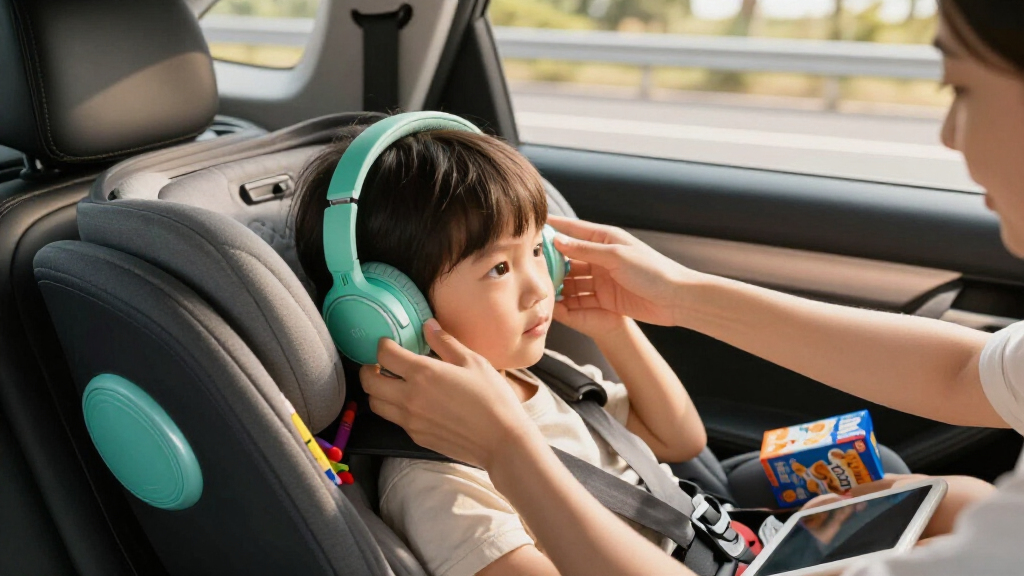
Over-ear beats in-ear for young children, almost every time. Earbuds slip out of small ear canals, sit too deep, and — if a cable snags on a car door — yank directly inside the ear. Padded over-ear cups seal gently, stay put on a bumpy road, and distribute pressure across the head instead of one tiny hole.
Here’s a quick fit test you can do at home before the trip:
- Shake test: Have your child shake their head side to side. Headphones that slide need a smaller band setting.
- Two-finger test: You should fit two fingers under the headband at the crown — snug but not tight.
- One-hour test: An hour of tablet time at home. Red marks on the temples after an hour mean the cups are too hard or too small.
- Glasses check: If your child wears glasses, make sure the arms don’t press painfully under the cups.
Scenario: a friend bought beautifully reviewed headphones for her seven-year-old that were technically excellent — and abandoned by mile 60 because the clamping force gave him a headache. Kids can’t always articulate “the headband hurts”; they just say “I don’t wanna wear them.” The fit test catches that in your living room instead of two states from home.
Battery, Wires, and the Battle for the Back-Seat Charger
For ANC models, battery life is the make-or-break road trip spec. Look for 20–35+ hours minimum, because road trips are exactly when charging gets forgotten — the tablet’s charger, the GPS mount, and now headphones all competing for one 12-volt outlet. The iClever BTH26’s 60-hour claim exists precisely for this failure mode.
But here’s a trade worth making: many ANC kids’ models also include a 3.5mm wired mode. Run out of battery mid-drive, plug into the aux cable, and everything still works minus the noise cancellation. Wired mode also saves battery on shorter trips and connects straight to car DVD systems and airplane seat jacks — no Bluetooth pairing required.
Wired versus wireless isn’t either/or, then. It’s a layered strategy:
- Bluetooth for tablets and phones — cleaner, no cables to tangle in a car seat.
- Wired backup for dead batteries, car entertainment systems, and planes.
- USB-C charging — the emerging standard, so one cable runs everything in the family bag.
- Low-latency Bluetooth 5.0+ — matters more than you’d think, since laggy lip-sync on videos drives kids to crank volume as if that would fix it.
And if you have two kids and one tablet, look for a share port or daisy-chain feature — some kids’ models let a second headphone plug into the first, ending the great sibling volume war before it starts.
Will They Survive Your Kid? A Durability Checklist
Kids’ headphones live hard lives: dropped on restaurant floors, sat on in the third row, stuffed under a booster seat with the goldfish crackers. Durability in this category isn’t a bonus — it’s the difference between one purchase and three per year.
The features that actually predict survival are simple. Flexible headbands that bend instead of snap. Foldable hinges that tuck the cups in for packing — and, yes, hinges are also the first thing to break, so check they feel tight, not loose. A carrying case, because a case in a backpack beats a bare headphone under a shoe. And a 1–2 year warranty, which several kids’ audio brands offer and which signals the manufacturer expects the product to last.
Sustainability is quietly becoming a real factor here too. More kids’ headphone makers are using recycled plastics and — more usefully for parents — replaceable parts like cables and ear pads. A $6 ear-pad replacement beats a whole new headset when the pads get grimy after a summer of snack-adjacent use.
The honest test scenario: hand the headphones to your child at home for one week before the trip. If they survive the couch cushions, the backpack, and being removed one-handed while the other hand holds a juice box, they’ll survive Route 66.
Road Trip Rules: How to Use Headphones Without Guilt
Even perfect headphones deserve limits. A safe listening routine for a long drive looks like scheduled breaks, volume check-ins, and a few rules you set before the car moves — not just headphones on for six straight hours.
Hearing-health guidance generally suggests kids take a listening break roughly every hour, even at safe volumes. On a road trip that’s easy: breaks align with rest stops anyway. Headphones off, everyone stretches, ears rest.
Here’s the routine that works for most families:
- Pre-trip volume set: Set the volume yourself at home, at a comfortable level, then rely on the limiter to hold it there.
- Hourly headphone-off breaks: Tie them to rest stops, snacks, or “spot the red barn” games.
- Random check-ins: If you can clearly hear their show from the front seat, something’s wrong — check the fit or the limiter.
- No headphones during conversation: Dinner stops and family talk time are headphone-free, keeping the trip social, not silent.
One common worry: will the ANC block out my voice so I can’t talk to my child? Partially, yes. ANC targets low drone, not speech, so your voice comes through muffled but audible. Still, the polite honk of a car horn, or a hand on the shoulder, beats shouting over seat rows.
A final safety note: never use headphones — ANC or otherwise — as a substitute for supervising a child in or around a vehicle. Quiet back seats are lovely; awareness of where your child is, especially near roads and at stops, isn’t optional.
Before You Buy: 5 Minutes of Checking That Saves Regret
Because kids’ headphone lines change faster than shoe sizes, a five-minute verification pass before checkout is the cheapest insurance in this whole purchase. Specs drift between model years, names get reused, and a “kids” label on the box doesn’t guarantee a volume limiter inside it.
Check these five things on the manufacturer’s official product page — not just the retailer listing:
- Volume limiter: Is it 85 dB, and is it hardware-based or switchable? Switchable means a kid can switch it.
- ANC claim: “Noise cancelling” on a box sometimes means passive sealing. Look for the word “active” and a battery-hour rating.
- Age rating: Most kids’ headphones are rated 3 and up. For toddlers, lean toward earmuff-style protection and talk to your pediatrician.
- Wired mode: Confirm the 3.5mm jack exists if you want car-system and airplane compatibility.
- Warranty: One to two years is the standard worth holding out for.
Scenario: a parent buys “the same headphones” their nephew has, only to find the current model year dropped the limiter switch and the aux jack — same name, different guts. Five minutes on the manufacturer’s spec sheet catches that every time.
Verify every spec on the official manufacturer page before booking your trip or buying the headphones. Retailer listings lag behind model refreshes, and product availability shifts constantly.
Frequently Asked Questions
Are noise-cancelling headphones safe for kids?
Yes — the ANC technology itself is harmless; it cancels external sound waves rather than adding anything dangerous to the ear. The real safety variable is volume, which is why a limiter capped at 85 dB matters more than the noise cancellation. Some audiologists argue ANC is actually safer, since kids don’t crank volume to compete with road noise. Most kids’ headphones are rated for ages 3 and up; check with your pediatrician for younger children.
What’s the best age for a child to start using headphones?
Most kids’ headphone manufacturers rate their products for age 3 and up. For toddlers under three, earmuff-style noise protection without audio — like 28dB SNR kids’ ear muffs — is the safer, simpler option for loud environments and naps. Over-ear designs fit young children better and more safely than earbuds, which sit too deep in small ear canals.
Do noise-reducing headphones help kids with autism or sensory sensitivities?
Yes, they’re widely recommended for sensory-sensitive children. Noise-reducing earmuffs in particular give a child control over overwhelming sound at busy rest stops, fireworks, or crowded venues. If the goal is pure quiet rather than audio, passive earmuffs are usually the better fit than Bluetooth ANC models — no pairing, no charging, nothing to fiddle with.
Wired or wireless headphones for car trips?
Both, ideally. Bluetooth is cleaner for tablets with no cables to tangle in a car seat, while a 3.5mm wired mode saves you when the battery dies mid-drive and connects directly to car DVD systems and airplane seat jacks. Many ANC kids’ models include both, which is the setup worth holding out for.
How do I stop my child from turning the volume up?
Choose a hardware-based limiter built into the headphone itself rather than an app-based limit or a switchable 85/94 dB setting a child can flip. With a hardwired cap, the volume button simply stops working past 85 dB. Add hourly check-ins on long drives: if you can hear their show clearly from the front seat, something’s off with the fit or the settings.
Conclusion
Buy the limiter, not the lights. Cat ears, battery marathon claims, and fold-flat hinges are all fine, but the feature that protects your child twenty years from now is the hard 85 dB volume cap paired with real noise reduction so they never need to fight the road for volume. Everything else is preference; that one is protection.
Picture the drive you’re actually buying: six hours of quiet highway, a back-seat kid absorbed in a movie at whisper volume, and a front seat where the only soundtrack is your playlist and the hum of tires — the hum nobody inside those little ear cups has to hear.
Evergreen bestsellers Picks
bestsellers
As an affiliate, we earn on qualifying purchases.