
TL;DR

Get travel and outdoor gear delivered free with Prime
- Fast, free delivery on millions of items
- Prime Video, Amazon Music and more included
- Member-only deals all year
Portable camping stoves range from ultralight backpacking burners to powerful multi-burner systems. Your choice depends on trip type, weather, fuel, and safety. Proper selection enhances outdoor cooking and keeps you safe.
Imagine the crackle of a small flame as it dances over your pot, boiling water in half the time. That’s the magic of a good portable camping stove. But with so many options, choosing the right one can feel overwhelming.
Whether you’re a weekend warrior, a backpacker chasing weight savings, or a family car camper, the stove you pick shapes your whole outdoor cooking experience. This guide breaks down the main types, what features matter most, and how to avoid common pitfalls. Ready to make your next trip even tastier? Let’s dive in.
Match your stove type to your trip: ultralight for backpacking, stable multi-burners for car camping, cold-weather models for expeditions.
Fuel choice impacts performance and safety—white gas excels in cold, canisters are convenient but limited in remote areas.
Use windscreens carefully—avoid enclosing canisters unless approved—wind and cold significantly increase fuel use.
Stability and cookware compatibility are key—choose wide, low bases for large pots and group cooking.
Regular maintenance, proper lighting, and safety measures keep your stove working safely and last longer.
What Stove Type Fits Your Adventure? Find the Perfect Match
Choosing the right stove starts with understanding the main types available. Each has its own strengths, and your trip’s demands will determine what’s best.
Canister stoves are the go-to for backpackers. They’re light, compact, and ignite with a click—perfect when every ounce counts. Think of a sleek, tiny device that fits in your hand, ready to boil water in minutes.
Remote-canister stoves connect the burner to the fuel via a hose. They offer better stability and work well in cold weather, especially if you flip the canister upside down for cold conditions. Picture a sturdy, two-burner unit on a picnic table, ready to cook for a group.
Liquid-fuel stoves burn white gas or kerosene. They’re the tough guys—reliable in freezing temps and remote areas. Imagine a rugged, brass beast that needs priming, pumping, and care, but can run where others sputter out.
Alcohol stoves are whisper-quiet, super-light, but slow. They’re great for ultra-light hikers but lack power for large pots. Some parks ban them during fire restrictions because they lack a positive shutoff.
Wood-burning stoves use twigs or biomass, reducing carried fuel. But dry wood isn’t always available, and bans treat them like open fires.
Integrated stove systems combine a burner and pot with built-in heat exchangers. They boil water fast but aren’t ideal for frying or simmering.
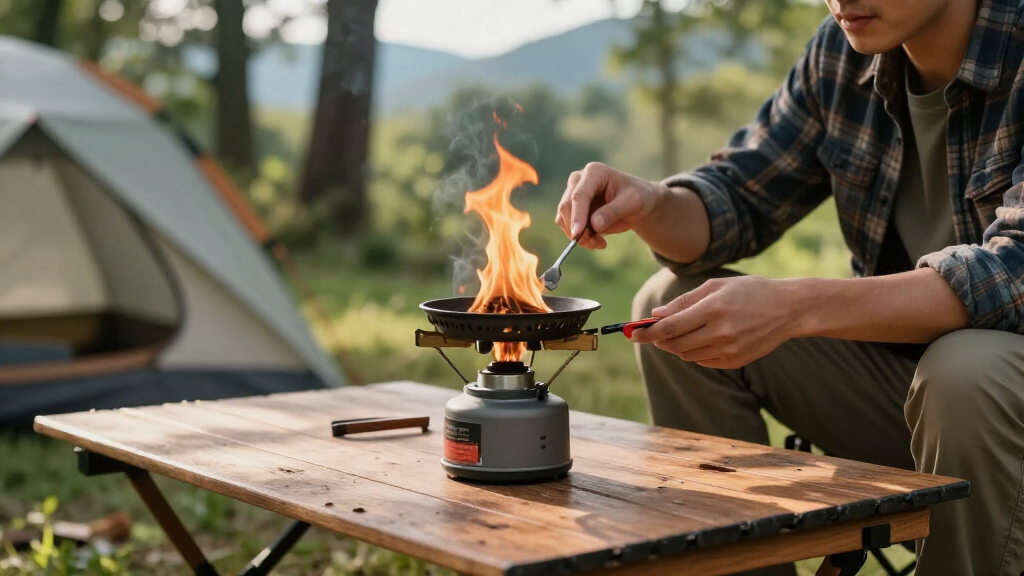
Tabletop propane stoves are the classic campsite workhorses. They’re larger, stable, and handle full-size cookware for families or groups.
portable camping stove for backpacking
As an affiliate, we earn on qualifying purchases.
As an affiliate, we earn on qualifying purchases.
Pick the Right Stove for Your Trip Style — Here’s How
Every trip needs a different stove. Your choice depends on how much weight you’re willing to carry, the weather, and your cooking needs.
For backpacking, focus on ultralight canister stoves. They’re tiny and save space—think of them as your cooking sidekick for quick hot drinks and simple meals.
Car campers often prefer sturdy two-burner propane units. They offer wind protection, simmer control, and can handle larger pots—perfect for breakfast pancakes or family dinners.
Expedition adventurers should consider liquid-fuel or remote-canister stoves. These excel in cold, high-altitude environments where fuel performance drops. Imagine boiling water in freezing rain or snow—these stoves keep going where others falter.
Here’s a quick rundown:
| Trip Type | Recommended Stove | Key Features |
|---|---|---|
| Backpacking | Ultralight canister stove | Lightweight, compact, easy to ignite |
| Car camping | Tabletop propane stove | Stable, powerful, multiple burners |
| Expedition cold-weather | Liquid-fuel or remote-canister | Reliable in extreme cold, versatile fuel options |
Matching your stove to your trip ensures you get hot meals without adding unnecessary weight or hassle.
multi-burner camp stove for car camping
As an affiliate, we earn on qualifying purchases.
As an affiliate, we earn on qualifying purchases.
Fuel Choices That Impact Your Trip — What You Need to Know
Fuel selection isn’t just about convenience; it shapes your entire cooking experience. Canisters are clean and simple but may be scarce in remote areas. Liquid fuels like white gas are versatile but require handling care.
If your adventure takes you to colder places, white gas performs better because it vaporizes efficiently even when temperatures drop below freezing. Think of it as your cold-weather hero, unlike isobutane canisters that lose pressure in the cold.
In places where fuel access is limited, consider multifuel stoves that accept kerosene or gasoline. These are the workhorses of remote expeditions, but they demand more maintenance. An example: a mountaineer in Nepal relying on a multifuel stove for multiple weeks.
Efficiency varies. Using a lid, selecting the right pot size, and shielding the stove from wind can cut fuel use by 20-30%. In windy conditions, a windscreen can be a game-changer—just don’t enclose the canister unless approved.
As an affiliate, we earn on qualifying purchases.
Weather-Proofing Your Stove: Keep Cooking in Cold, Windy Conditions
Weather can make or break your cooking plans. Wind and cold are the biggest enemies, increasing fuel burn and boiling times. Imagine a windy mountain ridge where your flame flickers and sputters—fuel consumption spikes.
To fight wind, use a windscreen. But be cautious: enclosing a canister can cause dangerous overheating or rupture. Instead, use a windbreak that directs airflow around your burner without trapping heat.
In cold weather, keep your fuel warm—store the canister close to your body or in a pocket. For liquid fuels, pre-warming bottles prevents pressure drops. An expedition tech tip: insulate your stove with foam or wrap it in clothing to maintain pressure and efficiency.
When selecting a stove, consider models designed for wind resistance and cold weather. Some remote-canister stoves have built-in heat exchangers and better regulation, making them more reliable in harsh environments.
As an affiliate, we earn on qualifying purchases.
Stability and Cookware Compatibility — Cooking Without Wobbling or Spills
Nothing kills your trip’s mood faster than a wobbly pot or unstable flame. Stability matters, especially when cooking for others or boiling large quantities. Think of a campfire that tips over as your stew bubbles over—annoying and dangerous.
Choose stoves with a wide, low base for maximum stability. Many tabletop propane units have sturdy legs and large burner heads that support big pots without wobbling.
Always check the manufacturer’s recommended maximum pot size or weight. Heavy cast iron or large aluminum pots can strain a tiny, narrow burner. A good rule: if it wobbles, it’s a safety hazard and wastes fuel.
For group cooking, a stove with multiple burners or a large cooking surface keeps everyone fed and happy. Also, use a heat diffuser if you want to simmer or prevent scorching on thin-bottom pots.
How to Ignite, Maintain, and Keep Your Stove Safe — Easy Tips
Getting your stove lit and keeping it safe is straightforward with a few simple habits. Always carry waterproof matches or a lighter—don’t rely solely on built-in igniters, which can fail in moisture or cold.
Before lighting, inspect connections, seals, hoses, and O-rings. Tighten everything properly. When in doubt, check for leaks with a soapy water solution—bubbles mean a leak.
Once lit, monitor the flame. If it’s flickering or uneven, turn off and troubleshoot. Keep a fire extinguisher or fire blanket nearby, especially if you’re new to outdoor cooking.
After use, let the stove cool completely before disconnecting fuel or packing. Store fuel containers upright and away from direct sunlight. Regular maintenance—cleaning burners, replacing worn parts—extends your stove’s life and keeps it safe.
Remember: never leave a stove unattended, and always cook outdoors on a stable, nonflammable surface away from tents and dry brush.
Latest Trends: What’s New in Portable Camping Stoves?
The camping stove market is buzzing with innovation. Integrated heat exchanger cookware now reduces fuel use by up to 25%, making trips longer and greener. Think of it as your stove’s turbo boost—fast boiling, less fuel.
Regulators are more advanced, helping stoves maintain steady power even as canisters empty or temperatures drop. Remote-canister models are lighter, more stable, and easier to operate in wind and cold.
Multifuel stoves, supporting a range of liquid fuels, are gaining popularity among mountaineers and remote explorers. They offer peace of mind when canisters are hard to find.
Some brands embed features like built-in ignition, nesting cookware, and even USB-powered fans for wood-gasification stoves—making outdoor cooking more convenient and tech-savvy.
Environmental concerns are shaping product choices too. Reusable cookware, fuel efficiency, and recycling programs are now part of the conversation. Always check local restrictions, especially during wildfire season, as rules tighten on open flames and certain stove types.
Frequently Asked Questions
Which camping stove is easiest for beginners?
A simple threaded-canister stove is the easiest for beginners. It’s straightforward, reliable, and quick to light, making it perfect for those just starting out or doing quick trips.
Can I use a camping stove inside a tent?
No. Using a stove inside a tent can cause dangerous carbon monoxide buildup, fire hazards, and fuel leaks. Always cook outdoors on a stable, nonflammable surface with proper ventilation.
What fuel should I use in cold weather?
White gas performs best in cold conditions because it vaporizes reliably even when temperatures drop. Some remote canister stoves with winter blends can also work well if kept warm.
How much fuel do I need for a multi-day trip?
Estimate based on your meals, water boil needs, and weather. Test your stove beforehand, and carry a little extra—fuel consumption can spike in wind or cold.
Are canisters refillable or recyclable?
Most single-use canisters are not refillable. Recyclability depends on local programs; always empty and clean canisters before recycling, and follow manufacturer instructions.
Conclusion
Your perfect camping stove isn’t just about the size or power; it’s about how it fits your adventure. Pick one that matches your needs, handle it responsibly, and it will serve you well for years of outdoor adventures.
Next time you hit the trail or the campsite, imagine that tiny flame quietly fueling your memories—simple, reliable, and just right for your trip. Happy cooking!
Fall Picks
fall essentials
As an affiliate, we earn on qualifying purchases.