
To prevent car sickness in dogs on long drives, you should prepare your pet by making sure they’re comfortable, well-rested, and secured in a crash-tested carrier or harness. Recognize early signs like drooling or restlessness so you can act quickly. Use calming techniques, such as playing soothing music or offering familiar toys, and guarantee good ventilation. For extra comfort, incorporate travel accessories like calming sprays or treats. If symptoms persist or worsen, consulting your vet can help you find personalized solutions.

Get travel and outdoor gear delivered free with Prime
- Fast, free delivery on millions of items
- Prime Video, Amazon Music and more included
- Member-only deals all year
Key Takeaways
- Keep the dog in a well-ventilated, comfortable crate or harness to minimize movement and anxiety.
- Offer familiar blankets or toys to provide reassurance during the trip.
- Ensure the vehicle is clean, free of strong smells, and maintains a steady airflow.
- Take frequent breaks for short walks and hydration to reduce motion sickness risk.
- Use calming techniques such as soft music or pheromone diffusers to soothe the dog.
As an affiliate, we earn on qualifying purchases.
How to Prepare Your Dog and Car for a Nausea-Free Ride
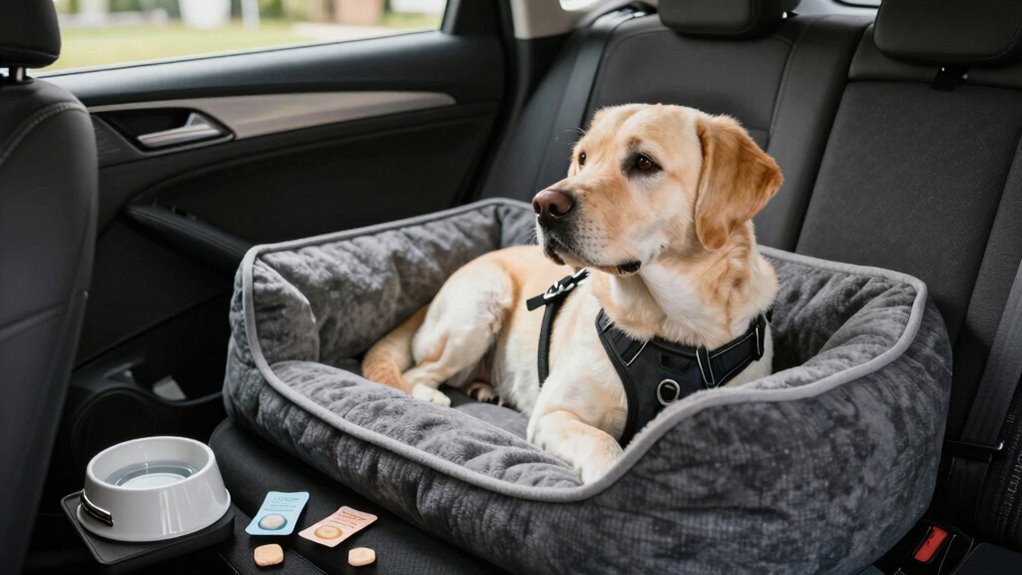
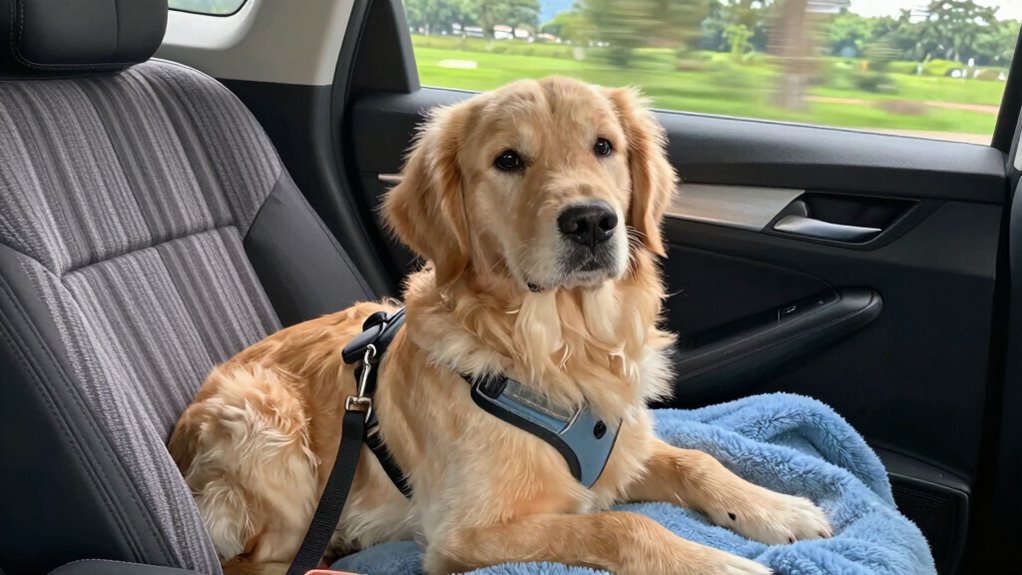
To prevent car sickness in your dog, start by preparing both your pet and your vehicle before the trip. Ensuring dog travel safety is essential, so make sure your dog is comfortable and well-rested beforehand. Vehicle preparation includes securing your dog in a crash-tested carrier or harness to prevent sudden movements, which can worsen nausea. Keep the car well-ventilated, and avoid strong smells that might upset your pet. Reduce distractions by cleaning the car and removing loose items. Offer a familiar blanket or toy to help your dog feel secure. Before hitting the road, take your dog for a short walk to burn off excess energy. Proper dog travel safety and vehicle preparation create a calm environment, reducing the chances of nausea and making the trip more enjoyable.
As an affiliate, we earn on qualifying purchases.
How to Recognize Early Signs of Car Sickness in Dogs
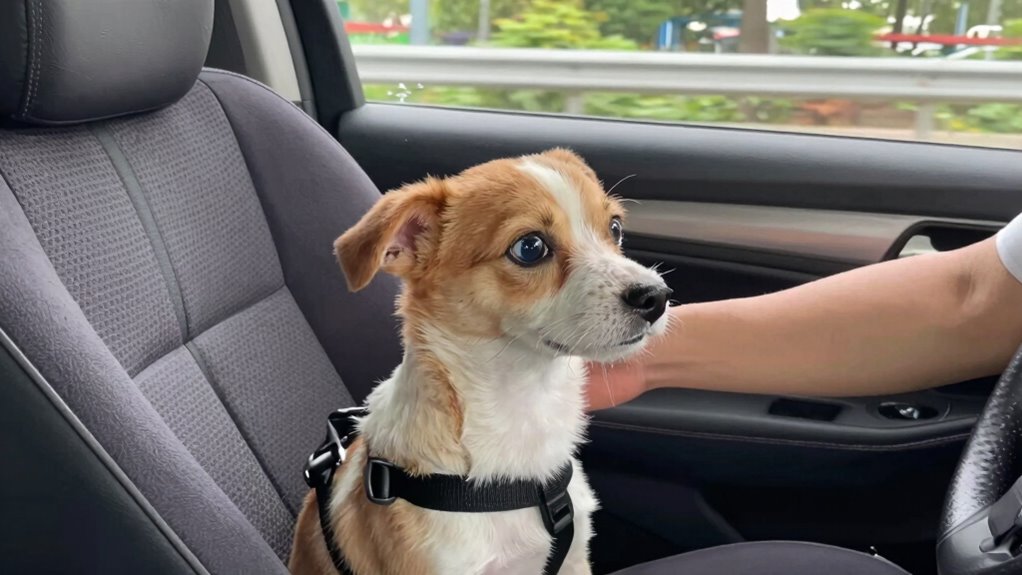
Recognizing the early signs of car sickness in dogs can help you intervene before the discomfort worsens. Pay close attention to your dog’s behavior during travel; symptoms like excessive drooling, lip licking, yawning, or restlessness often signal distress. You might notice your dog whining, pawing at the car seat, or trying to escape. Some dogs display decreased appetite or appear lethargic. Rapid breathing or trembling can also indicate nausea. By identifying these signs early, you can take quick action—such as stopping the car or offering water—to prevent full-blown sickness. Symptom identification is essential for managing your dog’s comfort and preventing long-term aversion to car rides. Staying alert to these behavioral cues ensures you can address car sickness promptly.
As an affiliate, we earn on qualifying purchases.
Calming Tips to Keep Your Dog Comfortable During Long Drives
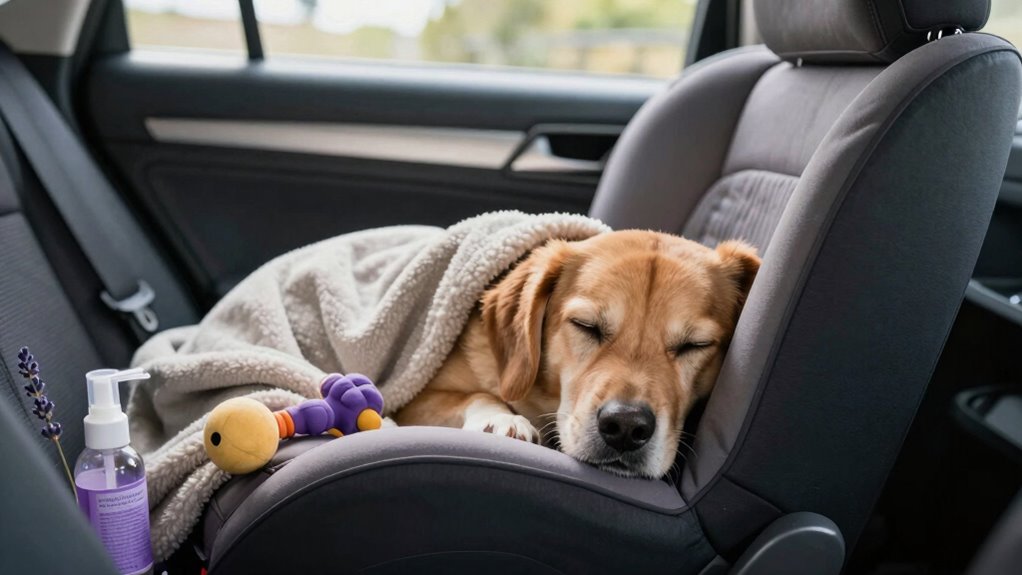
Long drives can be stressful for dogs, but you can help keep them calm and comfortable by creating a soothing environment. Using dog calming techniques and travel anxiety remedies, you can reduce their stress and prevent motion sickness. Start by offering a familiar blanket or toy to provide comfort. Play calming music or white noise to help relax your dog. Maintain a calm demeanor yourself, as dogs pick up on your energy. Make sure proper ventilation and avoid sudden stops or sharp turns. Consider giving a natural supplement or pheromone diffuser if your dog is particularly anxious. You can also utilize DIY tools and safety tips to ensure your car is a safe environment for your pet during travel.
As an affiliate, we earn on qualifying purchases.
Best Travel Accessories to Prevent Dog Motion Sickness

Finding the right travel accessories can make a significant difference in preventing your dog’s motion sickness during car trips. Start by offering travel treats, which can help comfort your dog and distract them from nausea. Choose treats that are easy to digest and can be given gradually throughout the journey. Additionally, good car ventilation is essential; make sure windows are slightly open or use the vehicle’s ventilation system to maintain fresh, circulating air. Proper airflow helps reduce anxiety and prevents stuffiness that can worsen nausea. Consider using a comfortable, secure crate or harness to keep your dog stable and minimize sudden movements that could trigger motion sickness. Incorporating calming environmental factors such as familiar blankets or calming sprays can further help soothe your dog during travel. Keeping your dog in a balanced environment with appropriate accessories can also promote overall comfort and reduce stress. Using smart home technology like climate control systems can help maintain an optimal environment and enhance your pet’s comfort during long journeys. Additionally, ensuring your dog’s hydration levels are maintained can help prevent dehydration-related discomfort during travel. Regularly monitoring your dog’s body temperature can also help prevent overheating and related stress. Combining these accessories with your calming efforts creates a more comfortable environment, making long drives less stressful and more enjoyable for your furry friend.
When to Talk to Your Vet About Severe Car Sickness
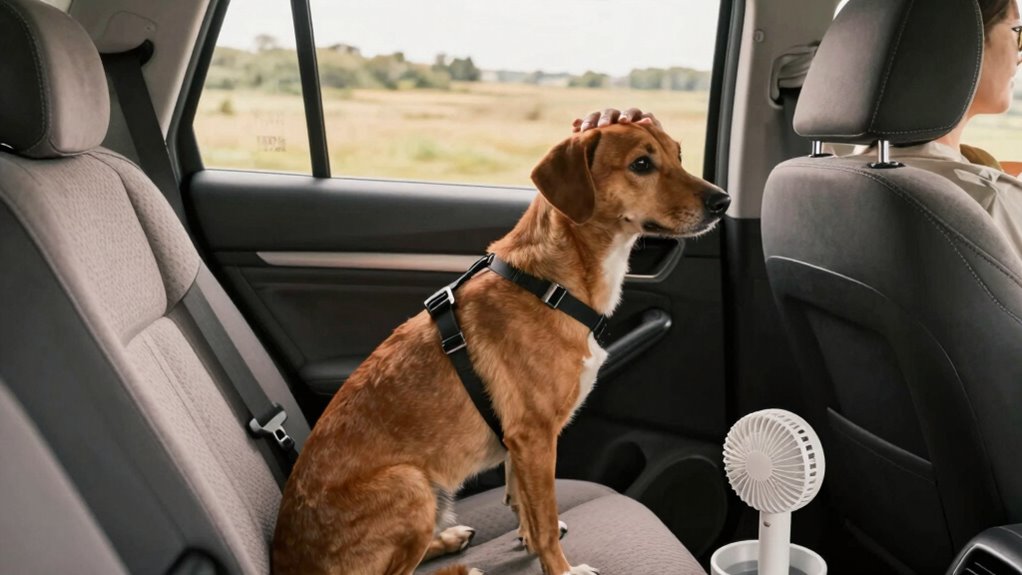
If your dog continues to experience severe car sickness despite trying various remedies, it’s important to consult your veterinarian promptly. Persistent symptoms may indicate underlying issues or behavioral triggers that require professional assessment. Your vet can evaluate whether medication options might help manage severe symptoms or if behavioral therapy is necessary. Watch for signs like vomiting, drooling, or distress that worsen over time. Consider these points before reaching out:
- Severe or ongoing vomiting
- Signs of dehydration or weakness
- Behavioral triggers that worsen symptoms
- Lack of improvement despite remedies
- Concerns about underlying health conditions
Additionally, understanding how car interior conditions can influence your dog’s comfort and reaction during travel can aid in managing symptoms. For instance, ventilation and temperature control play a crucial role in reducing travel stress. Timely veterinary advice ensures your dog gets appropriate treatment and reduces stress during travel. Don’t hesitate to seek professional guidance if severe car sickness persists.
Frequently Asked Questions
Can Certain Dog Breeds Be More Prone to Car Sickness?
Certain dog breeds are more prone to car sickness due to breed tendencies and genetic factors. Small breeds, like Chihuahuas and French Bulldogs, often experience more motion sensitivity, making them more susceptible. Breeds with flat faces, such as Bulldogs, may also have difficulty breathing, increasing discomfort. Understanding your dog’s breed tendencies and genetic predispositions helps you anticipate and manage their car sickness, ensuring a smoother, more comfortable ride for your furry friend.
How Does Diet Influence a Dog’s Likelihood of Getting Car Sick?
Your dog’s diet impact plays a significant role in their likelihood of getting car sick. Feeding them a light, easily digestible meal a few hours before travel helps reduce nausea. Nutritional strategies like offering small portions and avoiding rich or fatty foods can calm their stomach. Make certain they stay hydrated, but don’t give large amounts of water just before the trip. Proper diet management helps keep your dog comfortable during long drives.
Are There Natural Remedies to Prevent Car Sickness in Dogs?
Yes, you can try natural remedies like herbal supplements such as ginger or chamomile, known for calming nerves and settling stomachs. Aromatherapy options, like lavender or peppermint essential oils, might also help soothe your dog’s anxiety and nausea during travel. Always consult your veterinarian before introducing new remedies. These natural options could make long drives less stressful, giving your furry friend comfort and peace of mind on every trip.
How Long Should a Dog Be Exposed to Car Rides to Build Tolerance?
You should gradually expose your dog to car rides, starting with short trips of 10-15 minutes and gradually increasing duration. Use travel accessories like harnesses to keep them secure and comfortable, and incorporate behavioral training to help them associate car rides with positive experiences. Consistent, positive exposure over several weeks helps build your dog’s tolerance, reducing anxiety and sickness during longer journeys. Patience and gradual progress are key.
Does Age Affect a Dog’s Susceptibility to Motion Sickness?
Think of your dog’s susceptibility to motion sickness as a delicate bloom, influenced by age. Puppies, with their developing senses, may be more prone to nausea, while seniors, facing the clouds of their health, might also struggle more. During puppy development, their inner ear and nervous system are still maturing, making them vulnerable. Conversely, senior health issues can heighten motion sickness, so adjust your approach based on your dog’s age to keep travel smooth.
Conclusion
With a little preparation and patience, you can turn long drives into smooth sailing for your furry friend. Think of your car rides as gentle waves, where every step you take calms the storm inside your dog’s tummy. By recognizing signs early and using calming tools, you’re crafting a journey filled with wagging tails and happy hearts. So, gear up with care—your peaceful voyage awaits just beyond the horizon.
Fall Picks
fall essentials
As an affiliate, we earn on qualifying purchases.