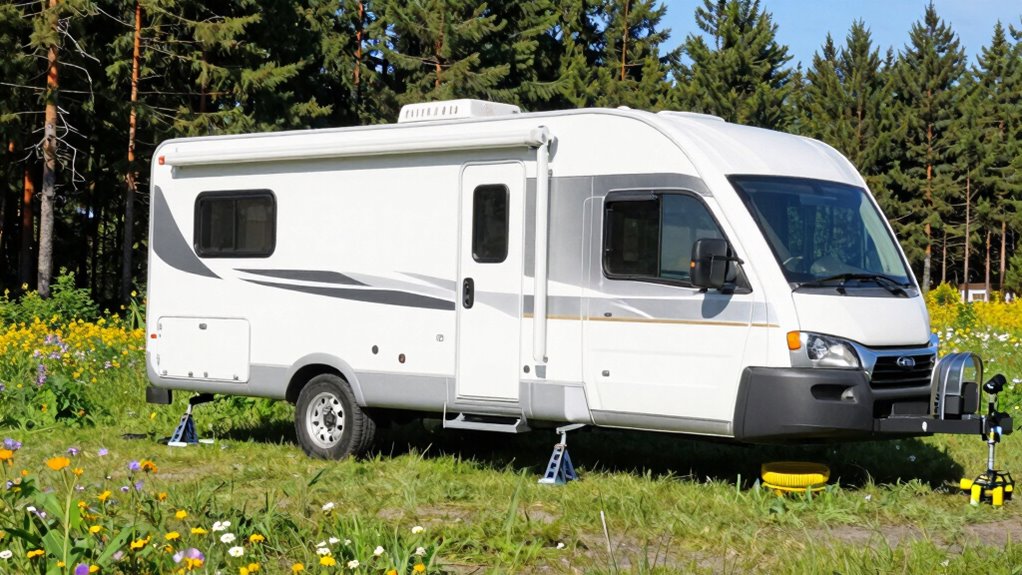

To keep your RV or trailer stable at multi-stop campsites, start by properly leveling it with bubble or digital levels and use leveling blocks if needed. Secure all tires with wheel chocks and deploy stabilizer jacks on soft ground. Always tighten jacks and recheck level at each stop. Protect your awning with straps or tie-downs, especially in windy conditions. Consistently inspecting and adjusting these measures guarantees maximum stability; if you want to master these techniques, there’s more to discover.

Get travel and outdoor gear delivered free with Prime
- Fast, free delivery on millions of items
- Prime Video, Amazon Music and more included
- Member-only deals all year
Key Takeaways
- Relevel the RV at each new campsite to account for terrain changes and maintain stability.
- Use wheel chocks and stabilizer jacks to prevent movement on uneven ground.
- Secure awnings with straps and anchors, checking tension regularly to prevent swinging.
- Inspect and tighten all securing devices after each move for continuous stability.
- Choose stable, level sites and avoid soft or sensitive terrain to protect the RV and environment.
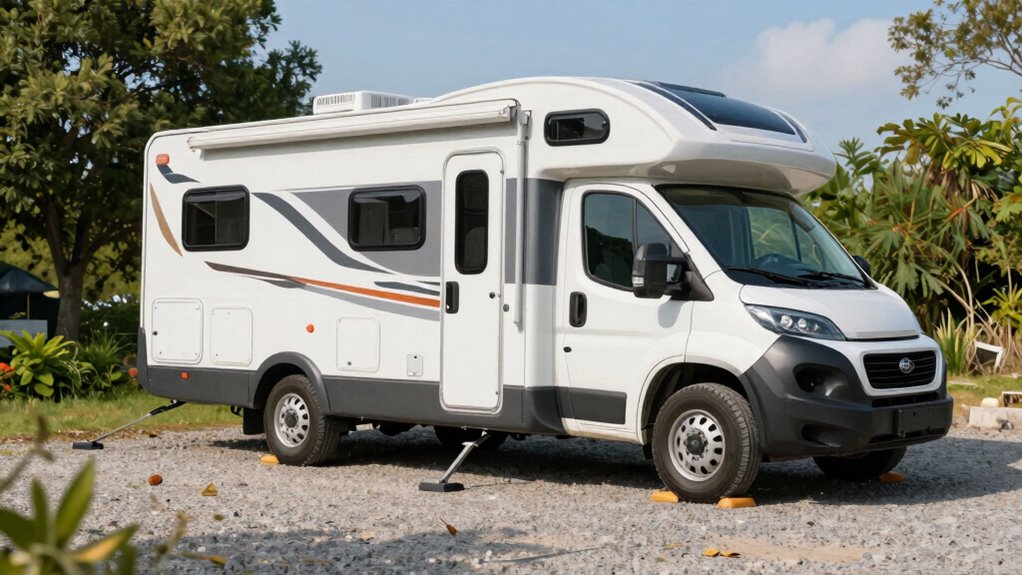
Ever wondered how to prevent your RV from rocking or shifting while parked at a campsite? It’s a common concern, especially when dealing with uneven terrain or multi-stop adventures. The key to maintaining stability lies in proper leveling techniques and guaranteeing awning stability, both of which can make your stay more comfortable and safe. When you arrive at each stop, the first step is to level your RV. Use a high-quality bubble or digital level to identify which corners need raising or lowering. Deploy your leveling blocks or ramps under the tires, and make small adjustments until your rig sits evenly. This not only keeps your appliances and fixtures functioning correctly but also minimizes unwanted movement inside the RV.
Once your RV is level, focus on additional stability measures. For multi-stop campsites, terrain varies, so it’s wise to set up wheel chocks on each tire. Wheel chocks prevent rolling, especially on inclined sites, giving your RV a firm foundation. If your campsite has a lot of soft ground or gravel, consider using stabilizer jacks or leveling jacks. These can be extended to lift the RV slightly off the ground, reducing sway and bounce during wind or when people move inside. Always tighten these jacks properly, and double-check their stability after setup. Incorporating biodiversity considerations such as avoiding soft or sensitive terrain can help protect the environment while maintaining your setup’s stability. Using proper leveling techniques can also prevent unnecessary strain on your RV’s frame and appliances, ensuring a longer lifespan. Additionally, choosing appropriate site selection can lead to more stable camping conditions and easier setup.
Use wheel chocks and stabilizer jacks to secure your RV on uneven or soft terrain for maximum stability.
Awning stability is another critical aspect. Awnings are great for creating shade, but they can become unstable if not secured correctly. When setting up, ensure that your awning arms are locked into place and that straps or tie-downs are used if strong winds are expected. Many RV owners forget that an unstable awning can cause damage or create dangerous swinging. Installing tension straps or tie-downs helps keep the awning taut and secure, even in gusty conditions. If you plan to leave the awning extended for a long period, consider adding weight or anchors to the straps for added stability. For optimal stability, it’s helpful to periodically re-tighten and inspect these tie-downs during your stay.
In multi-stop scenarios, take a few extra minutes to recheck your setup at each new campsite. Terrain and weather can shift, impacting stability. Regularly inspecting your leveling and securing all tie-downs ensures your RV remains steady throughout your trip. By combining proper leveling techniques, using wheel chocks, stabilizer jacks, and securing your awning, you’ll create a stable environment that minimizes movement and maximizes comfort. This way, you can relax and enjoy your camping experience without constantly worrying about your RV shifting or rocking.
As an affiliate, we earn on qualifying purchases.
Frequently Asked Questions
Can Leveling Blocks Damage My Rv’s Chassis?
Using leveling blocks won’t damage your RV’s chassis if you choose the right type and use them properly. They help maintain chassis integrity by preventing uneven weight distribution, which could cause structural impact over time. Always place blocks on firm, level ground and avoid excessive lifting. Proper use guarantees your RV remains stable without risking damage to the chassis or compromising structural integrity.
How Do Weather Conditions Affect RV Stability?
Think of your RV as a ship steering through unpredictable seas—weather impact can considerably sway its stability. Strong winds threaten to tip or sway your trailer, especially if it’s not well-anchored. Rain and snow can shift the ground beneath, affecting leveling and balance. To maintain wind stability, secure your awnings and use stabilizers. Keep an eye on weather forecasts, and adapt your setup to guarantee safety against changing conditions.
Is It Necessary to Chock All Wheels Every Time?
You should chock all wheels every time you park your RV or trailer, especially on uneven or sloped ground. Using wheel locks helps prevent movement, but chocks provide extra stability. Make certain your tire pressure is correct to maintain proper balance and prevent shifting. Always chock both the front and rear wheels on the side facing downhill or when parking on an incline, giving your setup maximum stability and safety.
What Are the Best Tools for Quick Stabilization?
For quick stabilization, you want tools that are reliable, portable, and easy to use. Stabilization techniques include using leveling blocks, adjustable stabilizer jacks, and wheel chocks. Portable stabilizer options like quick-lift stabilizer jacks, stabilizer braces, and foldable support legs make setup fast and efficient. These tools help you secure your RV or trailer quickly, ensuring stability, safety, and peace of mind during multiple stops or extended stays.
How Often Should I Recheck Stability During My Stay?
You should recheck your RV’s stability at least once daily during your stay, especially after setting up or when weather conditions change. Regularly monitoring your RV guarantees camping safety and helps catch any shifts early, reducing risks. Incorporate quick stability checks into your RV maintenance routine, paying attention to leveling and support systems. Staying vigilant keeps your setup secure and your camping experience safe and enjoyable.
As an affiliate, we earn on qualifying purchases.
Conclusion
To keep your RV or trailer stable at multi-stop campsites, always level your vehicle, secure stabilizers properly, and distribute weight evenly. Remember, a steady rig makes for a more comfortable stay and prevents unnecessary wear—think of it like the sturdy ship that carried explorers through uncharted waters. With these tips, you’ll be as prepared as a knight before battle, ensuring your adventures remain smooth sailing. Happy camping!
As an affiliate, we earn on qualifying purchases.
As an affiliate, we earn on qualifying purchases.
Fall Picks
fall essentials
As an affiliate, we earn on qualifying purchases.