To sleep warm on cold-weather road trips without overcomplicating things, focus on layering with thermal blankets and a well-insulated sleeping bag, and place a foam pad underneath for extra warmth. Block drafts with blankets or foam boards, and use reflective emergency blankets inside to trap heat. Wear a hat, socks, and moisture-wicking layers to keep your body heat in. Keep key areas insulated, and stay dry—these simple tips can make a big difference. If you continue, you’ll find more ways to stay cozy all night.

Get travel and outdoor gear delivered free — and shop member deals
- Fast, free delivery on millions of items
- Access to Prime Big Deal Days deals on October 6–7
- Prime Video, Amazon Music and more included
Key Takeaways
- Use thermal blankets, sleeping bags, and an insulated mattress to trap body heat effectively.
- Block drafts with blankets or foam boards around doors and windows for better warmth retention.
- Dress in moisture-wicking layers, a hat, and socks to keep your body heat close.
- Build a small, safe campfire or use reflective blankets inside to boost warmth inside the vehicle.
- Maintain vehicle and battery health to ensure reliable heat and prevent cold-related issues overnight.

When you’re on a cold-weather road trip, staying warm while sleeping can make all the difference in getting restful rest and waking up ready to hit the road again. You don’t need fancy gear or complicated setups—just a few smart strategies to keep the chill at bay. First, focus on your vehicle’s maintenance to guarantee it’s in good shape. A well-maintained engine and a properly sealed vehicle keep heat inside and prevent drafts from sneaking in while you sleep. Check your weather stripping around doors and windows, and make sure your battery and heating system are functioning properly before hitting the road. This way, your vehicle becomes a reliable shelter against the cold.
Ensure your vehicle is well-maintained and sealed for reliable warmth during cold-weather road trips.
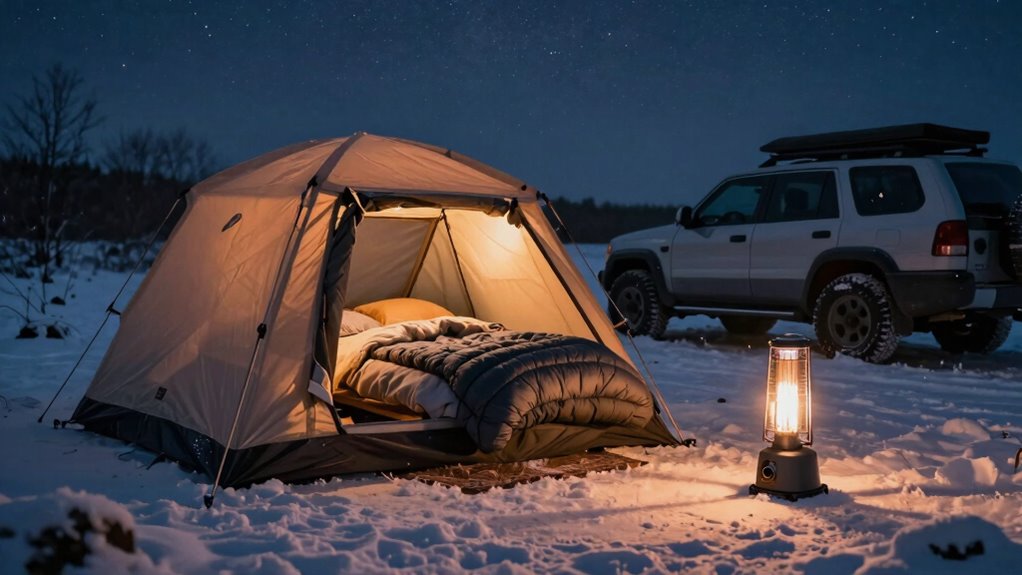
Layering is your best friend. Pack thermal blankets, sleeping bags rated for low temperatures, and extra blankets to pile on. The key is trapping warm air close to your body. Use a foam sleeping pad or an insulated mattress topper underneath your sleeping bag to prevent heat loss through the ground. When you settle in, wear moisture-wicking base layers, a hat, and socks—your body loses a lot of heat through your head and feet. Keeping these parts covered helps you stay warm longer. Additionally, insulation around your sleeping area can significantly improve heat retention. Proper insulation helps prevent heat from escaping and keeps your sleeping environment cozy during those cold nights.
Campfire cooking isn’t just about preparing meals; it can also be a morale booster and a way to generate some warmth. If conditions permit, building a small, safe campfire can provide heat and comfort. The act of tending to the fire keeps you active, and the heat radiating from it makes a noticeable difference in your comfort level. Plus, cooking hot meals or drinks like tea and soup warms your core and boosts your energy. Just ensure you follow fire safety rules and local regulations to avoid accidents or wildfires.
To maximize warmth, block out drafts and cold air with makeshift insulation like blankets or foam boards around your vehicle doors and windows. Use reflective emergency blankets inside your sleeping area to reflect your body heat back toward you. Keep your head and neck covered, since those areas lose heat quickly, and stay dry—moisture inside your sleeping bag makes you feel colder. If you’re in a pinch, wearing a hooded jacket or hat while sleeping can help retain heat. Additionally, ensuring good vehicle insulation can make a significant difference in maintaining warmth during cold nights.
thermal sleeping bag for cold weather
As an affiliate, we earn on qualifying purchases.
As an affiliate, we earn on qualifying purchases.
Frequently Asked Questions
What Are the Best Portable Heating Options for Sleeping in a Car?
You should consider portable electric blankets and chemical hand warmers for sleeping in a car. Portable electric blankets provide consistent warmth directly on your body, making them a safe and effective option. Chemical hand warmers are compact, easy to use, and offer quick heat for added comfort. Combining these two, along with good insulation, helps you stay cozy without overcomplicating your setup.
How Can I Prevent Condensation Inside My Sleeping Area?
Did you know that improper moisture control causes up to 80% of cold-weather condensation issues? To prevent condensation inside your sleeping area, prioritize ventilation strategies like cracking a window slightly or using a vent fan. This improves airflow and helps remove excess moisture. Also, choose breathable bedding, and avoid trapping humidity inside. These simple steps keep your space dry, warm, and comfortable, ensuring a cozy night’s sleep despite the cold.
Is It Safe to Use a Space Heater in a Vehicle?
Using a space heater in your vehicle can be safe if you prioritize heater safety and guarantee proper vehicle insulation. Always use a heater designed for indoor use, avoid leaving it unattended, and keep it away from flammable items. Make sure your vehicle’s insulation is adequate to retain heat and prevent condensation. Ventilate occasionally to prevent carbon monoxide buildup, and never run a traditional electric heater directly inside the vehicle without proper precautions.
What Clothing Layers Are Recommended for Cold-Weather Sleep?
For cold-weather sleep, you should prioritize layering essentials like thermal underwear, a warm fleece or hoodie, and an insulated jacket. Use insulation techniques such as adding a sleeping bag rated for low temperatures, and consider a sleeping pad for extra warmth. Wear moisture-wicking base layers to stay dry, and top it with insulating layers. This combination keeps you warm, comfortable, and ready to face chilly nights on the road.
How Can I Keep My Sleeping Bag Dry in Snowy Conditions?
Keep your sleeping bag dry in snowy conditions by practicing moisture control and proper sleeping bag maintenance. Use a waterproof, breathable ground tarp or tent footprint to shield it from snow and moisture. Always store your sleeping bag in a dry, breathable sack when not in use, and avoid touching snow directly. Regularly check for dampness, airing out your bag when possible, to prevent moisture buildup and maintain insulation.
As an affiliate, we earn on qualifying purchases.
Conclusion
Staying warm on cold-weather road trips doesn’t have to be complicated. Simple tricks like layering your bedding and using reflective insulation can make all the difference. Did you know that the average person loses about 10% of body heat through their head? So, keeping your head warm is essential. With these easy tips, you’ll stay cozy and enjoy your trip without waking up shivering. Warm nights make for better mornings—happy travels!
As an affiliate, we earn on qualifying purchases.
moisture-wicking base layers for cold weather
As an affiliate, we earn on qualifying purchases.
As an affiliate, we earn on qualifying purchases.
Halloween Picks
halloween
As an affiliate, we earn on qualifying purchases.