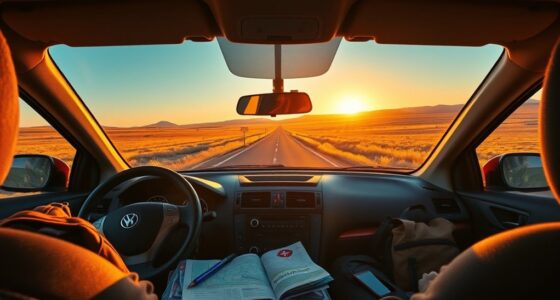

To enjoy a solo road trip safely, plan ahead by checking your vehicle’s maintenance and packing an emergency kit. Share your route with a trusted person and stay alert during the trip. Trust your instincts, park in safe areas, and keep valuables hidden. Be open to meeting fellow travelers at local spots, but always prioritize your safety. Exploring this way boosts confidence; you’ll discover ways to make your journey even smoother.
Key Takeaways
- Prepare thoroughly with vehicle checks, emergency supplies, and a detailed route plan for safety and smooth travel.
- Share your itinerary and check in regularly with trusted contacts to stay connected and informed.
- Trust your instincts, choose well-lit, populated areas for stops, and lock your vehicle when away.
- Meet people safely by joining group tours, online communities, or attending local events along your route.
- Stay alert, take regular breaks, and carry essential safety gear to handle unforeseen issues confidently.

Thinking about hitting the open road solo? Before you pack your bags and fire up your engine, it’s crucial to prioritize safety and preparation. One of the first steps is ensuring your vehicle is in top shape. Conduct a thorough vehicle maintenance check—tire pressure, oil levels, brake function, and fluid levels—to prevent breakdowns that could ruin your trip. Carry a basic toolkit, jumper cables, and a spare tire, just in case. Regular maintenance not only keeps your car running smoothly but also gives you peace of mind while driving long distances alone. Remember, being proactive about vehicle maintenance can save you from unexpected problems miles away from help.
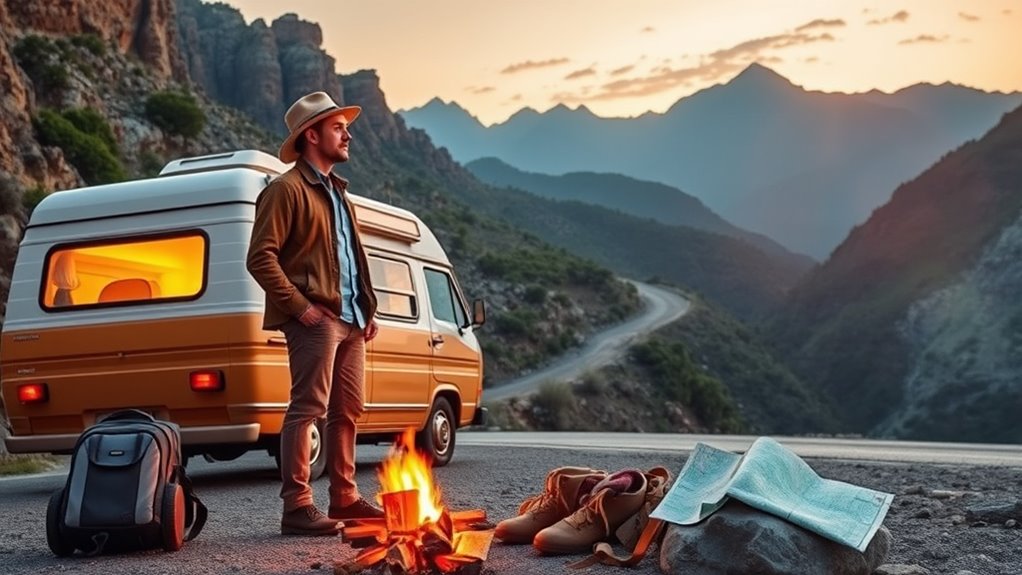
Ensure your vehicle is road-ready with regular maintenance and essential supplies for a safe solo journey.
Equally important is emergency preparedness. Pack a well-stocked emergency kit that includes essentials like bottled water, non-perishable snacks, a flashlight, first aid supplies, and a charged power bank for your phone. Keep a physical map or an offline GPS device handy, even if you rely on digital maps, because cell service can be spotty in remote areas. Make sure someone you trust knows your route and expected arrival times, and check in regularly. Planning for emergencies means more than just packing supplies; it involves knowing what to do if you encounter car trouble, accidents, or other unforeseen issues. Familiarize yourself with basic roadside assistance procedures and keep emergency numbers saved in your phone. Regular vehicle maintenance and a properly stored emergency kit are key to handling unforeseen challenges safely.
When it comes to safety, trust your instincts. If a situation or location feels off, don’t hesitate to change plans or seek help. Always park in well-lit, populated areas and lock your vehicle when you’re away. Keep your valuables out of sight to avoid attracting unwanted attention. Stay alert while driving, avoiding distractions and taking regular breaks to stay refreshed. Staying prepared with vehicle maintenance and emergency supplies allows you to focus on enjoying your trip without unnecessary stress. It’s about creating a safety net that enables you to explore new places confidently.
Ultimately, your solo road trip should be an adventure filled with discovery, not worry. By taking the time to maintain your vehicle and prepare for emergencies, you’re setting yourself up for a smoother journey. With the right precautions, you can embrace the freedom of the open road, meet interesting people along the way, and create unforgettable memories. Remember, being prepared isn’t just about avoiding problems; it’s about empowering yourself to enjoy every mile with confidence and peace of mind.
Frequently Asked Questions
What Essential Documents Should I Carry for a Solo Road Trip?
You should carry your driver’s license, vehicle registration, and proof of insurance, including travel insurance if available. Keep a copy of your emergency kit, which includes first aid supplies and essential tools, in your car. It’s also wise to have your ID, credit cards, and any necessary permits or maps. Being prepared with these documents makes certain you’re ready for emergencies and can enjoy your solo adventure confidently.
How Do I Handle Vehicle Breakdowns or Emergencies Alone?
Imagine your vehicle is a trusted friend; when it stalls unexpectedly, stay calm and assess the situation. You should have basic emergency preparedness, including a roadside kit and knowledge of simple vehicle repair. If you’re alone, call roadside assistance or use your phone to find help nearby. Remember, staying composed and prepared turns a breakdown into just another part of your adventure, not a crisis.
What Are the Best Apps for Safety and Navigation on a Solo Trip?
You should use apps like Google Maps or Waze for navigation, and Download safety apps like Noonlight or Life360 for real-time alerts. Always have your travel insurance info handy and set emergency contacts in your phone. These tools help you stay aware of your surroundings, navigate confidently, and get help quickly if needed, making your solo trip safer and more enjoyable.
How Can I Find Reliable Accommodation Options While Traveling Solo?
Imagine arriving in a new city and finding a cozy, highly-rated guesthouse through trusted online reviews. To find reliable accommodation options, always check local lodging options and read recent online reviews to gauge safety and quality. Use reputable booking platforms, look for verified guest feedback, and consider location convenience. This way, you guarantee a comfortable stay that’s well-suited to your needs, making your solo trip safer and more enjoyable.
What Strategies Help Avoid Loneliness During Long Solo Drives?
To avoid loneliness during long solo drives, you can join group activities or events at your destination to meet new people. Use social apps to connect with fellow travelers or locals interested in meeting up. Listening to podcasts or audiobooks also keeps you engaged. Planning regular breaks to explore or chat with others helps break the monotony and keeps your mood upbeat, making your journey more enjoyable and less lonely.
Conclusion
As you hit the open road solo, remember that the best connections often come when you least expect them. With your careful planning and safety tips in mind, you’ll find that adventure and new friendships can happen just around the next bend. Sometimes, the most memorable moments come from unexpected encounters—like a stranger sharing a sunset or a spontaneous chat at a roadside diner. Trust the journey, and let the road surprise you.