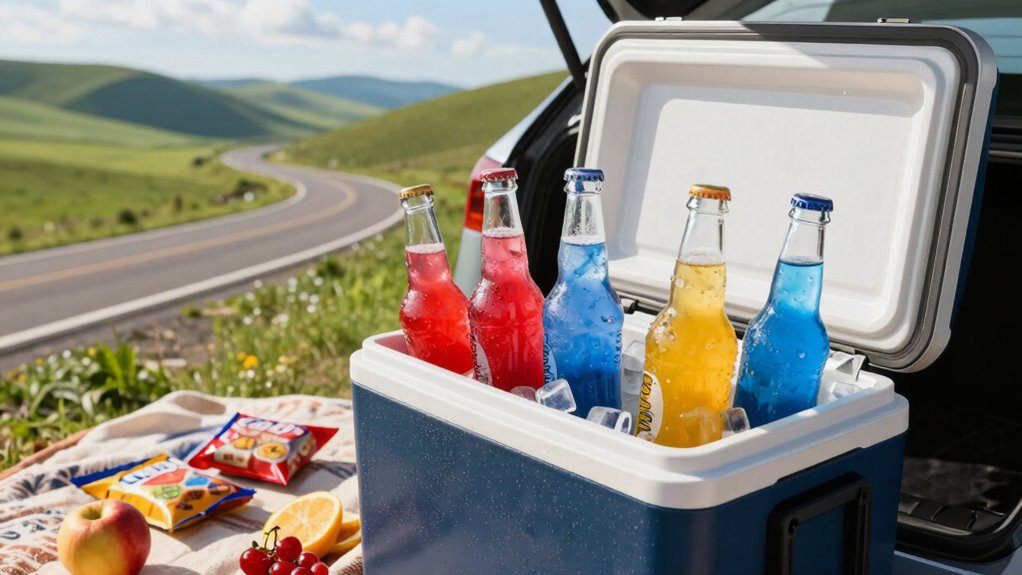

To make summer road trips less chaotic, organize your cooler with layered insulation and ice packs at the top and sides to create a cold barrier. Use stackable, airtight containers for food, pre-chilled if possible, and keep raw meats separate. Limit openings to maintain temperature and replenish ice packs as needed. Tightly seal the lid to preserve cold. Keep these tips in mind, and you’ll discover even more ways to stay cool on your journey.

Get travel and outdoor gear delivered free with Prime
- Fast, free delivery on millions of items
- Prime Video, Amazon Music and more included
- Member-only deals all year
Key Takeaways
- Use ice packs strategically placed at the top and sides to create a uniform cold barrier and slow warming.
- Organize items in stackable, airtight containers, grouping similar items to minimize rummaging and exposure.
- Pre-chill all items and ensure cooler insulation is high-quality for longer-lasting cold retention.
- Regularly replenish ice packs during the trip to maintain consistent temperatures and prevent spoilage.
- Keep the cooler lid tightly sealed and limit unnecessary openings to preserve cold air and reduce chaos.
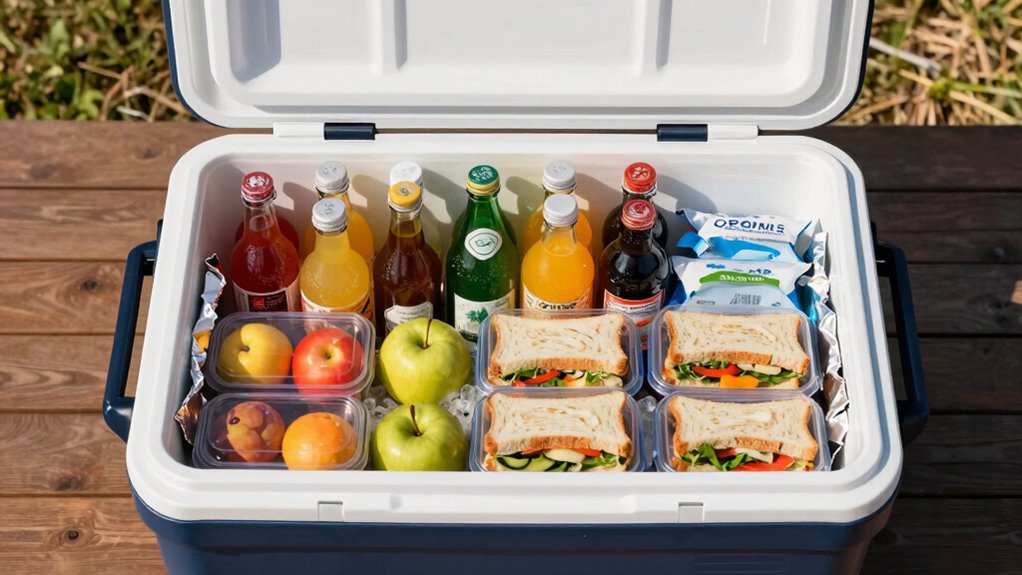
Have you ever wondered how to pack a cooler efficiently to keep your food and drinks cold for longer? It’s a common question, especially when you’re gearing up for a summer road trip. The secret lies in strategic ice pack placement and smart container organization. When you get these right, your cooler becomes a powerhouse of cold, and you can enjoy fresh snacks and chilled beverages throughout your journey.
Start by considering where to place your ice packs. Instead of tossing them randomly inside, position them at the very top and along the sides of your cooler. This creates a cold barrier that envelops everything inside. When you open the cooler, the cold stays contained longer because the ice packs act like a shield, slowing down the warming process. If you have multiple packs, spread them out evenly to avoid uneven cooling. The goal is to create a consistent temperature throughout. Keep the heaviest items at the bottom, where they won’t crush delicate foods, and place items that need to stay cold but aren’t as fragile near the ice packs. This way, the cold air circulates more efficiently, extending the freshness of your perishables.
Position ice packs at the top and sides to create a cold barrier, ensuring even cooling and longer freshness inside your cooler.
Container organization is just as crucial. Use stackable, airtight containers for your food, and try to keep similar items together. For example, group drinks in one section, snacks in another, and perishable foods in a dedicated area. When everything is organized, you don’t have to rummage through the cooler, which minimizes warm air entering each time you open it. Remember to pre-chill all items before packing. Cold food and drinks help maintain the cooler’s overall temperature, reducing the workload on your ice packs. Also, keep raw meats separate from ready-to-eat foods to prevent cross-contamination. Proper cooler insulation can also greatly enhance cooling efficiency by reducing heat transfer into the cooler. Choosing a cooler with high-quality insulation can significantly extend the time your items stay cold. Using a cooler with good insulation is a wise investment for longer trips.
To further boost efficiency, line the cooler with a layer of ice or frozen gel packs at the bottom before adding your containers. This initial cold boost helps keep things chilly longer. As the trip progresses, replenish the ice packs as needed—preferably with frozen packs rather than loose ice, which can melt quickly and cause a mess. Additionally, selecting a high-quality cooler with superior insulation can make a notable difference in maintaining optimal temperatures. When you close the lid, make sure it’s sealed tightly to keep the cold in and warm air out. Regularly checking your cooler packing formula can help you optimize your approach for maximum freshness.
insulated cooler with high-quality insulation
As an affiliate, we earn on qualifying purchases.
As an affiliate, we earn on qualifying purchases.
Frequently Asked Questions
How Long Can Food Stay Fresh in the Cooler?
Food typically stays fresh in a cooler for about 24 to 48 hours if you maintain proper cooler maintenance. To maximize food preservation, keep your cooler tightly sealed and chilled with plenty of ice or ice packs. Avoid opening it frequently to prevent temperature fluctuations. Remember, the colder and more consistent the temperature, the longer your food stays fresh and safe during your trip.
What Types of Coolers Are Best for Long Trips?
For long trips, you need a cooler that’s practically a fortress—think heavy-duty, rotomolded models with superior insulation. These coolers excel at temperature control, keeping your food icy for days on end. Prioritize coolers with excellent cooler maintenance features like secure seals and sturdy latches to prevent warm air from sneaking in. This way, your snacks stay fresh, and your drinks stay cold no matter how long the road.
How Should I Organize Snacks for Easy Access?
To organize snacks for easy access, focus on snack compartmentalization by dividing treats into separate containers or sections. Prioritize accessibility by placing popular or frequently eaten snacks in the top or front of the cooler, so you don’t have to dig through everything. Use clear containers or labels to quickly identify what you want. This way, you keep snacks organized and within reach, making your road trip smoother and more enjoyable.
Can I Pack Ice or Use Ice Packs Effectively?
You can pack ice or use ice packs effectively by placing them strategically in your cooler, especially near perishable items. If you want ice alternatives, try frozen water bottles or reusable gel packs—they double as drinks later. Use cooling techniques like stacking items to maximize cold retention and keeping the cooler in the shade. These methods help maintain a low temperature longer, ensuring your snacks and drinks stay fresh throughout your trip.
How Do I Prevent Leaks and Spills During Travel?
To prevent leaks and spills during travel, focus on temperature control and container sealing. Use airtight containers that seal tightly, and double-bag items prone to leaks. Keep liquids at ideal temperatures to minimize expansion and pressure buildup, which can cause spills. Additionally, pack heavier items on the bottom and avoid overfilling containers. Properly sealed, temperature-controlled containers help keep your cooler organized, safe, and leak-free throughout your trip.
stackable airtight food containers for cooler
As an affiliate, we earn on qualifying purchases.
As an affiliate, we earn on qualifying purchases.
Conclusion
Now that you’ve got the cooler packing formula down, your summer road trips will run smoother than a well-oiled engine. Think of your cooler as a carefully curated garden, each item placed just right to flourish and stay crisp. With this plan, chaos melts away like ice on a hot day, leaving you free to enjoy the journey. Embrace the method, and watch your adventures flow seamlessly, turning every trip into a revitalizing breeze of fun.
As an affiliate, we earn on qualifying purchases.
cooler organizer with compartments
As an affiliate, we earn on qualifying purchases.
As an affiliate, we earn on qualifying purchases.
Halloween Picks
halloween
As an affiliate, we earn on qualifying purchases.