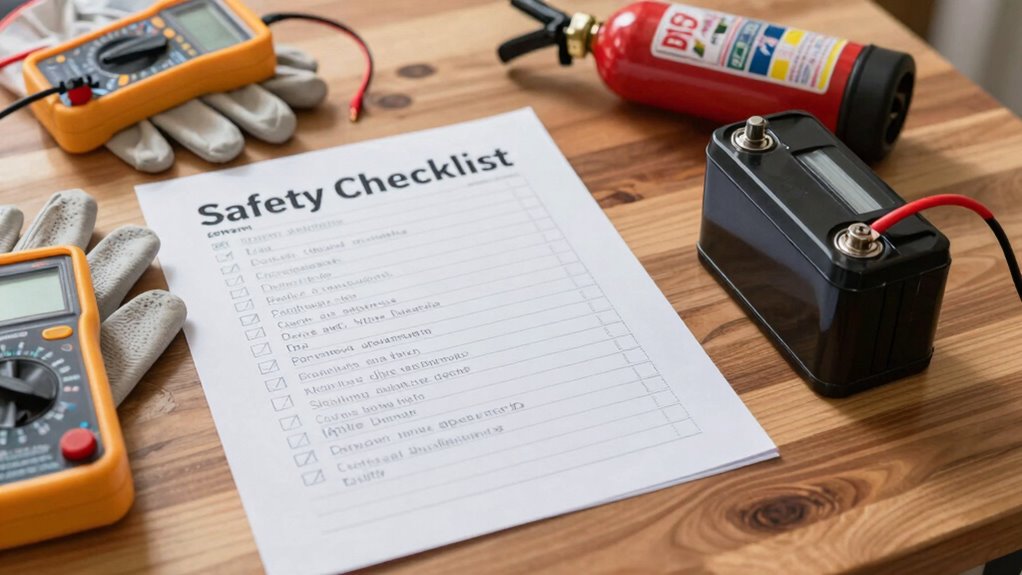

Before you hit the road with a 12V lithium battery, make certain you check for physical damage like swelling, cracks, or corrosion, and disconnect the battery from devices if needed. Store it properly in a cool, dry place, and secure it firmly in your vehicle to prevent movement. Use compatible chargers, install proper fuses, and keep fire safety equipment nearby. Staying vigilant and following safety steps will help prevent risks and extend your battery’s lifespan—continue with this guide to learn more essential safety tips.
Key Takeaways
- Inspect batteries for physical damage, swelling, corrosion, or leaks before use.
- Store in a cool, dry place and disconnect from devices when not in use.
- Use compatible chargers and avoid overcharging to prevent thermal runaway.
- Securely mount batteries with proper wiring and protective fuses for safe transport.
- Keep a fire extinguisher nearby and know emergency procedures for battery fires.
What Are the Main Safety Risks of 12V Lithium Batteries on the Road?
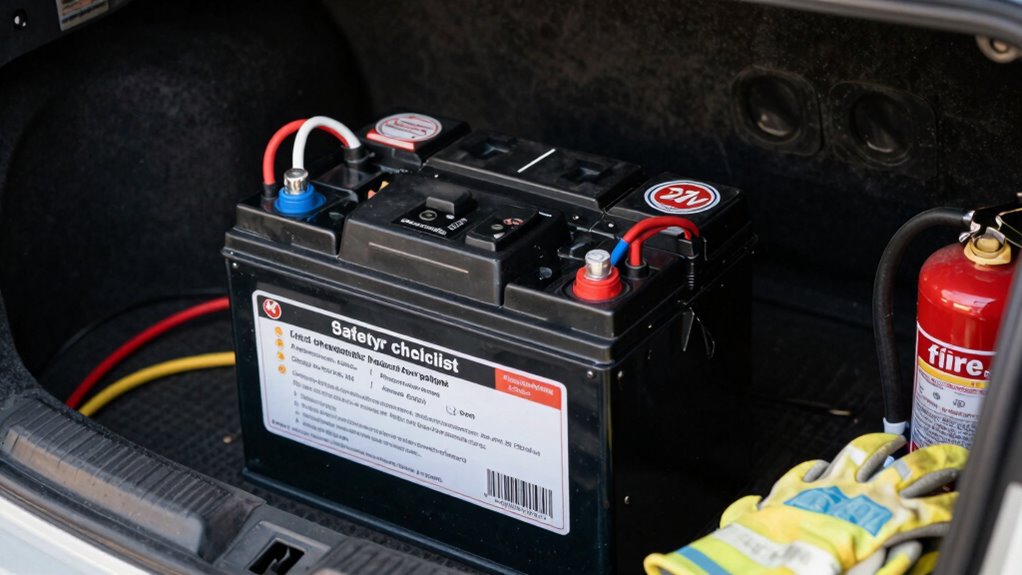
While 12V lithium batteries are widely used for their efficiency and portability, they pose several safety risks when on the road. One major concern is the potential for thermal runaway, which can cause fires if the battery is damaged or improperly handled. Ensuring proper charger compatibility is essential; using the wrong charger can lead to overcharging or overheating. Additionally, battery recycling is necessary for safety and environmental reasons—discarding batteries improperly can lead to chemical leaks or fires. It’s important to inspect your battery regularly for damage or swelling and to store it in a cool, dry place. Proper storage techniques are also crucial to minimize risks and extend the lifespan of your battery. Being aware of the comprehensive safety considerations can help prevent accidents, ensuring your safety and that of others during your travels. Always stay informed about the specific safety risks associated with lithium batteries to respond effectively in emergency situations.
How to Handle and Store Your Lithium Battery Safely Before Travel

Proper handling and storage of your 12V lithium battery before travel can considerably reduce safety risks. Always store the battery in a cool, dry place away from flammable materials, and keep it upright to prevent leaks. Follow the manufacturer’s charging protocols to avoid overcharging or undercharging, which can cause damage or safety hazards. Before packing, disconnect the battery from devices and ensure it’s at a partial charge—usually around 50%—to prolong its lifespan. If you need to dispose of the battery, follow proper battery recycling procedures to prevent environmental harm and potential safety issues. Never store a damaged or swollen battery, and always transport it in a protective case to avoid accidental short circuits. Additionally, understanding solar system safety can help prevent accidents related to battery handling during travel. Properly managing filter sizing/flow can also ensure your battery operates efficiently and safely during use. Being familiar with protocols for safe handling can further reduce risks during transportation and storage. Implementing storage guidelines based on current safety standards can enhance overall safety measures. These steps help guarantee safe handling and storage before hitting the road.
How to Inspect Your Battery for Damage and Wear
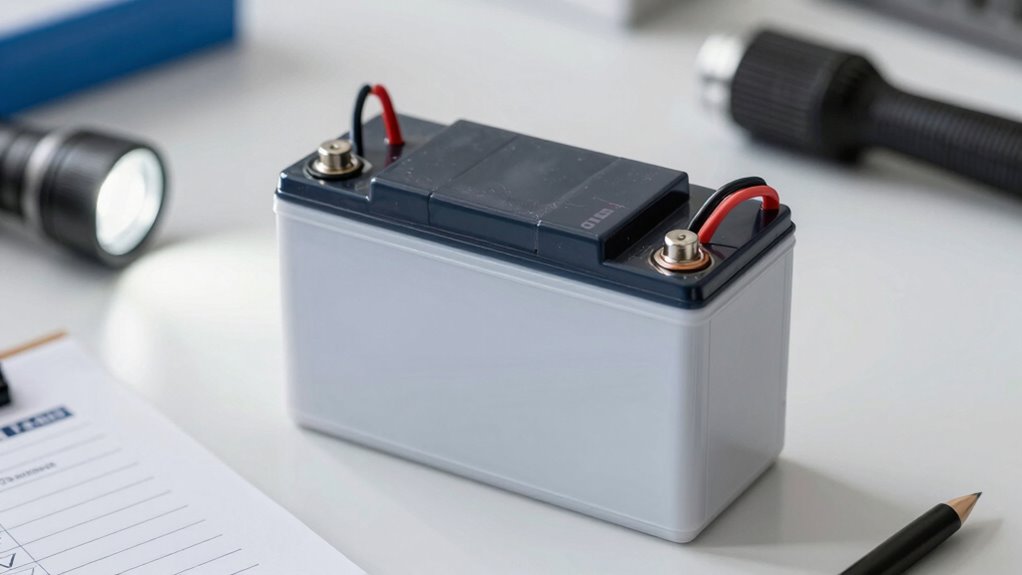
Begin by carefully inspecting your battery for any visible damage, such as cracks, dents, or bulges. Next, look closely for signs of corrosion around the terminals or connectors. Addressing these issues early helps guarantee your battery stays safe and reliable. Additionally, ensure that your battery is free from damage indicators that could compromise its performance. Regularly checking the battery’s capacity can also help you detect potential issues before they become serious. It’s also important to verify that your battery is properly secured and mounted, as loose connections can cause performance problems and safety hazards. Always verify that your charger settings are correct to prevent overcharging or undercharging, which can lead to battery damage. Incorporating support networks for new fathers can also help you stay informed about proper maintenance and safety practices, ensuring your battery remains in optimal condition.
Visual Damage Inspection
Inspecting your 12V lithium battery for damage and wear is a crucial step in ensuring its safe operation. Carefully examine the case for cracks, dents, or bulges, which could indicate internal damage. Look for any leaks, corrosion, or discoloration, as these signs suggest issues needing immediate attention. Damaged batteries should be properly recycled or disposed of to prevent hazards. Use the table below as a quick reference:
| Damage Signs | Action Needed |
|---|---|
| Cracks or dents | Replace and recycle safely |
| Bulges or swelling | Discontinue use, battery disposal |
| Leaks or corrosion | Handle with care, battery recycling |
| Discoloration or burns | Seek professional inspection |
| Unusual smell | Safely dispose of battery |
Regular visual checks keep you safe and protect the environment. Being aware of optical drives and enterprise USB backups can help you understand proper handling and storage of sensitive equipment, ensuring safety during maintenance or disposal. Additionally, understanding battery safety protocols can further prevent potential hazards during inspection and disposal, especially considering electrical safety standards for lithium batteries. Awareness of visual damage indicators is essential for early detection of issues that could lead to safety risks. Incorporating proper handling techniques can reduce the risk of accidental damage during inspection and disposal.
Check for Corrosion
Corrosion often appears as white, green, or bluish deposits on the battery terminals or connections. If you spot any, clean the corrosion carefully with a brush or a cloth dipped in a mixture of baking soda and water. Regular inspection prevents poor connections and possible safety hazards. Corrosion can also hinder battery performance and accelerate damage, so addressing it promptly is vital. Keep in mind, damaged or heavily corroded batteries should be properly disposed of to support battery recycling efforts and reduce environmental impact. Proper maintenance and recycling help ensure your lithium battery’s safety, longevity, and reduce ecological harm. Additionally, battery safety tips from trusted sources can help you maintain your battery’s integrity and safety over time. Understanding regional flavors and insights can also enhance your knowledge of proper storage and handling practices, especially if you’re in areas with specific environmental conditions. Being aware of the power output of electric dirt bikes can further inform your understanding of battery requirements and safety considerations in high-performance models. Regularly inspecting for signs of battery degradation can help prevent unexpected failures during your rides, and staying alert to potential corrosion risks can save you from costly repairs or replacements.
How to Properly Wire and Install Your Lithium Battery
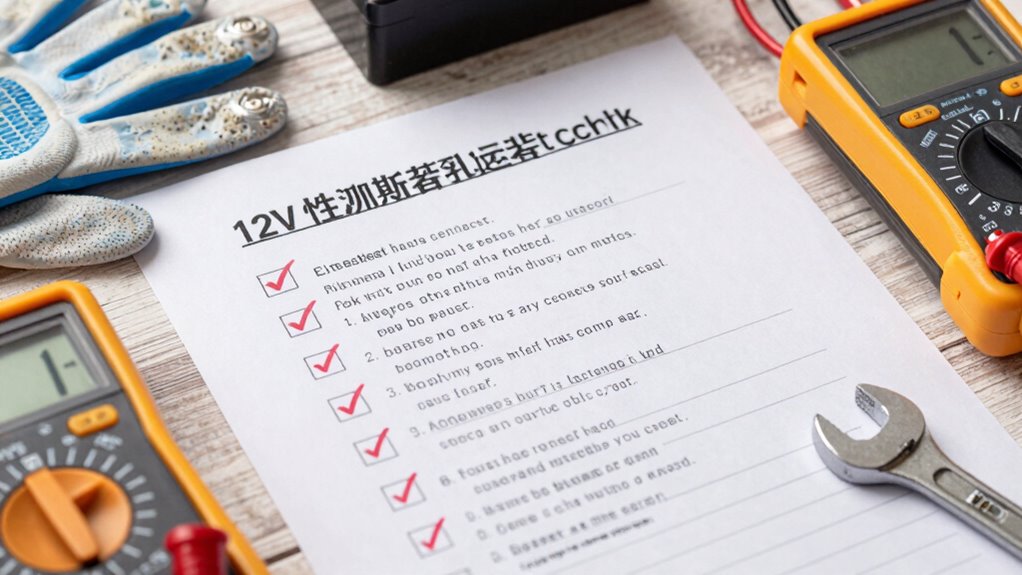
To guarantee safe wiring and installation, you need to follow correct wiring techniques and connect everything properly. Make certain your battery is securely mounted to prevent movement or damage during use. Always double-check your connections and follow proper procedures to avoid short circuits or other hazards. Additionally, ensure that your wiring is properly insulated to prevent heat buildup and reduce the risk of toxic fumes in case of a fire cable safety.
Correct Wiring Techniques
Proper wiring is essential to guarantee your lithium battery operates safely and efficiently. Use thick, insulated wires to prevent overheating and assure a solid connection. Always connect the positive terminal first, then the negative, following proper charging protocols. Use appropriate fuses or circuit breakers to protect against overloads. Avoid mixing incompatible components to facilitate battery recycling later. Here’s a visual:
| Step | Action |
|---|---|
| 1 | Connect positive terminal |
| 2 | Attach negative terminal |
| 3 | Install protective fuse or breaker |
This setup minimizes risks and helps maintain battery health. Proper wiring also secures safe disconnection, making battery recycling easier when it’s time. Follow manufacturer instructions meticulously to prevent sparks or shorts, keeping your journey safe and your battery in top shape.
Secure Mounting Methods
Ensuring your lithium battery is securely mounted is essential for safe operation and longevity. You should use sturdy brackets or mounts designed for your battery’s size and weight, preventing movement during transit. Proper mounting minimizes vibrations and reduces the risk of damage. Make sure wiring is routed neatly and secured to avoid accidental disconnections or shorts. Follow recommended charging protocols to prevent overcharging, which can compromise battery safety and lifespan. When disposing of or recycling your battery, adhere to proper battery recycling procedures to protect the environment and prevent hazards. Regularly inspect mounting points and wiring connections, ensuring everything remains tight and secure. A well-mounted battery reduces safety risks, extends its service life, and ensures reliable performance on the road.
Proper Connection Procedures
When wiring your lithium battery, it’s essential to follow correct connection procedures to guarantee safety and peak performance. Always connect the positive terminal first, then the negative, to prevent sparks. Use proper gauge wiring to handle the current load and avoid overheating. Make certain all connections are tight and secure, avoiding loose contacts that can cause shorts or fires. Verify charger compatibility before connecting it to the battery to prevent overcharging or damage. Proper connection also means thinking about future maintenance; plan for battery recycling when the unit reaches the end of its life. Using the right tools and following manufacturer instructions minimizes risks. Remember, correct wiring not only keeps you safe but also prolongs your battery’s lifespan and ensures reliable operation on the road.
Tips for Securing Your Battery in Your Vehicle or Gear
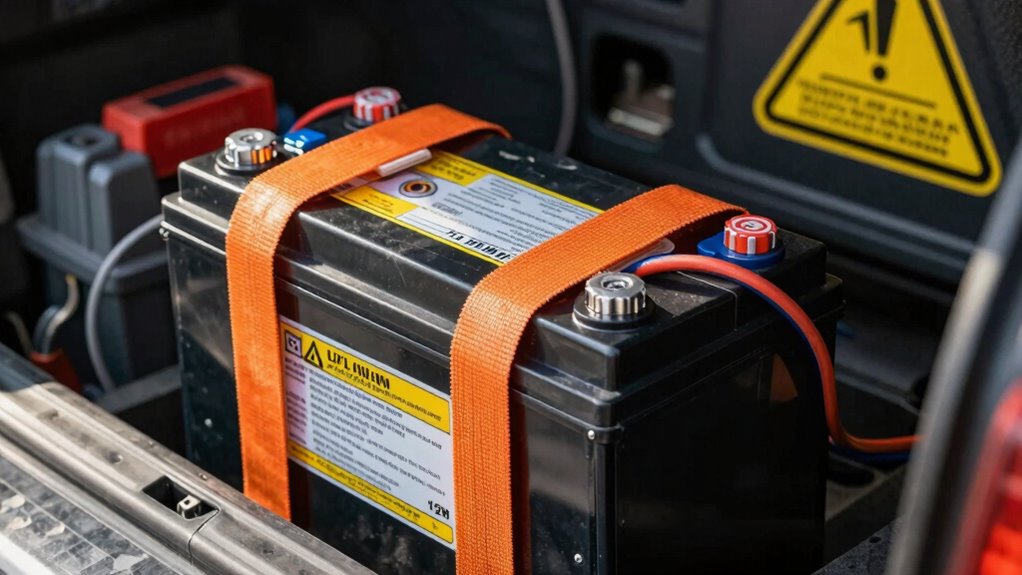
Securing your 12V lithium battery in your vehicle or gear is essential to prevent movement and potential damage during use or transit. Use sturdy straps or brackets designed for battery safety to keep it firmly in place. Properly securing the battery minimizes risks of accidental disconnection or physical damage, which could lead to malfunctions or safety hazards. Additionally, make certain the battery is stored in a well-ventilated, dry area to prevent overheating. When not in use, follow charging precautions, such as avoiding overcharging and disconnecting the battery if long-term storage is planned. Remember to dispose of old batteries responsibly through proper battery recycling channels to protect the environment. Proper securing and handling help maintain battery safety and longevity during your travels.
What Emergency Plans Should You Have for Battery Fires or Malfunctions?
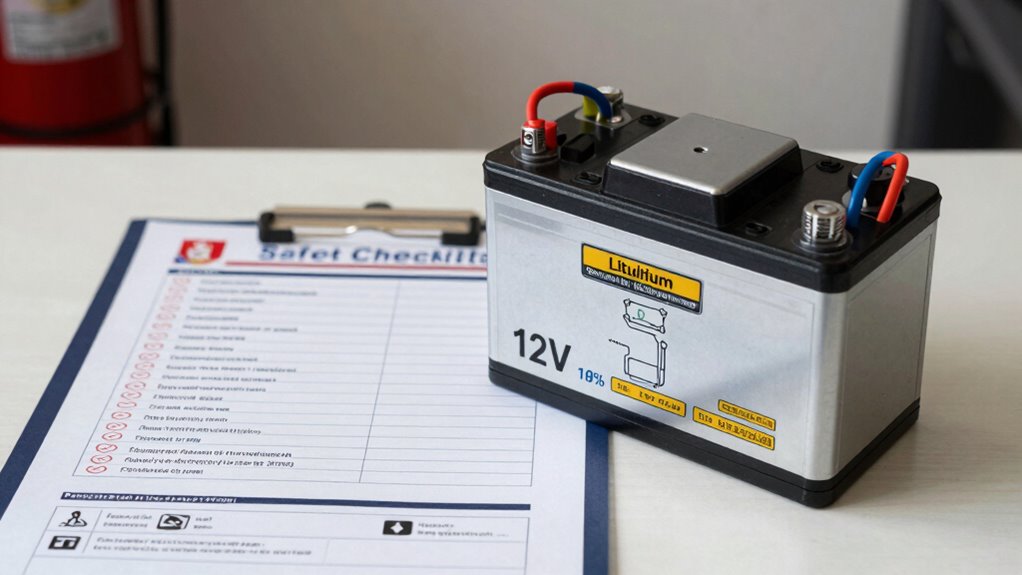
Having a clear plan in place for battery fires or malfunctions can prevent chaos and minimize damage. Your emergency response should include knowing how to quickly disconnect the battery to cut power and prevent further issues. Keep a fire extinguisher rated for electrical or battery fires nearby, and guarantee everyone knows how to use it safely. Fire prevention measures, like proper ventilation and avoiding overcharging, also reduce risks. Regularly check for signs of damage or swelling, and have a plan to evacuate the area if a fire starts. By preparing these steps beforehand, you can act swiftly and confidently, limiting harm and ensuring safety during an emergency. Being proactive with your emergency plans keeps you and your environment protected.
How to Maintain Your Lithium Battery for Safety and Longevity
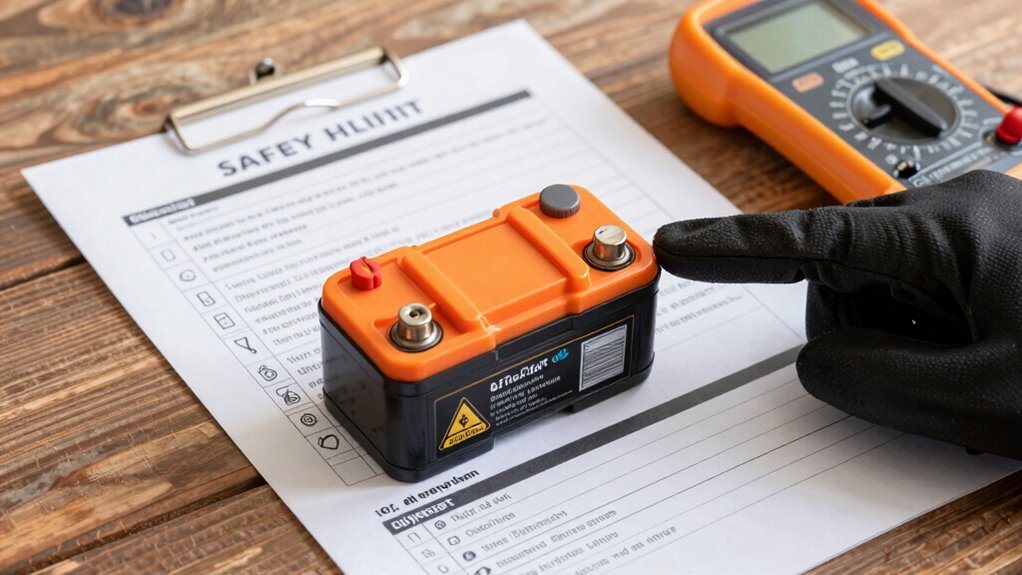
Proper maintenance is essential to keep your lithium battery safe and extend its lifespan. Regularly inspect the battery for any signs of damage or corrosion, and keep terminals clean and tight. Avoid overcharging or deep discharging, as these practices can reduce battery life. When your battery reaches the end of its life, prioritize responsible battery recycling to prevent environmental harm. Don’t fall for lithium battery myths that suggest more frequent replacements are better; instead, focus on proper upkeep. Store your battery in a cool, dry place when not in use, and follow manufacturer guidelines for charging and maintenance. Proper care not only enhances safety but also ensures your lithium battery performs reliably for years.
Final Safety Checklist Before Hitting the Road
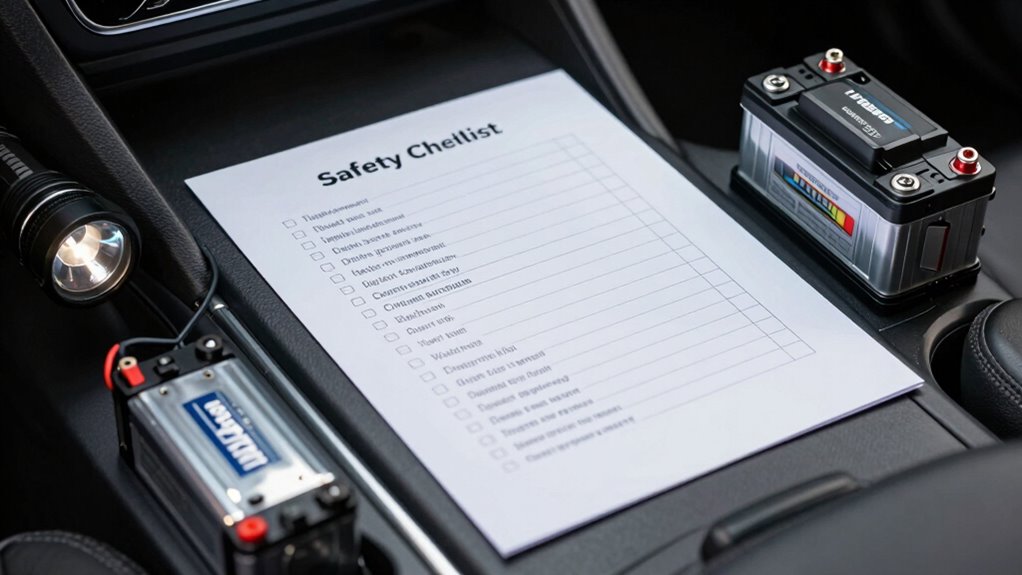
Before hitting the road, it’s crucial to perform a final safety check on your 12V lithium battery to prevent any issues during your trip. Confirm the battery is properly secured and connections are tight to avoid short circuits. Check for any signs of damage or swelling, and verify that your charging safety measures are in place—use approved chargers and avoid overcharging. Remember, responsible battery recycling is essential once your battery reaches the end of its life; never discard it improperly. Also, confirm the vents are unobstructed to prevent overheating.
| Checkpoint | Action |
|---|---|
| Secure connections | Tighten all terminals |
| Visual inspection | Look for damage or swelling |
| Charging safety | Use proper chargers, avoid overcharge |
| Battery recycling | Plan for proper disposal when needed |
Frequently Asked Questions
Can I Use Any Charger for My 12V Lithium Battery?
You can’t just use any charger for your 12V lithium battery. Make certain the charger is compatible with lithium batteries to avoid damage. Using an incompatible charger could harm your battery’s lifespan and safety. Always check the charger’s specifications and verify it matches your battery’s voltage and current requirements. Proper charger compatibility helps maintain battery health, prolongs lifespan, and keeps you safe on the road.
How Often Should I Perform Safety Inspections on My Battery?
You should perform safety inspections on your battery regularly, ideally every few months or after significant charging cycles. Frequent checks help extend its lifespan and prevent issues like corrosion or damage. Monitor for swelling, leaks, or loose connections. By staying proactive, you guarantee your battery remains safe and reliable, especially after numerous charging cycles. Consistent inspections help catch problems early, keeping your battery functioning at its best for as long as possible.
Are There Specific Signs Indicating My Battery Is Unsafe?
If your battery shows signs like overheating or voltage irregularities, it’s a warning sign that something’s wrong. You might notice it gets unusually hot, or the voltage fluctuates unexpectedly. These signs act like a siren in your mind, alerting you to potential danger. Don’t ignore these signals—check your battery immediately, and if problems persist, replace or service it to guarantee your safety on the road.
What Insurance Coverage Is Recommended for Lithium Battery-Related Incidents?
You should get liability coverage that specifically includes lithium battery-related incidents to protect yourself financially. It’s also wise to confirm your policy covers emergency response costs, like fire or spill cleanup, which can be costly with lithium batteries. This coverage guarantees you’re prepared for potential accidents, giving you peace of mind while traveling. Always discuss these details with your insurance provider to make sure you’re fully protected on the road.
How Do Weather Conditions Affect Battery Safety During Travel?
Weather conditions markedly impact your lithium battery’s safety during travel. Extreme temperatures, both hot and cold, can cause temperature effects that lead to battery malfunctions or damage. High heat increases the risk of thermal runaway, while cold weather can reduce performance or cause charging issues. Always monitor weather impact, store your battery in a temperature-controlled environment, and avoid exposing it to severe weather to guarantee safe and reliable operation on the road.
Conclusion
Before you hit the road, remember—your 12V lithium battery isn’t just a power source; it’s a potential powerhouse of chaos if mishandled! Follow these safety tips meticulously to prevent disasters that could turn your adventure into a fiery inferno or battery meltdown. Stay vigilant, stay prepared, and treat your battery like the ticking time bomb it could be—because safety isn’t just a checklist, it’s your ultimate shield against catastrophe on wheels!