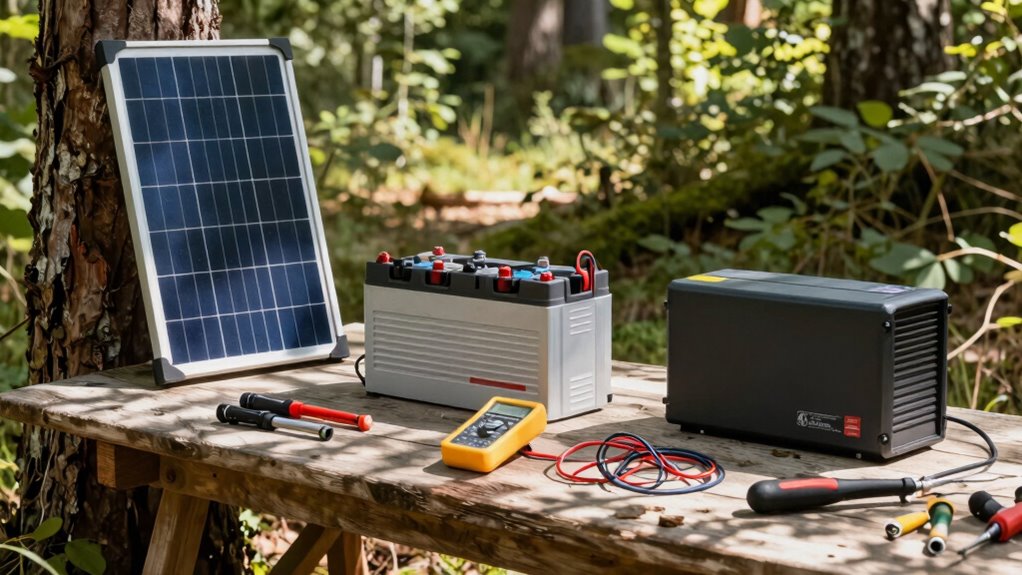

To build a simple off-grid power plan, start by calculating your daily energy needs for appliances, lighting, heating, and cooling, making sure you include all household demands. Next, choose the right components like solar panels, batteries, and an inverter based on your calculated usage, and consider sunlight hours and panel placement for maximum efficiency. Regular maintenance and proper sizing prevent overspending and guarantee reliable power. Keep exploring to discover detailed steps for a successful setup.

Get travel and outdoor gear delivered free with Prime
- Fast, free delivery on millions of items
- Prime Video, Amazon Music and more included
- Member-only deals all year
Key Takeaways
- Calculate your total daily energy requirements for all appliances, lighting, heating, and cooling needs.
- Assess available sunlight hours to determine the number and placement of solar panels.
- Choose appropriate battery storage based on your excess energy needs and maintenance preferences.
- Select quality inverters and system components to ensure efficiency and reliability.
- Regularly inspect, clean, and maintain system components to optimize performance and longevity.
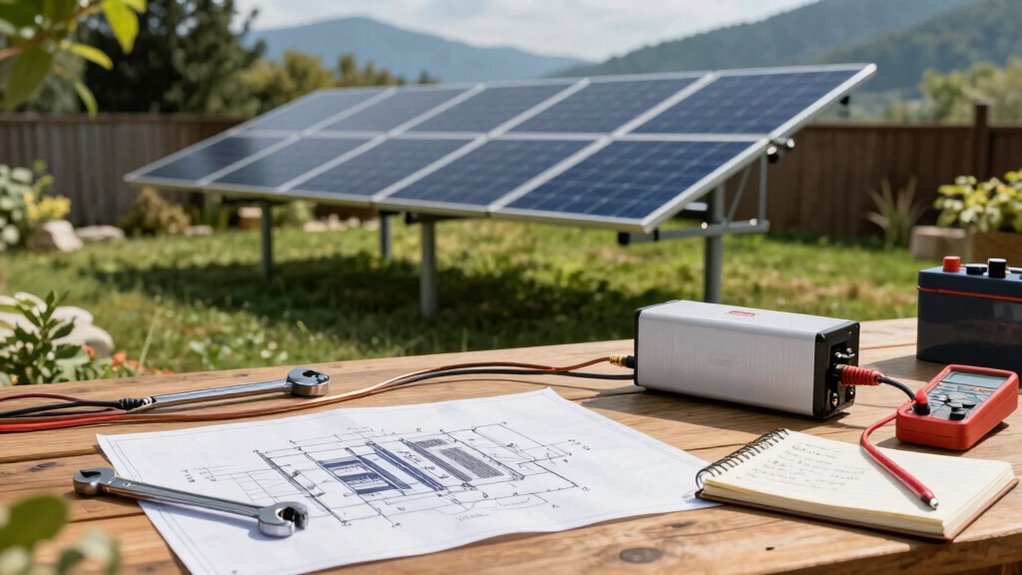
Thinking about living off the grid? Before you buy anything, it’s vital to develop a simple, practical power plan that suits your needs. The first step is understanding your energy requirements. Calculate how much power you use daily, considering appliances, lighting, heating, and cooling. This gives you a clear idea of the size and capacity of the system you need. Once you know your energy consumption, you can start exploring the main components: solar panels, batteries, and inverters.
Assess your daily energy needs to build a reliable, tailored off-grid power system.
Solar panel maintenance is straightforward, but it’s important to keep your panels clean and free of debris to maximize efficiency. Regularly inspect your panels for dirt, dust, or snow, and gently clean them with water and a soft cloth if needed. Avoid harsh chemicals that could damage the surface. Remember, panels perform best when they’re unobstructed and angled toward the sun. As you plan your setup, consider your location’s sunlight hours throughout the year to determine the best number of panels. Too few, and you’ll struggle to generate enough power; too many, and you might overspend on equipment you don’t need.
Next, focus on battery storage options. Batteries are the backbone of your off-grid system, providing power when the sun isn’t shining. You’ll need to choose between different types like lead-acid or lithium-ion batteries, each with its pros and cons. Lithium-ion batteries tend to last longer and charge faster but come with a higher upfront cost. Lead-acid batteries are more affordable but require more maintenance and have a shorter lifespan. Whichever you choose, guarantee your batteries have enough capacity to store excess energy generated during sunny periods for use during cloudy days or at night. Proper battery management is vital to prolong their life, so invest in a good battery management system and keep terminals clean and tight. Additionally, understanding solar power systems can help you optimize your setup for better efficiency and longevity.
It’s also helpful to familiarize yourself with off-grid power systems to better understand how to balance your energy production and consumption effectively. Keep in mind that solar panel efficiency can vary based on location, angle, and weather conditions, which impacts your overall system performance.
Finally, don’t forget about the inverter, which converts DC power from your batteries into AC power usable by your appliances. When selecting an inverter, size it according to your peak power demand to avoid overloads. As you assemble your system, prioritize quality and reliability; cheap components may save money upfront but could lead to costly repairs or replacements later. Building your off-grid power plan involves careful calculation, regular maintenance, and thoughtful choices in batteries and panels. It’s a rewarding process that, once set up correctly, can provide you with clean, independent energy for years to come.
solar panel kit for off-grid home
As an affiliate, we earn on qualifying purchases.
As an affiliate, we earn on qualifying purchases.
Frequently Asked Questions
How Much Does an Off-Grid Power System Typically Cost?
An off-grid power system usually costs between $10,000 and $30,000, depending on your energy needs. You’ll need to take into account battery storage costs and inverter selection, which greatly influence the total price. Smaller systems for minimal use are cheaper, while larger setups for more power require a bigger investment. Planning carefully helps you balance your budget with your energy requirements, ensuring reliable off-grid power without overspending.
Can I Expand My System Later if Needed?
Yes, you can expand your off-grid power system later. Focus on system scalability by choosing a larger inverter and additional battery capacity upfront, even if you don’t need them immediately. This way, you can easily add more batteries for increased battery expansion and power output as your energy needs grow. Planning for scalability guarantees your system remains flexible and efficient, saving you time and money in future upgrades.
What Are the Maintenance Requirements for Off-Grid Systems?
You need to regularly check your batteries to guarantee their longevity, avoiding deep discharges and maintaining proper charge levels. Keep your inverter clean and free from dust, and periodically inspect wiring and connections for corrosion or wear. Monitoring system performance helps catch issues early. Proper maintenance extends your system’s lifespan, ensures efficiency, and minimizes downtime. Staying proactive with these tasks keeps your off-grid system running smoothly and reliably.
How Do I Choose the Best Location for Solar Panels?
You should choose a location for your solar panels with ideal panel placement in mind, ideally facing south (or north if you’re in the Southern Hemisphere) for maximum sunlight exposure. Avoid shading concerns from trees, buildings, or other obstructions throughout the day. Clear, unobstructed spaces provide the best panel placement, ensuring your system captures the most sunlight and generates ample power for your off-grid needs.
What Backup Options Are Recommended for Cloudy Days?
On cloudy days, you should rely on backup options like a well-sized battery bank with good management. Proper battery management guarantees you store excess energy during sunny periods for later use, maintaining your power supply. To enhance weather resilience, consider adding a generator or hybrid system that kicks in when solar output drops. This combination keeps your off-grid setup reliable and efficient, even in less sunny conditions.
deep cycle lithium-ion batteries
As an affiliate, we earn on qualifying purchases.
As an affiliate, we earn on qualifying purchases.
Conclusion
Now that you know how to create a simple off-grid power plan, you’re ready to take control of your energy needs. Imagine a small cabin in the woods, powered entirely by solar panels and a battery system you’ve set up yourself. By understanding your consumption and choosing the right components, you can enjoy reliable, eco-friendly energy without the grid. Start planning today—you’ll be surprised how achievable off-grid living truly is.
As an affiliate, we earn on qualifying purchases.
As an affiliate, we earn on qualifying purchases.
Halloween Picks
halloween
As an affiliate, we earn on qualifying purchases.