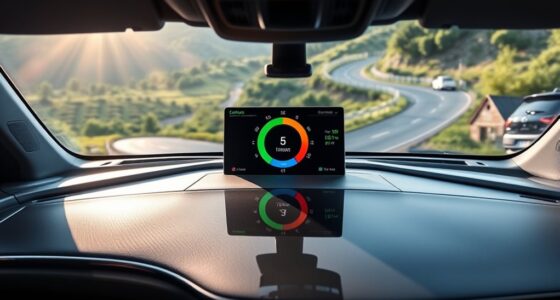

To figure out how much power you’ll need for a weeklong road trip, first list your essential devices like phones, GPS, and cameras, then estimate how much energy each uses daily. Consider portable chargers, solar panels, or backup batteries to stay powered on the go. Manage your device settings to conserve battery life, and have backup options ready. For a detailed plan on estimating and managing your energy needs, keep exploring the info below.
Key Takeaways
- Estimate total daily energy consumption of essential devices like phones, GPS, and cameras, then multiply by seven days.
- Use device wattage and usage hours to calculate total energy needs, ensuring sufficient battery capacity.
- Incorporate portable power banks and backup batteries for continuous power, especially in remote areas.
- Utilize renewable energy sources like solar panels or solar chargers to supplement power during travel.
- Prioritize power management by turning off unused devices, adjusting settings, and scheduling charges to extend battery life.
Calculate Your Power Needs for the Road Trip
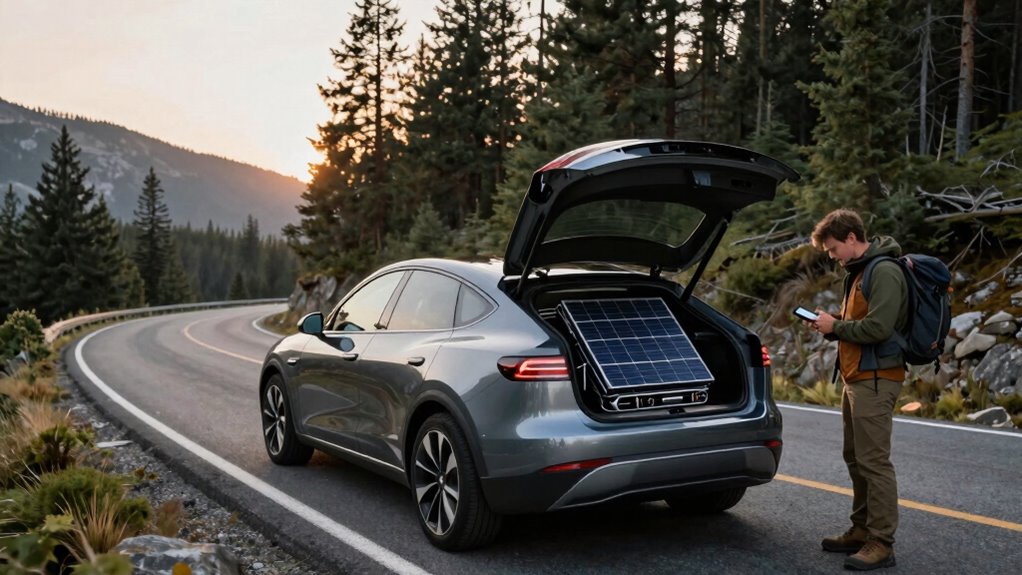
Before hitting the road, you need to determine how much power you’ll require for your weeklong trip. Start by listing essential devices and estimating their daily energy use. Consider portable generators as a reliable power source, especially if you’re staying in areas without grid access. Solar panels can also help supplement your power needs, especially when parked in sunny locations. Calculate the total wattage each device consumes and multiply by the hours you’ll use them daily. This will give you a clear idea of your total energy requirements. Keep in mind, portable generators provide steady power, while solar panels depend on sunlight. Balancing these sources guarantees you won’t run out of power and can enjoy your trip without interruptions. Additionally, using power quality monitoring devices can help ensure your setup remains efficient and safe throughout your journey. Being aware of energy management strategies can further optimize your power usage and extend your supplies during your trip. Proper planning for power consumption ensures you can sustain all necessary devices without overloading your system. Incorporating an understanding of system efficiency can help you maximize the use of your energy sources and reduce waste. Regularly assessing your battery capacity can also prevent unexpected power shortages during your travels.
What Devices Consume Power During Your Trip?
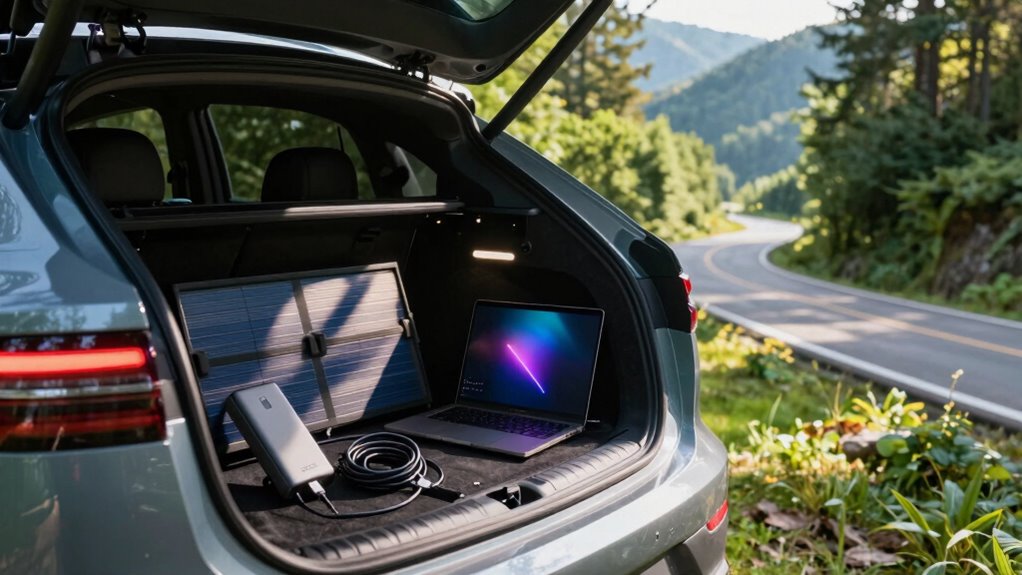
Ever wonder which devices will drain your power the most during your trip? Your smartphone, tablet, and navigation system are major culprits, constantly drawing energy from your batteries. Portable chargers and charging stations help, but they still require power sources, making energy management essential. Laptops and cameras also consume significant power, especially if used extensively. Even small devices like Bluetooth speakers and e-readers add up over time. To minimize reliance on grid power, solar panels can be a game-changer, converting sunlight into usable energy and keeping your devices topped off. Recognizing which devices consume the most power allows you to prioritize usage and plan accordingly, ensuring you have enough energy for the entire trip without running out at the worst moment. Proper energy management is crucial for a successful road trip, especially when off the grid. Additionally, understanding the power consumption of each device can help you make smarter choices about which gadgets to bring along. Incorporating cultural artifacts like Indonesian masks or Balinese decor can also inspire a mindful approach to what you pack, emphasizing quality and meaningful items over excess. Incorporating hydrating ingredients into your device usage habits can further extend battery life and improve overall efficiency, reducing unnecessary energy drain. Knowing the existential themes behind technology use can also inspire more mindful consumption and sustainable practices.
Choosing the Best Power Sources for Your Adventure
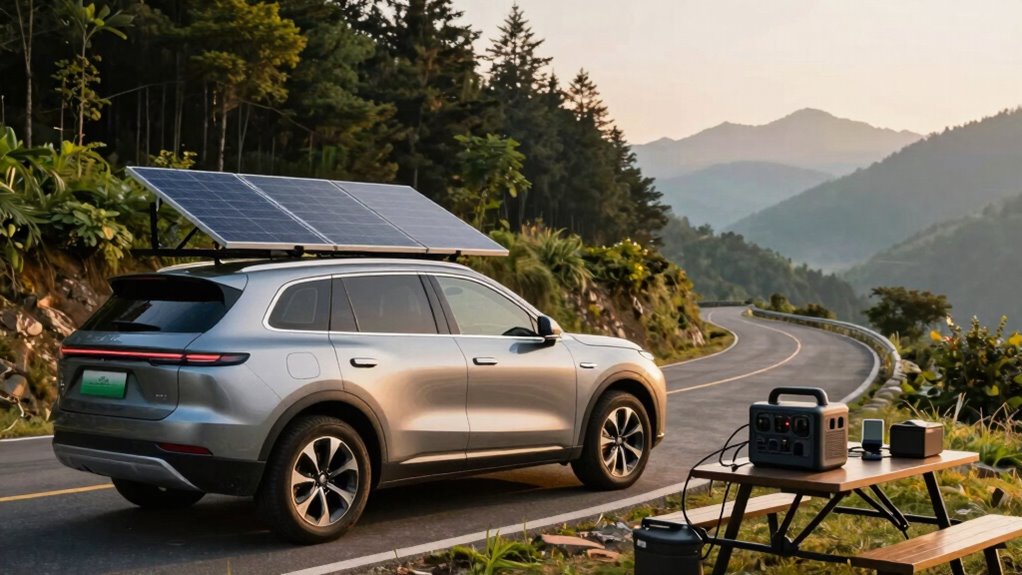
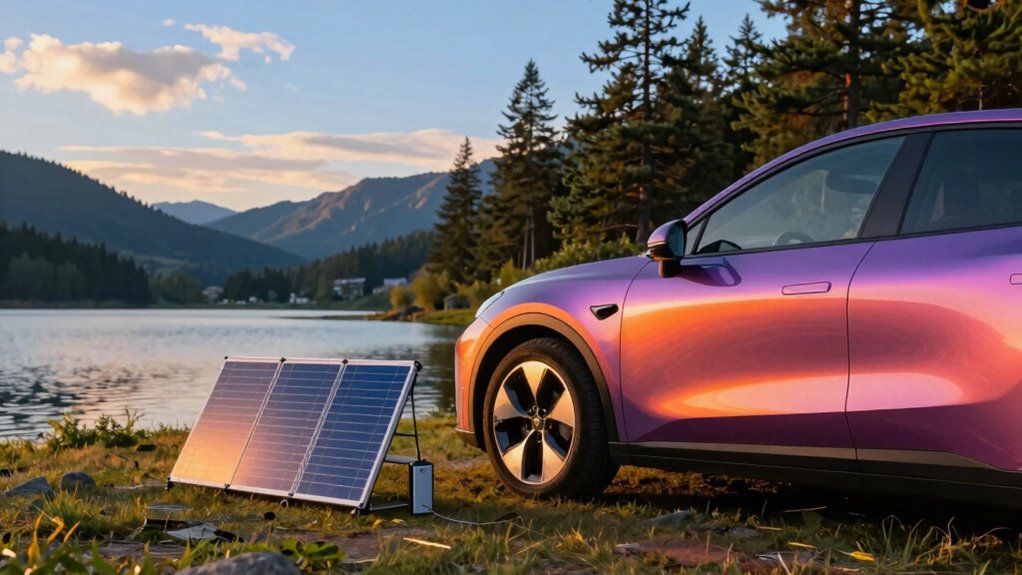
Choosing the right power sources can make or break your road trip experience, especially when you’re miles away from traditional outlets. Solar backups are a great eco-friendly option, harnessing sunlight to recharge your devices and batteries during the day. They’re lightweight, silent, and reliable in sunny conditions, making them ideal for remote adventures. Portable generators offer more power and can run larger appliances or multiple devices at once, but they’re heavier and noisier. When selecting between the two, consider your power needs, travel environment, and convenience. Solar backups excel for smaller electronics and steady recharging, while portable generators provide a backup for high-demand devices or extended off-grid stays. Combining both options can give you flexibility and peace of mind. Additionally, choosing solar panels and their applications that are durable and efficient ensures you get the most reliable power during your journey. Proper planning for power safety and system design can help prevent issues like overloads or malfunctioning, especially in remote locations. Understanding power management strategies can further optimize your energy use and extend your trip without interruptions. Incorporating energy storage solutions like batteries can also help balance your power consumption and provide energy during cloudy days or nighttime. Being aware of your power consumption habits can help you conserve energy and maximize your available resources.
Tips to Extend Battery Life and Save Power
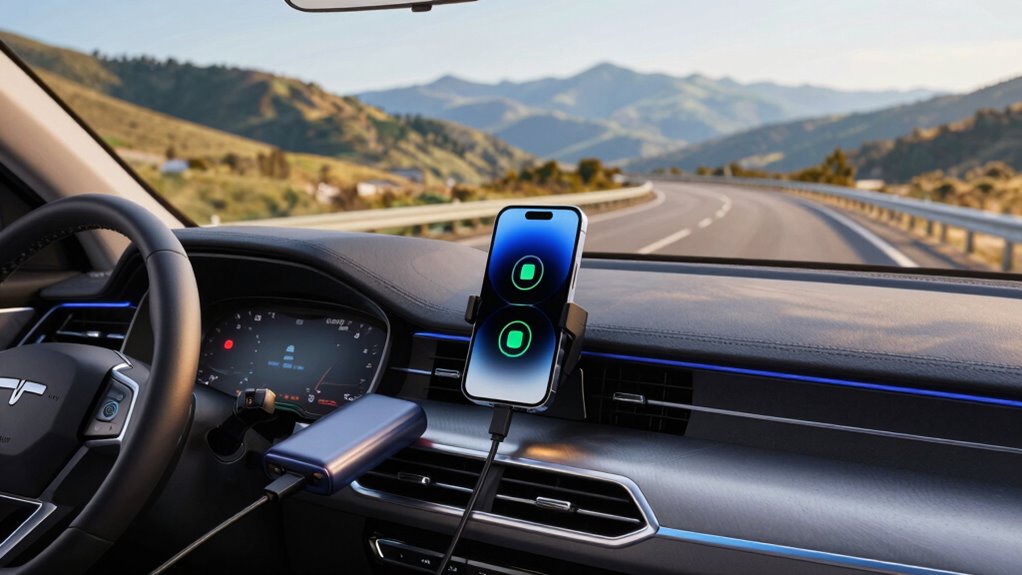
Maximizing your device’s battery life is essential when you’re off-grid for an extended period. To do this, focus on improving charging efficiency by using the right chargers and avoiding unnecessary power drain. Turn off apps and features like Bluetooth, Wi-Fi, and location services when not in use. Adjust screen brightness and enable power-saving modes to conserve energy. Consider investing in a portable solar panel, which can boost your power supply sustainably and reliably. Portable solar options help you harness sunlight to recharge devices during the day, reducing reliance on traditional power sources. Using outdoor cooking gear like solar-powered cookers can also complement your energy conservation efforts. Additionally, proper soundproofing techniques can minimize noise disturbance, helping you maintain a peaceful environment while conserving energy by reducing the need for additional electronic devices. By managing your device’s settings and using renewable energy solutions, you’ll extend battery life and make the most of your power resources throughout your trip.
What to Do When Power Runs Out Unexpectedly

What should you do when your device suddenly runs out of power in the middle of your trip? First, stay calm and assess your options. Emergency preparedness means carrying a portable charger or backup power bank, which can be lifesavers. Use power management strategies by turning off unnecessary apps or features to conserve remaining battery life. If you have access to vehicle power outlets, plug in your device to recharge temporarily. Remember, planning ahead with extra batteries or solar chargers can prevent these situations. Keep a list of nearby charging stations or cafes offering charging services. Staying prepared and managing your device’s power prudently ensures you’re not left stranded without access to maps or communication tools. Quick action can help you regain control and keep your trip on track. Additionally, exploring portable charging gear such as solar generators and portable power stations can be useful for packing extra batteries or supplies efficiently. Being familiar with electrical basics can also help you troubleshoot minor issues and maximize your available power. Moreover, understanding power consumption can help you identify which devices or features drain your battery the fastest and adjust accordingly.
Frequently Asked Questions
How Do Weather Conditions Affect My Power Requirements?
Weather conditions directly impact your power requirements by affecting your battery capacity and power efficiency. Hot weather can drain your battery faster and reduce efficiency, while cold weather might decrease your battery’s ability to hold a charge. Rain or snow can lead to additional energy use for heating and defrosting. To stay prepared, monitor weather updates and adjust your power needs accordingly, ensuring your devices stay charged throughout your trip.
Can Solar Panels Fully Power My Devices During the Trip?
You can rely on solar panels to fully power your devices, but it depends on battery capacity and charging efficiency. For example, if you have a high-capacity battery and efficient panels, even on cloudy days, your devices stay charged. However, if your battery is small or panels are inefficient, you might need extra power sources. Planning for varied weather guarantees your solar setup keeps your devices running smoothly throughout the trip.
What Safety Precautions Should I Take With Onboard Power Sources?
You should prioritize proper battery management and follow safety regulations when dealing with onboard power sources. Always check connections for damage, avoid overcharging, and use a surge protector to prevent electrical hazards. Keep batteries in well-ventilated areas and store them away from flammable materials. Regularly inspect your system, and make sure you’re familiar with safety guidelines to prevent accidents and maintain reliable power throughout your trip.
How Often Should I Check and Maintain My Power Equipment?
Think of your power equipment as a garden needing regular tending. You should check it weekly, looking for signs of wear and tear, to guarantee battery longevity and power optimization. Regular maintenance keeps your system running smoothly, preventing surprises that could drain your resources mid-journey. Just like nurturing a garden, consistent attention ensures your power stays healthy and reliable, ready to support your adventure every mile of the way.
Are There Portable Power Options Suitable for Extreme Outdoor Environments?
Yes, you can find portable power options suited for extreme outdoor environments. Rugged power banks and portable battery packs are designed to withstand harsh conditions like water, dust, and shocks. These devices often feature durable casings, high-capacity batteries, and solar charging capabilities, making them ideal for extended outdoor adventures. They guarantee you stay connected and powered up, even in the most challenging environments.
Conclusion
As you hit the open road, think of your power needs as the fuel guiding your journey. By planning wisely, you’ll keep your devices humming like a well-tuned engine, ready to explore every mile. Remember, a little foresight is like a trusty map—saving you from getting lost in the dark. With the right power sources and a smart strategy, your adventure will sail smoothly, leaving worries in the dust and making every moment shine brighter.