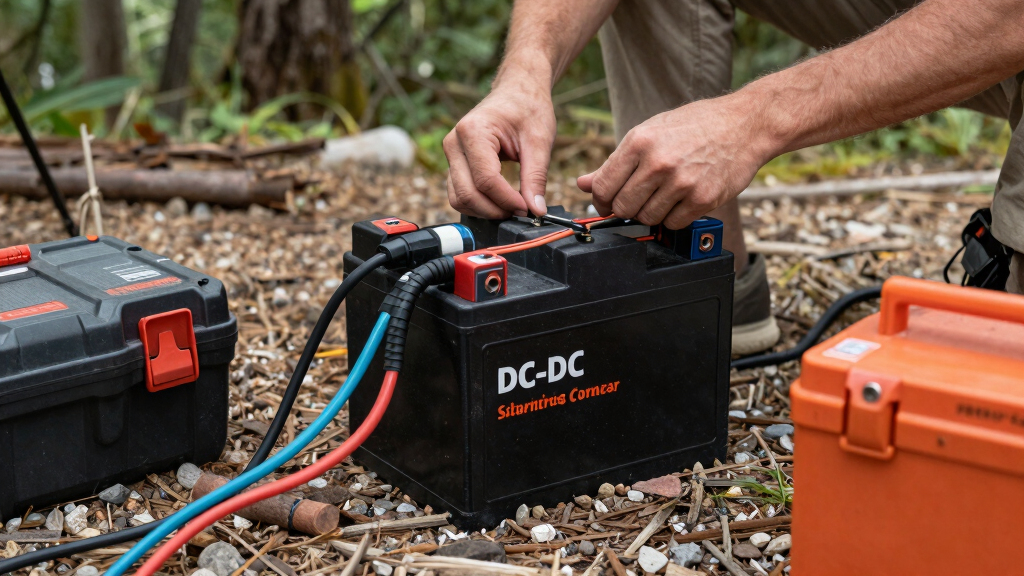

For off-grid road trips, choosing the right dc-dc charger can make the difference between reliable power and constant battery issues. The Renogy DC to DC Charger 12V 40A stands out as the overall best, offering multi-stage charging and Bluetooth connectivity for easy monitoring. The FOVAL 12V to 48V DC to DC Charger is a top choice for those needing ultra-fast charging across a wide voltage range, perfect for larger RV setups. Meanwhile, the ECO-WORTHY 12V 20A DC to DC Charger provides a budget-friendly option with MPPT efficiency for small to medium systems. The main tradeoffs revolve around power capacity, compatibility, and ease of use, which can influence the best fit for your off-grid needs. Continue reading for a detailed breakdown of these options and how they match different adventure profiles.
Key Takeaways
- Higher amperage chargers like the Renogy 40A model deliver faster, more robust power for larger off-grid systems.
- MPPT technology is a key feature for maximizing solar input efficiency, especially in variable sunlight conditions.
- Bluetooth or app connectivity simplifies monitoring but often adds to the cost and complexity.
- Compatibility with various battery chemistries (LiFePO4, AGM, Gel, Flooded) expands the charger’s versatility for different setups.
- Budget options like ECO-WORTHY offer solid performance but may lack some advanced features found in premium models.


More Details on Our Top Picks
Renogy DC to DC Charger 12V 40A – Multi-Stage Charger for LiFePO4, AGM, Gel, Flooded Batteries | Car, RV, Marine & Boat Battery Charger with Bluetooth Compatibility
This Renogy 12V 40A charger stands out for its sophisticated multi-stage charging, Bluetooth control, and seamless integration with various battery types, making it a top choice for off-grid travelers seeking precise battery management. Unlike the smaller Renogy 12V 20A model, it handles larger capacity batteries and offers Bluetooth connectivity for remote monitoring, but this added complexity could be overkill for casual users. Its intelligent alternator detection and multi-protection features deliver safety and efficiency, especially in marine or RV environments where heat and overload are concerns. The compact design simplifies installation, yet its higher power draw means it’s less suitable for small or low-capacity systems. Ideal for experienced off-grid enthusiasts who want detailed control and robust safety features. However, beginners or those with limited space should consider simpler options.
Pros:- Supports multiple battery chemistries with smart multi-stage charging
- Bluetooth compatibility for remote monitoring and control
- Built-in alternator detection prevents battery drain during engine shutdown
- Comprehensive electronic protections against overloads, short circuits, and heat
Cons:- Higher cost and complexity may overwhelm novice users
- Larger physical size and power consumption make it less suitable for small systems
Best for: Off-grid power users who need precise control over large battery banks and remote monitoring capabilities.
Not ideal for: Casual users or small-system setups where simplicity and ease of installation are more important than advanced features.
- Output Voltage:12V
- Current Rating:40A
- Battery Compatibility:LiFePO4, AGM, Gel, Flooded
- Bluetooth Control:Yes (via Renogy BT-2 Module)
- Protection Features:Overload, Short Circuit, Over-temperature, Over-voltage
- Size:Compact, wall-mount design
Bottom line: Best suited for seasoned off-grid travelers seeking detailed control and safety with large battery setups.
FOVAL 12V to 48V DC to DC Charger, 800W Ultra-Fast Battery Charger for LiFePO4, Lead-Acid, AGM, Gel, and Lithium – Multi-Stage Charging for RVs, CVS, Trailers, Boats and Trucks
This FOVAL 800W DC to DC charger is designed for quick, efficient charging, capable of replenishing 1kWh during a 75-minute drive, making it ideal for off-grid trips where time and energy efficiency matter. Compared to the more feature-rich Renogy 12V 40A, it emphasizes speed over extensive monitoring, lacking Bluetooth but excelling in fast, multi-stage charging with robust safety protections. Its compatibility with multiple battery types and high conversion efficiency (up to 99%) support a variety of off-grid setups. However, its fixed 15A current rating and limited remote control options mean it’s less flexible for complex systems. This pick makes the most sense for travelers prioritizing rapid recharge times and broad battery compatibility. Nevertheless, users seeking detailed data tracking or remote management should look elsewhere.
Pros:- Ultra-fast charging, replenishing 1kWh in 75 minutes
- Compatible with multiple battery chemistries including LiFePO4 and lead-acid
- High efficiency (up to 99%) for optimal energy use
- Multi-protection against overheating, overvoltage, and short circuits
Cons:- Limited remote monitoring and control features
- Fixed current rating of 15A may limit larger systems
Best for: Off-grid travelers needing fast, reliable recharging with diverse battery compatibility.
Not ideal for: Users who want extensive remote control, detailed data logging, or Bluetooth integration for monitoring.
- Output Voltage:48V
- Input Voltage:16V
- Power:800W
- Current Rating:15A
- Battery Types:LiFePO4, Lead-Acid, AGM, Gel
- Size:11.65″D x 6.5″W x 2.48″H
Bottom line: Great for those who need speed and broad compatibility over detailed management features.
ECO-WORTHY 12V 20A DC to DC Battery Charger with MPPT, Dual Input On-Board Battery Charger for Lead-Acid, LiFePO4 Battery, 16.4FT Cable for Switch Panel for RVs, Vehicles, Boats Solar System
This ECO-WORTHY 12V 20A charger excels in offering user-controlled activation—disengaging charging when the vehicle is off, which is critical for Lifepo4 systems avoiding overcharging. Compared to the Renogy 12V 20A model, it emphasizes manual control and safety, with a simple design that’s easy for DIYers and beginners. Its MPPT technology ensures high efficiency even in cloudy conditions, and the built-in protection safeguards against overvoltage, overcurrent, and temperature issues. However, this model requires manual activation via a Bluetooth module and lacks remote monitoring capabilities, which could be a drawback for those wanting real-time data. Its 20A capacity suits small to medium off-grid systems but may not handle larger batteries efficiently. This product makes sense for users who prioritize battery longevity and manual system control in off-grid setups. Those seeking automatic charging or remote diagnostics should consider other options.
Pros:- Manual on/off control for Lifepo4 battery protection
- High-efficiency MPPT technology for cloudy days
- Built-in protections against overloads and temperature
- Includes a long 16.4 ft cable for flexible installation
Cons:- Requires Bluetooth module and manual activation
- No remote monitoring or data logging features
Best for: Off-grid users who want precise control over charging times to protect Lifepo4 batteries and prefer manual activation.
Not ideal for: People seeking automated charging, real-time remote monitoring, or plug-and-play simplicity.
- Output Voltage:12V
- Current Rating:20A
- Protection Features:Overvoltage, Overcurrent, Over-temperature
- Input Compatibility:Dual (solar and alternator)
- MPPT:Yes
- Cable Length:16.4 ft
Bottom line: Ideal for off-grid users who need manual control and battery protection over advanced automation features.
Renogy DC to DC Charger 12V 20A – Multi-Stage Charger for LiFePO4, AGM, Gel, Flooded Batteries | Car, RV, Marine & Boat Battery Charger with Bluetooth Compatibility
This Renogy 12V 20A charger offers multi-stage charging, Bluetooth control (with the BT-2 module), and a straightforward setup, making it a solid choice for those new to off-grid systems. Compared to the 40A version, it’s more suited to smaller batteries and less complex setups, with enough features for most recreational RV or marine applications. Its built-in alternator detection and safety protections ensure reliable charging, although it lacks the speed and capacity of larger models. Bluetooth compatibility allows remote adjustment but requires an additional module, which adds cost. Its compact design makes installation easier for beginners but limits its use in larger, more demanding systems. This makes the most sense for small to medium off-grid setups where simplicity and connectivity are valued. For larger systems or faster charging, a higher-capacity model might be preferable.
Pros:- Multi-stage charging ensures battery health
- Bluetooth control via optional BT-2 module
- Compact and easy to install
- Built-in alternator detection for vehicle safety
Cons:- Limited to 20A current, unsuitable for large systems
- Bluetooth module sold separately, increasing overall cost
Best for: Beginners or small-system off-grid users who want reliable multi-stage charging with Bluetooth monitoring.
Not ideal for: Advanced users with large battery banks or high power demands requiring faster, higher-capacity chargers.
- Output Voltage:12V
- Current Rating:20A
- Bluetooth Control:Yes (via BT-2)
- Protection Features:Overload, Short, Over-temperature
- Size:Small, wall-mount
Bottom line: Best for small-scale off-grid setups needing reliable, connected charging without complexity.
RENOGY REGO 12V 20A DC-DC Battery Charger with LiFePO4 Activation, Waterproof Smart Battery Charger Compatibility with Flooded, Gel, AGM, and Lithium Batteries for RV Marine Truck All Weather
This RENOGY REGO 12V 20A excels in safety and user control, specifically designed to disengage charging when the vehicle is off, making it ideal for Lifepo4 systems that require careful management. Compared to the FOVAL 800W model, this charger emphasizes manual control over speed, providing peace of mind for sensitive batteries. Its waterproof design and activation feature make it perfect for all-weather use on RVs, boats, or trucks. However, it does lack remote monitoring and automation, which might be limiting for those who prefer real-time data or integration into smart systems. Its 20A capacity is suitable for small to medium setups but not for larger power banks. This is the best pick for users prioritizing battery longevity and manual operation in off-grid environments. For automation or remote diagnostics, other models would be more appropriate.
Pros:- Disengages charging when vehicle is off, protecting Lifepo4 batteries
- Waterproof and durable for all-weather conditions
- Compatible with multiple battery types including Lithium and Flooded
- Easy manual control for safety and longevity
Cons:- Requires Bluetooth module for activation, no native remote control
- Lacks real-time data logging or remote management features
Best for: Off-grid users wanting precise, manual control over Lifepo4 charging to maximize battery life and safety.
Not ideal for: Those seeking automatic, remote-controlled charging with extensive data tracking for large systems.
- Output Voltage:12V
- Current Rating:20A
- Waterproof:Yes
- Activation:Manual (via Bluetooth)
- Battery Compatibility:Flooded, Gel, AGM, Lithium
- Size:Small, waterproof
Bottom line: Ideal for users who value manual, safe charging control over automation in off-grid systems.
LiTime 12V 40A DC-DC Battery Charger with MPPT Solar Controller, Dual Input Smart Charger for 14.6V LiFePO4 Lithium Batteries, Fast Charging for RVs, Campers, Trailers, Solar, Home Backup and Off-Grid
This LiTime charger stands out for its all-in-one design, combining a high-efficiency MPPT solar controller with a smart dual-input charger capable of handling multiple battery chemistries. Compared with the Renogy 30A model, it offers slightly higher current output, which translates into faster recharge times for larger battery banks, but it trades some of Renogy’s advanced remote monitoring features for simplicity. The built-in reverse charging function is a major advantage in emergencies, reducing downtime when your starter battery fails. However, its lack of waterproofing makes it unsuitable for marine environments, a consideration if your off-grid setup involves boats or exposed outdoor locations. Overall, this charger is ideal for those seeking a straightforward, powerful, and flexible off-grid charger that simplifies solar and alternator integration while supporting lithium and lead-acid batteries.
Pros:- High 93% conversion efficiency with built-in MPPT solar controller
- Dual input for flexible solar and alternator charging
- Supports multiple battery types including LiFePO4, AGM, Gel, SLA
Cons:- Not waterproof, limiting outdoor or marine use
- Lacks advanced remote monitoring features found in some competitors
Best for: Off-grid enthusiasts who need reliable, fast charging from both solar and vehicle alternators in a variety of battery types.
Not ideal for: Marine users or those needing waterproof units, since this model isn’t rated for outdoor exposure or water contact.
- Output Voltage:12 Volts
- Input Voltage:12 Volts (DC)
- Current Rating:40 Amps
- Battery Compatibility:LiFePO4, AGM, Gel, SLA
- Charging Efficiency:Up to 93%
- Dimensions:7.44″D x 5.83″W x 1.89″H
Bottom line: Best for off-grid users prioritizing high power and flexibility in a compact, easy-to-install package.
Renogy DC to DC Charger with MPPT 12V 30A Multi-Stage Charging – Smart On-Board Battery Charger for Solar/Alternator Input – Charges Lithium AGM Gel Flooded Batteries in RVs Cars Marine
This Renogy 30A charger excels in tight spaces, thanks to its small footprint (under 10 inches in length) and robust construction, making it perfect for RVs, cars, or marine use. It offers three-stage charging with MPPT, enabling efficient solar energy harvesting and optimized battery health, similar to the LiTime but with a focus on durability and remote monitoring via Bluetooth and the Renogy app. Compared to the LiTime, it provides a 3-year warranty and an IP67 waterproof rating, which makes it suitable for outdoor marine environments but comes with a slightly lower current output, meaning longer charging times for large batteries. Its smart features help prevent over-voltage and reverse polarity issues, making it reliable in harsh conditions. This pick makes the most sense for those needing a compact, waterproof, and remotely monitored charger for off-grid or marine setups.
Pros:- Waterproof IP67 rating suitable for marine and outdoor use
- Compact size fits in tight installation spaces
- Remote monitoring via Bluetooth and Renogy app
Cons:- Lower maximum current (30A) compared to higher-capacity chargers
- Slightly longer charge times for large batteries
Best for: Boat, RV, or vehicle owners who need a compact, waterproof charger with remote monitoring capabilities.
Not ideal for: Users with large battery banks requiring faster charging, since the 30A current may be slow for high-capacity systems.
- Output Voltage:12 Volts
- Input Voltage:12 Volts (DC)
- Current Rating:30 Amps
- Battery Compatibility:Lithium, AGM, Gel, Flooded
- Protection Features:Over-voltage, Reverse Polarity, Over-Temperature
- Dimensions:9.6″D x 3″W x 5.7″H
Bottom line: Ideal for off-grid applications where space, water resistance, and remote monitoring are priorities over maximum charging speed.
How We Picked
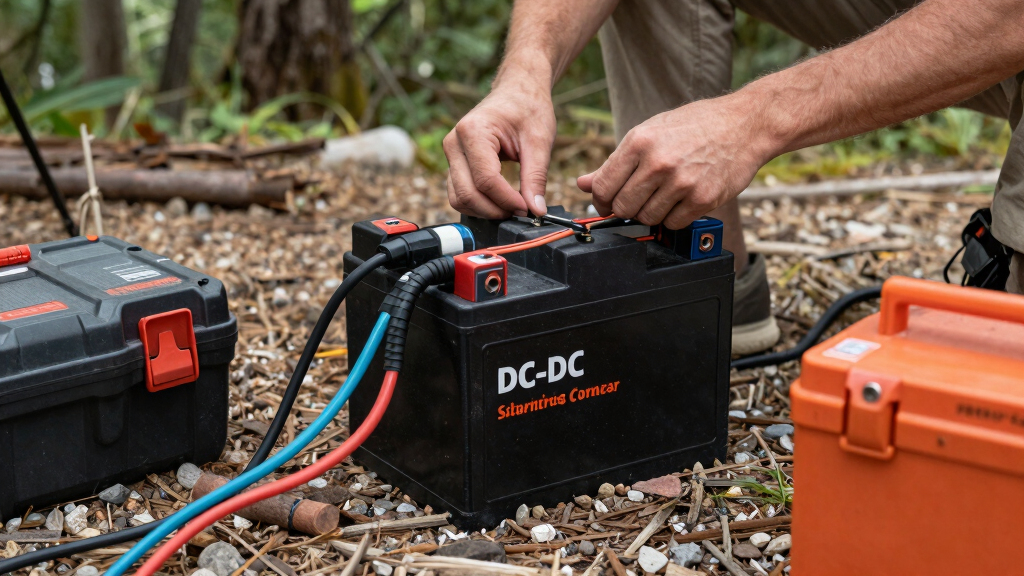
These products were evaluated based on performance, build quality, versatility, and ease of integration into off-grid systems. Priority was given to chargers that support multiple battery types, include advanced features like MPPT or Bluetooth, and have proven reliability in off-grid scenarios. Price-to-value ratio was also considered, ensuring options cater to different budgets without sacrificing core functionality. The ranking reflects a combination of power capacity, user-friendly features, and adaptability to various off-grid setups, helping buyers identify the best fit for their specific needs.Factors to Consider When Choosing Best Dc-dc Charger For Off-grid Road Trips
Choosing the best dc-dc charger for off-grid road trips involves balancing several key factors. Beyond basic compatibility, understanding how features like charging capacity, efficiency, and connectivity impact your setup can save you money and frustration. It’s also important to consider your system size, battery chemistry, and whether you prioritize ease of use or advanced customization. Making informed decisions ensures your off-grid power system remains reliable and efficient during your adventures.Power Capacity and Amperage
When selecting a dc-dc charger, the amperage rating determines how quickly your batteries will charge and how much power the system can handle. A charger with too low a current might prolong charging times unnecessarily, especially if you have a large battery bank. Conversely, an oversized charger can lead to wasted energy and unnecessary expense. Matching the charger’s capacity with your system size and power demands is essential for efficient off-grid operation.
Compatibility with Battery Types
Different batteries demand different charging profiles. Lithium iron phosphate (LiFePO4) batteries, for example, require specific voltage and current settings, which some chargers handle better than others. Ensuring the charger supports multiple chemistries or is specifically designed for your batteries adds flexibility and future-proofs your setup. Skipping this consideration may lead to reduced battery lifespan or inefficient charging.
Efficiency and Solar Compatibility
Efficiency, especially with MPPT (Maximum Power Point Tracking) technology, plays a critical role in harnessing solar energy effectively. Higher efficiency means more power from your solar panels reaches your batteries, vital in off-grid environments with limited sunlight. Cheaper chargers may lack MPPT or have subpar performance, wasting valuable energy. Investing in an efficient charger maximizes your solar input and reduces overall system costs.
Ease of Use and Monitoring
Features like Bluetooth, app connectivity, or digital displays simplify system management, which is especially useful during extended off-grid trips. These tools enable real-time monitoring of voltage, current, and system health, helping prevent issues before they become critical. However, added features can increase complexity and cost, so consider your comfort with tech and how much monitoring you need.
Build Quality and Durability
Off-grid environments demand rugged, weatherproof chargers that can withstand vibrations, moisture, and temperature fluctuations. Look for well-built units with adequate IP ratings and solid construction. While premium models often offer better durability, they come at a higher price. Balancing build quality with your environmental conditions and budget is key to long-term reliability.
Frequently Asked Questions
Can I use a dc-dc charger with both solar and alternator power?
Yes, many dc-dc chargers are designed to accept inputs from both solar panels and vehicle alternators, allowing seamless integration. This dual-input capability ensures your batteries are charged efficiently from multiple sources, which is particularly useful during off-grid trips. However, it’s important to verify that the charger supports your specific power sources and voltage ranges to prevent compatibility issues.
Is MPPT technology worth paying extra for in a dc-dc charger?
MPPT technology significantly enhances solar charging efficiency by continuously tracking the optimal voltage and current. This means you get more energy from your solar panels, especially in variable sunlight conditions. While MPPT chargers tend to cost more upfront, the increased energy harvest can justify the expense over time, especially in off-grid setups where maximizing solar input is critical.
How do I know if a dc-dc charger is compatible with my battery chemistry?
Compatibility depends on the charger’s ability to support different voltage profiles and charging algorithms specific to various battery chemistries like lithium, AGM, or flooded lead-acid. Many advanced chargers explicitly list supported chemistries, making it easier to choose one for your setup. Using an incompatible charger can reduce battery lifespan or cause inefficient charging, so always double-check the specifications before purchasing.
Should I prioritize high amperage or advanced features like Bluetooth in my charger?
It depends on your system size and monitoring needs. High amperage chargers are better suited for larger batteries or faster charging, which is essential for bigger off-grid systems. Advanced features like Bluetooth or app monitoring are more about convenience and system oversight, valuable in complex setups. For most off-grid users, a balanced approach that offers reliable power with some monitoring features tends to be ideal.
What maintenance is required for a dc-dc charger used off-grid?
Generally, dc-dc chargers require minimal maintenance, mainly ensuring they stay clean, dry, and free of corrosion. Periodic inspection of wiring and connections helps prevent issues caused by vibration or moisture. Checking for firmware updates or recalibrating settings (if applicable) can also improve performance. Investing in a durable, weatherproof model reduces ongoing maintenance needs and prolongs its lifespan.
Conclusion
For most off-grid travelers, the Renogy DC to DC Charger 12V 40A offers the best balance of power, features, and reliability, making it the ideal choice for larger systems or frequent off-grid use. The ECO-WORTHY 12V 20A is a solid pick for budget-conscious users with smaller setups. If you seek premium features and maximum solar efficiency, the LiTime 12V 40A DC-DC Charger stands out. Beginners or casual users will appreciate the simplicity of entry-level models, while seasoned off-grid enthusiasts should prioritize chargers with higher amperage and advanced monitoring. Matching your system size, budget, and environmental conditions will lead you to the best fit for your off-grid adventures.