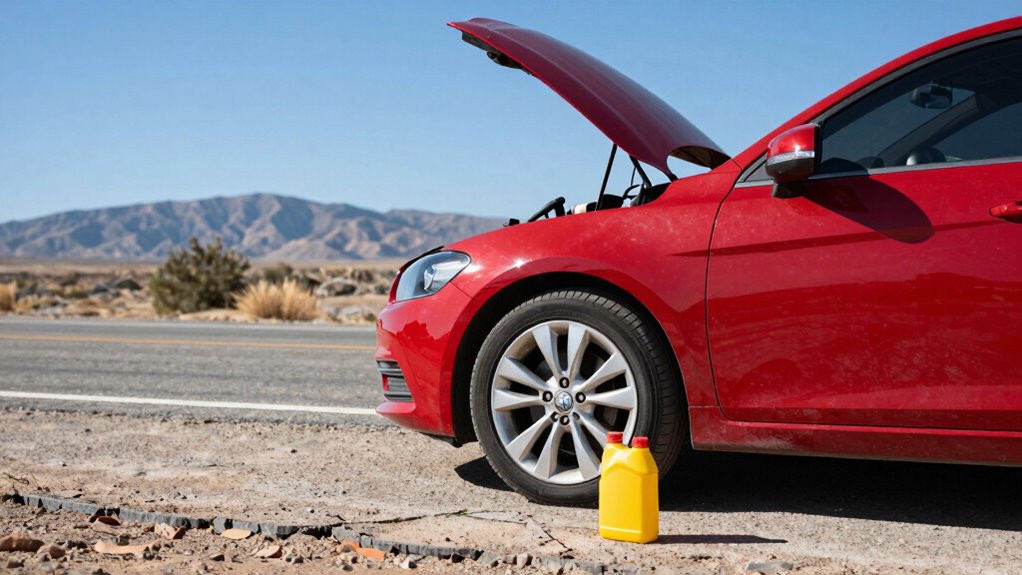

Your car can overheat during road trips if the cooling system has leaks, worn-out parts, or blockages that reduce coolant circulation. You might notice rising gauges, strange noises, or engine performance issues early on. When overheating strikes, safely pull over, turn off the engine, and pour water over the radiator if possible. Regular maintenance and quick fixes can help, but understanding more will keep your drives safer and more relaxed.

Get travel and outdoor gear delivered free with Prime
- Fast, free delivery on millions of items
- Prime Video, Amazon Music and more included
- Member-only deals all year
Key Takeaways
- Cooling system malfunctions, like leaks or cracks, reduce coolant circulation and cause engine overheating during long trips.
- Sudden temperature fluctuations or rising gauges indicate early signs of overheating needing immediate attention.
- Quickly pull over, turn off the engine, and pour water over the radiator to help cool down in an emergency.
- Regularly check coolant levels, inspect radiators, and keep cooling components clean to prevent overheating.
- Persistent high temperatures or engine issues require professional repair to avoid severe damage on road trips.
As an affiliate, we earn on qualifying purchases.
What Causes Car Overheating on Road Trips?
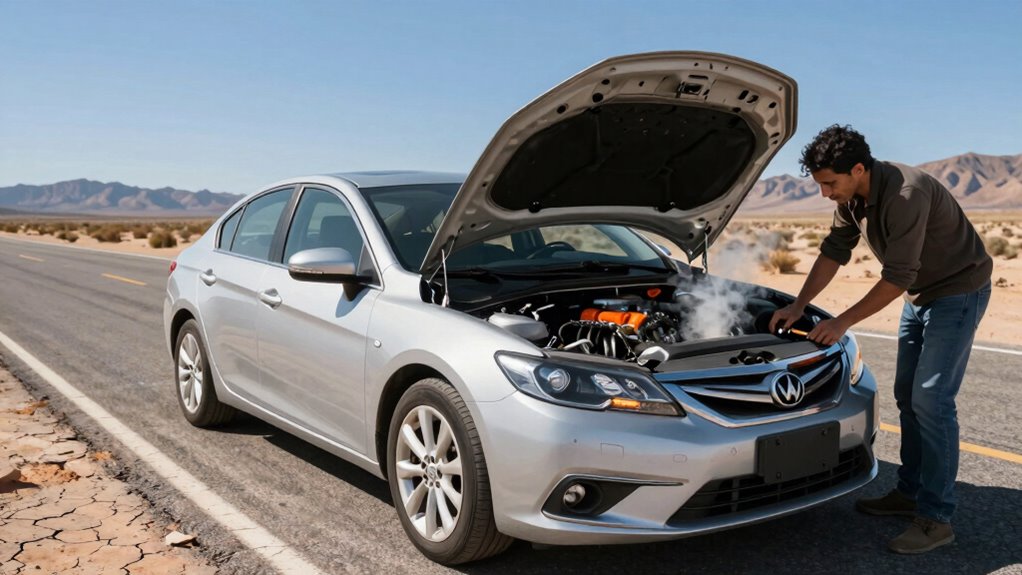
When your car starts to overheat on a road trip, it’s often because the cooling system isn’t working properly. A common cause is an issue with the engine block, which houses the coolant and helps keep the engine temperature in check. If the engine block develops cracks or leaks, it can cause the coolant to escape, leading to overheating. Radiator leaks are another frequent problem; they occur when the radiator develops holes or loose connections, allowing coolant to escape. Without enough coolant circulating through the engine and radiator, your car’s temperature rises rapidly. These issues disrupt the cooling process, making it essential to inspect the engine block and radiator for leaks before hitting the road, especially on long trips. Regular maintenance and inspections can help prevent these problems by ensuring all cooling components are functioning properly and properly calibrated cooling systems. Being aware of coolant levels and their importance can significantly extend the lifespan of your vehicle’s cooling system and improve safety during your journey. Additionally, understanding how coolant circulation works can help you diagnose potential issues early and avoid unexpected breakdowns.
As an affiliate, we earn on qualifying purchases.
How to Recognize the Early Signs of Overheating
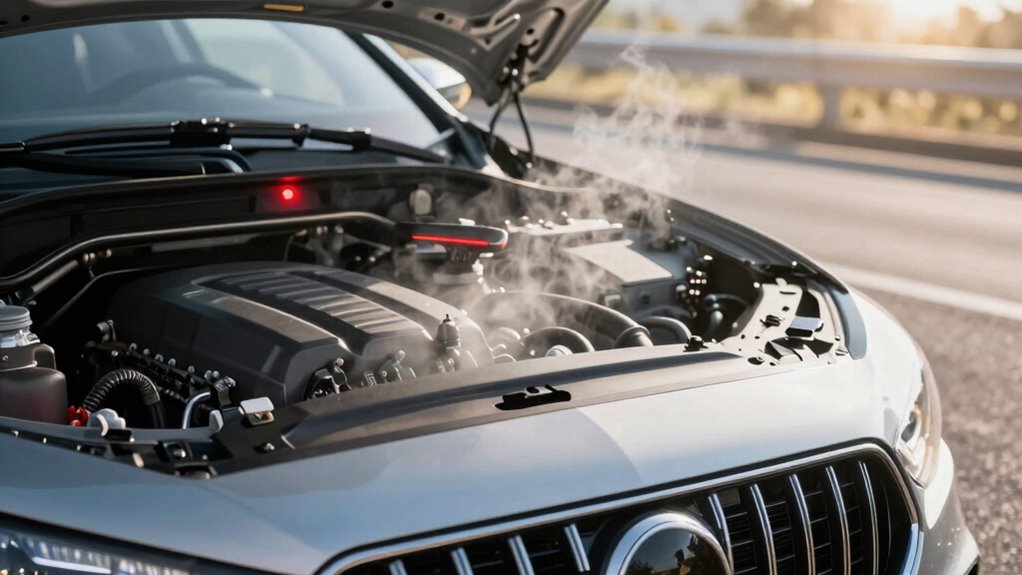
You should watch for sudden temperature fluctuations, which can signal your engine is struggling. Listen for unusual engine noises, like knocking or sizzling sounds, that could indicate overheating. Keep an eye on your temperature gauge; a rising needle is a clear warning sign you need to take action. Additionally, pay attention to engine performance issues, as they may also hint at underlying overheating problems. Being aware of coolant levels can help prevent overheating before it becomes a serious issue.
Sudden Temperature Fluctuations
Sudden temperature fluctuations can be a clear warning sign that your engine is beginning to overheat. When you notice the needle jumping unexpectedly or the temperature gauge fluctuating, it’s often a sign of thermal shock or radiator leaks. These issues cause uneven cooling, risking serious engine damage if ignored. Pay attention to quick shifts in temperature—either spikes or drops—that signal your cooling system isn’t functioning properly. Recognizing these signs early; they’re your first line of defense against breakdowns on the road. Monitoring small wood stoves and understanding their operation can also help you prevent overheating issues in related systems. Being aware of the cooling system and how it maintains consistent engine temperatures is also essential for long-term vehicle health.
Unusual Engine Noises
Unusual engine noises are often early warning signs that your car is overheating or about to overheat. You might notice engine knocking or other strange sounds coming from under the hood. These noises can indicate that your engine is running hotter than normal, causing parts to expand or function improperly. Engine knocking, in particular, signals that the fuel mixture isn’t combusting correctly, which can be linked to overheating issues. Pay attention to unusual engine noises, especially if they suddenly start or become more frequent. Ignoring these signs can lead to severe engine damage or breakdowns. If you hear odd sounds, pull over safely, turn off the engine, and check for overheating or leaks. Acting promptly can prevent costly repairs and keep your trip on track.
Rising Temperature Gauge
A rising temperature gauge is one of the clearest early signs that your engine is overheating. When you notice the needle climbing, it signals that your radiator’s efficiency might be dropping or your temperature sensor isn’t reading correctly. This early warning allows you to act before serious damage occurs. Keep an eye on the gauge, especially during long stretches or hot weather. A sudden spike suggests your cooling system isn’t working properly, possibly due to clogged radiator fins or low coolant levels. If the gauge rises steadily, pull over safely. Addressing issues early can prevent engine damage and costly repairs. Regular maintenance, including checking the radiator and sensor, helps keep your cooling system functioning efficiently and prevents overheating on road trips. Incorporating natural cooling techniques can also assist in maintaining optimal engine temperature during travel. Additionally, understanding must-see destinations and travel tips for your route can help you plan regular breaks at scenic spots or service stations to check your vehicle’s status and avoid unexpected overheating. Being aware of engine temperature fluctuations can further help you recognize potential problems before they escalate.
engine cooling system diagnostic tool
As an affiliate, we earn on qualifying purchases.
As an affiliate, we earn on qualifying purchases.
Quick Fixes You Can Try When Your Car Overheats
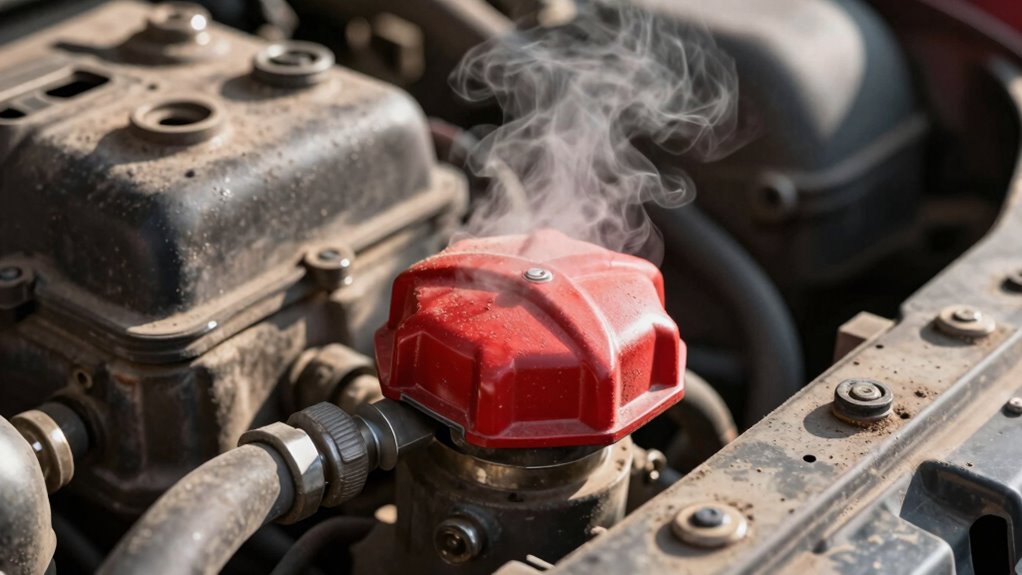
If your car starts overheating, first check the coolant levels and top them off if needed. Turning off the air conditioning can also help reduce engine stress and cool down the temperature. These quick fixes can buy you some time until you can reach a mechanic. Additionally, understanding car cooling systems can help you better diagnose and prevent overheating issues in the future. Knowing how to identify coolant leaks and maintain proper fluid levels is also essential for preventing overheating on road trips. Familiarizing yourself with region-specific attractions and other regional destinations can help plan alternative routes or stops if you need to divert due to vehicle trouble. Staying informed about tax planning strategies can also help you prepare financially for unexpected car repairs or travel disruptions.
Check Coolant Levels
When your car starts overheating, checking the coolant level is one of the quickest and simplest steps you can take. Low coolant can cause engine temperature spikes, especially if there are coolant leaks or reduced radiator efficiency. To check, make sure your engine is cool, then open the radiator cap carefully. If the coolant level is below the recommended mark, top it off with the correct type of coolant. Keep an eye out for signs of leaks around hoses or the radiator, which can lead to low coolant and overheating. Regularly maintaining coolant levels prevents overheating and keeps your system running smoothly.
- Look for puddles or wet spots under your car
- Check for crusty residue around hoses and radiator
- Use a coolant tester to verify proper mixture
- Replace old or contaminated coolant promptly
Turn Off Air Conditioning
Turning off your air conditioning system can provide immediate relief for an overheating engine. When your engine overheats, running the air conditioning adds extra load, increasing the engine’s temperature. Turning it off reduces this strain, helping your cooling system work more efficiently. Cooler ambient air from outside flows over the radiator, assisting in heat dissipation. This quick fix is especially useful on hot days or when climbing steep grades. While it may not solve the underlying issue long-term, disabling the air conditioning temporarily lowers engine temperature, preventing further overheating. Keep in mind, if your engine continues to overheat despite turning off the A/C, you should pull over and check other cooling system components. This simple step can buy you vital time until you reach help or a mechanic.
As an affiliate, we earn on qualifying purchases.
What to Do If Your Car Starts Overheating?
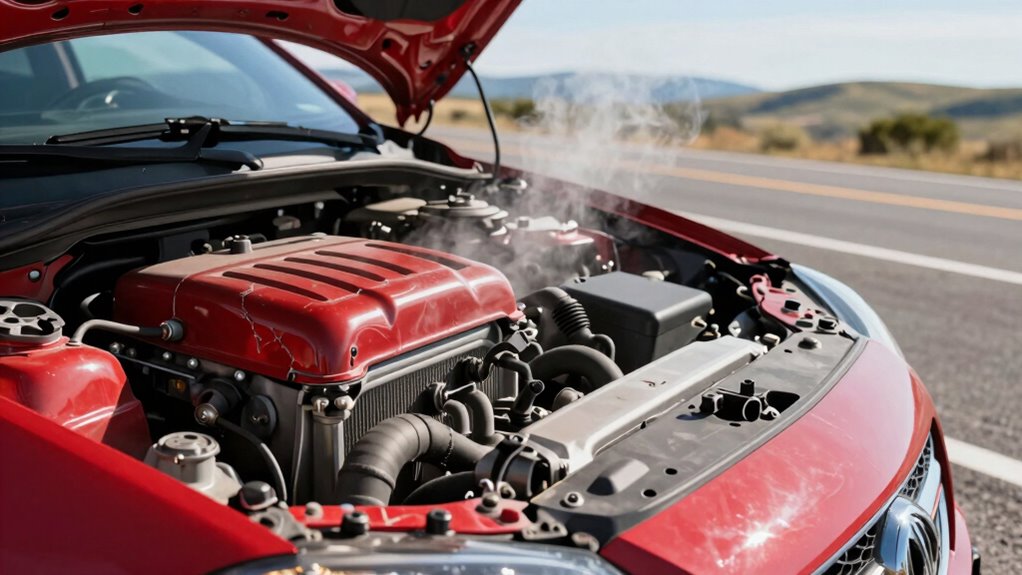
As your car begins to overheat on the road, it’s crucial to act quickly to prevent engine damage. First, safely pull over and turn off the engine to give it a chance to cool down. Check the dashboard for warning lights or rising engine temperature readings from engine temperature sensors. While waiting, you can try alternative cooling methods such as pouring water over the radiator or radiator hoses if available. Keep an eye on the temperature gauge and listen for unusual sounds. If you’re comfortable, open the hood to release steam and improve airflow. Consider using a portable fan or fan to help circulate air around the engine. Remember, avoiding further strain on the engine helps prevent long-term damage. Exploring regional flavors and insights can also help you understand common issues related to vehicle cooling systems. Additionally, investing in car protection accessories like remote car covers can help shield your vehicle from extreme temperatures and environmental stressors that may contribute to overheating. Regular maintenance and proper wiring practices are essential to ensure your cooling system functions efficiently and safely. Ensuring your vehicle has adequate coolant level check is also a quick step to identify if low coolant might be causing the overheating issue. Staying informed about cooling system components and their proper operation can further help prevent overheating during your travels.
Preventative Maintenance Tips to Avoid Overheating
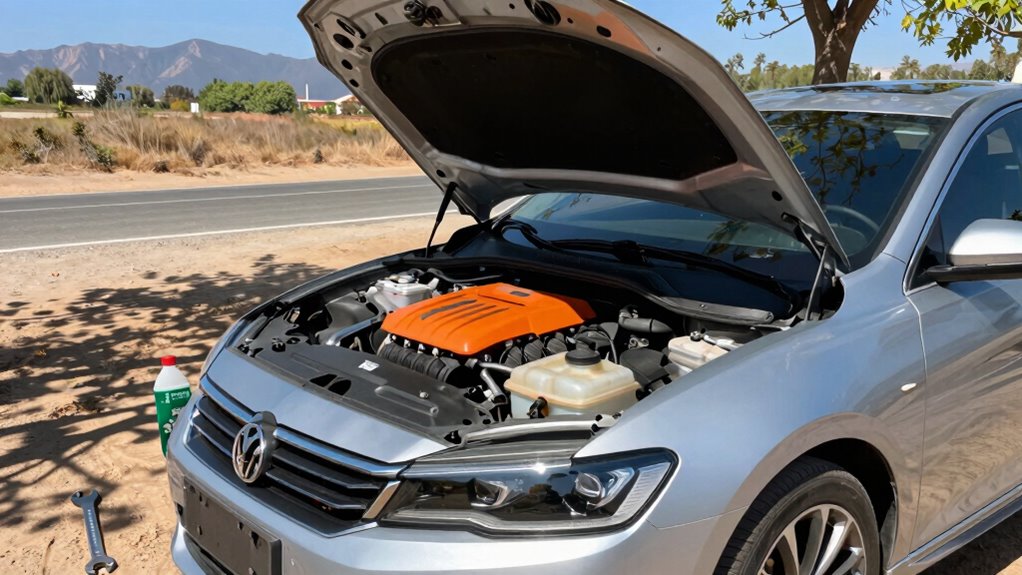
Regularly inspecting and maintaining your vehicle’s cooling system is essential to prevent overheating during road trips. Check your tire pressure regularly; under-inflated tires cause extra strain on your engine, increasing heat buildup. Keep tires properly inflated to reduce engine workload and improve fuel efficiency. Additionally, make certain your brake system functions efficiently, as poorly maintained brakes can cause excessive heat and impact overall vehicle temperature. A well-maintained brake system prevents unnecessary heat transfer to engine components. Regularly replacing air filters and checking belts also helps keep the engine running smoothly, reducing the risk of overheating. Staying proactive with these simple maintenance tasks keeps your engine cooler, improves safety, and helps avoid breakdowns caused by overheating on long drives. Monitoring your cooling system and ensuring it’s functioning properly can also significantly reduce the chances of overheating. Maintaining proper coolant levels and ensuring there are no leaks further supports effective heat dissipation.
How to Check and Maintain Your Coolant Levels
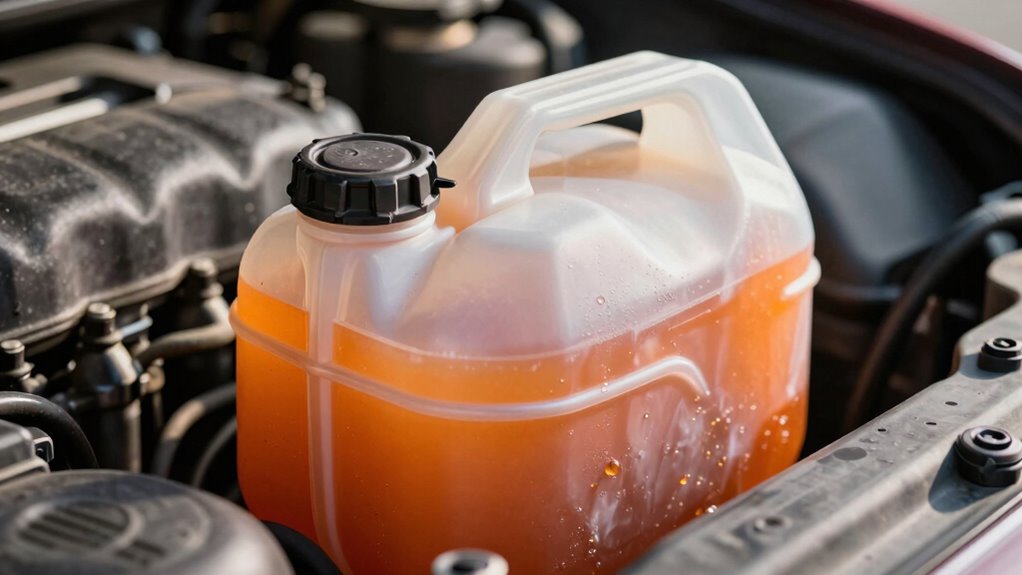
Maintaining proper coolant levels is essential for preventing your engine from overheating during road trips. To check your coolant, verify the engine is cool, then locate the coolant reservoir. Observe the level against the marked “Full” line. If the coolant appears dirty or discolored, it’s time for a top-up or flush to improve coolant quality. Regular radiator maintenance also helps prevent leaks or blockages that impair cooling efficiency. Proper coolant care ensures your vehicle’s cooling system remains effective and reliable.
Check coolant levels when engine is cool; look for discoloration and maintain regular radiator upkeep to prevent overheating.
- Check the coolant level regularly, especially before long trips
- Use the right type of coolant recommended by your vehicle’s manual
- Inspect for leaks or cracks in the radiator and hoses
- Replace coolant if it’s old, contaminated, or hasn’t been changed in years
These steps keep your cooling system in top shape and prevent overheating.
When Should You Seek Professional Help for Overheating?
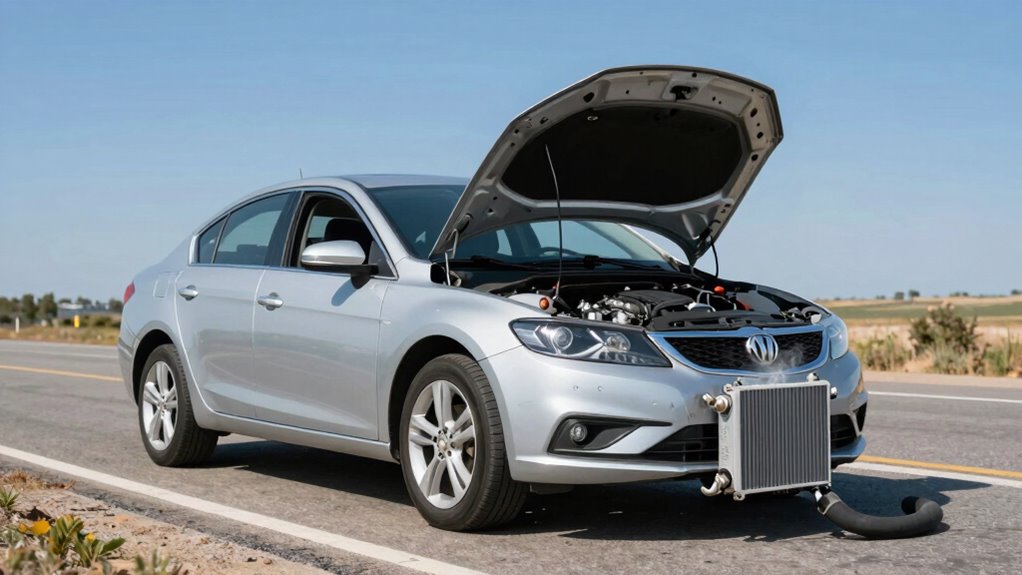
Even if you’ve taken all the preventive steps, there are times when overheating signals that you need professional help. If your temperature gauge remains high despite cooling efforts, it’s time to consult a mechanic. Persistent overheating could indicate serious engine repairs, such as a faulty thermostat or a damaged water pump. You should also seek help if you notice brake issues, like a soft pedal or unusual vibrations, which can be dangerous on hot roads. Ignoring these signs might lead to engine damage or brake failure. Don’t delay getting expert assistance when overheating is accompanied by these symptoms. Addressing the problem promptly guarantees your safety and prevents costly repairs down the line.
Top Tips for Keeping Your Engine Cool on Long Drives
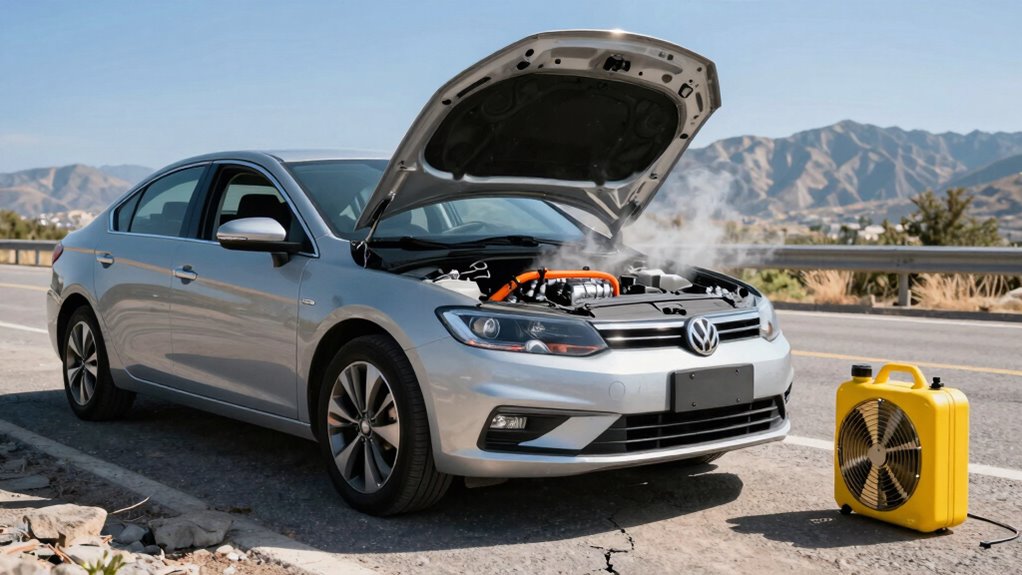
When preparing for a long drive, taking steps to keep your engine cool can make all the difference in preventing overheating. Maintaining optimal engine performance is key to a smooth trip. Pack these road trip essentials to help keep your engine cool:
- Coolant and extra fluids to top off as needed
- A portable fan or fan spray for quick cooling
- A clean air filter to improve airflow
- A thermometer to monitor engine temperature
Regularly check your coolant level and ensure your radiator is free of debris. Avoid heavy acceleration and idling for long periods, which can raise engine temps. Keeping your engine cool not only prevents breakdowns but also extends its lifespan. Being proactive with these tips ensures your long drive stays comfortable and trouble-free.
Frequently Asked Questions
Can a Faulty Thermostat Cause My Car to Overheat?
Yes, a faulty thermostat can cause your car to overheat. When the thermostat gets stuck closed, it prevents coolant from circulating properly, leading to overheating. This issue often accompanies coolant leaks or malfunctioning radiator fans, which fail to cool the engine effectively. Check for these signs and consider replacing the thermostat promptly to prevent further damage. Regular maintenance helps guarantee your cooling system functions smoothly during road trips.
How Does a Clogged Radiator Impact Engine Temperature?
A clogged radiator causes engine temperature to rise because it blocks proper coolant flow, leading to overheating. Coolant leaks can worsen the issue by reducing the coolant level, making it harder for the radiator to cool the engine effectively. Radiator blockages trap heat, preventing heat transfer away from the engine. Regular maintenance, including checking for leaks and cleaning the radiator, helps keep the cooling system working efficiently and prevents overheating.
Are There Specific Driving Conditions That Increase Overheating Risk?
Ever feel like your car’s fighting against you? Certain driving habits, like heavy acceleration or long idling, and road conditions—especially steep hills or rough terrains—raise overheating risks. When you push your vehicle to its limits on hot days or bumpy roads, cooling systems struggle to keep up. Stay alert, adjust your driving habits, and choose smoother roads when possible to help your engine stay cool and safe.
What Are Signs of a Failing Water Pump?
You’ll notice signs of a failing water pump through coolant leaks under your car and a high-pitched water pump noise. If the pump isn’t working properly, your engine may overheat, and you might see steam or a temperature warning. Pay attention to any unusual sounds or leaks, as these indicate the water pump needs inspection or replacement. Ignoring these signs can lead to more serious engine damage.
How Long Can I Safely Drive if My Engine Is Overheating?
Like a ticking time bomb, driving with an overheating engine is risky. You shouldn’t safely drive more than a few miles once your engine temperature rises; it’s best to pull over immediately. The cooling system’s job is to regulate temperature, but if it fails, the engine can seize. Continuing to drive can cause severe damage, so prioritize stopping and letting your engine cool down before proceeding.
Conclusion
Think of your car’s cooling system as a loyal guardian, keeping your engine from overheating and breaking down on the road. By staying vigilant, performing regular maintenance, and acting quickly when issues arise, you can keep this guardian strong. Don’t let a small hiccup turn into a big breakdown—treat your car like a trusted friend, and enjoy smooth, cool rides ahead. After all, a well-maintained engine is the heart of a memorable road trip.
Fall Picks
fall essentials
As an affiliate, we earn on qualifying purchases.