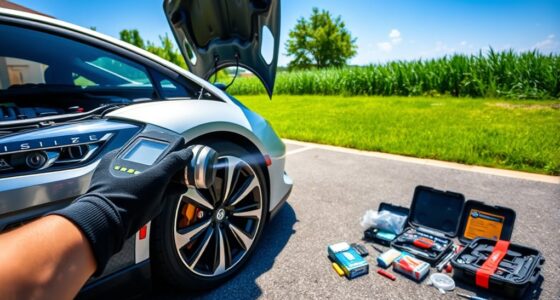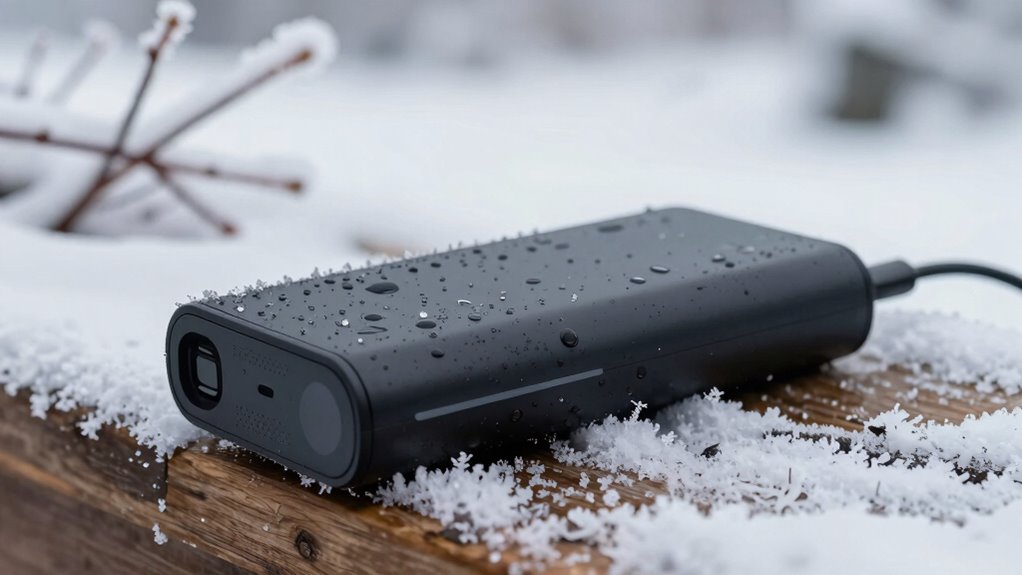

Cold weather slows down the chemical reactions inside your battery, making ions flow less easily through the electrolyte. This increases the internal resistance, so your device needs more energy to work properly, causing performance drops and shorter battery life. Repeated cold exposure can also cause long-term damage, reducing lifespan. Warming the battery helps restore some function. If you want to understand how temperature truly affects your battery’s health, keep exploring the details.

Get travel and outdoor gear delivered free — and shop member deals
- Fast, free delivery on millions of items
- Access to Prime Big Deal Days deals on October 6–7
- Prime Video, Amazon Music and more included
Key Takeaways
- Cold temperatures slow down chemical reactions inside batteries, reducing their efficiency and capacity.
- Increased internal resistance in cold weather limits current flow, decreasing power output.
- Electrolyte viscosity or freezing hampers ion movement, impairing battery performance.
- Repeated cold exposure accelerates long-term battery degradation and lifespan reduction.
- Warming batteries temporarily restores chemical activity and improves performance.
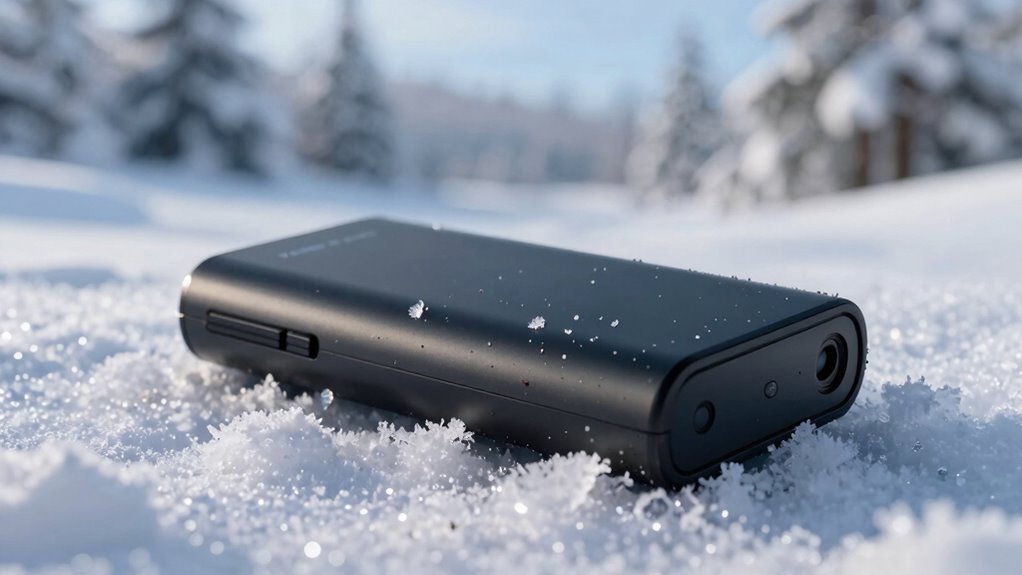
Have you ever noticed your portable battery draining faster in cold weather? This isn’t just a coincidence; it’s rooted in the fundamental science of how batteries work. The core reason behind this performance drop lies in the battery chemistry and the temperature effects that influence it. When temperatures drop, the chemical reactions inside your battery slow down, reducing its ability to generate power efficiently. The slowdown happens because the electrolyte, which facilitates ion flow between the battery’s electrodes, becomes more viscous or even freezes at very low temperatures. As a result, fewer ions move through the electrolyte, leading to a decrease in the battery’s capacity and output. Essentially, the chemistry inside your portable battery isn’t as active or efficient when it’s cold, which directly impacts how long it can power your devices. battery chemistry plays a crucial role in how temperature impacts overall performance.
Temperature effects are particularly significant because they alter the internal environment of the battery. When it’s cold, the internal resistance of the battery increases, meaning more energy is needed to push electrons through the chemical pathways. This increased resistance not only reduces the battery’s available capacity but also causes it to deliver less current. Consequently, your device might shut down sooner or show decreased performance. Conversely, when the battery warms up, the chemical reactions accelerate, restoring some of the lost capacity. That’s why your battery might seem to perform better after being in a warmer pocket or a heated environment. Still, consistently exposing your portable batteries to extreme cold can cause long-term damage, degrading their overall lifespan. Additionally, repeated exposure to cold temperatures can lead to long-term battery degradation, which diminishes overall lifespan over time. Maintaining optimal temperatures for your batteries can help prolong their overall lifespan, as well as prevent performance issues. Moreover, using temperature management techniques can mitigate some of these negative effects.
As an affiliate, we earn on qualifying purchases.
Frequently Asked Questions
How Can I Extend My Battery Life in Cold Weather?
To extend your battery life in cold weather, you should use battery insulation to keep it warmer and prevent performance drops. Additionally, practice good power management by reducing screen brightness, closing unused apps, and enabling power-saving modes. Avoid exposing your device to extreme cold for extended periods, and keep it in a pocket close to your body when possible. These tips help maintain battery efficiency even in chilly conditions.
Do Different Battery Types React Differently to Cold Temperatures?
Different battery types react differently to cold temperatures because of their battery chemistry and temperature resilience. Lithium-ion batteries, common in smartphones, generally handle cold better but still see reduced performance. In contrast, lead-acid batteries tend to be more sensitive to cold, experiencing significant drops in capacity. Understanding each battery’s chemistry helps you choose the right type for cold climates, and ensuring proper insulation can improve their temperature resilience.
How Quickly Does Battery Performance Decline in Cold Conditions?
In cold conditions, your battery’s performance can decline within minutes to hours, depending on the battery chemistry and cold climate impacts. Lithium-ion batteries, common in smartphones, typically lose about 50% of their capacity at 0°C, while other types may fare slightly better or worse. Cold temperatures slow chemical reactions inside the battery, reducing power output and efficiency until it warms up again.
Can Storing Batteries in Warm Environments Restore Lost Capacity?
Storing batteries in warm environments can help restore some lost capacity, but it’s not a complete fix. Using battery insulation and ensuring proper thermal regulation protects against extreme cold, minimizing capacity loss in the first place. When you bring cold batteries into warmth, they warm up, and chemical reactions resume more efficiently. Just avoid rapid temperature changes, as they can damage the battery over time.
Are There Specific Brands Better Suited for Cold Weather Use?
Brilliant brands bolster battery performance in cold weather. When comparing brands, look for those specializing in cold-resistant batteries, like Anker or Duracell. These brands design batteries with advanced chemistry and insulation, making them better suited for chilly conditions. By choosing a brand known for cold resistance, you guarantee your device stays powered longer, even in freezing temperatures. So, do your due diligence and pick a brand with proven cold-weather credentials to stay connected comfortably.
As an affiliate, we earn on qualifying purchases.
Conclusion
In cold weather, your portable battery can lose up to 50% of its capacity, making your devices run out of juice faster. This dramatic drop happens because low temperatures slow down the chemical reactions inside the battery. So, next time you’re outside in the cold, remember, your battery’s performance can drop considerably—sometimes by half! To keep your devices powered longer, try keeping your battery warm or storing it in a pocket close to your body.
As an affiliate, we earn on qualifying purchases.
temperature-controlled portable charger
As an affiliate, we earn on qualifying purchases.
As an affiliate, we earn on qualifying purchases.
Fall Picks
fall essentials
As an affiliate, we earn on qualifying purchases.