
TL;DR

Get travel and outdoor gear delivered free with Prime
- Fast, free delivery on millions of items
- Prime Video, Amazon Music and more included
- Member-only deals all year
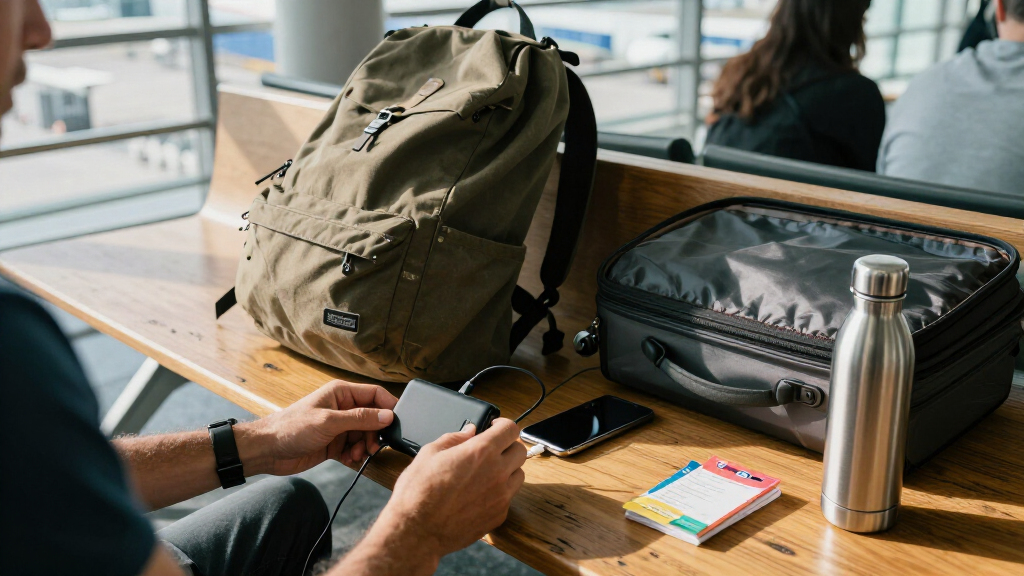
Portable power banks for travel store energy in rechargeable batteries and deliver it to your devices through USB. Choose capacity and output based on what you carry, check watt-hours and your airline’s current rules, and pack the bank in your carry-on. A 10,000 mAh model often suits a day out, while longer trips or multiple devices may call for more capacity.
Your phone can go from full to five percent before you reach the hotel, especially after a day of maps, photos, and train tickets. A portable power bank gives you a backup, but the biggest number on the box doesn’t always make the best travel companion.
This guide explains how to match capacity, charging speed, and weight to your trip, how to check flight rules, and what to look for before you buy. You’ll also get a practical way to estimate whether a bank suits a day trip, a long flight, or a bag full of devices.
Treat mAh as a guide to stored charge, not a promise of a specific number of phone charges.
A 10,000 mAh bank often suits a day out; consider more capacity for several devices or long gaps between outlets.
Match USB-C PD output to your device, cable, and charging needs; high wattage alone doesn’t guarantee faster charging.
Pack power banks in carry-on baggage and check your airline’s current watt-hour rules before flying.
Check weight, port layout, shared output, recharge time, and battery condition before you travel.
Choose a capacity that fits the day you have planned
Portable power banks for travel work best when their usable capacity matches your devices and your itinerary. A 10,000 mAh model can be a sensible middle ground for carrying a phone through a full day, while 5,000 mAh banks save space and 20,000 mAh models offer more reserve for longer journeys or several devices.
Those numbers describe stored charge, not guaranteed phone charges. The bank stores energy at one voltage, then converts it to the voltage your device needs; that conversion loses some energy as heat. Your phone also draws more power when its screen is bright, navigation is active, or it searches for a weak signal. That’s why two travelers with the same phone and bank can get different results, and why it’s safer to leave a reserve instead of planning around a precise number of charges.
For example, imagine you’re spending Saturday walking around Rome. A compact bank may cover maps, messages, and photos without weighing down your day bag. If you’re taking a night train and also charging earbuds or a tablet, the extra capacity of a larger model may earn its place. The tradeoff is that the larger bank takes up more room, weighs more, and can take longer to recharge before the next day.
Think about the devices you’ll charge and the hours between outlets. A bigger capacity helps on a long, busy day, but you’ll carry more weight and spend longer recharging the bank.
For a quick choice, start with your phone’s battery and typical daily use. Then add the other devices you’ll charge and think about whether you can recharge the bank at your hotel. A single phone on a city break calls for a different setup than a camera, tablet, and phone on a multi-day hike. If outlets are predictable, carrying less capacity can be a better choice; if you’ll be away from them for a long stretch, the extra reserve reduces the chance that you’ll have to ration navigation or communication.
Compare size, speed, and ports before you buy
Portable power banks for travel differ most in capacity, output, weight, and the connections they offer. Compare those details together: a lightweight bank with one port may be perfect for your phone, while a higher-output model can better suit a tablet or some laptops. Check whether it shares power across ports when charging several devices, since a bank’s maximum output may apply only when one port is in use.
| What to check | Why it matters | Example |
|---|---|---|
| Capacity | Sets how much energy the bank stores, though usable energy is lower than the headline mAh suggests. | Choose a smaller model for a light day bag or more capacity for several devices. |
| Output wattage | Affects charging speed, subject to what your device and cable support. | USB-C Power Delivery can charge many phones and tablets quickly; some laptops need more wattage. |
| Ports | Determine which cables fit and how many devices can connect. | Two ports help when you carry a phone and earbuds, but total output may be shared. |
| Size and weight | Higher capacity usually means more bulk in your bag. | A slim bank fits a pocket; a larger one may work better in a backpack. |
USB-C is now common, and USB-C Power Delivery (PD) supports faster charging when the bank, cable, and device all speak the same charging standard. A high wattage on the bank alone doesn’t make your phone charge faster; the phone sets its own limit. Wattage matters most when a device can use it: adequate output can shorten a layover charge or keep a tablet working, while extra output beyond the device’s limit adds little practical benefit.
Think of a traveler who wants to charge a tablet during a layover. A phone-focused bank may connect but charge slowly, or fail to provide enough power. Before packing for that trip, check your tablet’s required wattage against the bank’s output, and check whether the listed maximum drops when you use another port. If it does, charging the phone and tablet together may take longer than charging each one separately, so consider whether the convenience of one bank is worth that slower shared output.
Pack it for a flight and check the watt-hour rating
Portable power banks for travel generally belong in your carry-on, not your checked bag, because they contain spare lithium-ion batteries. Many aviation rules allow batteries up to 100 Wh without prior approval; batteries from 100 to 160 Wh may need airline approval and can face limits. Rules differ by airline and jurisdiction, so check current guidance before you fly. [1]
The watt-hour figure is often printed on the bank. If it isn’t, estimate it with mAh × internal voltage ÷ 1,000; many banks use an internal voltage of about 3.7 V. For instance, a 20,000 mAh bank works out to about 74 Wh using that voltage, though you should use the manufacturer’s stated figure when available. Watt-hours matter because they measure energy in a way airlines can compare across batteries with different voltages; mAh alone can make two banks look similar even when their stored energy differs.
Before a trip from Berlin to Lisbon, check the airline’s battery page and confirm the capacity label is readable. A bank that meets a general threshold may still be subject to your airline’s instructions. Keep it accessible in your carry-on so you can follow crew directions if asked. Checking before departure also gives you time to leave an oversized bank at home instead of discovering the issue at the gate.
Check official airline and aviation guidance before booking or flying. Battery limits and packing rules can change, and the rules that apply depend on your route and carrier.
Don’t fly with a power bank that is swollen, damaged, unusually hot, or missing clear capacity and safety information. Heat and rough handling can make a damaged battery a safety problem. If a bank gets unusually hot or changes shape, stop using it and follow the manufacturer’s advice on safe handling and disposal.
Follow these steps to match a bank to your trip
To choose a portable power bank for travel, list your devices, check their charging needs, choose enough capacity for the time between outlets, and confirm the bank’s weight and flight rating. This quick sequence helps you avoid buying a heavy model that can’t charge your laptop or a small one that runs dry before dinner. It also helps you identify where a compromise matters: extra capacity adds reserve, while compatible output can save time when you only have a short stop to recharge.
- List what you’ll charge. Write down your phone, earbuds, camera, tablet, or laptop. A weekend city break with only a phone needs less capacity than a work trip with a laptop.
- Check the connection and power needs. Look for USB-C PD if you want faster charging for a compatible phone or tablet. For a laptop, compare its required wattage with the bank’s output; if the bank falls short, it may charge very slowly or fail to keep up while the laptop is in use.
- Pick capacity for the longest gap between outlets. A 10,000 mAh bank may suit a typical day out; multiple devices or long stretches without access to a wall socket can call for a higher-capacity model. Allow some margin because conversion losses and heavy use reduce the energy that reaches your devices.
- Check size, ports, and shared output. Make sure your cables fit and that simultaneous charging works at the speed you expect. A built-in cable can trim clutter, but it’s harder to replace if it fails.
- Confirm flight rules and recharge time. Check the watt-hour label and your airline’s current policy. If you’ll use a large-capacity bank, check how long it takes to recharge; USB-C input and a sufficiently powerful wall charger can reduce downtime. A fast input is useful when you have a brief stop at an outlet, while a slower bank may need a full night to refill.
For example, a photographer on a two-day rail trip might choose a sturdier bank with enough capacity for a phone and camera, then recharge it at the hotel overnight. Someone taking a light day hike could prefer a smaller bank and a short cable that fits in a jacket pocket. The better fit depends on when each person can reach an outlet and how much weight they’re willing to carry between stops.
Wireless charging and magnetic attachments can reduce cable fuss for compatible phones. Wired charging is usually faster and more efficient, though. Treat wireless charging as a convenience feature, not extra capacity: the extra energy lost during wireless charging can mean fewer useful charges from the same bank.
Use simple habits to keep your power bank ready
A portable power bank helps most when it’s charged, in good condition, and easy to reach. Recharge it before leaving, keep it out of hot places such as a sunlit car, and follow the manufacturer’s storage and care instructions. Battery capacity gradually declines with age, use, heat, and storage conditions.
A clear battery display or a row of indicator lights can tell you whether you have enough reserve before heading out. If you’re taking a morning ferry, check the charge the night before rather than discovering an empty bank as you join the queue. USB-C input makes many newer banks easier to recharge with a modern wall charger.
Some models allow pass-through charging, which means they can charge your device while the bank itself is plugged in. Not every model supports this, and using it can add heat or reduce performance. Check the manufacturer’s instructions before leaving both devices connected overnight.
Built-in cables are handy when you want to pack less, but a removable cable is easier to swap when it frays. If you rely on a built-in cable on a long trip, make sure you also have a backup way to connect your phone. A spare short USB-C cable takes little room and can save the day.
Frequently Asked Questions
Can I bring a power bank on a plane?
Usually, yes, but spare power banks generally must travel in your carry-on baggage, not checked luggage. Capacity limits and approval requirements depend on the airline and aviation rules for your journey. Check your airline’s current policy before flying.
Is a 10,000 mAh power bank enough for travel?
A 10,000 mAh model is a common middle ground for carrying a phone through a day, depending on your phone and how heavily you use it. If you need to charge several devices or spend a long time away from an outlet, you may prefer more capacity.
How many times will a power bank charge my phone?
It depends on the bank’s usable energy and your phone’s battery. Advertised mAh doesn’t translate directly into phone charges because voltage conversion, battery size, and how you use both devices affect the result. Treat charge estimates as approximate.
Can a portable power bank charge a laptop?
Some can, if they support USB-C Power Delivery at the wattage your laptop needs and have enough capacity. A small phone-oriented bank may charge a laptop slowly or not at all. Check your laptop’s charging requirements and the bank’s output specifications.
Should I choose wired or wireless charging?
Wired charging is typically faster and more efficient. Wireless charging can be convenient when your phone and bank are compatible, but it may waste more energy as heat. Choose it for ease, and choose wired charging when speed or battery life matters more.
Conclusion
Pick a bank that fits the devices you’ll carry, the hours you’ll spend away from an outlet, and the weight you’re willing to pack. Then check its watt-hour rating and your airline’s current battery rules before you leave. The best backup is the one you still have with you when the station lights go dim.
Halloween Picks
halloween
As an affiliate, we earn on qualifying purchases.