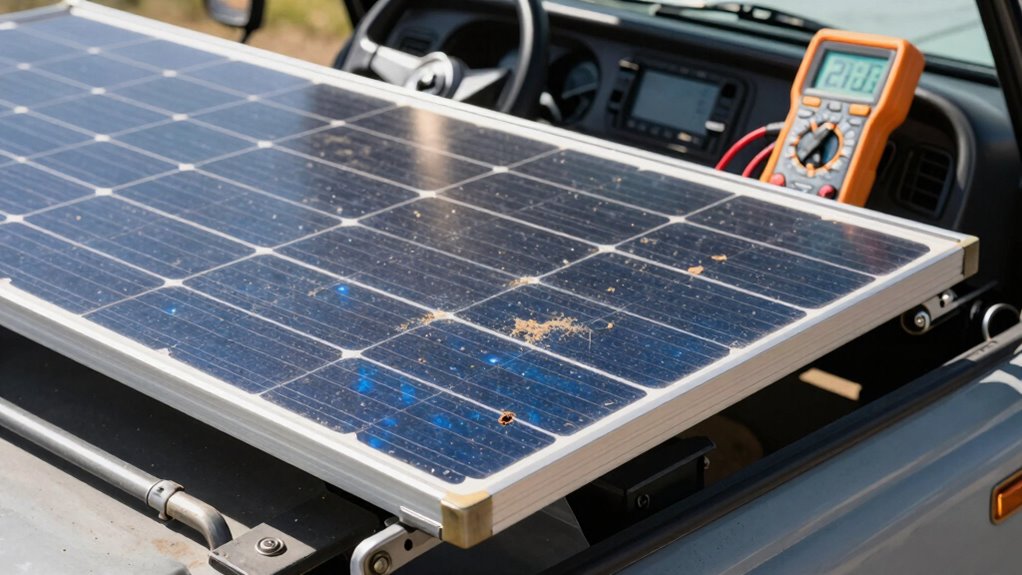

To quickly determine if your solar setup is too weak for your trip, actively monitor its real-world performance over several days. Track your energy consumption from lights, gadgets, and appliances, and compare it to what your panels produce during peak sunlight hours using a wattmeter or app. If your batteries frequently drain or energy shortfalls happen often, your system might need upgrades. Keep exploring to master how to guarantee your setup meets your travel demands.

Get travel and outdoor gear delivered free with Prime
- Fast, free delivery on millions of items
- Prime Video, Amazon Music and more included
- Member-only deals all year
Key Takeaways
- Measure current battery capacity against your total energy needs during peak usage times.
- Use a wattmeter or solar monitoring app to check real-time energy production during sunlight hours.
- Conduct short-term, real-world tests tracking energy consumption versus solar output over multiple days.
- Observe if batteries consistently drain faster than they recharge, indicating insufficient capacity.
- Assess panel efficiency by examining shading, angle, and cleanliness, and compare output to expected performance.
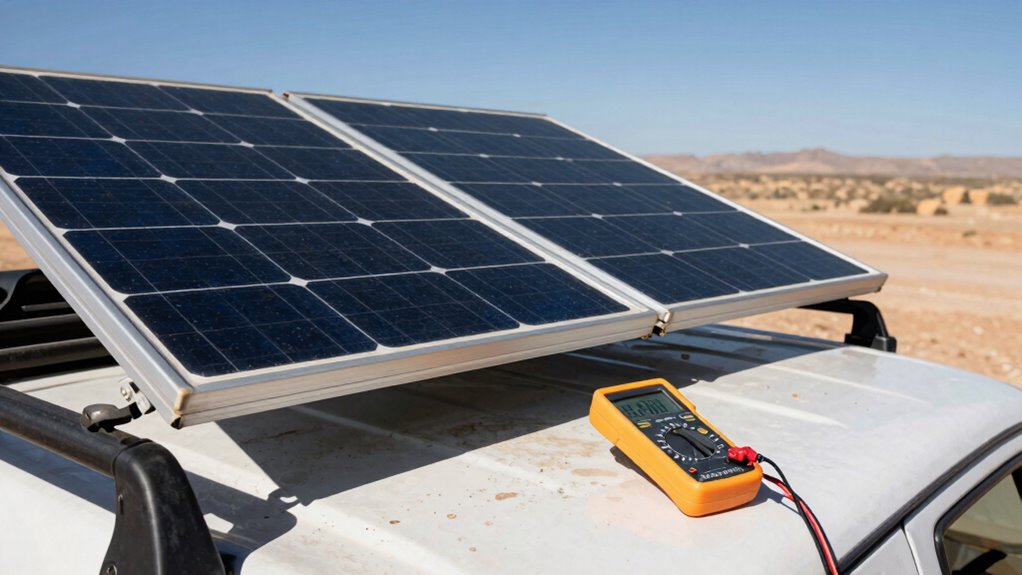
Planning a trip with a solar setup? The fastest way to know if your system is too weak for your adventure is to assess its real-world performance against your energy needs. Start by evaluating your battery capacity. If your batteries can’t hold enough charge to power your devices overnight or during cloudy days, then your system’s capacity isn’t sufficient. Calculate your total energy consumption for the trip, including lights, gadgets, and any appliances. Then compare this to your battery’s capacity, measured in amp-hours or watt-hours. If your batteries are draining faster than they can recharge during sunlight hours, you’ll face power shortages, which signals your setup needs an upgrade.
Assess your solar setup’s capacity by monitoring real-world power use and recharge rates during your trip.
Next, pay close attention to your solar panel efficiency. Even if you have large batteries, your solar panels won’t do their job if they’re not effective enough to generate sufficient power. Factors like panel quality, angle, shading, and cleanliness influence effectiveness. During a typical sunny day, monitor how much energy your panels produce. Use a wattmeter or a solar monitoring app to measure output at different times of the day. If the energy production consistently falls short of your needs, especially during peak sunlight hours, then your solar panel effectiveness isn’t enough for your trip. Remember, lower efficiency means you’ll need larger or more suitable panels to meet your energy demands.
Combine these observations to get a clear picture. If your batteries are barely holding a charge or depleting quickly, and your panels aren’t generating enough power during peak sunlight, then your current setup’s too weak. A quick test is to simulate your daily energy consumption under actual conditions. Track how much energy you’re using versus what your system produces over several days. If there’s a deficit, you’ll need to either increase your battery capacity, improve your solar panel effectiveness, or both. Additionally, understanding the solar panel efficiency helps you make informed decisions about upgrades or adjustments. Conducting real-world testing can help you identify potential issues early and avoid surprises during your trip.
This simple, real-world test saves you from the guesswork and helps you prepare better. It’s more effective than just relying on specifications or estimates. By actively monitoring how your solar setup performs during actual use, you’ll quickly see if it can sustain your trip’s energy needs or if it’s time to upgrade. Ensuring your system is robust enough means fewer surprises and more peace of mind, letting you focus on enjoying your adventure instead of worrying about power outages.
Products Worth Considering

Bose QuietComfort Wireless Bluetooth Headphones with Active Noise Cancellation, Mic, USB‑C Charging, Deep Bass, 24‑Hour Battery – White Smok

Travelpro Maxlite 5 Softside International Carry-On Luggage, Green, 20-Inch

Amazon Kindle Paperwhite (2024), 16 GB, 7-inch Display, Jade
As an affiliate, we earn on qualifying purchases.
Frequently Asked Questions
How Can I Upgrade My Existing Solar System Easily?
To upgrade your existing solar system easily, focus on increasing solar panel efficiency by adding high-efficiency panels or upgrading current ones. Consider expanding your energy storage options with larger or more advanced batteries to store more power. Also, guarantee your system components are compatible and well-maintained. These steps help maximize energy production and storage, making your setup more reliable and capable of meeting increased energy demands during your trip.
What Are Signs My Solar Setup Is Underperforming?
Did you know that shading issues can cut your solar output by up to 80%? If your solar setup underperforms, look for signs like reduced battery maintenance needs, inconsistent power supply, or visible shading on panels. These issues indicate your system isn’t functioning efficiently. Regularly check for shading and keep batteries well-maintained to guarantee peak performance and prevent underperformance during your trip.
Can Weather Affect My Solar System’s Capacity?
Yes, weather can impact your solar system’s capacity, mainly by reducing solar panel efficiency. Cloudy days, rain, snow, and fog decrease sunlight exposure, lowering energy production. To predict these effects, you should perform weather pattern analysis for your trip area. This helps you understand potential fluctuations in power output and determine if your solar setup will meet your energy needs under different weather conditions.
How Long Does a Typical Solar Setup Last?
A typical solar setup lasts about 25 to 30 years. For example, if your panel efficiency drops by 20% over a decade, you’ll need to replace or upgrade components. Battery lifespan varies, often 5 to 15 years, depending on usage. Regular maintenance and quality parts help prolong your system’s longevity, ensuring consistent performance for your trips. Keep an eye on efficiency and battery health to maximize your setup’s lifespan.
Is Professional Assessment Necessary for Solar Capacity?
You don’t necessarily need a professional assessment for your solar system’s capacity, but it’s highly recommended. A capacity assessment by experts ensures your solar system can meet your energy needs, especially for extended trips. They evaluate your setup’s output and efficiency, helping you avoid shortages. While DIY checks can provide basic insights, professionals give precise measurements and advice, guaranteeing your solar system is strong enough for your trip’s demands.
Conclusion
Now that you know the quickest way to test your solar setup, you’re like a captain checking the ship’s compass before setting sail. If your system can’t keep up, don’t ignore the warning signs—they’re your lighthouse guiding you to a stronger, more reliable setup. Remember, a weak solar system is like a flickering candle in the wind; it won’t light your way through the trip. Prepare, test, and power up for smooth sailing ahead.